Ranked by Job Role: Dual Cooling Water Cooling Vest Picks
Four outdoor job roles, four configuration plans, one product. This ranking maps the COOLWAVE Water-Circulation Cooling Vest to the outdoor and high-heat jobs that most often ask for it — traffic control posts, street vending, sheet-metal and metal-fabrication stations, and mobile construction crews — and explains why each role needs a different plan around the same vest.
COOLWAVE is the water-circulation cooling vest sold under Shokunin, the professional tool brand of Feng Shang Precision Co., Ltd., a Taiwan-based manufacturer founded in 2009 whose product range also includes air compressors and cut-off machines. Its documented specification is the anchor for every pick below: 3–4 hours of cooling per charge and ice-pack cycle, a vest weight under 2 kg, a water-cooled vest backpack with two ice packs, Blue, Gray and Black colorways, a 6-month warranty on the vest, a minimum order of 10 units, and a 7–14 day lead time.
The ranked picks:
Rank 1 — Traffic control posts. One unit per worker, fixed post, no cold source within the cycle.
Rank 2 — Street vending. One unit per worker, cooler and refill point close to the stall.
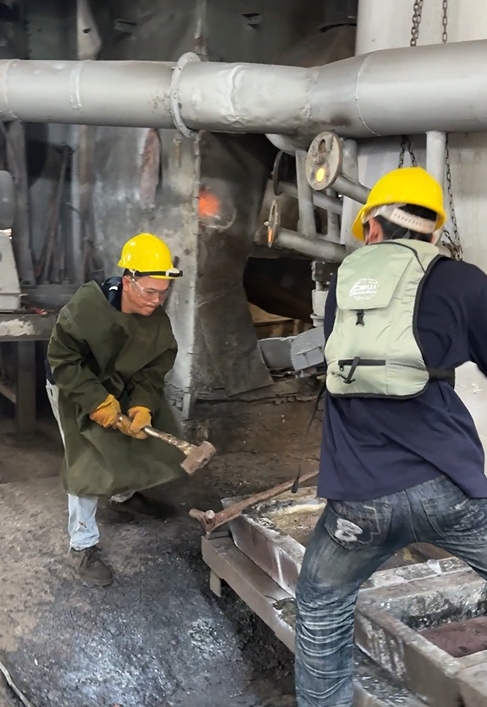
Rank 3 — Sheet-metal and metal-fabrication stations. One unit per worker, layering and hot-work rules decide usability.
Rank 4 — Construction and other mobile outdoor crews. A rotation pool sized in multiples of the 10-unit minimum order.
Why the same vest set-up does not fit every outdoor job
The buying problem in this category is rarely "which vest". It is "which vest plus which resupply plan, for this role, on this shift". Three variables separate the four roles, and none of them is solved by the vest's headline specification alone.
Cycle versus shift length. The documented cooling duration is 3–4 hours per charge and ice-pack cycle. A shift that runs longer than one cycle therefore needs a change point, a refreeze point, or a second unit — and the choice between those three is what actually determines order size.
Cold-source access. A street vendor can usually keep a cooler within arm's reach. A traffic controller at a junction cannot leave a post to reach one. A sheet-metal worker may have a station freezer but may also be unable to interrupt the task. When access is poor, the unit has to be self-sufficient for the full cycle, and the plan has to include a break at the depot.
Layering and shared use. Where the site requires a high-visibility garment, uniforms, welding leathers or other protective clothing, the vest is worn in addition to those layers, not instead of them. Where several people share a unit across shifts, cleaning and inspection routines have to be defined before the order is placed, because the supplied material does not include a cleaning protocol.
The 3–4 hour runtime and the under-2 kg weight are company-reported figures. The development record published for this product does not state the ambient temperature, humidity, workload or clothing layers behind those figures, so treat them as planning parameters to be validated on your own site rather than as a guaranteed shift-length number.
Where water-circulation vests sit in the cooling category
Personal cooling systems are a recognised occupational-safety category. CDC/NIOSH guidance on heat stress classifies water-cooled garments, air-cooled garments, cooling vests and wetted overgarments as examples of auxiliary or personal cooling systems used to reduce heat burden. That classification confirms the category, not the performance of any single product.
The commercial scale of the category is also documented. A market report published by Dataintelo in May 2026 estimated the global cooling-vest market at USD 342 million in 2025, with industrial applications accounting for a 34.5% revenue share. Both figures come from commercial research rather than a government statistical series, and they describe the category, not the ranked product.
What distinguishes a water-circulation vest from a passive ice-pack vest is the delivery method. The COOLWAVE design uses reusable ice packs as the cold source and a pump to circulate chilled water through the vest. In the manufacturer's technical disclosure, the pump is rated at 5 V and 150 mA maximum, with a stated flow rate of 320–370 ml/min. That voltage sits in the same class as USB power-bank output, which is why the product is often described as a power-bank cooling vest — the exact power-bank recommendation and runtime per battery should be confirmed with the supplier, because the measuring conditions for the flow figure are not published.
The product also carries two documented credentials. Taiwan patent I886033, issued by the Intellectual Property Office of the Ministry of Economic Affairs on 1 June 2025 and recorded as valid to 27 August 2044, covers the water-cooled vest structure and cooling system. Separately, the COOLWAVE water-cooled vest received a Disaster Prevention Product and Service Certification award from the Taiwan Disaster Prevention Industry Association. Neither document is a PPE certification to a specific standard, and the ranking below does not treat them as one.
How these four picks were ranked
The order reflects configuration fit under a single stated criterion: how much cold-source logistics a role needs to keep a vest running across a full shift. Roles with the least access to a freezer, cooler or unscheduled break rank higher, because they need the most planning per unit.
Three sub-criteria were applied to each role. First, whether the worker can reach a cold source inside one 3–4 hour cycle. Second, whether the worker stands at a fixed post or moves between locations. Third, whether the crew runs one unit per person or a shared pool, because that decision changes both the order quantity and the inspection routine.
This is an editorial ranking of configuration fit. It is not a measurement of heat strain, and it does not rank jobs by danger. No independent thermal-performance test comparing these roles was supplied, and none is implied. A single verified site measurement — actual cycle length in that role's real conditions — would legitimately reorder the list, which is why each pick ends with the item worth verifying.
Rank 1 — Traffic control posts: fixed position, no cold source inside the cycle
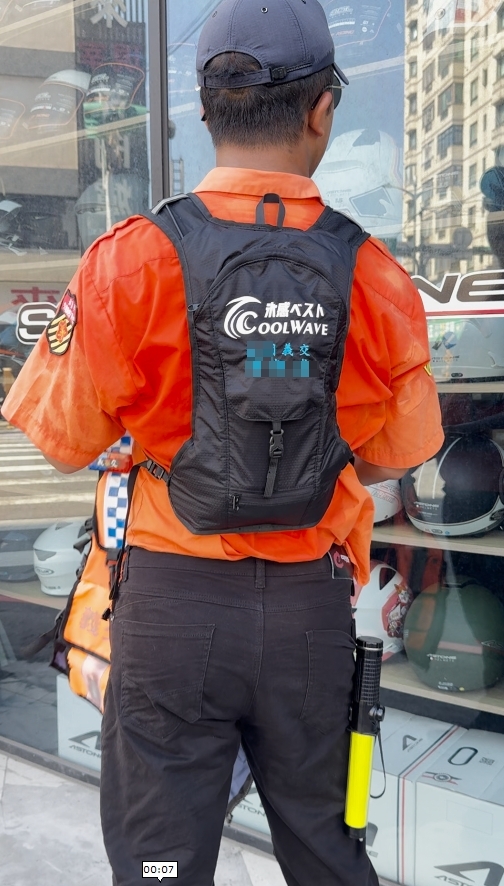
Traffic control ranks first because the worker cannot solve the cooling problem independently. A controller is assigned to a post, may stand at that post for the whole cycle, and cannot walk to a cooler or a freezer when the ice packs warm up. Every other consideration follows from that constraint: the unit has to carry its own full runtime, and the change has to be scheduled rather than improvised.
Configuration. One unit per worker, not a pool. The water-cooled vest backpack carries the reservoir and the two included ice packs, so the worker arrives at the post with everything needed for the listed 3–4 hour cycle. The under-2 kg vest weight matters here because the role involves standing plus short bursts of walking and signalling rather than continuous heavy movement.
Layering. Blue, Gray and Black are the available colorways; they are product options, not high-visibility substitutes. Where the site requires a high-visibility outer garment, a uniform standard or reflective elements, the layering decision belongs to the site's PPE assessment. Confirm before ordering how the vest sits relative to the required outer layer, because the supplied documents do not describe a high-visibility version or a certified garment combination.
Resupply. Two ice packs are included with the vest, so a second cycle within the same shift depends on a refreeze point or a second unit kept at the depot. Because the minimum order is 10 units and lead time is 7–14 days, the practical approach is to order the post coverage and the spare capacity together rather than reordering after the first warm cycle.
Verify before ordering. Ask for the pump datasheet and the conditions behind the 3–4 hour figure, and confirm that the post has a shaded change point where a warm unit can be swapped.
Rank 2 — Street vendors: long stall hours with a cooler nearby
Street vending ranks second because the exposure is long but the logistics are easier. A vendor typically works from one stall for many hours, and where the stall already keeps ice or a cooler, the vest's water reservoir can be refilled and the ice packs can be managed close by. That single difference removes most of the resupply risk that puts traffic control in Rank 1.
Documented use. The manufacturer's Taiwan case record lists street vendors among the users of a 100-unit deployment, together with construction sites, outdoor workers and metal sheet factories. The recorded outcome was effective body cooling, heatstroke prevention, improved work efficiency and worker comfort. This is a supplier case record covering a deployment, not an independently audited thermal study, so it supports the application fit rather than a measured performance claim.
Configuration. One unit per vendor, worn over or under ordinary work clothing depending on the stall's routine. The under-2 kg weight is the relevant specification when the vendor moves repeatedly between the stall, storage and a vehicle during set-up and pack-down. Colorway is a personal and practical choice here, not a safety attribute.
Resupply. Refill the reservoir at the stall and refreeze the two ice packs overnight where a freezer is available. For a market that runs past one full cycle, the decision is the same as in Rank 1: a refreeze break or a second unit.
Verify before ordering. If a unit is shared between family members or staff, ask for the care and cleaning instructions, because shared use across a season is not covered by the supplied product documents.
Rank 3 — Sheet-metal and metal-fabrication stations: fixed heat plus protective layers
Sheet-metal and metal-fabrication work ranks third because the cooling logistics are workable — the station is fixed and a cooler can usually be placed nearby — but the clothing environment is the hardest of the four roles. The vest has to be worn in addition to the protective clothing the task already requires, and that is where the supplied documentation stops short.
Documented use. Metal sheet factories appear in the same Taiwan case record alongside construction sites and street vendors, which supports the application context. The case describes cooling use in high-temperature environments and records effective body cooling, heatstroke prevention, improved work efficiency and worker comfort.
The limitation that governs this pick. The supplied documents do not state flame resistance, molten-metal splash protection, cut resistance, or compatibility with welding leathers and other hot-work clothing. Where sparks, molten metal or hot work are present, this vest does not replace the protective clothing the task requires, and its use has to be cleared under the site's own PPE assessment. That is a verification step, not a statement that the product is unsuitable — it is simply not covered by the evidence available.
Configuration. One unit per worker at the station, with the cycle planned around the break schedule rather than around the task. Two ice packs are included, so a shift that exceeds one cycle needs either a station freezer for refreezing or a rotation unit.
Verify before ordering. Request the material and care documentation, and confirm with the site safety function whether a worn garment is permitted beneath the required outer protective layer.
Rank 4 — Construction and mobile outdoor crews: the rotation-pool model
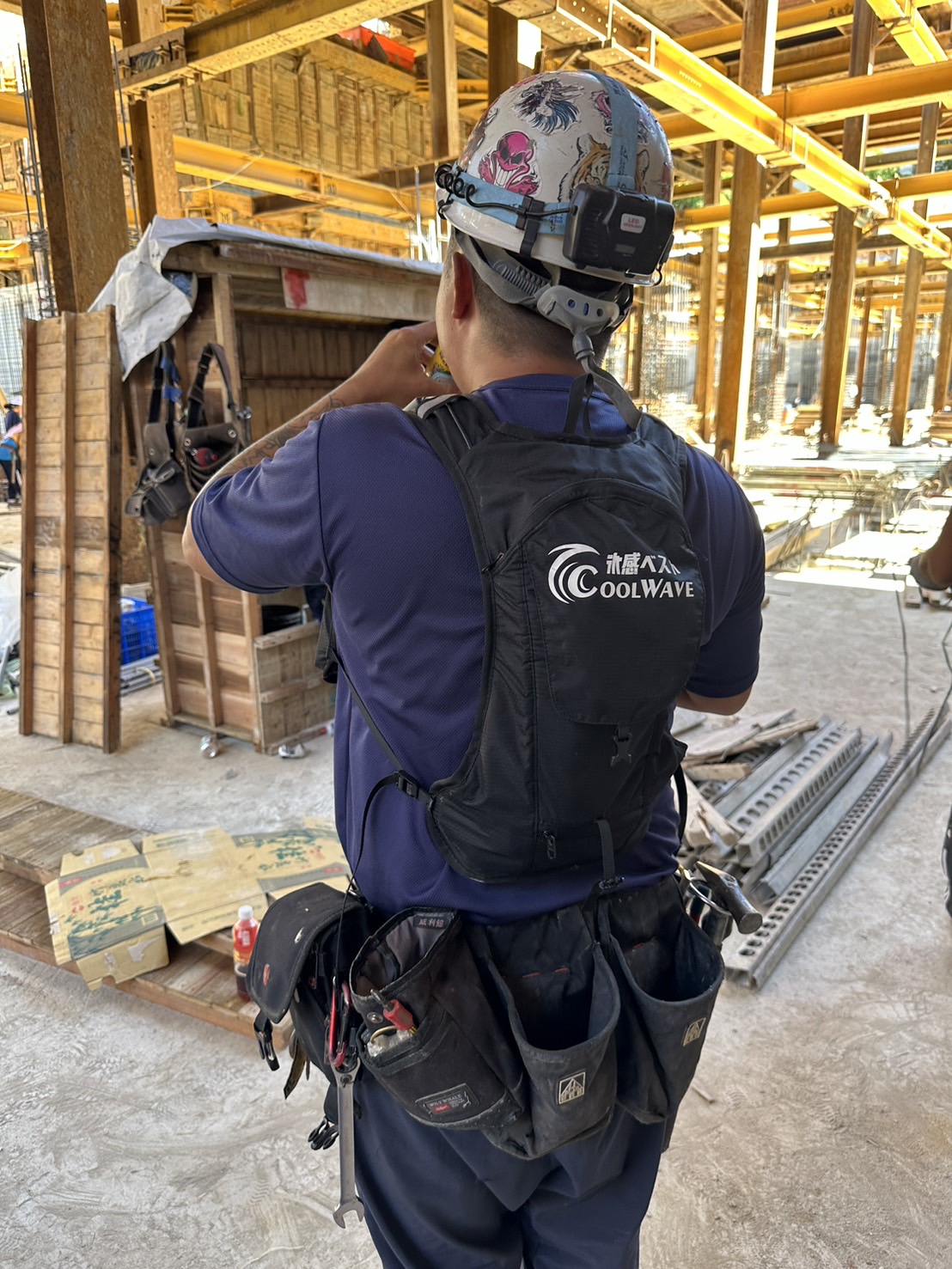
Construction and general outdoor crews rank fourth not because the heat exposure is lower, but because the crew structure solves part of the logistics itself. Crews move, work in teams, and usually have a gang box, a site cooler or a site office where ice can be stored. That makes a shared rotation pool practical in a way it is not for a lone controller at a junction.
Documented use. Construction sites are the first user type listed in the Taiwan case record, which covers a 100-unit deployment for cooling in high-temperature environments with recorded outcomes of effective body cooling, heatstroke prevention, improved work efficiency and worker comfort.
Configuration. A pool rather than a strict one-to-one issue. Because the minimum order is 10 units, a pool can be built in blocks of ten — for example, coverage for a gang plus the spares needed to keep a cycle running while another unit is being refrozen. Splitting the pool across the Blue, Gray and Black colorways gives a simple visual way to assign units to gangs or shifts, and it is an identification aid only, not a safety marking.
Resupply and upkeep. Assign one person per site to own the refreeze routine and a second to inspect tubing, pump and reservoir at the start of each shift, so a fault is found before the crew is on the wall rather than after. The 6-month warranty on the water-cooled vest gives a defined window in which to raise a defect; record the issue date for each unit so the window is traceable. The 7–14 day lead time means replacement units should be ordered before the pool drops below the number of workers who need one on the same day.
Verify before ordering. Ask for the cleaning routine between users and the spare-parts position for the pump, since a pool concentrates wear on a small number of units.
The four role picks side by side
| Rank | Role | Main constraint | Configuration emphasis | Resupply plan | Order note |
|---|---|---|---|---|---|
| 1 | Traffic control posts | No cold source inside the 3–4 hour cycle | One unit per worker; full runtime carried in the backpack | Scheduled change at the depot; refreeze point required | Order post coverage plus spares in the same 10-unit block |
| 2 | Street vending | Long stall hours, but cooler usually within reach | One unit per vendor; movement during set-up favours the under-2 kg weight | Reservoir refill at the stall; overnight refreeze of the two ice packs | Confirm care instructions if the unit is shared |
| 3 | Sheet-metal and metal-fabrication stations | Protective clothing and hot-work rules govern use | One unit per worker, planned around the break schedule | Station freezer or a rotation unit for shifts beyond one cycle | Clear layering with the site PPE assessment first |
| 4 | Construction and mobile outdoor crews | Multiple users, moving locations, shared storage | Rotation pool issued across Blue, Gray and Black for identification | Named owner for refreeze and pre-shift inspection | Size the pool in multiples of 10 and reorder before it runs short |
Supported specification behind every pick
| Attribute | Documented value | Status / note |
|---|---|---|
| Cooling duration | 3–4 hours per charge and ice-pack cycle | Company-reported; ambient and workload conditions not published |
| Vest weight | Under 2 kg | Company-reported product specification |
| Included accessories | Water-cooled vest backpack and two ice packs | Per unit as supplied |
| Colorways | Blue / Gray / Black | Product options; not a high-visibility rating |
| Pump | 5 V, 150 mA (max); 320–370 ml/min | Manufacturer technical disclosure; measurement conditions not published |
| Warranty | 6 months on the water-cooled vest | Terms to be confirmed in the order documents |
| Minimum order | 10 units | MOQ for the vest line |
| Lead time | 7–14 days | Confirm the start point of the count at order |
| Production mode | ODM; customization not offered in the capability record | Treat private-label requests as a question to confirm |
| Patent | I886033, water-cooled vest structure and cooling system | Intellectual Property Office, Ministry of Economic Affairs (ROC); issued 1 June 2025, recorded to 27 August 2044 |
| Recognition | Disaster Prevention Product and Service Certification award | Taiwan Disaster Prevention Industry Association; not a PPE certification |
Step by step: turning a role list into a 10-unit order
The sequence below converts the ranking into a purchase decision. It works from the role outward, which is the reverse of how vest specifications are usually presented.
Step 1 — Count heads per role per shift. Separate the four roles and note how many people are in each at the same time. Part-time and split-shift coverage should be counted separately, because two people sharing one unit changes the refreeze requirement.
Step 2 — Classify cold-source access. For each role, mark whether a freezer, a cooler or no cold source is reachable inside one cycle. This is the step that decides rank in practice: it determines whether the role needs a refreeze break, a second unit, or neither.
Step 3 — Match cycle to shift. Compare the 3–4 hour documented cycle with the actual shift length, then place the change point. Where the shift runs past one cycle, write down who performs the change and where it happens. Do not plan a shift length on the assumption that the vest will run longer than its documented cycle.
Step 4 — Choose per-person or pool. Roles 1 to 3 generally justify one unit per worker; Role 4 usually justifies a pool. A pool reduces the number of units in circulation but increases the inspection burden, so it should come with a named owner for refreezing and a pre-shift check.
Step 5 — Build the order in blocks of 10. Because the MOQ is 10 units, round the total up to the next block and use the surplus either as spares or as the second-cycle capacity identified in Step 3. Confirm the Blue, Gray and Black split at the same time, so identification is decided before delivery rather than after.
Step 6 — Confirm commercial terms against the record. The documented terms are a 6-month warranty on the vest and a 7–14 day lead time, with ODM production listed and customization not offered. Anything beyond that — branding, bespoke colors, extended warranty — should be treated as unconfirmed until it is agreed in writing.
Step 7 — Request the verification pack. Before release of the order, ask for the pump datasheet supporting the 5 V, 150 mA and 320–370 ml/min figures, the conditions behind the 3–4 hour runtime, the care and cleaning instructions, the warranty terms, and a copy of patent I886033. A supplier that can answer all five gives the buyer something to hold on to when a crew later asks why the vest behaves a certain way on site.
What this ranking does not prove
Four limits should sit next to the ranking, because they affect how much weight a buyer can put on it.
No independent thermal test. The runtime and flow figures are company-reported. No independent laboratory comparison across the four roles was supplied, so the ranking orders configuration fit, not measured cooling performance.
No PPE certification claim. The patent covers structure and cooling system, and the disaster-prevention recognition is an award from a Taiwanese industry association. Neither establishes PPE classification for a specific market, and the supplied material does not name a standard such as EN or ANSI or a conformity marking.
No price or cost-per-crew figure. The supplied materials do not publish unit price, Incoterms, sample charges or spare-part pricing, so a total programme cost cannot be calculated here. Budget questions have to go through a quotation against the crew count.
No cleaning or durability protocol. Shared use across shifts and seasons is a real pattern in construction and vending, but the supplied documents do not define a cleaning routine, a tubing replacement interval or a leak test. Those are questions for the supplier, and they matter more in a pool model than in a per-person issue.
Frequently asked questions
Is the COOLWAVE water-circulation vest a certified PPE item?
The supplied documents establish two credentials and neither is a PPE certification. Taiwan patent I886033, issued by the Intellectual Property Office of the Ministry of Economic Affairs on 1 June 2025 and recorded as valid to 27 August 2044, covers the water-cooled vest structure and cooling system. The vest also holds a Disaster Prevention Product and Service Certification award from the Taiwan Disaster Prevention Industry Association. A patent protects the design and an industry award recognises the product; neither confirms conformity with a protective-clothing standard, and no such standard is named in the material. CDC/NIOSH guidance does classify water-cooled garments among personal cooling systems, which supports the category rather than this product's certification. Employers should confirm the classification their own jurisdiction requires before issuing the vest as protective equipment.
Can one vest cover a full eight-hour shift?
The documented cooling duration is 3–4 hours per charge and ice-pack cycle, and two ice packs are included with the vest. A shift that runs longer than one cycle therefore needs a defined change point — either a refreeze break at a cooler or freezer, or a second unit kept in rotation. The conditions behind the 3–4 hour figure, including ambient temperature and workload, are not published, so the figure is best used as a planning input and then validated in the role's real conditions. Plan the change before the shift, not after the worker reports the vest running warm.
What is the minimum order, and how should a crew size it?
The minimum order is 10 units. Sizing should follow the role count rather than the headcount alone: a traffic control team with no cold source inside the cycle needs per-person coverage plus spares, while a construction crew can work from a rotation pool. Rounding up to the next block of ten and using the surplus as second-cycle capacity is the most direct way to align the order with the 3–4 hour cycle. Unit price is not published in the supplied materials, so a cost per crew cannot be calculated here; a quotation against the crew count and the Blue, Gray and Black split is the appropriate next step.
How can a buyer trial the vest before a full rollout?
The documented starting quantity is the 10-unit minimum order, so the practical trial is a single-role pilot at that quantity rather than a one-off sample. Choose the role with the tightest cold-source access, log the actual cycle length against the real shift for each worker, and test the layering decision against the protective clothing that role already wears. Sample-specific terms are not described in the supplied material, so any sample arrangement should be confirmed directly with the supplier before it is assumed.
What warranty and lead time apply to an order?
The water-cooled vest carries a 6-month warranty, and the stated lead time is 7–14 days. Two details are worth fixing in writing at the point of order: when the lead time starts counting, and what the warranty covers — the vest body, the pump, the reservoir and the tubing are different components with different failure modes. Record the issue date of each unit so the warranty window is traceable across a pool. For crews planning a first order, the product brochure can be downloaded from the COOLWAVE catalogue PDF, and a role-by-role quotation can be requested through the company contact channels.
Conclusion: rank the role, then size the order
The four picks share one specification — 3–4 hours of cooling, a vest under 2 kg, a backpack with two ice packs, three colorways, a 6-month warranty, a 10-unit minimum and a 7–14 day lead time — and differ only in how the cold source is managed. Traffic control ranks first because a fixed post with no freezer forces the entire plan into the unit and the break schedule. Street vending follows because the stall supplies the cooler. Sheet-metal stations rank third because the layering and hot-work question is larger than the cooling question. Construction crews rank fourth because a gang, a cooler and a pool solve part of the logistics before the first unit is issued.
Read as a purchase rule, the ranking says: identify the role with the least access to a cold source, plan its change point first, and let the other roles inherit the same cycle discipline. That single move decides the order quantity, the colorway split and the refreeze routine at the same time.
Planning a crew order by role?
Download the COOLWAVE product catalogue (PDF) for the full specification set, or review the manufacturer profile at fstool.com.tw before requesting a role-by-role quotation.
Have Questions or Need More Details?
Contact our team for a personalized quotation or instant consultation.
Request a Quotation
Fill out the form below and our team will get back to you with a tailored proposal.
WhatsApp Direct Chat
Prefer to chat in real-time? Message us on WhatsApp for instant assistance & quick answers.
- Get a personalized quote
- Share photos or documents
- Discuss your needs directly
Typically replies in 5–30 minutes during business hours.