
Dual Cooling Water Cooling Vest Technical Guide: Pump, Flow Rate, Materials, and Runtime
A dual cooling water cooling vest is a wearable heat-relief system that pairs reusable ice packs with a pump-driven water loop, so the wearer carries both a cold source and an active circulation path instead of a passive frozen insert. Shokunin — the professional tool brand of Feng Shang Precision Co., Ltd., a Taoyuan, Taiwan manufacturer founded in 2009 — builds the COOLWAVE water-circulation vest on that architecture: two ice packs chill the water, a 5 V pump circulates it through the vest, and the line is rated for a 3–4 hour cooling duration per ice-pack cycle.
This guide is written for the two stages where specification reading actually decides the purchase: Decision and Execution. It sorts the published figures into four groups — electrical, hydraulic, material, and runtime — explains what each one controls on a working site, and shows how a distributor or industrial buyer can verify them before committing to a pilot order of 10 units or a repeat program.
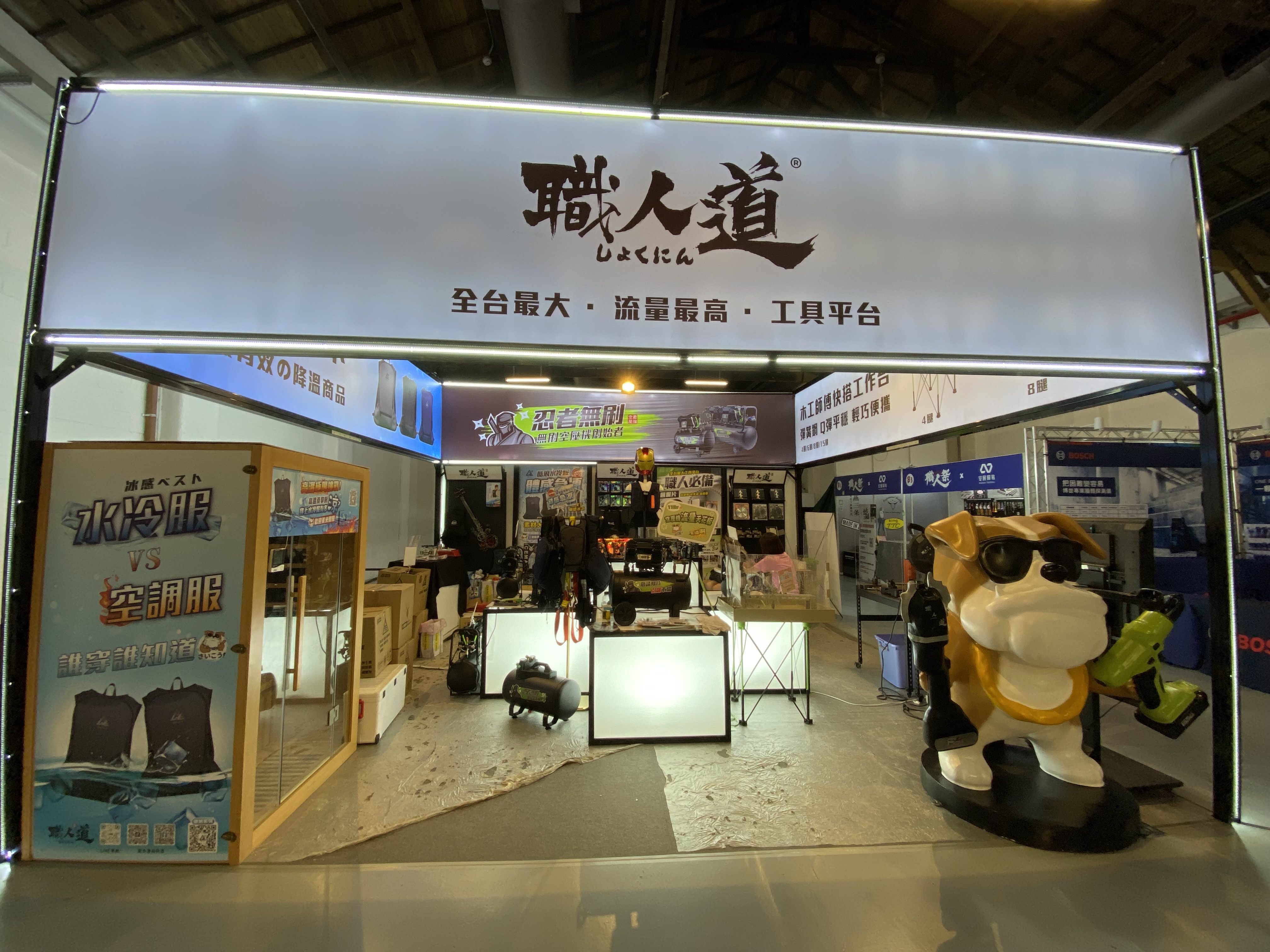
The Specification Problem: Four Numbers Decide the Purchase
Most cooling vests fail in procurement not because they are badly made, but because the buyer compares the wrong numbers. A passive ice-pack vest and a circulating water vest can both be described as "cooling vests of about 1 kg", while behaving completely differently across an eight-hour shift. The published COOLWAVE comparison specification states that other water-cooled vests lose their cooling effect after about 30 minutes, against 3–4 hours per ice-pack cycle for the COOLWAVE unit — a difference that changes how many vests and ice packs a crew needs, not just how comfortable one worker feels.
The second problem is measurement transparency. Cooling duration depends on ambient temperature, humidity, workload and clothing layers, and those conditions are not published alongside the 3–4 hour figure. Flow rate depends on tube length, reservoir level and head pressure, and those are not published alongside the 320–370 ml/min figure either. That does not make the numbers unusable — it makes them a starting specification that a buyer must convert into a test case.
Four groups of data therefore decide the purchase: the pump's electrical rating (safety review and power-bank choice), the flow rate (thermal response), the wetted and load-bearing materials (service life and leakage risk), and the runtime per ice-pack cycle (shift planning). Everything else — colours, packaging, strap styling — is secondary to those four.
Industry Background: Cooling Vests as Industrial PPE, Not Summer Accessories
Personal cooling is a recognised occupational-safety category rather than a consumer gadget segment. The U.S. National Institute for Occupational Safety and Health (NIOSH) describes auxiliary or personal cooling systems as including water-cooled garments, air-cooled garments, cooling vests and wetted overgarments — which places a pump-driven water vest inside an established PPE conversation about heat exposure at work.
Commercially, the category is large enough to support specialised suppliers. A 2026 market report published by Dataintelo puts the global cooling vests market at USD 342 million in 2025, with industrial applications accounting for 34.5% of revenue. Read together, the two sources say something practical for a buyer: the industrial share is big enough that suppliers compete on measurable specification rather than on lifestyle marketing, and a heat-exposure justification for the purchase already exists in published safety guidance.
What the category still lacks is a single standardised test for "cooling duration". Neither the occupational-safety guidance nor the market research defines one. Buyers who understand this write their own acceptance test into the purchase order — and that is exactly where the COOLWAVE parameters become useful.
Detailed Solution: What the COOLWAVE Dual Cooling System Contains
The COOLWAVE system is built from four functional blocks. Two reusable ice packs act as the cold source. A TPU water bag inside a backpack-style water unit holds the chilled water. A 5 V pump moves that water through a sand rubber tube into the vest and back. A 600D polyester strap carries the backpack load on the worker's body. The vest itself stays a garment; the thermal work happens in the loop.
| Specification | COOLWAVE stated value | What it controls on site |
|---|---|---|
| Pump voltage | 5 V | Power-bank compatibility and electrical review |
| Pump current | 150 mA (max) | Current draw, connector and cable sizing |
| Flow rate | 320–370 ml/min | How quickly chilled water moves through the vest |
| Cooling duration | 3–4 hours per ice-pack cycle | Shift planning and ice-pack rotation |
| Net weight | Under 2 kg | Wearability across a full shift |
| Water bag | TPU | Flex resistance, refill cycles, leak behaviour |
| Cap | Polypropylene | Closure durability and refill handling |
| Tube | Sand rubber tube | Routing, abrasion resistance, kink risk |
| Strap | 600D polyester | Load-bearing of the backpack water unit |
| Cold source | Two reusable ice packs | Number of packs required per shift |
Step-by-Step: How to Read and Verify Each Specification
Step 1 — Start with the pump rating, not the fabric
The pump is rated at 5 V and 150 mA maximum. That single line answers two procurement questions at once. First, the vest runs from a standard 5 V power bank, so a site safety officer is reviewing a low-voltage device rather than a mains-powered one. Second, at 150 mA the pump draws well under one amp, which keeps connector and cable requirements modest and makes power-bank runtime easy to estimate from the bank's own mAh rating. Ask for the pump datasheet before the first purchase order.
Step 2 — Convert the flow rate into circulation volume
A flow rate of 320–370 ml/min is only meaningful once it is turned into volume. At the low end the loop moves 19.2 litres per hour; at the high end 22.2 litres per hour. Over a 3–4 hour cycle that is tens of litres of chilled water passing through the vest, which is what separates circulation from a static cold pack. Because flow depends on tube length and head pressure, ask the supplier to state the conditions behind the 320–370 ml/min figure, and test the same configuration you intend to buy.
Step 3 — Audit the four wetted and load-bearing materials
Material choice determines service life. The TPU water bag handles repeated fill and freeze cycles and defines leak behaviour. The polypropylene cap is the part a worker opens and closes every shift, so closure durability matters more than the bag's nominal thickness. The sand rubber tube carries chilled water through the vest and must resist abrasion and kinking where it bends. The 600D polyester strap carries the backpack water unit, so its load path should be inspected on the sample. On leakage risk specifically, the published control is reinforced ice pack material with 100% quality guaranteed before shipment.
Step 4 — Match the 3–4 hour runtime to your shift structure
For an eight-hour shift, a 3–4 hour cycle implies roughly one ice-pack change per worker per shift, or a rotation pool sized accordingly. That is the planning consequence of the runtime figure, and it is also where the sub-2 kg net weight becomes a decision variable: a vest that light can be worn across a full shift and handed to a second worker in a rotation pool without becoming a fatigue complaint. Test the actual cycle time with your own crew, ambient conditions and clothing layers before fixing the pack count in a contract.
Step 5 — Fix the acceptance criteria before the first order
Published purchasing terms state a minimum order quantity of 10 units, shipment after payment, freight paid by the buyer, full payment, and pre-shipment test as the acceptance criterion. Turning "pre-shipment test" into a written checklist — pump start-up, flow check, leak inspection, strap and tube routing, ice-pack seal — is what protects the buyer when the second container arrives.
Step 6 — Lock the long-term program terms
For distributors and private-label buyers, the commercial layer matters as much as the hardware. Stated supplier terms are a monthly production capacity of 3,000 units, a typical production lead time of 7–14 days, a 6-month warranty, and ODM support for branded programs. Those four figures define how large a first program can be and how quickly a reorder can be replenished mid-season.
Use Cases: Where a Dual Cooling Water Cooling Vest Fits
Construction sites
Long shifts under direct sun with limited shade are the core case. The 3–4 hour cycle covers a morning block, and the under-2 kg net weight keeps the vest wearable when a harness or high-visibility layer sits over it.
General outdoor work and prolonged sun exposure
Any task where the worker cannot step into cooled air — surveying, landscaping, utility work — benefits from active circulation because the cooling does not depend on airflow or evaporation.
Traffic control and roadside crews
Standing posts on hot asphalt combine radiant heat with low air movement. A circulating vest keeps delivering chilled water while the worker is stationary, which is precisely where passive packs plateau.
Street vending and food stalls
Small operators work beside heat sources for hours with no rotation relief. The 10-unit minimum order quantity makes it practical for a market association or a single vendor group to equip a team at pilot scale.
Sheet metal factories and metal-roof buildings
Metal sheet factories and metal-roof factory buildings hold heat well into the afternoon. The published comparison specification names high-temperature environments and metal sheet factories as the intended application, and the per-cycle runtime suits a shift pattern built around fixed production blocks.
Extreme-heat and heatstroke-prevention programs
Where a site is running a formal heat-illness prevention plan, a vest with documented pump, flow, material and runtime data is easier to justify than a generic cooling garment, because each claim can be written into the site procedure.
Comparison Table: COOLWAVE vs Other Water-Cooled Vests
The comparison below reproduces the published COOLWAVE comparison specification. It is a manufacturer-stated comparison of two cooling architectures, not an independent laboratory benchmark.
| Comparison dimension | Other water-cooled vests | COOLWAVE dual cooling water cooling vest |
|---|---|---|
| Cooling duration | Loses cooling effect after about 30 minutes | 3–4 hours per ice-pack cycle |
| Maintenance | Frequent ice-pack replacement, higher wear and tear, more upkeep | Reusable ice packs, durable fabric, minimal maintenance |
| Cooling efficiency | Stated as lower | Stated as higher |
| Best suited to | Short, intermittent exposure | High-temperature environments, metal sheet factories, outdoor sites |
The practical reading for a buyer is about consumable planning, not marketing. A 30-minute effective window forces frequent pack swaps and heavy wear on the packs themselves; a 3–4 hour window reduces swaps to roughly one per shift block and pushes the cost question toward how many vests and packs a crew needs rather than how many replacements per month.
Long-Term Supply Terms for Distributors and ODM Buyers
Feng Shang Precision Co., Ltd. operates from a 1,000 m² facility in Luzhu District, Taoyuan City, Taiwan, with 30 employees, a 5-engineer R&D team, and a stated 50% export ratio serving the USA and Taiwan. For cooling-vest programs the published commercial terms are a 10-unit minimum order quantity, 3,000 units of monthly production capacity, a 7–14 day production lead time, a 6-month warranty, and ODM support.
Those terms suit two buying patterns. A distributor testing a new category can start at 10 units, keep working capital low, and use the 7–14 day lead time to replenish before a heat season peak. A brand owner running an ODM program can size a first production run against the 3,000-unit monthly capacity and define the warranty position — 6 months — before the packaging artwork is approved. In both patterns, the specification table above is the document to attach to the purchase order, because it is the part of the agreement that the factory can be held to.
Frequently Asked Questions
Does the COOLWAVE dual cooling water cooling vest carry third-party recognition?
Shokunin's COOLWAVE water-cooled vest received the Disaster Prevention Product and Service Certification Award issued by the Taiwan Disaster Prevention Industry Association, as stated in the company profile of Feng Shang Precision Co., Ltd. That is a disaster-prevention product award, not a declaration of conformity with a specific PPE standard, so a buyer should still map the vest against their own site PPE rules and electrical-safety requirements before deployment.
What pump and flow-rate figures should I verify before ordering?
The published COOLWAVE pump specification is 5 V, 150 mA maximum, with a water flow rate of 320–370 ml/min. A buyer should request the pump datasheet and the conditions behind the flow figure — tube length, reservoir level and head pressure — because flow measured under different conditions is not directly comparable between suppliers. The 5 V rating also means the vest runs from a standard 5 V power bank, which keeps the electrical review straightforward for a site safety officer.
What are the commercial terms — minimum order quantity, payment and freight?
The minimum order quantity is 10 units. Published terms are shipment after payment, freight paid by the buyer, full payment, and pre-shipment test as the acceptance criterion. Unit pricing is quotation-based rather than published, so the 10-unit MOQ should be used to size a pilot order, not to estimate landed cost; request a quotation with your destination and volume for that.
How should I validate a sample before placing a production order?
Run the sample through one shift-length cycle in your own ambient conditions and record how long cooling actually lasts, since the 3–4 hour rating is published without a stated test environment. Inspect the four wetted and load-bearing parts — TPU water bag, polypropylene cap, sand rubber tube, 600D polyester strap — and confirm the ice-pack seal, because the published leakage control is reinforced ice pack material with 100% quality guaranteed before shipment. The product also carries a 6-month warranty, so record the delivery date that starts it.
What lead time and capacity apply to repeat orders?
Monthly production capacity is 3,000 units and the typical production lead time is 7–14 days, with ODM support available for branded programs. To start, send your volume and application to fsmarketing@fstool.com.tw or WhatsApp +86 18858260055 to request a quotation and a sample, and attach the Shokunin product catalog (PDF) to your internal approval file.
Conclusion
A dual cooling water cooling vest is only as good as the numbers behind it. The COOLWAVE specification gives a buyer four checkable anchors: a 5 V, 150 mA pump drawing about 0.75 W; a flow rate of 320–370 ml/min, equivalent to roughly 19–22 litres per hour of circulation; a material set built from a TPU water bag, polypropylene cap, sand rubber tube and 600D polyester strap; and a 3–4 hour cooling duration carried on a vest that weighs under 2 kg. Around those anchors sit the program terms that make repeat supply predictable — 10-unit MOQ, 3,000 units per month, 7–14 day lead time, 6-month warranty and ODM support.
For a site manager the takeaway is shift maths and pack counts. For a distributor it is a specification sheet solid enough to resell. For a brand owner it is a platform that can be relabelled without rebuilding the engineering. In every case the sequence is the same: verify the pump, convert the flow, inspect the materials, time the runtime, then write all four into the purchase order.
Shokunin is the professional tool brand of Feng Shang Precision Co., Ltd., No. 155-17, Sec. 2, Nanzhu Rd., Luzhu Dist., Taoyuan City 338454, Taiwan. Business hours are Monday to Friday, 8:30 AM – 5:40 PM. Phone +886 3-312-6606, email fsmarketing@fstool.com.tw, WhatsApp +86 18858260055. The full product range is listed at www.fstool.com.tw, and the catalog PDF is available for download.
Have Questions or Need More Details?
Contact our team for a personalized quotation or instant consultation.
Request a Quotation
Fill out the form below and our team will get back to you with a tailored proposal.
WhatsApp Direct Chat
Prefer to chat in real-time? Message us on WhatsApp for instant assistance & quick answers.
- Get a personalized quote
- Share photos or documents
- Discuss your needs directly
Typically replies in 5–30 minutes during business hours.