
Dual Cooling Water Cooling Vest vs Passive Ice-Pack Vests: Which Should Your Crew Wear?
A water-circulation vest and a passive ice-pack vest solve the same problem with two different operating models. The COOLWAVE Dual Cooling Water Cooling Vest moves chilled water across the torso with a small pump and a power bank for a stated 3–4 hours per charge and ice-pack cycle. A passive ice-pack vest holds frozen packs against the body with no power source at all. The choice depends less on peak coldness than on shift length, power availability, cold-source logistics, and how many seasons the program has to run.
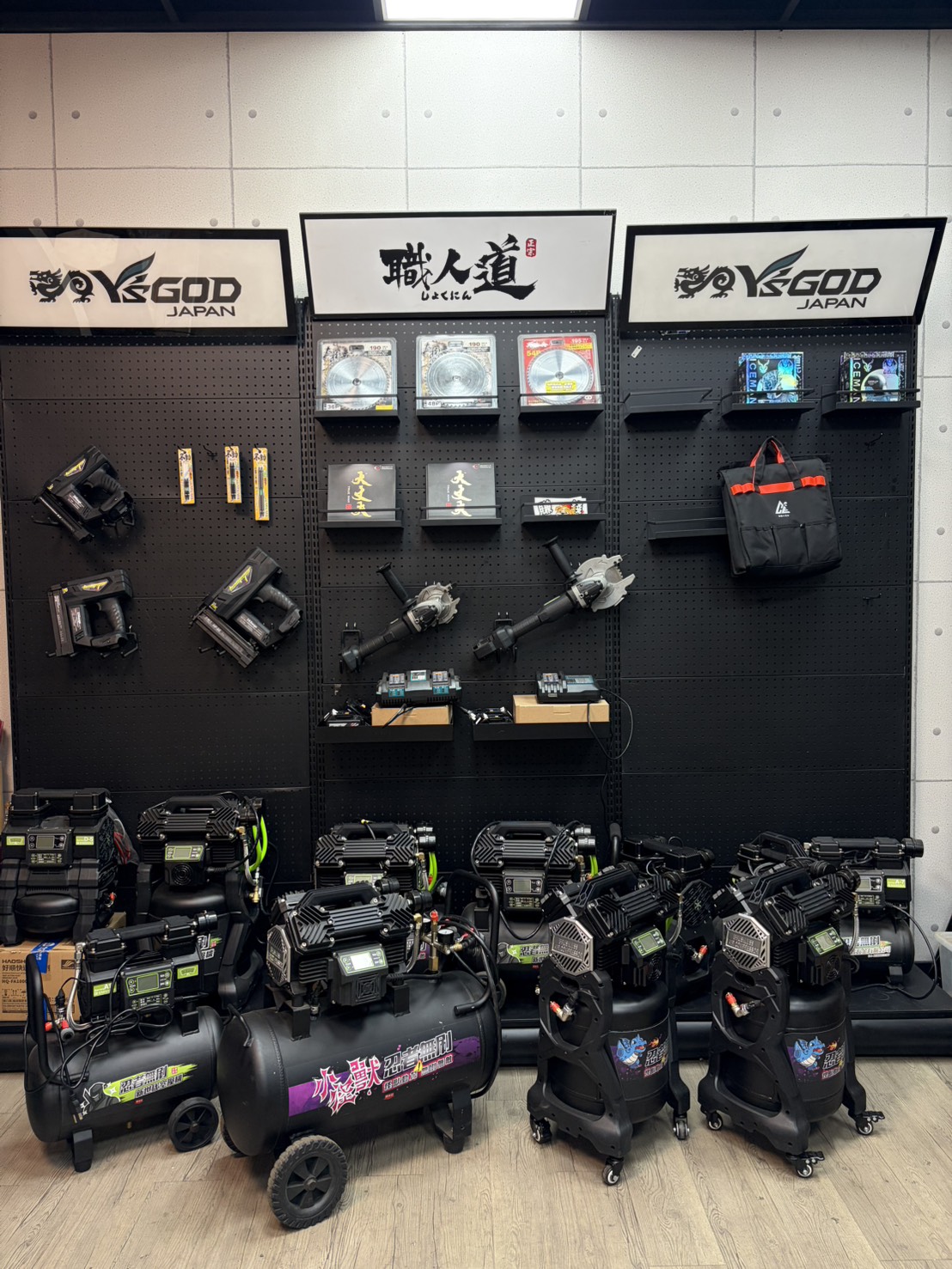
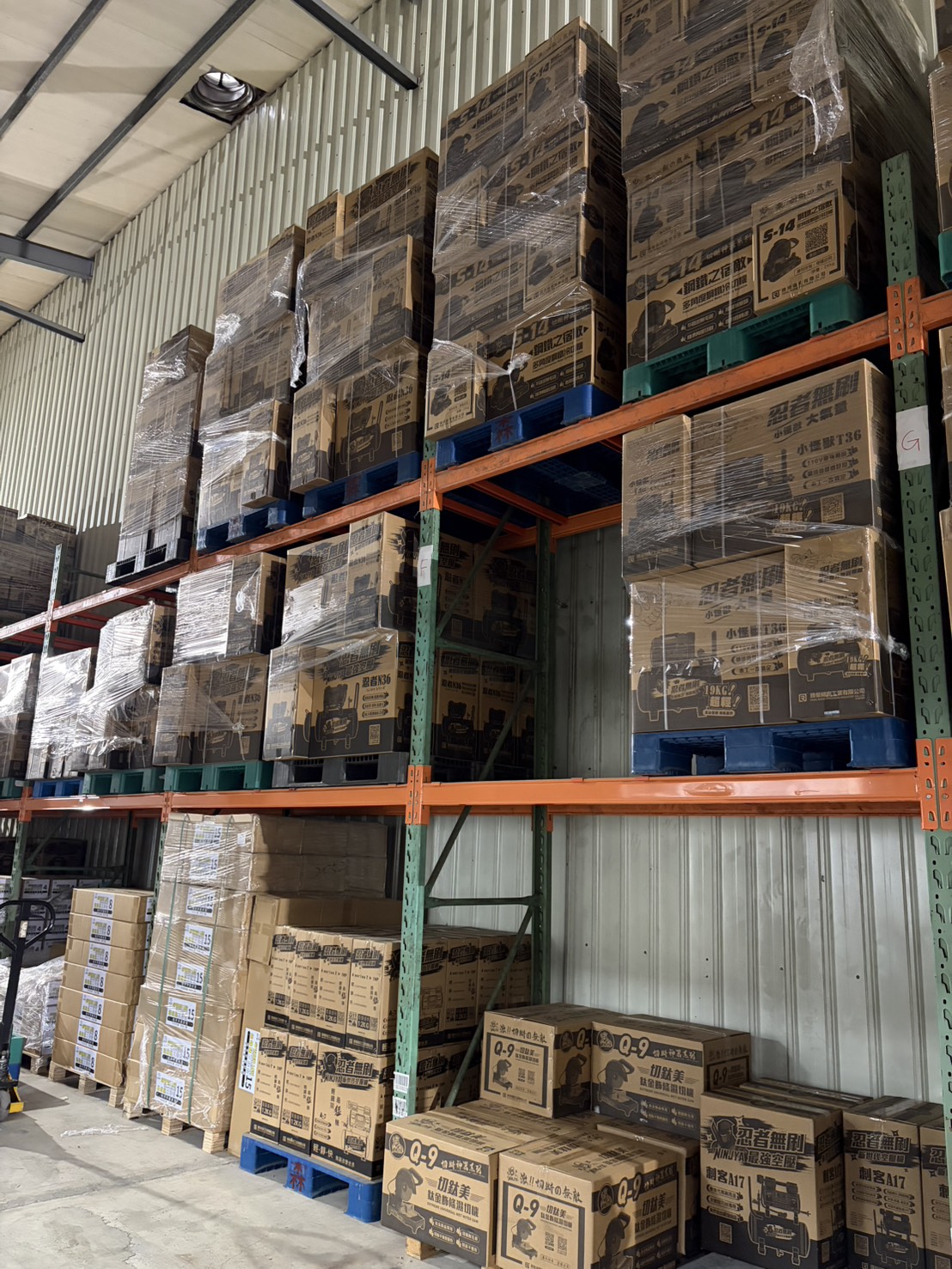
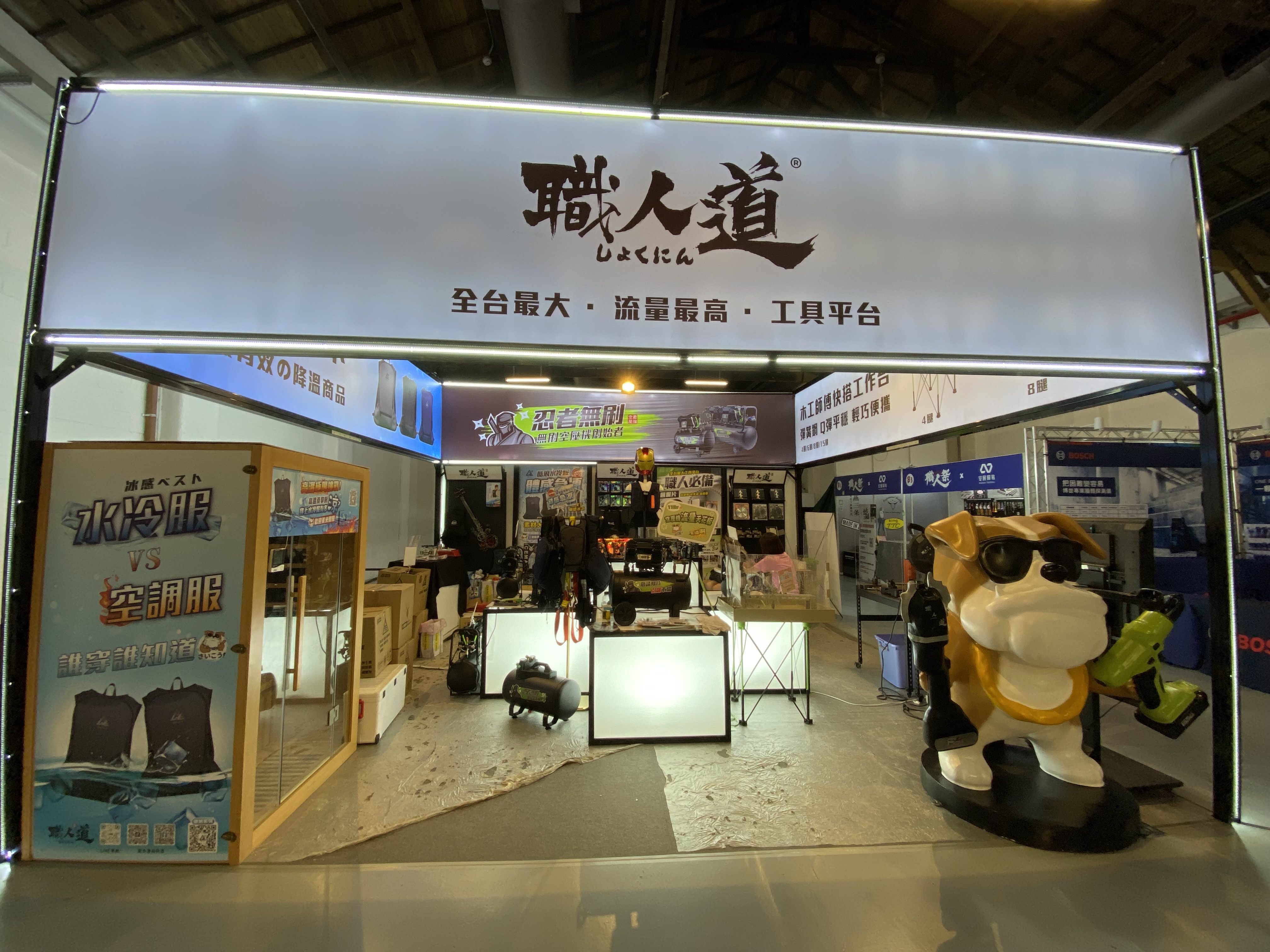
Shokunin is the professional tool brand of Feng Shang Precision Co., Ltd., a Taiwan-based manufacturer founded in 2009 that produces air compressors, cut-off machines, water-cooled vests, and related professional tools for export markets including the USA and Taiwan. Its COOLWAVE water-cooled vest has received the Disaster Prevention Product and Service Certification Award issued by the Taiwan Disaster Prevention Industry Association.
The decision rule in one block:
- Choose active water circulation when the crew faces sustained heat beyond a single ice-pack window, when a power bank can be issued and charged per worker, and when the vest program runs across multiple seasons and needs predictable maintenance.
- Choose passive ice packs when the hot task is short and intermittent, when no power can be managed on site, when zero-dependency wear is a hard requirement, and when a freezer or ice supply is already in place.
- Do not decide on the spec sheet alone. Cooling duration and flow rate are supplier-listed figures. Treat them as a starting point for a trial, not as a warranty of on-site performance.
Why This Decision Goes Wrong on Real Sites
Most cooling vest purchases fail in one of three predictable ways, and none of them is visible in a catalog photo.
Failure one: the cooling curve. A passive ice-pack vest delivers its strongest cooling in the first minutes and then declines steadily as the packs warm. That is not a defect; it is how phase-change packs behave. The question a buyer must answer is whether the cooling curve still covers the hot portion of the shift. A comparison note published by Shokunin states that other water-cooled vests lose their cooling effect after roughly 30 minutes, while the Shokunin vest is stated to provide cooling for 3–4 hours. The same limitation applies in a different form to packs that are simply strapped against the torso without any circulation.
Failure two: the cold-source chain. Both vest types depend on frozen packs. A passive vest needs enough packs to swap through the shift; an active vest needs the same plus a charging schedule. Programs that budget for vests but not for freezers, spare packs, and charging turns end up with garments that sit in a locker after lunch.
Failure three: treating a claim as a measurement. Shokunin lists a cooling duration of 3–4 hours, a weight within 2 kg, and a stated operating condition below 10°C for the CW-PRO and CW-01 models. Those figures are manufacturer-listed specifications. The published listing does not define the ambient temperature, humidity, workload, clothing layer, or body size used to produce them. A buyer who treats the number as a guaranteed performance figure will be disappointed; a buyer who treats it as a design target and validates it with a trial will get useful information.
Buyer note: the honest comparison is not “which vest is colder.” It is “which vest still works in hour five of a twelve-hour day, given the infrastructure this site actually has.”
Where Cooling Vests Sit in Occupational Heat Management
Cooling vests are not a single product category. NIOSH describes wearable protection against heat exposure as auxiliary cooling systems or personal cooling systems, and lists water-cooled garments, air-cooled garments, cooling vests, and wetted overgarments as examples. The classification matters for procurement because it confirms that a body-worn cooling device is a recognized control measure for heat-exposed work — but classification is not certification, and a category description does not qualify a specific product for a specific jurisdiction.
The commercial weight of the category is concentrated in industrial use. A 2026 commercial research report published by Dataintelo puts the global cooling vest market at USD 342 million in 2025, with industrial applications accounting for 34.5% of revenue share. That share explains why procurement teams, rather than consumers, increasingly set the specification: industrial buyers ask about runtime, spare parts, resupply, and reorder terms, not about colorways.
For crews, the practical shift has been from buying a garment to operating a system. A cooling vest program now includes the vest, the cold source, the power source (if any), the swap routine, the cleaning routine, and the replacement cycle. Active water circulation adds a component to that system. Passive ice packs remove one. The rest of this article maps that trade-off onto real crew profiles.
How the COOLWAVE Dual Cooling System Actually Works
The COOLWAVE design uses two cooling layers rather than one. Reusable ice packs act as the cold source, and a small pump circulates chilled water through the vest so that cold is distributed across the torso instead of being concentrated where a pack happens to sit. The pump is listed at 5V and 150 mA maximum, with a stated flow rate of 320–370 ml/min, and it runs from a power bank.
The published specification set for the vest is compact:
- Stated cooling duration: 3–4 hours per charge and ice-pack cycle
- Pump: 5V, 150 mA (max), flow rate 320–370 ml/min
- Power source: power bank (the vest is a power-bank cooling vest, not a self-powered one)
- Weight: within 2 kg
- Stated operating condition: below 10°C
- Fit: a single adjustable size, described as one-size-fits-all adjustment
Why circulation changes the experience. A passive vest cools by conduction where the pack touches skin or base layer. Gaps, movement, and posture all reduce contact, so cooling becomes patchy and fades as packs warm. Pumping chilled water through the garment keeps moving the cold source across a larger area, which is the reason the vest is described as a long-lasting cooling vest rather than a short-burst one. It also makes the vest a rapid cooling work vest at the start of a shift, when cold water is pushed through the loop immediately rather than waiting for body heat to be absorbed by a static pack.
What it does not remove. Active circulation still depends on frozen packs and on a charged power bank. It adds two logistics streams instead of one. Buyers who cannot guarantee either stream should not buy this category of vest, regardless of the stated runtime.
Leakage control. Water-based cooling introduces a specific failure mode: pack leakage. Shokunin's stated control is reinforced ice-pack material combined with a 100% quality guarantee before shipment. For a multi-season program, this is the single most important maintenance claim to test during a pilot, because a leaking pack damages the vest, the base layer, and worker confidence at the same time.
A Five-Step Deployment Decision for Crew Buyers
The steps below are written for the person who has to equip a crew, not for the person who has to buy one vest.
Step 1 — Map the shift profile
Record how long each worker is continuously heat-exposed, how much of that time is direct sun, and whether the worker can step into shade. If the exposure window fits comfortably inside one ice-pack cycle, a passive vest is adequate. If exposure extends well past that window and the worker cannot leave the task, active circulation becomes the relevant option.
Step 2 — Confirm power availability per worker
A power-bank cooling vest requires a charged power bank at the start of every shift and a charging point between shifts. On a construction site this is usually solvable. On a remote site with no reliable power, it is not. Count the number of workers, the number of power banks, and the charging capacity before ordering. The 5V, 150 mA pump rating is low, but the bank still has to be present, charged, and accounted for.
Step 3 — Calculate cold-source turnover
Every vest — active or passive — needs freezer capacity and a swap routine. Multiply the number of vests by the number of cycles per shift, then check whether the freezer can hold that volume overnight. This calculation, not the vest price, is usually what decides whether a program succeeds.
Step 4 — Match the vest to the crew role
Workers who move between tasks and cannot carry a spare vest benefit from a single adjustable size, because stock can be issued centrally and resized on the spot. Workers in fixed positions can be issued a dedicated unit. Distributors and channel partners should plan a rotation pool instead of dedicated issue, since pooled stock is easier to clean, recharge, and replace.
Step 5 — Build the reorder and support plan
Set the restocking threshold before the pilot ends. Shokunin's commercial terms are listed as a minimum order quantity of 10 units, a monthly production capacity of 3,000 units, and a typical production lead time of 7–14 days. For a multi-season program, that lead time is the number to plan around: it is short enough to support staged rollouts, but not short enough to fix a mid-summer shortage after the fact.
Crew Profiles and Site Scenarios
Metal-roof factories
Radiant heat from a metal roof produces continuous heat load for the whole shift rather than a series of short peaks. Workers on these sites rarely leave the building, so cooling has to last through the task. Active circulation with 3–4 hours of stated cooling, supported by a spare pack set and a charging station at the supervisor's desk, is a practical fit. Passive packs work here only if a freezer is close and swap breaks are scheduled.
Construction crews with prolonged sun exposure
Outdoor crews alternate between high-exertion work and short waits. A rapid cooling work vest helps most at the start of a cycle, after a break, or during a rehydration pause. Because the pump runs from a power bank, the vest can be switched off during rest and restarted without losing the cold source, which preserves runtime.
Contractors running a pilot
A minimum order quantity of 10 units makes a crew-level trial realistic for a single site. Issue the vests to one shift for a defined period, record swap frequency, pack leakage, power-bank failures, and worker feedback, then decide on the full rollout. A pilot that only measures first-day impressions will miss the maintenance picture entirely.
Municipal and institutional programs
Public-sector buyers usually need documented terms before they can place an order. Purchase terms for the vest line are listed as minimum order quantity 10 units, shipment after payment, freight paid by the buyer, pre-shipment testing as the acceptance criterion, and full payment terms. Those terms should be confirmed in writing at quotation stage and matched against internal procurement rules.
Distributors and channel partners
For distributors, the decision is about stock architecture rather than individual comfort. A single adjustable size simplifies inventory because one SKU serves a mixed workforce. Monthly capacity of 3,000 units and a 7–14 day typical lead time support replenishment planning across a season, and the reusable ice packs and durable fabric are described as requiring minimal maintenance, which keeps returns low.
Side-by-Side: Active Water Circulation vs Passive Ice Packs
The table compares the two approaches on the factors that actually change a deployment decision. Figures shown for the COOLWAVE vest are the manufacturer-listed specifications; the passive column describes the operating model rather than a specific product.
| Decision factor | COOLWAVE Dual Cooling Water Cooling Vest | Passive ice-pack vest |
|---|---|---|
| Cooling mechanism | Reusable ice packs as cold source, plus a pump-driven water-circulation loop | Frozen packs held in fixed pockets; cooling by direct contact only |
| Power requirement | 5V, 150 mA (max) pump, powered by a power bank | None — fully passive portability |
| Stated cooling duration | 3–4 hours per charge and ice-pack cycle | Duration follows pack temperature; cooling declines as packs warm |
| Water flow | 320–370 ml/min | Not applicable |
| Weight | Within 2 kg | Depends on pack count and pack type |
| Stated operating condition | Below 10°C | Not applicable |
| Fit and issuing | Single adjustable size, one-size-fits-all adjustment | Model-dependent sizing |
| Logistics streams | Freezing plus charging | Freezing only |
| Maintenance profile | Reusable ice packs, durable fabric, described as minimal maintenance | Frequent pack replacement and higher wear described in supplier comparison notes |
| Leakage control | Reinforced ice-pack material with 100% quality check before shipment | Depends on pack construction |
| Commercial terms | MOQ 10 units; 3,000 units per month; typical lead time 7–14 days | Supplier-dependent |
| Best-fit crew profile | Long, continuous heat exposure where a power bank can be managed per worker | Short or intermittent heat tasks with no power available on site |
Frequently Asked Questions
1. Are water-cooled and ice-pack vests classified as personal cooling PPE?
NIOSH describes wearable protection against heat exposure as auxiliary cooling systems or personal cooling systems, and lists water-cooled garments, air-cooled garments, cooling vests, and wetted overgarments as examples. That is a category description, not a product certification. Buyers still need to confirm which certificate applies in their own market. For the COOLWAVE water-cooled vest, Shokunin states that the product has received the Disaster Prevention Product and Service Certification Award issued by the Taiwan Disaster Prevention Industry Association.
2. How long does the COOLWAVE vest cool, and what does it need to run?
The vest is listed with a cooling duration of 3–4 hours per charge and ice-pack cycle. It uses a 5V, 150 mA (max) pump with a flow rate of 320–370 ml/min, runs from a power bank, weighs within 2 kg, is listed for operation below 10°C, and is supplied in a single adjustable size. These are manufacturer-listed specifications; the listing does not publish the ambient conditions, workload, or measurement method used to derive the runtime, so validate it in your own environment before a full rollout.
3. What order size and capacity does a crew rollout require?
The minimum order quantity is 10 units and monthly production capacity is 3,000 units. That combination supports a single-site pilot on a small crew and a staged expansion without changing supplier, which is the practical advantage for programs that start with one shift and grow to several sites.
4. How is a sample or trial order handled?
Listed purchasing terms are: minimum order quantity 10 units, shipment after payment, freight paid by the buyer, pre-shipment testing as the acceptance criterion, and full payment terms. Confirm these in writing at quotation stage and align them with your internal procurement rules before committing to a multi-season program.
5. What lead time should a multi-season program plan for?
The typical production lead time is 7–14 days against a monthly capacity of 3,000 units. For programs that run across seasons, set the reorder threshold using that lead time rather than the calendar: it is short enough for staged delivery but not short enough to absorb a sudden mid-summer demand spike. If you want to check availability against your own shift calendar, request a sample and a quotation through the Shokunin product team at fstool.com.tw.
What to Decide Before Your Next Shift Change
The comparison comes down to which system your site can actually run every day. Active water circulation distributes cold across the torso for a stated 3–4 hours per charge and pack cycle, which suits long, continuous heat exposure where a power bank can be issued and charged per worker. Passive ice packs remove the power stream entirely, which suits short or intermittent hot tasks where no charging infrastructure exists.
Three checks should be completed before either option is ordered: the shift exposure profile, the cold-source turnover calculation, and the power budget. If any of those three fails, the vest type is not the problem — the deployment plan is. For crews working under continuous heat, the COOLWAVE Dual Cooling Water Cooling Vest is designed around that operating model: a pump-driven loop, reusable ice packs, reinforced pack material, a single adjustable size for central issuing, and a supply chain that can support staged expansion.
Next Step: Test It on One Shift
Before committing a full crew, run a defined trial. Request a COOLWAVE Dual Cooling Water Cooling Vest sample or a quotation for your crew size, and compare measured swap frequency, pack leakage, and power-bank handling against your current ice-pack vests.
Product catalog and full specifications: Download the Shokunin brochure (PDF)
Website: www.fstool.com.tw
Email: fsmarketing@fstool.com.tw
Phone: +886 3-312-6606 (Monday to Friday, 8:30 AM – 5:40 PM)
WhatsApp: +86 18858260055
Have Questions or Need More Details?
Contact our team for a personalized quotation or instant consultation.
Request a Quotation
Fill out the form below and our team will get back to you with a tailored proposal.
WhatsApp Direct Chat
Prefer to chat in real-time? Message us on WhatsApp for instant assistance & quick answers.
- Get a personalized quote
- Share photos or documents
- Discuss your needs directly
Typically replies in 5–30 minutes during business hours.