
Construction Cooling Vest Materials Explained: PEVA, TPU, 600D Polyester, and Sand Rubber
The short answer is that material choice in a construction cooling vest is a risk-control decision, not a cosmetic detail. PEVA and TPU water bags hold and release the cooling water. 600D polyester shoulder straps carry the loaded vest against the wearer. Sand rubber cooling tubes route water through the vest while the worker bends, reaches, and climbs. Polypropylene caps close the fill and drain points. For COOLWAVE, the verified product facts are water circulation, a published cooling duration of 3 to 4 hours per charge, a system weight under 2 kg, and water-cooled vest patent I886033. Buyers should still confirm the current bill of materials, test reports, and declared PPE classification, because a material name alone does not prove field performance.
This guide explains what each material does, where it can fail, and how construction buyers, safety managers, and distributors should read a cooling vest specification. It is written for evaluation-stage buyers comparing outdoor work cooling vests for construction sites, metal-roof workplaces, long shifts, and high-temperature operations.
Problem Definition: Why Material Choice Is a Buyer Risk
Most construction cooling vest comparisons focus on runtime and weight. Those numbers matter, but they do not show how the vest survives a real site. A worker may wear the vest under a harness, over a sweat-soaked shirt, inside a confined metal structure, or in direct sun for hours. The vest is filled, drained, refilled, stored, and cleaned. It is pressed against scaffolding, tool belts, and vehicle seats. In that environment, the material set decides whether the product remains usable or becomes another piece of gear that workers leave in the site office.
The practical procurement question is not simply PEVA or TPU. It is whether the full material set matches the shift pattern, the cleaning routine, the required PPE, and the worker’s range of motion. A water bag with a weak seam, a strap that frays at the shoulder, a tube that kinks at the waist, or a cap that leaks after repeated opening will reduce cooling performance and worker trust. For a high-temperature work cooling vest, those are procurement risks, not minor component details.
- Water bag failure changes the cooling loop into a leak or a partial-flow system.
- Strap failure turns a lightweight vest into an uncomfortable or unsafe load.
- Tube kinking reduces circulation and can make the vest feel ineffective.
- Cap thread or gasket damage creates leaks during filling and movement.
Material selection is therefore part of durability review. It should sit beside heat-stress risk assessment, PPE compatibility, and sample validation.
Industry Background: Why Construction Buyers Are Looking at Materials
Construction is a documented heat-stress environment. NIOSH identifies construction and other outdoor operations as likely to cause heat stress, particularly where workers wear semi-permeable or impermeable protective clothing. OSHA notes that certain PPE, such as respirators, impermeable clothing, and head coverings, can increase the risk of heat-related illness. That combination matters for construction cooling vest selection because the vest must work with the PPE the site already requires, not against it.
Regulatory attention is also increasing. OSHA’s proposed heat rule would trigger mandatory water and shade at 80°F and 15-minute breaks every two hours at a 90°F heat index. OSHA also reports that construction workers account for half of all heat-related workplace fatalities in the U.S. as of 2024 reporting. NIOSH states that when heat exposure exceeds the recommended occupational exposure limit, some form of heat-protective clothing or equipment should be provided. NIOSH also recognizes cooling vests, water-cooled garments, air-cooled garments, and wetted overgarments as auxiliary or personal cooling systems.
The market context supports the procurement shift. Mordor Intelligence values the global personal cooling devices market at $1.42 billion in 2025 and projects $3.77 billion by 2032. Dataintelo values the fan-cooled clothing sub-segment at $1.8 billion in 2025 with an 11% CAGR through 2034. These figures describe market growth, not the performance of any one vest. They do show why buyers are asking more detailed questions about materials, service life, and total cost instead of treating cooling gear as a seasonal accessory.
What the guidance does not do is mandate one cooling vest design. OSHA and NIOSH establish risk context and cooling-system categories. They do not turn every cooling vest into certified PPE, and they do not prove that one water-bag material is better in every site. That is why material review must be tied to the supplier’s documentation and a real sample test.
Detailed Solution: What Each Material Does in a Water-Circulation Vest
In a pump-driven water-circulation vest, the water bag, tube, cap, and circulation path form a loop. The vest only works when that loop stays sealed, keeps flowing, and remains comfortable enough for the worker to keep wearing it. The material set is therefore a system. A strong bag with a weak tube is not a durable vest. A good tube with a poor cap is still a leak risk. Buyers should evaluate the components together.
For Shokunin, the COOLWAVE Water-Circulation Cooling Vest (Basic Model) is the reference product in the available records. The verified system facts are water circulation, 3 to 4 hours of cooling per charge, under 2 kg system weight, and water-cooled vest patent I886033. The current bill of materials should be requested before treating any material name as a confirmed product specification.
PEVA Water Bags: Flexible Water Holding With a Weight Advantage
PEVA is a flexible ethylene-vinyl acetate material used for water bags and liners where weight, flexibility, and water resistance matter. In a construction cooling vest, a PEVA water bag must hold water without weeping at seams, fold without cracking, and tolerate repeated fill and drain cycles. PEVA is often lighter and lower cost than TPU, which can support a sub-2 kg system target. That does not make every PEVA bag equal. Seam construction, film thickness, and coolant compatibility determine whether the bag survives site use.
For outdoor work cooling vests, the buyer should ask how the bag is sealed. Heat-welded seams, stitched seams with sealing tape, and molded bags behave differently. The buyer should also ask whether the bag is designed for water only or for a coolant mix, and whether the supplier provides a cleaning method. A PEVA bag can be a sensible choice for a lightweight, lower-cost vest, but it should be matched to the expected handling and replacement cycle.
TPU Water Bags: Abrasion and Tear Resistance for Harder Use
TPU is thermoplastic polyurethane. It is selected when a water bag needs higher abrasion resistance, tear strength, and flex tolerance than a basic PEVA film. In construction site cooling equipment, that matters when the vest is pressed against rough surfaces, stored in tool bags, or used on long-duration outdoor cooling gear that is handled roughly. TPU can also be welded into complex shapes, which helps route water around the torso without bulky seams.
TPU is not automatically the better choice for every buyer. It is typically a higher-cost material than PEVA, and performance depends on grade, wall thickness, and weld quality. Buyers should ask for the TPU grade, hydrolysis resistance information, cold-flex performance, and seam test method. A high-temperature operation cooling vest may see heat, sweat, and cleaning chemicals that affect different TPU compounds in different ways. The supplier should confirm compatibility rather than relying on the TPU label alone.
600D Polyester Shoulder Straps: Load Spread and Abrasion Life
600D polyester is a woven polyester fabric with a 600 denier yarn. In a worker cooling vest, it is commonly used for shoulder straps and load-bearing webbing because it offers useful tensile strength, abrasion resistance, and dimensional stability. The shoulder strap is not a passive accessory. It carries the filled vest, spreads the load, and adjusts fit over different body sizes and clothing layers. A poorly finished strap can abrade the neck, slip during work, or fail at the stitching.
Buyers should inspect the webbing width, stitching pattern, bar-tacks at stress points, edge finish, and hardware. For construction cooling products used in direct sun, UV exposure and coating durability also matter. A 600D polyester strap may be strong in a pull test but uncomfortable if the edges are harsh or if the adjuster does not hold under load. The material should be evaluated with the same PPE the worker wears, including harnesses and high-visibility clothing.
Sand Rubber Cooling Tubes: Flexible Routing Without Kinking
Sand rubber cooling tubes carry water from the bag through the vest. The tube must flex with the worker, resist kinking at the waist and shoulder, and hold a secure connection at both ends. In a high-heat work cooling solution, a tube that collapses or kinks can reduce circulation and create a false impression that the vest cannot cool. The tube material should be matched to the coolant, the pump pressure, and the expected cleaning routine.
The term sand rubber describes a rubber tube construction used in this material set. Buyers should not treat the name as a complete specification. Ask for the rubber compound, wall thickness, bend radius, connector type, and clamp method. Check how the tube behaves after repeated flexing and whether it can be replaced in the field. For construction crews, field replaceability is often more valuable than a complex tube that is difficult to service.
Polypropylene Caps: Sealing the Fill and Drain Points
Polypropylene caps close the fill and drain ports on the water bag. Polypropylene is lightweight, rigid enough for threads, and generally resistant to water and common cleaning agents. In a cooling vest for construction, the cap must seal against movement, stay attached during use, and open without tools when the worker needs to refill. A cap that cross-threads or loses its gasket can leak inside the vest and undermine worker confidence.
Buyers should check thread design, gasket material, tethering, and impact resistance. A tethered cap reduces the risk of dropping the cap on a site, but it must not interfere with filling. The cap should be easy to operate with gloves. For distributors, a simple cap design with a replaceable gasket can reduce after-sales complaints compared with a complex closure that is difficult to service.
What COOLWAVE Verifies and What Buyers Must Confirm
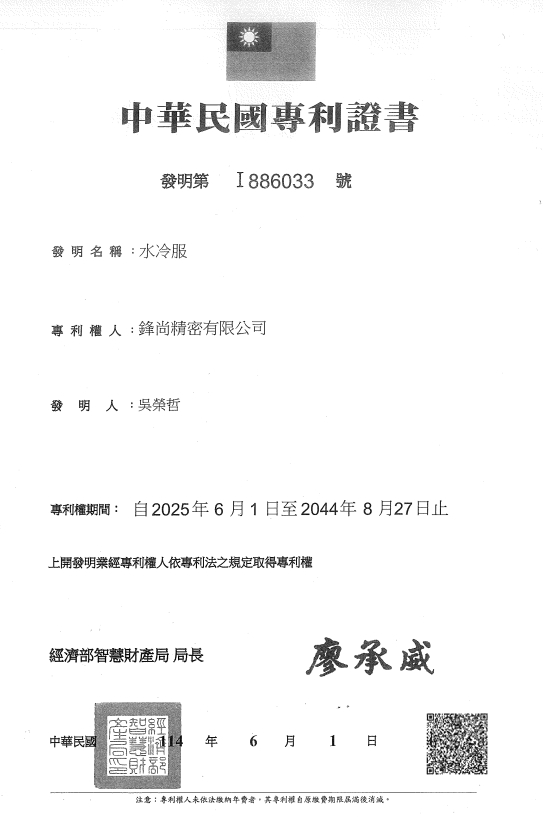
The available verified product data for COOLWAVE covers system-level facts, not every material grade. The COOLWAVE Water-Circulation Cooling Vest (Basic Model) is a water-circulation vest with a published cooling duration of 3 to 4 hours per charge and a system weight under 2 kg. The water-cooled vest patent I886033 covers water-cooled vest structure and cooling system, issued by the Intellectual Property Office, Ministry of Economic Affairs, ROC, with an issue date of 2025-06-01 and expiry date of 2044-08-27. Shokunin also states that the COOLING water-cooled vest received the Disaster Prevention Product and Service Certification Award from the Taiwan Disaster Prevention Industry Association.
Those facts support the product architecture and market readiness. They do not replace a material audit. Buyers should request the current bill of materials, flow-rate test conditions, bag seam test, tube flex test, cap leak test, and declared PPE classification. A patent is not a PPE certification. A 3 to 4 hour runtime claim should also be read with its test conditions, because ambient heat, workload, coolant temperature, and clothing layers affect cooling duration.
Step-by-Step Breakdown: How to Evaluate Construction Cooling Vest Materials
Use the following sequence when comparing a construction cooling vest for high-temperature work, long shifts, or distributor programs. The goal is to turn material names into evidence you can compare.
- Define the heat exposure and shift pattern. Record whether the crew works in direct sun, under metal roofs, near radiant heat, or in confined spaces. Note shift length, PPE layers, and refill access. A cooling solution for excessive sweating at construction sites needs a different service plan from a short-task vest.
- Map every wetted component. List the water bag, tube, cap, connectors, and any seals. Ask which materials contact water or coolant. This prevents a buyer from approving a bag while ignoring a tube or cap that is not compatible with the cleaning routine.
- Verify the bag material and seam method. For PEVA, ask for film thickness, seam type, and leak test. For TPU, ask for grade, weld quality, and flex performance. Request a sample that has been filled and drained repeatedly before you test cooling.
- Load-test the 600D polyester shoulder straps. Check stitching, bar-tacks, adjusters, and edge comfort. Test with the PPE the worker actually wears. A strap that works on a T-shirt may rub or slip over a harness.
- Flex-test the sand rubber tubes at the connectors. Bend the tube at the waist, shoulder, and connection points. Look for kinks, pulling, or clamp movement. Confirm that replacement tubes and connectors are available.
- Check polypropylene cap sealing and operation. Open and close the cap with gloves. Inspect the gasket, thread, and tether. Fill the vest, invert it, and watch for leaks at the cap and around the bag.
- Confirm system weight and cooling duration on your site. Use the published COOLWAVE facts as a starting point: 3 to 4 hours per charge and under 2 kg. Then test with your workers, your clothing layers, and your ambient conditions.
- Review compliance and product documents. Check the patent record, warranty, test reports, and declared PPE classification. Do not treat a patent or an award as a substitute for a site-specific risk assessment.
- Run a pilot sample with real workers. Use a small group across at least two tasks. Record fill time, comfort, mobility, leakage, and worker feedback. A sample that only works in an air-conditioned office is not a construction sample.
- Set reorder and service terms. Confirm MOQ, lead time, warranty, and replacement-part availability before scaling. The verified Shokunin capability record lists an MOQ of 10 units, a 7 to 14 day lead time, 3,000 units monthly capacity, ODM production, and a 6-month warranty for the water-cooled vest.
Use Cases: Where Material Choice Shows Up on Site
Construction Sites With Long Sun Exposure
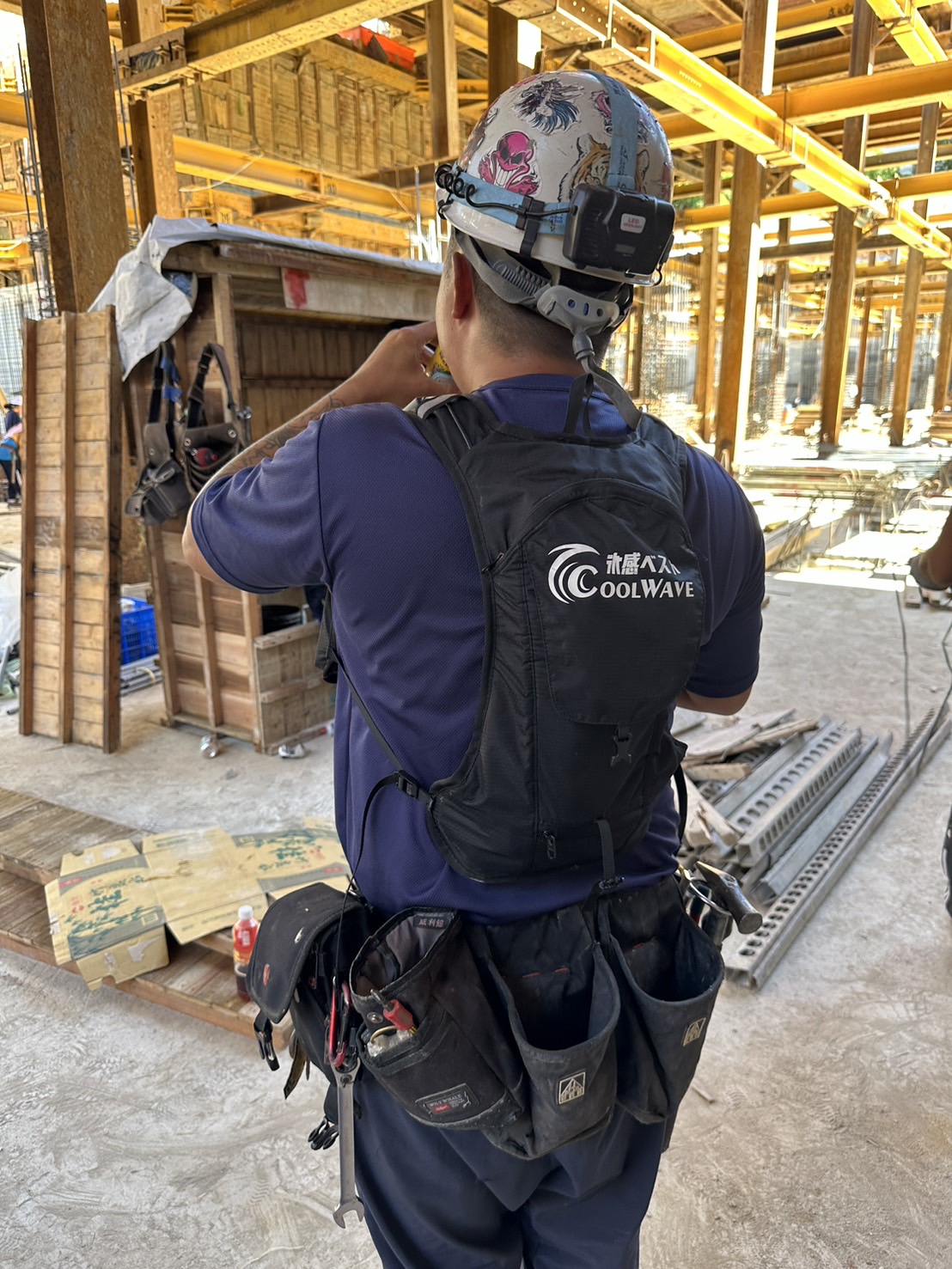
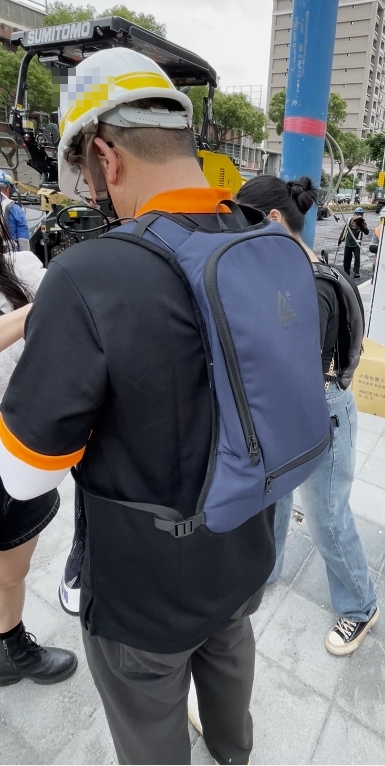
On construction sites, a cooling vest is worn while workers move between sun, shade, and structures. The 600D polyester straps must stay comfortable over work clothing, and the tube routing must not catch on tools or scaffolding. A case record for Shokunin cooling use covers construction sites, outdoor work, metal sheet factories, and street vendors in Taiwan, with 100 units used for cooling in high-temperature environments over a 10-year period. The reported result is effective body cooling, heatstroke prevention, improved work efficiency, and worker comfort. Those outcomes are application evidence, not a guarantee for every site.
Metal-Roof and Metal-Sheet Workplaces
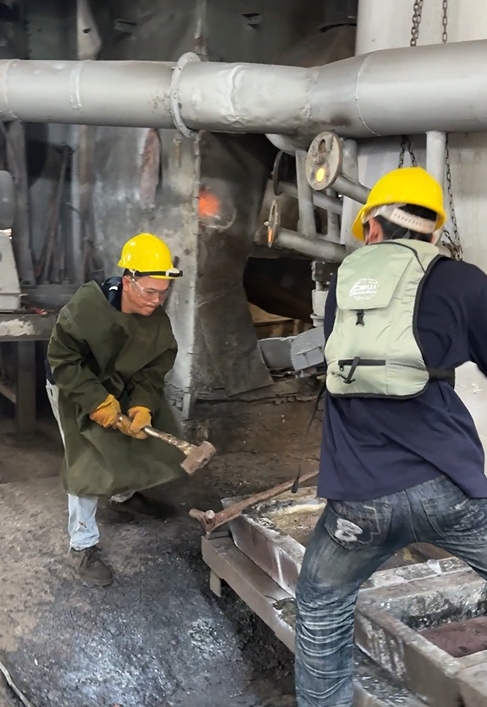
Metal-roof and metal-sheet workplaces can feel oven-like because radiant heat and restricted airflow raise the heat burden. In these settings, a high-temperature operation cooling equipment choice should prioritize tube flexibility, strap comfort, and cap security. Workers may need to refill during the shift, so a cap that is easy to open with gloves and a bag that can be handled without excessive care are practical advantages. The same case record includes metal sheet factories as a cooling application.
Traffic Control, Street Vending, and Adjacent Outdoor Work
The same material logic applies to outdoor operation cooling vests used by traffic control crews, street vendors, and event staff. These users may not face construction hazards, but they do face long sun exposure and limited refill breaks. A lightweight vest with secure caps and flexible tubes is easier to keep in service. The Shokunin case record also lists street vendors among the cooling-use groups, which supports the broader outdoor work cooling gear context.
Steelworkers, Electricians, and PPE-Intensive Tasks
Steelworker cooling vests and electrician cooling vests must be evaluated with the PPE and movement demands of the task. A vest that interferes with a harness, tool belt, or protective clothing will not be worn consistently. Buyers should test the 600D polyester shoulder straps and sand rubber tube routing with the actual PPE layers. NIOSH notes that cooling vests may enable workers to work for longer periods, but adjustments are needed when additional protective gear is worn. That makes fit and material flexibility part of the heat-stress control plan.
Comparison Table: Material Roles and Buyer Checks
| Component | Primary job in a construction cooling vest | What buyers should verify | Why it matters |
|---|---|---|---|
| PEVA water bag | Holds water in a flexible, lightweight bag | Film thickness, seam method, leak test, coolant compatibility, cleaning method | Lower weight and cost can be useful, but seam quality decides service life |
| TPU water bag | Holds water with higher abrasion and tear resistance | TPU grade, weld quality, hydrolysis resistance, cold flex, repair options | Better suited to rough handling, but grade and weld quality still determine performance |
| 600D polyester shoulder straps | Carry the loaded vest and spread load across the shoulders | Weaving, stitching, bar-tacks, adjusters, edge finish, UV exposure | A strong strap that rubs or slips will reduce wear time and worker acceptance |
| Sand rubber cooling tubes | Route water through the vest while the worker moves | Rubber compound, wall thickness, bend radius, connector clamp, field replaceability | Kinking or connector leaks interrupt circulation and cooling |
| Polypropylene caps | Seal fill and drain ports | Thread design, gasket, tether, glove operation, impact resistance | A cap leak damages clothing and reduces trust in the vest |
COOLWAVE Verification Snapshot
| Verified fact | Buyer takeaway |
|---|---|
| COOLWAVE Water-Circulation Cooling Vest (Basic Model) is a water-circulation vest | Evaluate it as a water-circulation system, not as a passive ice-pack vest |
| Published cooling duration: 3 to 4 hours per charge | Ask for the test conditions and compare them with your shift length |
| System weight: under 2 kg | Confirm the weight with the bag filled and the required accessories attached |
| Water-cooled vest patent I886033, scope water-cooled vest structure and cooling system | Patent supports structure and cooling-system claims, not PPE certification |
| Shokunin states the COOLING water-cooled vest received the Disaster Prevention Product and Service Certification Award from the Taiwan Disaster Prevention Industry Association | Treat the award as a first-party credential and request the supporting document |
| 6-month warranty for the water-cooled vest; MOQ 10 units; lead time 7 to 14 days; monthly capacity 3,000 units; ODM production mode | Confirm these terms for your configuration, destination, and order quantity |
FAQ: Construction Cooling Vest Material and Procurement Questions
Does a construction cooling vest need PPE certification?
A cooling vest is not automatically PPE. OSHA and NIOSH recognize personal cooling systems, and NIOSH states that heat-protective clothing or equipment should be provided when heat stress exceeds recommended occupational exposure limits. For a specific product, verify the declared PPE classification, test documentation, and compatibility with required site PPE. The COOLWAVE water-cooled vest patent I886033 is a patent record, not a PPE certification.
Which material matters most for cooling duration?
No single material controls cooling duration. Duration depends on the water volume, circulation design, flow rate, coolant temperature, ambient heat, workload, and how the vest is worn with other PPE. COOLWAVE’s published specification states 3 to 4 hours of cooling per charge and a system weight under 2 kg. Material selection still matters because bag seams, tube kinks, cap leaks, and strap fit can shorten useful wear time or stop the system from being used.
Do PEVA and TPU water bags change total cost?
They can. PEVA is generally lighter and often lower cost, while TPU typically offers higher abrasion and tear resistance at a higher material cost. The lower-cost bag is not automatically the lower-cost system. Buyers should compare warranty, replacement rate, cleaning time, and worker downtime alongside the unit price. COOLWAVE lists a 6-month warranty for the water-cooled vest.
What should we test in a sample?
Test the full assembly, not only the fabric. Fill and drain the water bag repeatedly, check seams and welds for leakage, flex the tubes at the connectors, load the 600D polyester shoulder straps, open and close the polypropylene caps, and confirm the system weight and cooling duration on your site. Run the sample with workers who wear the same PPE and perform the same tasks.
What lead time and MOQ should buyers plan for?
The verified capability record for Shokunin lists an MOQ of 10 units, a lead time of 7 to 14 days, a monthly capacity of 3,000 units, ODM production, and a 6-month warranty for the water-cooled vest. Confirm these terms against your configuration, destination, and order quantity. To request a sample, a quote, or the current brochure, contact fsmarketing@fstool.com.tw or download the brochure at the Shokunin product brochure.
Next Step for Construction Buyers
Evaluate the full material set, not a single specification line. Request a COOLWAVE sample, the current bill of materials, test conditions, and the latest brochure before you compare suppliers. Shokunin is a professional e-commerce brand launched by Feng Shang Precision Co., Ltd., a Taiwan-based manufacturer founded in 2009 with a 1,000 m² factory, 30 employees, 5 engineers, and a 50% export ratio serving USA and ROC markets.
Conclusion: Read Materials as Durability and Performance Signals
PEVA and TPU water bags, 600D polyester shoulder straps, sand rubber cooling tubes, and polypropylene caps each solve a different part of the construction cooling vest problem. PEVA can support a lighter, lower-cost water bag. TPU can improve abrasion and tear resistance. 600D polyester carries the load and must be finished for comfort. Sand rubber tubes must flex without kinking. Polypropylene caps must seal and remain easy to operate with gloves. The material set is a durability signal, not a spec-sheet decoration.
For COOLWAVE, the verified system facts are water circulation, 3 to 4 hours of cooling per charge, under 2 kg system weight, patent I886033, a 6-month warranty, MOQ 10 units, 7 to 14 days lead time, and 3,000 units monthly capacity. Use those facts as a starting point, then verify the current bill of materials, test conditions, and declared PPE classification for your site. A construction cooling vest is only useful when the materials, cooling loop, and worker fit hold up together.
Have Questions or Need More Details?
Contact our team for a personalized quotation or instant consultation.
Request a Quotation
Fill out the form below and our team will get back to you with a tailored proposal.
WhatsApp Direct Chat
Prefer to chat in real-time? Message us on WhatsApp for instant assistance & quick answers.
- Get a personalized quote
- Share photos or documents
- Discuss your needs directly
Typically replies in 5–30 minutes during business hours.