
Heat Stress on Construction Crews: A Cooling Vest Scenario
Heat stress on a construction crew rarely arrives as one dramatic moment. It accumulates across a shift: radiant heat rising off a metal deck, a hard hat and body harness that trap warmth, sweat that cannot evaporate under impermeable layers, and a break schedule that never quite lines up with the hottest two hours of the day. By the time a worker visibly slows down, the exposure has been building for hours.
This article walks through one hot shift and shows where a pump-driven water-circulation vest fits into that day. The reference product is the Shokunin COOLWAVE Water-Circulation Cooling Vest series — a backpack-carried system specified at a maximum flow rate of 320–370 ml/min, a 3–4 hour cooling duration, and a system weight within 2 kg, classified by the manufacturer as industrial cooling apparel / personal protective equipment (PPE) and covered by a 6-month manufacturer warranty. The walkthrough below is a planning scenario rather than a report of one named site: the specifications and external guidance are real, and the sequence is the part your site has to adapt.
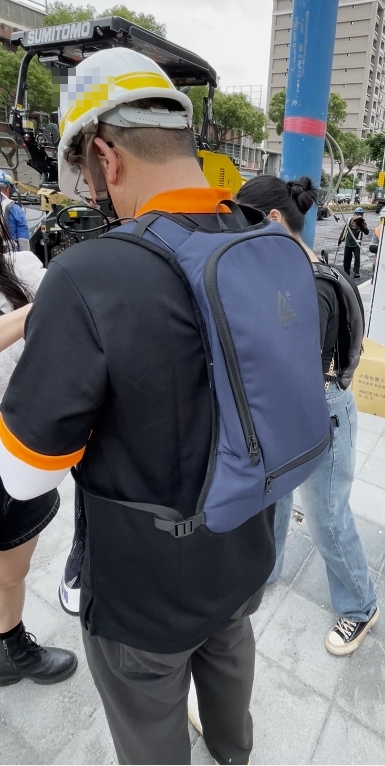
What heat stress actually looks like between 6 a.m. and 6 p.m.
Heat stress is the net result of heat produced by the body, heat gained from the environment, and the body's ability to lose heat. On a construction site all three move in the wrong direction at once. Muscular work generates internal heat. Solar radiation, hot surfaces and hot air add external load. And the PPE that keeps a worker safe — hard hat, harness, high-visibility layers, dust masks, sometimes impermeable coveralls — reduces the surface area and airflow available for evaporative cooling.
Occupational guidance is explicit about this combination. The U.S. National Institute for Occupational Safety and Health (NIOSH) describes outdoor operations carried out in hot weather, such as construction, as likely to cause heat stress, particularly where workers wear semi-permeable or impermeable protective clothing. The U.S. Occupational Safety and Health Administration (OSHA) makes a related point from the equipment side: certain PPE, including respirators, impermeable clothing and head coverings, can increase the risk of heat-related illness.
That matters for how a cooling product is judged. A vest is not competing with water, shade or work-rest scheduling — it addresses a specific part of the problem those measures do not touch: heat gain through the torso while the worker stays inside the PPE stack and keeps working.
The real gap is the interval, not the peak
In practice, the failure point on a well-run site is rarely the peak temperature itself. It is the interval between the moment a worker starts accumulating heat and the next scheduled opportunity to stop. A crew that climbs to a roof at 9 a.m. may not descend until after lunch. A traffic controller holding a position through a roadworks shift cannot leave the post because the heat index crossed a threshold. A metal-sheet fabricator working under a radiant roof has shade but no air movement.
Regulatory direction is moving toward exactly those intervals. A 2026 compliance guide summarising OSHA's proposed heat rule describes triggers at an 80°F heat index for water and shade, and 15-minute breaks every two hours at a 90°F heat index. That rule is proposed, not final, so it should be read as an indication of where workplace heat programmes are heading rather than a current federal requirement. The same guide reports that construction workers account for roughly half of heat-related workplace fatalities in the U.S. as of 2024 reporting — a figure worth treating as an attributed third-party estimate rather than a site-level measurement, but one that explains why buyers are being asked to document heat controls rather than simply advise workers to drink more water.
Where cooling garments sit in the hierarchy of controls
Personal cooling is a supplementary measure, and the guidance treats it that way. NIOSH identifies water-cooled garments, air-cooled garments, cooling vests and wetted overgarments as auxiliary or personal cooling systems for heat exposure. NIOSH also recommends that where heat stress levels exceed its recommended occupational exposure limit, some form of heat-protective clothing or equipment should be provided. Personal cooling therefore has a defined, limited role: it supports the worker who must remain in a hot environment, not a substitute for removing the exposure.
OSHA's heat guidance lists several special cooling devices that may be used in hot environments, including vests receiving cooled air from a vortex tube and vests with reusable ice packs or phase-change cooling packs. The same guidance is candid about the trade-offs. Ice-pack cooling in auxiliary ice vests is stated to last 2 to 4 hours under moderate to heavy heat loads and to require frequent replacement. Circulating air is described as highly effective but also as the most complicated form of personal cooling.
Research summaries point in the same direction without quantifying the benefit. A NIOSH technical review notes that cooling vests may enable workers to work for longer periods, while also noting that adjustments must be made when additional protective gear is worn. A NIOSH research-rounds summary describes study participants wearing vests fitted with ice packs, phase-change materials or water hoses under PPE showing fewer signs of heat stress than participants who did not wear cooling devices.
How the COOLWAVE water-circulation system addresses the shift
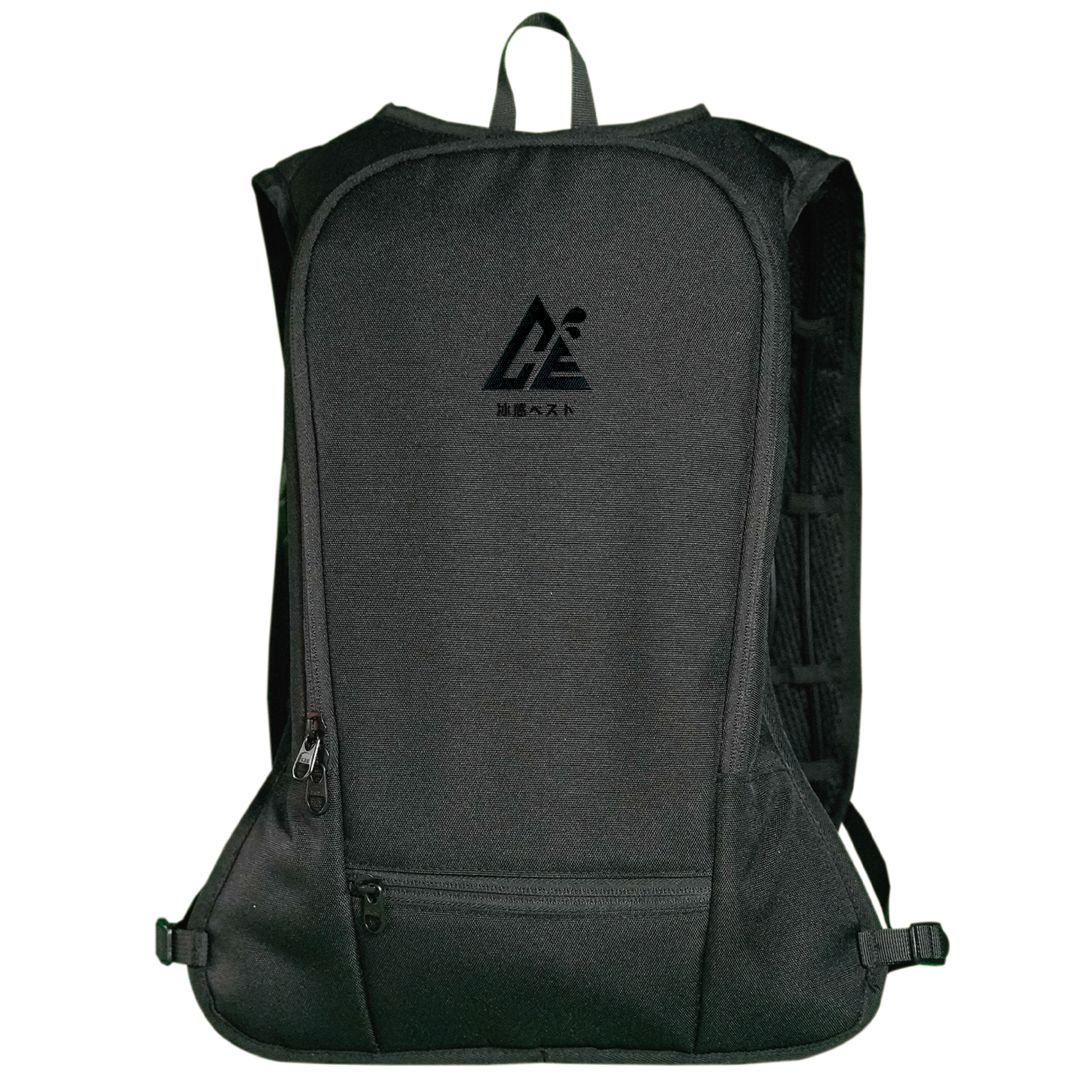
The COOLWAVE Water-Circulation Cooling Vest is an active system rather than a passive cold pack. Water is held in a TPU water bag inside a backpack worn on the back; two ice packs chill that water; a 5V 150 mA (max) pump pushes the chilled water through a sand rubber cooling tube routed across the torso and back to the reservoir. The manufacturer specifies a maximum flow rate of 320–370 ml/min and a cooling duration of 3–4 hours per prepared set, with a total system weight within 2 kg.
The design choice that matters most on a construction site is continuous circulation. A cold pack left in one position cools by direct contact and then loses its temperature gradient as the pack warms and the skin beneath it adapts. Circulating water keeps moving chilled water along the tube path, so the cold source is repeatedly renewed against the body rather than sitting still. Whether that produces a longer useful cooling window than a passive pack in your conditions is exactly what a trial should measure — but the mechanism is different, and that difference is the reason to test it rather than assume equivalence.
Materials and what each one is doing
- Water bag — TPU: holds the chilled water that the pump circulates; the flexible film is chosen for repeated filling and draining.
- Vest body — PEVA: the garment-side layer that carries the cooling path against the torso.
- Cooling tube — sand rubber (black): the channel that distributes chilled water across the body and returns it to the reservoir.
- Water bag cap — polypropylene: the closure on the fill point.
- Shoulder straps — 600D polyester: carries the reservoir and pump load on the back through a woven, abrasion-resistant strap.
- In the box: water-cooled vest backpack ×1 and ice packs ×2.
Two models, one core specification
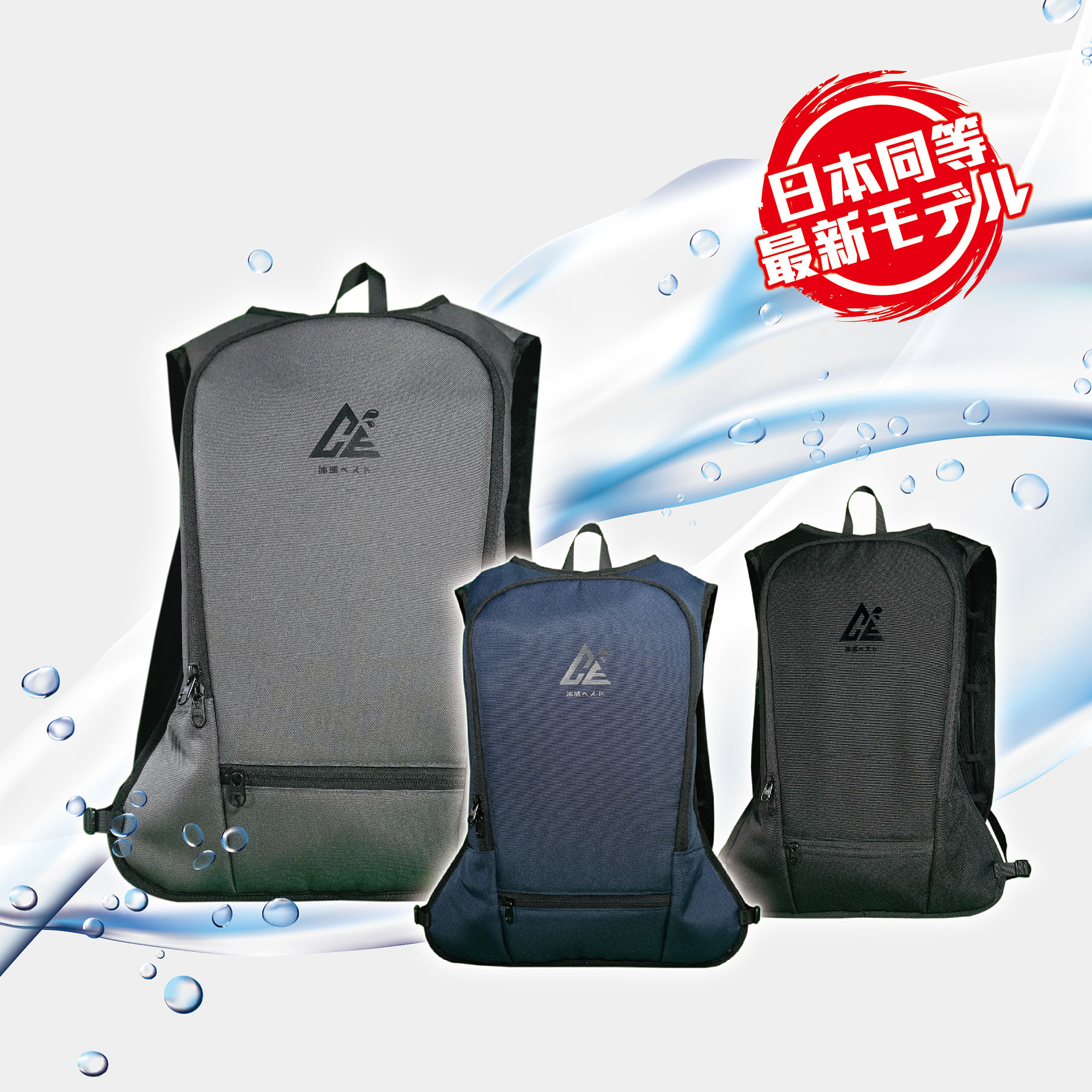
The series is offered as a Basic Model and a Professional Model, with the Professional Model available in blue, gray and black. The published product data for both tiers lists the same core parameters and materials: 3–4 hours of cooling, weight within 2 kg, 5V 150 mA maximum pump output, maximum flow 320–370 ml/min, PEVA vest material, TPU water bag, polypropylene cap, sand rubber cooling tube and 600D polyester shoulder straps. The system is classified as industrial cooling apparel / personal protective equipment (PPE), and the manufacturer provides a 6-month warranty on the water-cooled vest.
What the vest does not do
A fair reading of the product also has to include its limits. The vest does not lower ambient temperature, does not make impermeable PPE breathable, and does not remove the need for shade, drinking water and scheduled rest. Its cooling duration is finite — 3–4 hours per prepared set per the manufacturer's specification — so an eight- or ten-hour shift requires a planned second set rather than a single wear. The 5V 150 mA pump is a small electrical component and needs to be handled as part of the daily kit check. And because NIOSH notes that adjustments must be made when additional protective gear is worn, the vest has to be trialled with the actual harness, high-visibility layers and respiratory protection your crew uses, not in isolation.
The cooling vest scenario: one crew, one hot shift
The following sequence is a planning template for a crew of ten on an outdoor site with a mixed task list — structural work in direct sun, a metal-roof section with radiant heat, and a roadworks position at the site entrance. It assumes one vest per worker in the highest-exposure roles, with a small rotation pool.
Step 1 — Prepare the kits before the shift, not during it
Freeze the ice packs overnight so that every vest has two conditioned packs available at the start of the day. Fill each TPU water bag, fit the polypropylene cap, and run the pump briefly to confirm circulation before the vest leaves the site office. Count kits against the crew list. A vest that is discovered to be unprepared at 11 a.m. is a vest that will not be used, and a cooling programme that depends on improvisation quietly stops working within a week.
Step 2 — Assign vests by exposure and PPE burden
Allocate the first vests to the roles carrying both high radiant heat and the heaviest PPE stack, not by seniority or preference. The metal-roof section, direct-sun structural work and the traffic-control position at the site entrance are the obvious priority posts. This is also where the NIOSH point about semi-permeable and impermeable clothing becomes practical: the more the PPE blocks evaporation, the more a supplementary torso cooling path is doing work that sweat cannot.
Step 3 — Start circulation before the climb
Switch the pump on before the worker goes up, not after the first signs of discomfort. Once the pack is worn on the back and the tube is routed under the outer layer, the system begins moving chilled water across the torso while the worker is still at ground level. Starting early also surfaces fit problems — a strap that interferes with a harness, a tube that kinks under a hi-vis vest — while it is still easy to correct.

Step 4 — Plan the swap around the 3–4 hour window
Record the start time for each vest. With a manufacturer-specified cooling duration of 3–4 hours, the swap has to be scheduled against the break cycle rather than discovered when the water warms. A practical arrangement is two ice-pack sets per vest: set A runs the morning block, set B is swapped in at the lunch break, and both are re-frozen overnight. The 3–4 hour figure is a manufacturer specification, and actual performance will vary with ice-pack starting temperature, ambient heat, workload and how well the water bag is filled — so log real swap times for the first two weeks and let the site's own data set the schedule.
Step 5 — Close out the kit at the end of the shift
Drain and dry the water bag, inspect the sand rubber tube for kinks or abrasion, check the 600D polyester straps and the pump, and return the ice packs to the freezer. A vest left full and folded overnight is the most common reason a kit fails mid-week. Pair the close-out with a simple check of who wore what and for how long, which becomes the evidence base for the next hot month and for any conversation with a safety auditor.
Step 6 — Trial small before you scale
The evaluation stage is the right moment to test a limited batch rather than a full-crew rollout. Manufacturer data lists a minimum order quantity of 10 units for the COOLWAVE vest, so a single crew or a single high-exposure task group is a realistic trial size. Use the trial to measure what the datasheet cannot: swap frequency in your heat, comfort under your harness, whether workers keep the pump running, and whether the second ice-pack set is actually being used.
Use cases where the scenario repeats
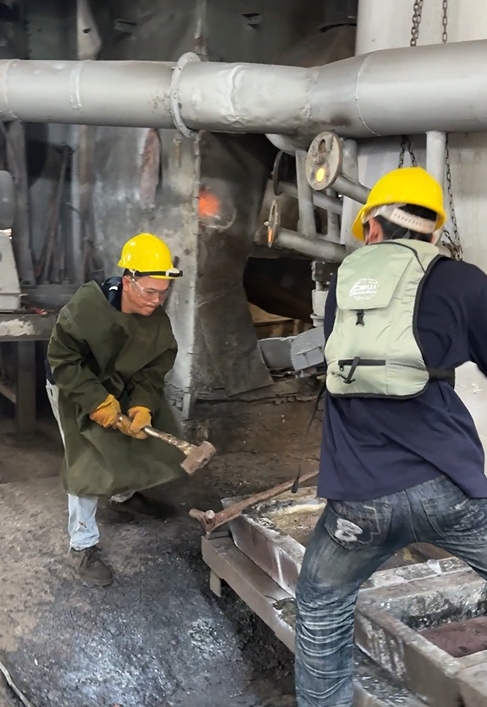
The COOLWAVE series is listed for construction workers, outdoor workers, food stall operators, street vendors, traffic controllers and metal sheet factories. Each of those settings shares the same structural problem: a worker held in place by the task, inside PPE or clothing that limits heat loss, for longer than a passive cold pack comfortably covers.
- Stuffy, metal-roof workplaces: heat radiates down from the roof while the worker stays on station. The backpack layout keeps the reservoir clear of the hands, which matters where manual handling continues.
- Long-hour sun exposure: rebar fixing, roofing and formwork keep crews in direct radiation for the middle of the day. A 3–4 hour cooling window maps reasonably onto a morning block or an afternoon block with a swap at the break.
- Traffic control positions: the worker cannot leave the post when the heat index rises, so the cooling has to travel with them.
- Street vending and market stalls: the same logic outside construction — a fixed position, a long shift, and no practical access to shade rotation.
Shokunin's own application record includes a documented deployment of 100 units in Taiwan for cooling use in high-temperature environments, with reported outcomes of effective body cooling, heatstroke prevention, and improved worker comfort. Those are the supplier's reported results across a mixed set of outdoor settings, not a controlled measurement on your site — which is why the trial in Step 6 still matters.
Comparing the three cooling approaches a site is likely to shortlist
The table below compares documented characteristics, not measured performance. Each row reflects what the cited source actually states, and no superiority is implied between technologies.
| Criterion | Ice-pack vest (passive) | Cooled-air vest (vortex tube) | COOLWAVE water-circulation vest |
|---|---|---|---|
| Cooling principle | Reusable ice or phase-change packs held against the body | Cooled air supplied to the garment from a vortex tube | 5V 150 mA pump circulates chilled water through a sand rubber tube loop |
| Stated cooling window | 2–4 hours at moderate to heavy heat loads, with frequent replacement (OSHA guidance) | Not quantified in the cited guidance | 3–4 hours per prepared set (manufacturer product data) |
| Site infrastructure required | Freezer access and spare pack logistics | Compressed-air supply at the work position | Freezer access for two ice packs, water fill point, pump charging/check routine |
| Carried weight | Depends on number of packs | Depends on air line and hose routing | Within 2 kg total system, backpack-carried on 600D polyester straps |
| Evidence status | Government heat-stress guidance | Government guidance, qualitative only | Manufacturer specification and product data sheet |
Frequently asked questions
Is the COOLWAVE vest classified as PPE or as ordinary workwear?
The manufacturer classifies the COOLWAVE Water-Circulation Cooling Vest as industrial cooling apparel / personal protective equipment (PPE). That classification describes the product category; it does not by itself certify the vest against a specific national PPE standard, and buyers should request the conformity documentation applicable to their market. In the hierarchy of controls, NIOSH treats cooling vests and water-cooled garments as auxiliary or personal cooling systems — supplementary to engineering controls, work practices and work-rest scheduling, not a replacement for them.
What does the 3–4 hour cooling duration actually cover?
The figure is the manufacturer's specification for one prepared set: water in the TPU bag chilled by the two supplied ice packs and circulated by the pump. Real duration depends on the starting temperature of the ice packs, ambient heat and radiant load, workload, and how the vest is worn. It is not directly comparable with OSHA's 2–4 hour figure for auxiliary ice vests, because that figure describes a different technology under stated moderate to heavy heat loads. Plan a second ice-pack set per vest for shifts longer than about three hours.
How does a crew carry the system through a full shift without stopping work?
The system travels on the back: the reservoir and pump sit in a backpack carried on 600D polyester shoulder straps, with the cooling tube routed across the torso, and the whole system weighs within 2 kg. Because the cooling window is 3–4 hours, a full shift is covered by rotation rather than by a single wear — two ice packs per vest, a swap at the main break, and re-freezing overnight. The 320–370 ml/min maximum flow rate and 5V 150 mA pump are the two parameters worth logging during the first weeks, since they tell you quickly whether the pump is running as specified.
Will it work underneath a harness, hi-vis layers and respiratory protection?
That has to be verified on your own PPE stack rather than assumed. NIOSH notes that adjustments must be made when additional protective gear is worn, and OSHA warns that respirators, impermeable clothing and head coverings can themselves increase heat-related illness risk. The practical test is a supervised trial with the full kit worn as it would be on site: check tube routing under the harness, strap pressure, access to the pump, and whether the worker can still move and communicate normally. If the combination interferes with any mandatory PPE, change the configuration or the role assignment — never the PPE.
What drives the cost of outfitting a crew beyond the vest itself?
No unit price is published in the product data, so the honest starting point is a quotation against your crew size and shift pattern. The cost drivers that matter are the number of vests against the number of high-exposure roles, a second ice-pack set per vest to bridge a long shift, spares for the pump and tubing, freezer capacity on site, and the warranty position — the vest carries a 6-month manufacturer warranty, which sets the replacement and repair planning horizon. Total cost should be assessed per protected shift hour, not per unit.
Can we trial a small batch, and what is the lead time?
Manufacturer data lists a minimum order quantity of 10 units, a lead time of 7–14 days and a monthly production capacity of 3,000 units, with global export markets. That makes a single-crew trial practical: order ten units, run them for two to four weeks against a control group, and record swap frequency, worker feedback and any PPE interference. Both the Basic and Professional models can be included in the same trial because they share the published core specification, which lets a crew compare fit and colour preference without changing the cooling parameters.
Conclusion: plan the shift, then choose the hardware
Heat stress on a construction crew is a scheduling problem before it is a product problem. The workers who get into trouble are usually the ones held in place — on the roof, at the traffic post, under the sheet-metal roof — through the interval between the hottest hours and the next break. Cooling garments help inside that interval, and occupational guidance is clear that they are supplementary: NIOSH and OSHA both place personal cooling alongside shade, water, work practices and work-rest cycles, not in place of them.
The Shokunin COOLWAVE Water-Circulation Cooling Vest series addresses that interval with a pump-driven circulation loop — chilled water moving at a maximum 320–370 ml/min through a sand rubber tube across the torso, from a TPU water bag in a backpack carried on 600D polyester straps, at a system weight within 2 kg and a 3–4 hour cooling duration per prepared set. It is classified as industrial cooling apparel / PPE, offered in Basic and Professional models, and backed by a 6-month manufacturer warranty. Whether it beats a passive ice vest on your site is a question only a controlled trial on your own PPE stack can answer — and with a 10-unit minimum order, that trial is small enough to run before the next heat wave rather than after it.

Next step for evaluation teams
Shokunin is the professional tool and cooling brand of Feng Shang Precision Co., Ltd., a Taoyuan, Taiwan manufacturer founded in 2009 that also states receipt of the Disaster Prevention Product and Service Certification Award from the Taiwan Disaster Prevention Industry Association. If you are comparing cooling options for a construction or outdoor-work crew, the practical next steps are a specification sheet, a sample, and a quotation against your crew count and shift pattern.
Start with the COOLWAVE product brochure (PDF) for the full parameter list, then request a sample or a ten-unit trial set through Shokunin and test the 3–4 hour cooling window against your own heat, PPE stack and break cycle.
Have Questions or Need More Details?
Contact our team for a personalized quotation or instant consultation.
Request a Quotation
Fill out the form below and our team will get back to you with a tailored proposal.
WhatsApp Direct Chat
Prefer to chat in real-time? Message us on WhatsApp for instant assistance & quick answers.
- Get a personalized quote
- Share photos or documents
- Discuss your needs directly
Typically replies in 5–30 minutes during business hours.