
Water-Cooled Vest vs. Ice Pack Vest: Which Is Safer for 40°C Work?
Water-Cooled Vest vs. Ice Pack Vest: Which Is Safer for 40°C Work?
At 40 °C, the safety difference between a water-circulation vest and an ice pack vest is not which one feels colder in the first ten minutes — it is whether the cooling lasts as long as the work does. The COOLWAVE Water-Circulation Cooling Vest is an active system: a 5 V / 150 mA pump circulates chilled water at a maximum flow rate of 320–370 ml/min and holds a rated cooling duration of 3–4 hours, at a total weight within 2 kg. A passive ice pack vest carries no pump and no power requirement, so it is lighter and simpler to issue, but its cooling depends on how quickly the ice packs melt and how quickly the wearer’s body heat overcomes them.
This guide compares the two approaches for work at 40 °C using published product specifications, patent and certification records, and the decision factors that decide safety on site: task duration, mobility, power availability, re-cooling logistics, and documentation.
Short answer: For continuous work near 40 °C, an active water-circulation vest is the safer choice, because cooling is pumped and rated (3–4 hours on the COOLWAVE kit) rather than left to melt. For short, intermittent tasks where no power source is available, a passive ice pack vest is the simpler and lighter option — provided the task finishes before the packs lose their cooling capacity.
Problem Definition: Why 40 °C Work Is a Duration Problem, Not a Temperature Problem
Safety at 40 °C is governed by cooling continuity. The body accumulates heat for as long as the work continues, and a cooling vest only protects while its cooling medium still has capacity to absorb that heat. A passive ice pack vest starts at its coldest point and degrades from there as the packs melt. An active water-circulation vest keeps chilled water moving across the torso through tubing, so performance is governed by the pump, the flow rate and the water reservoir rather than by the melt curve of a single pack. Because the COOLWAVE kit pairs a pumped water circuit with two ice packs, buyers often describe this category as a dual cooling water cooling vest.
On a 40 °C site, five variables decide whether a cooling vest is genuinely safe or merely comfortable:
- Cooling duration versus task duration. A vest rated for 3–4 hours covers a continuous exposure window of that length. If the task runs longer, the safety plan must include a rotation, a second vest, or a mid-shift re-cooling step — otherwise the final hour of work is unprotected.
- Mobility and physical load. The COOLWAVE vest stays within 2 kg, which matters for workers who climb, bend or carry tools. Passive vests are generally described as lightweight and portable, and that is a genuine advantage for short tasks.
- Power availability. Active cooling needs a power source for a 5 V / 150 mA pump. Passive cooling needs none, which is exactly why it remains in use on sites without charging infrastructure.
- Re-cooling logistics. Both systems depend on reusable ice packs and a place to re-freeze them between shifts. A cooling programme that cannot re-freeze packs reliably will fail regardless of which vest is purchased.
- Documentation. Industrial buyers must file evidence of what the vest is, how it is classified, and what has been certified. A vest that cannot be documented is difficult to defend in a safety audit.
Industry Background: Cooling Vests Are Moving into Industrial PPE Budgets
Cooling apparel is no longer a niche accessory. Dataintelo values the global cooling vest market at approximately USD 215 million in 2024, projected to reach USD 385 million by 2033. The wider personal cooling device market, which includes handheld fans and other devices, is far larger: Market Research Future valued it at USD 25.16 billion in 2024 with a projection of USD 94.85 billion by 2035. The gap between those two figures is a reminder that cooling-vest data must be read carefully, because market definitions vary widely depending on which device categories a report includes.
Two structural trends support the industrial case for active cooling. First, industrial applications — construction and manufacturing among them — held the largest share of the cooling vest market at 34.5% in 2025, according to Dataintelo, which means these buying decisions are increasingly made by safety and procurement teams rather than by individual consumers. Second, Strategic Market Research notes that active circulatory mechanisms such as ice water circulation are increasingly deployed in industrial sectors to mitigate occupational heat stress. Spherical Insights identifies Asia Pacific as the fastest-growing region for cooling vests, driven by rapid industrialisation and large outdoor work populations.
Compliance expectations run alongside the market. Cooling systems must comply with ISO 9001:2015 for quality management, and electrical components frequently require CE or UL marks. Passive chemical systems also have a growing presence: Dataintelo records phase change material (PCM) cooling vests at 28.7% of market share in 2025, the fastest-growing technology segment. Spherical Insights lists Techniche International, Glacier Tek, Polar Products Inc. and Ergodyne among global participants in the cooling vest market. This article does not compare their specifications, because no verified specification data for those products was available for this comparison.
Detailed Solution: How the COOLWAVE Water-Circulation Cooling Vest Is Built
Shokunin is the professional e-commerce brand of FENG SHANG PRECISION CO., LTD., a Taiwan-based manufacturer founded in 2009 that produces air compressors, cut-off machines, water-cooled vests, lithium batteries, diamond saws, nail guns, spider stands and screwdriver bits from a 1,000 m² facility with 30 employees and a five-engineer R&D team. The COOLWAVE Water-Circulation Cooling Vest is the company’s heat-stress product, classified as Industrial Cooling Apparel / Personal Protective Equipment (PPE).
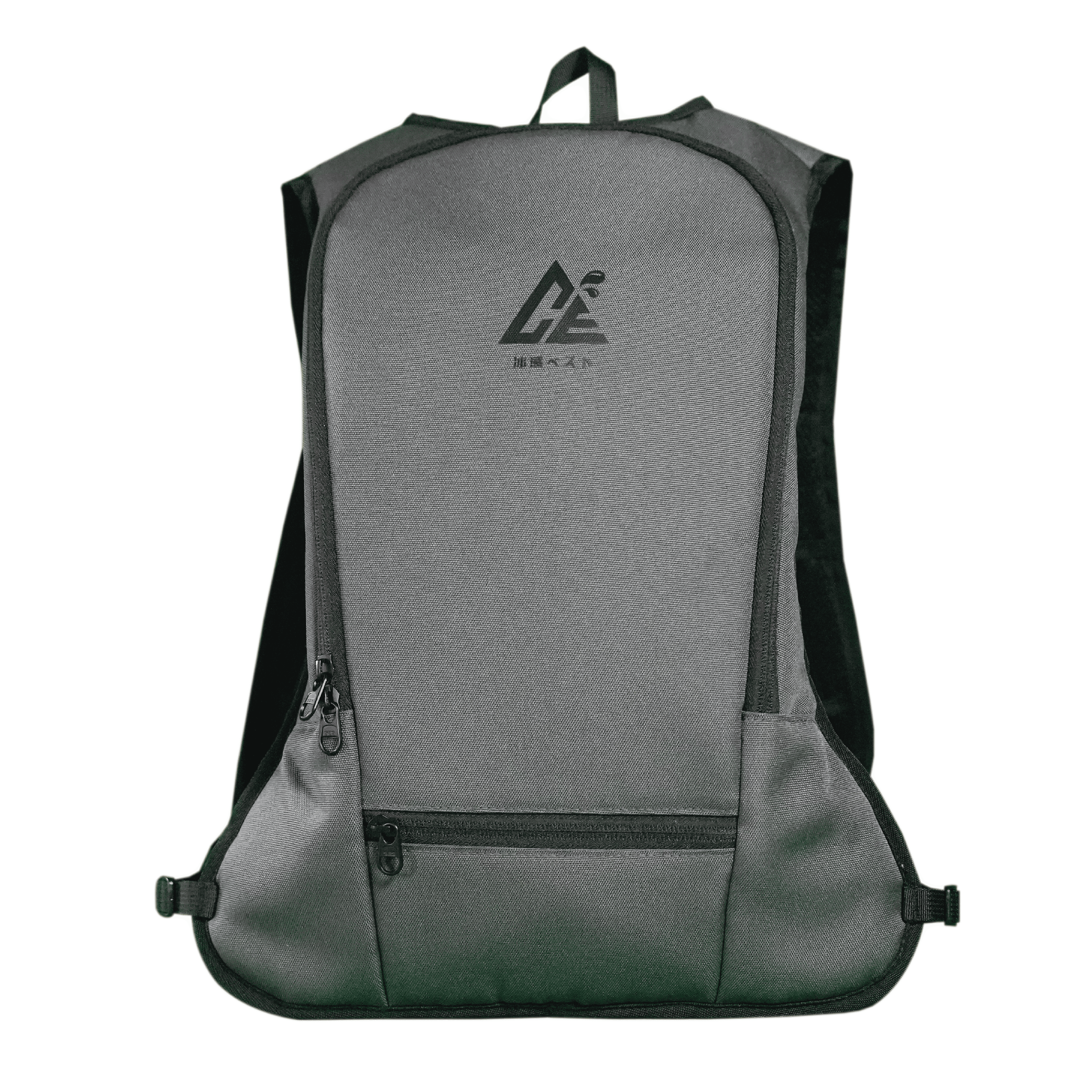
COOLWAVE Water-Circulation Cooling Vest, Professional Model in grey — the active system assessed in this comparison.
Active circulation instead of passive melting
The safety argument for an active vest is that cooling is delivered by a mechanism rather than by a material. In the COOLWAVE system, a 5 V / 150 mA pump moves chilled water through black sand-rubber cooling tubing at a maximum flow rate of 320–370 ml/min. The vest is PEVA, the water bag is TPU, the water bag cap is polypropylene, and the shoulder straps are 600D polyester — materials selected around a cold, wet and repeatedly handled duty cycle rather than around appearance.
The kit ships with the water-cooled vest backpack and two ice packs, which is the dual cooling arrangement: the ice packs provide the cold source and the water circuit distributes it. Adjustable vest straps and a portable backpack design allow a one-size-fits-all fit that field crews can issue without individual sizing, and the rated cooling duration is 3–4 hours at a total weight within 2 kg.
Specifications that matter on a 40 °C site
| Parameter | COOLWAVE Water-Circulation Cooling Vest |
|---|---|
| Product type | Industrial Cooling Apparel / Personal Protective Equipment (PPE) |
| Cooling duration | 3–4 hours |
| Weight | Within 2 kg |
| Suitable temperature (as stated on the specification) | Below 10 °C |
| Pump output | 5 V, 150 mA (max) |
| Flow rate | Max 320–370 ml/min |
| Shoulder strap material | 600D polyester |
| Vest material | PEVA |
| Water bag material | TPU |
| Water bag cap | Polypropylene |
| Cooling tube | Sand rubber (black) |
| In the box | Water-cooled vest backpack ×1, ice packs ×2 |
| Models and colours | Basic Model; Professional Model in Blue, Grey and Black |
| Stated application industries | Construction workers, outdoor workers, food stall operators, street vendors, traffic controllers, metal sheet factories |
Read together, those figures answer a practical question: how long the cooling lasts and how much water volume the pump can keep moving. A flow rate of up to 320–370 ml/min across a rated 3–4 hour window is what separates this product from a vest whose performance peaks at the start of the shift and declines from then on.
Certification and patent record
For procurement, the documentation matters as much as the specification. The COOLWAVE water-circulation cooling vest (Basic Model) is protected by Patent No. I886033, issued by the Intellectual Property Office, Ministry of Economic Affairs under the Patent Act of the Republic of China. The patent covers the water-cooled vest structure and cooling system, applies to the ROC market, is dated 1 June 2025, and is recorded through 27 August 2044.
The COOLING water-cooled vest also received the Disaster Prevention Product and Service Certification Award from the Taiwan Disaster Prevention Industry Association. Together, the patent and the award give a safety team two independent documents to file: one covering the engineering of the cooling system, and one covering the product’s recognition as disaster-prevention equipment.
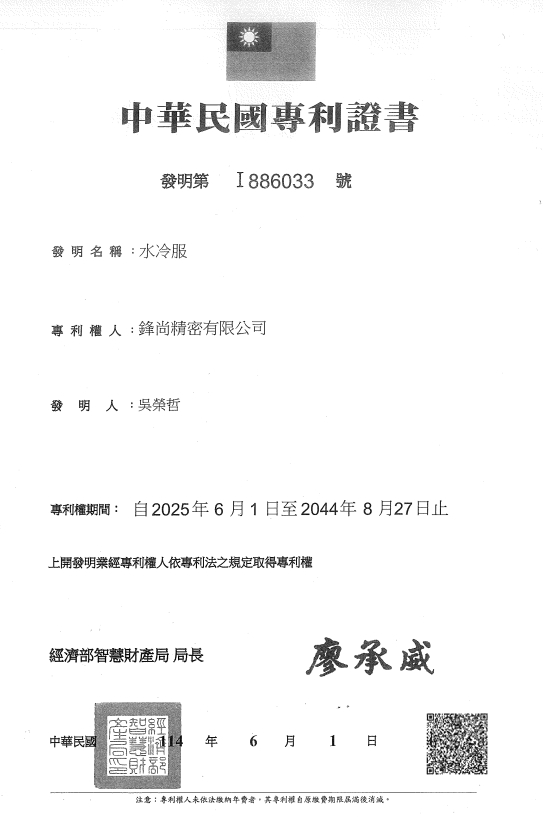
Patent No. I886033 for the water-cooled vest structure and cooling system, issued under the Patent Act of the Republic of China.
A note on standards: cooling systems must comply with ISO 9001:2015 for quality management, and electrical components often require CE or UL marks. Because the COOLWAVE vest includes a pump, buyers should confirm which electrical mark their own market requires before the order is placed, and keep the answer in the purchasing file.
What the passive alternative does well
A fair comparison has to state the limits of the active design. An ice pack vest needs no power, no pump and no tubing, so there is less to fail, less to charge, and less to explain to a worker who is already carrying tools. Passive vests are described as lightweight and portable, and for a 45-minute task in open sun the ice pack vest may be the more practical issue. The active vest earns its place when the exposure is long enough that passive packs would lose capacity mid-task, or when the site requires documented cooling equipment as part of a heat-stress programme.
Step-by-Step Breakdown: How to Choose for a 40 °C Site
Step 1 — Measure the uninterrupted work interval, not the shift length
Write down the longest period a worker stays in the heat without a break, then compare it with the rated cooling window. A shift of eight hours with four breaks is a different problem from two hours of continuous roofing work. The rated 3–4 hour duration of the COOLWAVE vest is the number to test against, not the nominal shift length.
Step 2 — Confirm the power source before you choose an active vest
The pump is specified at 5 V / 150 mA (max). That is a low-voltage DC input, so buyers evaluating a power-bank cooling vest configuration should confirm the exact power supply arrangement with the supplier before ordering — the specification sheet states the pump rating, and the same sheet states that a battery or power bank is not listed as an included item. If no reliable power source can be issued and maintained on site, a passive vest is the honest option rather than a compromise.
Step 3 — Weigh the physical load the wearer will actually carry
Within 2 kg is the total weight of the COOLWAVE system, which keeps it usable on ladders, scaffolding and in restricted spaces. Where workers already carry heavy tool belts, a lighter passive vest may reduce fatigue, but the trade-off is a shorter effective cooling window.
Step 4 — Build the re-cooling plan into the shift
The kit includes two ice packs and the packs are reusable, so the plan needs a re-freeze point: a site freezer, a depot freezer or a rotation of prepared packs. Document who re-freezes the packs, where, and at what time. This single administrative step determines whether a 3–4 hour cooling system actually delivers 3–4 hours on every shift.
Step 5 — Collect documentation before the purchase order
Before signing an order, request the patent record (I886033, ROC market), the Disaster Prevention Product and Service Certification Award, and confirmation of the PPE product classification. Add the electrical mark question from Step 2, and reference ISO 9001:2015 in the supplier questionnaire. Documentation gathered before the order is far cheaper than documentation gathered during an audit.
Use Cases: Where Each System Fits
Construction sites
Construction is the clearest case for active cooling, because exposure is long, continuous and often on reflective surfaces. The COOLWAVE vest lists construction workers as a primary application, and the adjustable straps and one-size-fits-all design allow a site office to hold a small pool of vests rather than issue individually sized units.
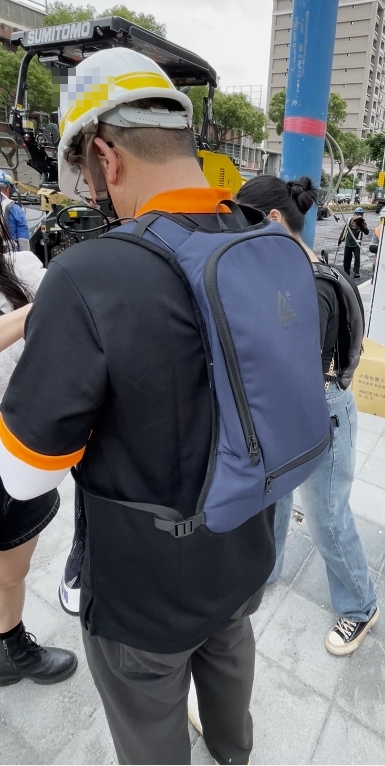
Construction work: sustained exposure is the condition where a rated 3–4 hour cooling window changes the safety calculation.
Traffic control and roadside duty
Traffic controllers stand in radiant heat from the road surface and from passing vehicles, with limited shade and few opportunities to leave position. That combination of fixed posture and continuous exposure favours a vest that keeps cooling without the wearer needing to stop and swap packs mid-duty.
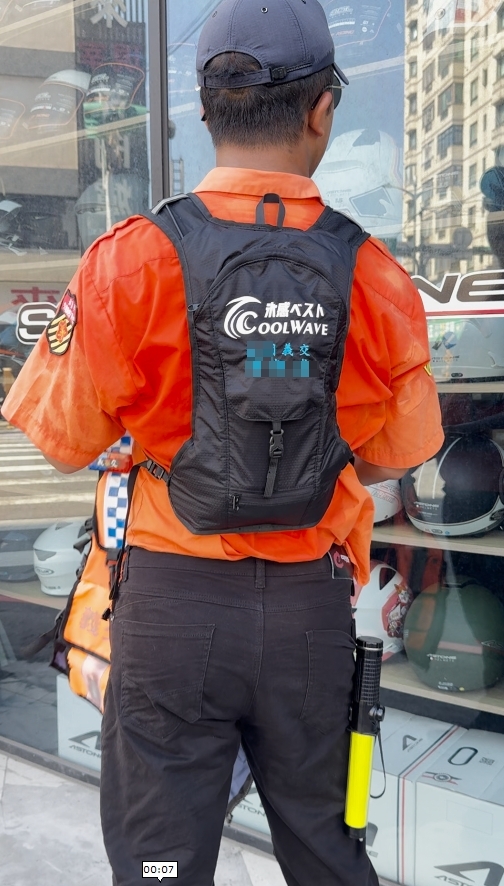
Direct traffic duty: a use case listed among the vest’s stated application industries.
Metal sheet factories and metal-roof buildings
Metal sheet factories and metal-roof workshops concentrate radiant heat inside the working area, which is why cooling gear for prolonged sun exposure and cooling solutions for metal-roof factories are persistent search topics among industrial buyers. Indoor radiant load is continuous rather than intermittent, which again favours a pumped system over a melting one.
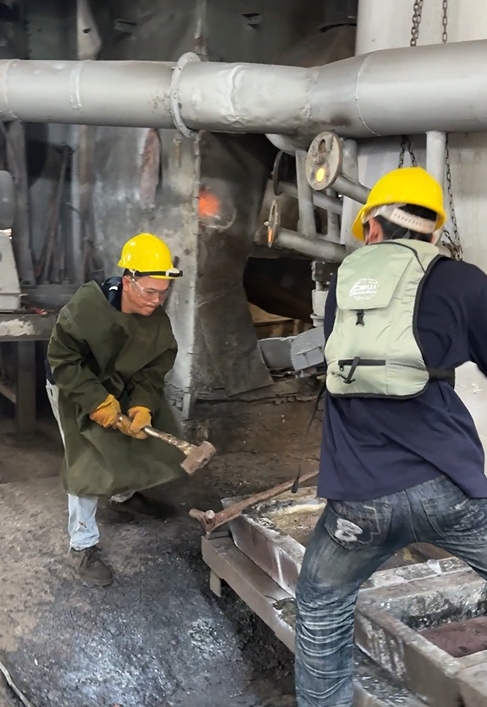
Metal sheet factory: one of the application industries named in the product specification.
Outdoor vendors, food stalls and street markets
Street vendors and food stall operators work in heat for commercial hours that cannot be shortened, and they are listed among the vest’s application industries alongside outdoor workers. Field evidence supports this: a Taiwan-based deployment of 100 units, used across construction sites, outdoor work, metal sheet factories and street vendors over a ten-year period, reported outcomes of effective body cooling, heatstroke prevention, and improved worker comfort and efficiency.
When the ice pack vest is the better answer
Choose passive cooling when the task is short, when no power source can be guaranteed, when the wearer must carry the absolute minimum weight, or when the crew cannot maintain a re-freeze routine. The passive vest’s no-power requirement is a reliability feature, not a limitation — as long as the work ends before the packs stop cooling.
Comparison Table: COOLWAVE vs. Passive Ice Pack Vests for 40 °C Work
| Decision factor | COOLWAVE Water-Circulation Cooling Vest (active) | Passive ice pack cooling vest |
|---|---|---|
| Cooling mechanism | Pump-driven circulation of chilled water through sand-rubber tubing, fed by two ice packs | Ice packs worn against the body; no circulation |
| Power requirement | 5 V / 150 mA (max) pump | None |
| Rated cooling duration | 3–4 hours | Not stated in the specification data reviewed for this article |
| Water flow rate | Max 320–370 ml/min | Not applicable |
| System weight | Within 2 kg | Lightweight and portable |
| Kit contents | Water-cooled vest backpack ×1, ice packs ×2 | Vest plus reusable ice packs |
| Fit | Adjustable straps, one-size-fits-all, portable backpack design | Varies by supplier |
| Between shifts | Re-freeze the two supplied reusable ice packs | Re-freeze reusable ice packs |
| Documentation | Patent No. I886033 (ROC) and the Disaster Prevention Product and Service Certification Award (Taiwan) | Varies by supplier; verify per supplier |
| Best-fit task profile | Continuous work up to the rated 3–4 hour window | Short or intermittent tasks where carrying no power source matters more than duration |
Both systems are sold as Industrial Cooling Apparel / Personal Protective Equipment (PPE) categories of product. A comparison table can only be as precise as the published data behind it: where a passive vest specification does not state a duration, this table records that gap rather than estimating a figure.
Frequently Asked Questions
1. Is the COOLWAVE water-circulation cooling vest certified or patented?
Yes. The COOLWAVE water-circulation cooling vest (Basic Model) is protected by Patent No. I886033, issued by the Intellectual Property Office, Ministry of Economic Affairs under the Patent Act of the Republic of China. The patent covers the water-cooled vest structure and cooling system, applies to the ROC market, is dated 1 June 2025 and is recorded through 27 August 2044. In addition, the COOLING water-cooled vest received the Disaster Prevention Product and Service Certification Award from the Taiwan Disaster Prevention Industry Association. At the market level, cooling systems must comply with ISO 9001:2015 for quality management, and electrical components frequently require CE or UL marks — buyers should state which mark their market requires when requesting documents.
2. Can a water-circulation vest last through a full 40 °C shift?
The COOLWAVE vest is rated for 3–4 hours of cooling, powered by a 5 V / 150 mA pump with a maximum flow rate of 320–370 ml/min, at a weight within 2 kg. If your work plan exceeds that window, the vest alone is not the whole control measure — plan a rotation between vests, a mid-shift re-cooling step, or a scheduled break so that no worker finishes the heat exposure with a depleted system. This is a planning rule, not a product limitation.
3. What drives the cost of a water-circulation cooling vest?
This article does not publish a price band, because no verified pricing data was available for it. What a buyer can control is the specification that drives the unit cost: the model (Basic or Professional), the colourway (Blue, Grey or Black), how many ice packs are issued per worker, and the order quantity against a published minimum order quantity of 10 units. Requesting a written quotation that states model, quantity, payment terms and lead time is the practical way to compare bids on equal terms.
4. Can we test a sample before placing a volume order?
The published minimum order quantity is 10 units, which means a small validation batch sits inside the standard MOQ rather than requiring a full production run. A validation batch is the sensible way to confirm fit, weight and the re-freeze routine on your own site before scaling. To arrange one, contact the manufacturer at fsmarketing@fstool.com.tw or through WhatsApp at +86 18858260055, and state the model, colourway and quantity you want to test.
5. What is the lead time and monthly supply capacity?
The stated monthly production capacity is 3,000 units with a quoted lead time of 7–14 days, and the water-cooled vest carries a 6-month warranty. FENG SHANG PRECISION CO., LTD. operates a 1,000 m² facility with 30 employees, a five-engineer R&D team and an annual output of 10,000 units across its product range, with 50% of output exported and the USA and ROC listed as main markets. For buyers who need a distributor or bulk quotation, the printable product brochure is available at the Shokunin catalogue download.
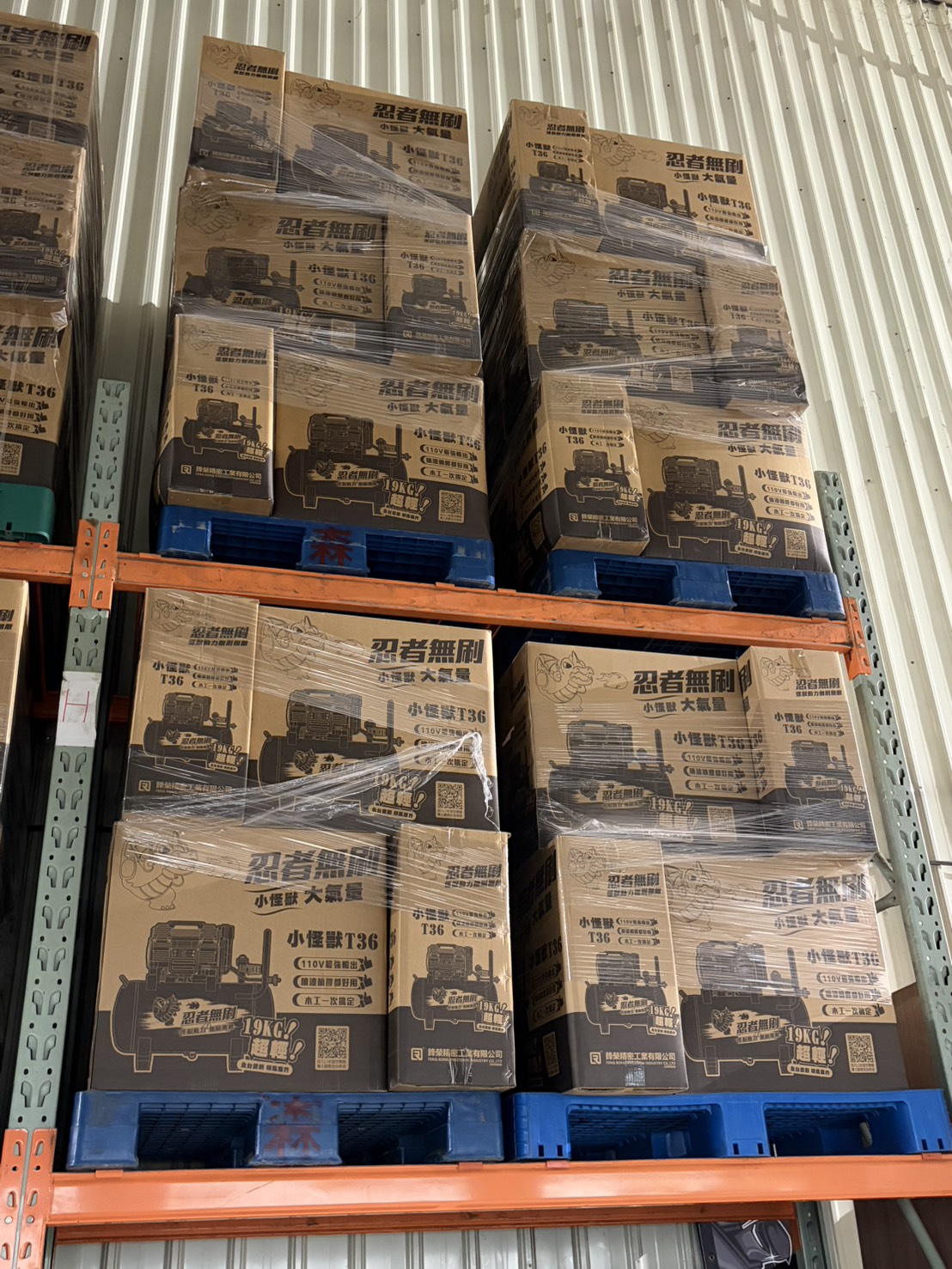
Stock and warehousing at FENG SHANG PRECISION CO., LTD., supporting sample orders and bulk supply.
Conclusion: The Safer Choice Depends on One Number — Your Uninterrupted Exposure Time
At 40 °C, the passive ice pack vest and the active water-circulation vest solve the same problem with different physics. The ice pack vest asks nothing of the site: no power, no tubing, minimal weight, and a cooling output that falls as the packs melt. The COOLWAVE Water-Circulation Cooling Vest puts a 5 V / 150 mA pump and a 320–370 ml/min water circuit inside a 2 kg system, and rates the cooling at 3–4 hours, which is the number that makes it defensible for long, continuous exposure.
The decision rule is therefore simple. Match the vest to the uninterrupted work interval. If that interval sits inside the rated cooling window and documentation is filed, the active vest is the safer industrial choice. If the interval is short and no power source can be guaranteed, the passive vest is the correct, lighter answer — provided the task ends before the cooling does.
Next step: Confirm your exposure window, then request the specifications, patent and certification documents, and a quotation for the COOLWAVE Water-Circulation Cooling Vest.
Email fsmarketing@fstool.com.tw · Phone +886 3-312-6606 · WhatsApp +86 18858260055 · Business hours Monday to Friday, 8:30 AM – 5:40 PM.
Download the full product brochure (PDF) or visit Shokunin for the complete tool and cooling range.
Have Questions or Need More Details?
Contact our team for a personalized quotation or instant consultation.
Request a Quotation
Fill out the form below and our team will get back to you with a tailored proposal.
WhatsApp Direct Chat
Prefer to chat in real-time? Message us on WhatsApp for instant assistance & quick answers.
- Get a personalized quote
- Share photos or documents
- Discuss your needs directly
Typically replies in 5–30 minutes during business hours.