
Water-Circulation vs Passive Ice-Pack Cooling Vests: Which One Wins on Industrial Sites?
On a site with a reliable 5V power source and work cycles of three to four hours, the water-circulation cooling vest is the stronger choice. On a site without dependable charging, or where a worker enters and exits vehicles, lifts and confined spaces all shift, a passive ice-pack vest asks less of the operation and usually wins. The deciding factor is not the product — it is the worksite constraint the product has to survive.
This is a head-to-head for procurement teams, safety officers and site managers who have narrowed the category to two architectures and now need to place an order. On one side is a dual cooling design: a Shokunin COOLWAVE Water-Circulation Cooling Vest, in which reusable ice packs supply the cold and a small pump circulates chilled water through a tube loop worn against the torso. On the other is a passive ice-pack-only vest, which delivers cold contact with no pump, no battery and no loop.
Shokunin is a professional tool brand launched by Feng Shang Precision Co., Ltd., a manufacturer based in Taoyuan, Taiwan, whose product range includes air compressors, cut-off machines and the COOLWAVE water-cooled vest line. The comparison below uses the published specifications for that line and documented field conditions for passive ice-pack cooling, and it separates what is stated from what a buyer still has to verify.
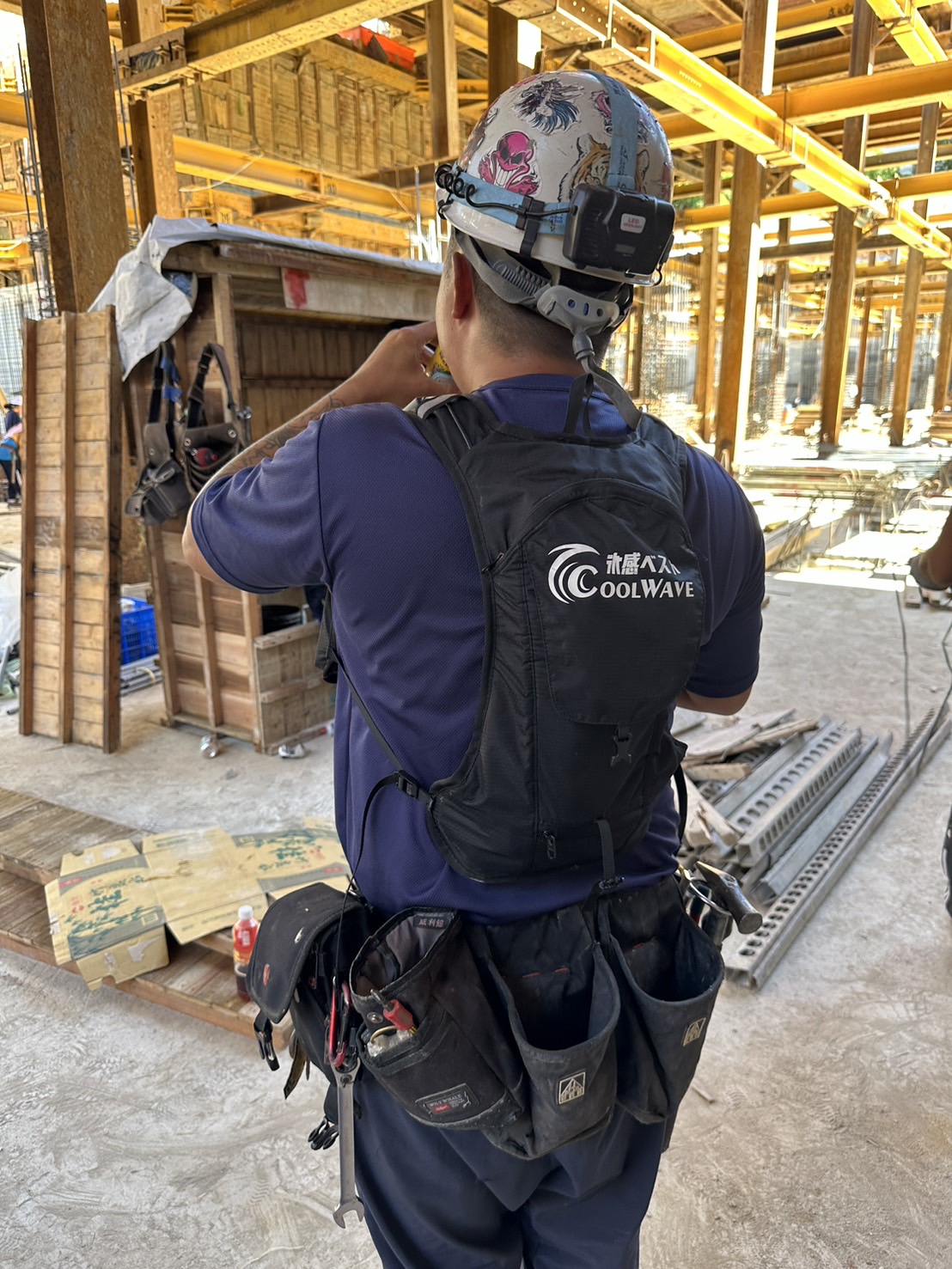
The Real Problem: The Wrong Architecture Fails Quietly
Heat is not the only load a worker carries. Protective equipment itself adds heat burden, which is why personal cooling systems exist as a documented category. The National Institute for Occupational Safety and Health (NIOSH) lists water-cooled garments, air-cooled garments, cooling vests and wetted overgarments among the personal cooling systems used against heat exposure. That classification matters for procurement because it confirms cooling wearables sit inside occupational heat management — but it does not rank one architecture above another.
The expensive mistake on industrial sites is not buying a poorly made vest. It is buying the right vest for the wrong constraint, because both failure modes are silent.
A circulating vest with no charging discipline fails invisibly. If the power bank is flat or the ice packs went into the loop warm, the pump still runs, the vest still sits on the shoulders, and the worker keeps working under the impression that cooling is happening. Nobody reports a fault, because nothing visibly breaks.
A passive ice-pack vest fails on timing. It performs exactly as designed until the packs lose their cold, and then it becomes another layer of clothing. If the workstation has no way to swap packs mid-shift, the cooling window closes and the worker is left in insulated fabric during the hottest part of the day.
Both failures are scheduling and site-design problems, not manufacturing defects. That is the frame this comparison uses: which architecture can your site actually support for the length of a real shift?
Industry Background: Industrial Buyers Now Set the Spec
The commercial weight of this decision is visible in the category numbers. Dataintelo reported the global cooling vests market at USD 342 million in 2025, and industrial applications accounted for 34.5% of revenue share in the same year. Roughly a third of the market is not consumer comfort wear; it is worksite equipment bought against a heat-safety obligation.
That split explains why specification language matters more than comfort language. A buyer for a metal-roof factory or a traffic-control contractor is not comparing how a vest feels in an air-conditioned showroom. They are comparing runtime against shift length, weight against harness compatibility, and documentation against an internal heat-management policy.
It also explains a gap that recurs across published product data in this category: cooling duration and flow figures are frequently disclosed without the test conditions behind them. Ambient temperature, humidity, workload, clothing layers and body size all change measured performance, and manufacturers do not always state which conditions their numbers describe. The practical consequence for a procurement team is simple — treat published specifications as RFQ inputs to be confirmed, not as final proof. Ask for the test basis, then run your own shift-length trial before scaling a fleet order.
The Two Architectures, Explained
Water-circulation: ice packs plus a pumped loop
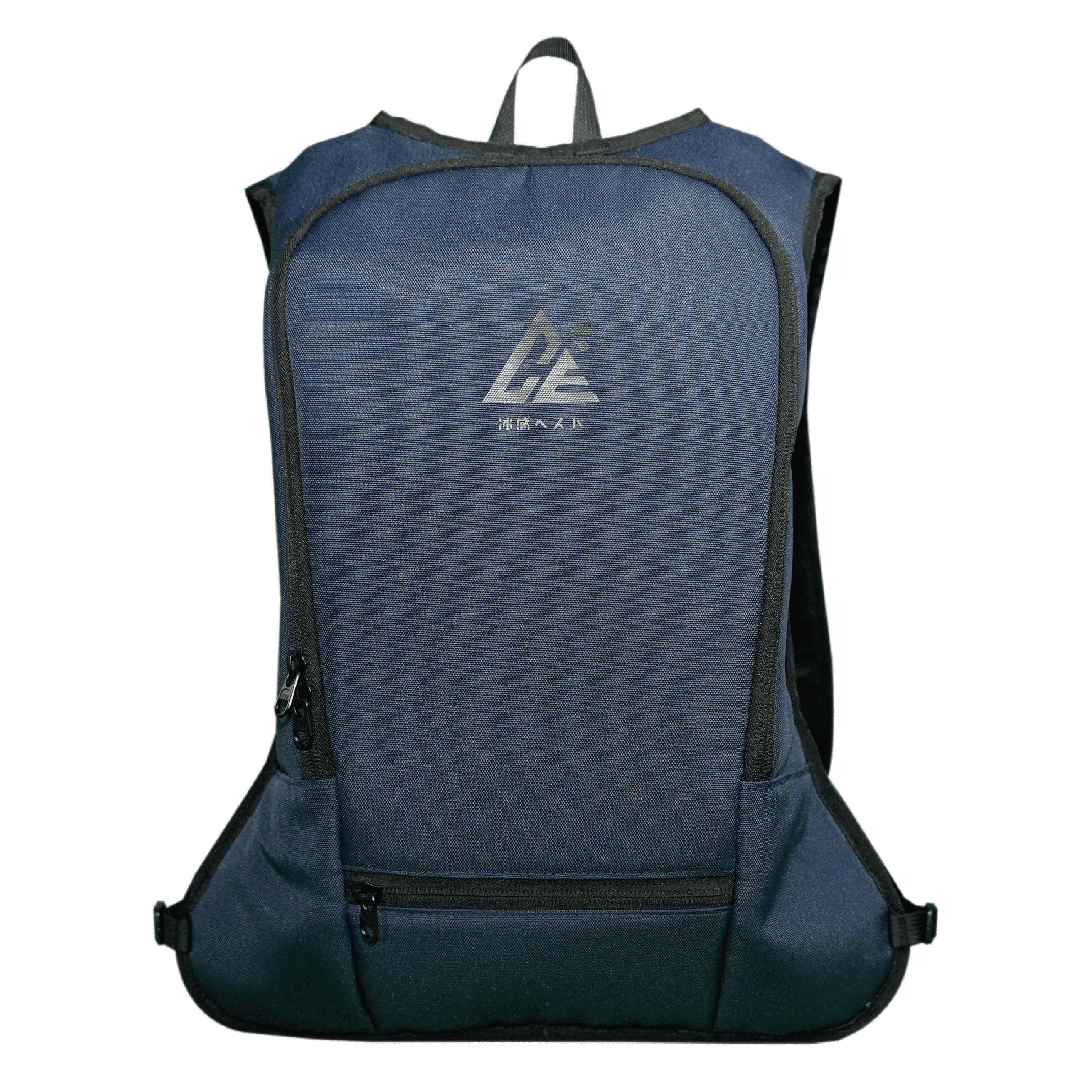
The dual cooling design does not replace ice with machinery. It moves the cold. Reusable ice packs chill a water reservoir carried in a backpack, a small electric pump pushes that chilled water through a tube loop worn against the body, and the loop returns the warmed water to the reservoir to be chilled again. The effect is continuous rather than localised: cooling spreads along the loop path instead of concentrating wherever a pack happens to press.
The published specification for the COOLWAVE Water-Circulation Cooling Vest is the reference point for this architecture:
COOLWAVE Water-Circulation Cooling Vest — published specifications
- Cooling duration: 3–4 hours
- Weight: within 2 kg
- Suitable temperature: below 10 °C (as listed)
- Pump output: 5V 150mA (max)
- Flow rate: max 320–370 ml/min
- Body material: PEVA
- Water bag: TPU; water bag cap in polypropylene
- Cooling tube: sand rubber (black)
- Shoulder strap: 600D polyester
- Contents: water-cooled vest backpack ×1, ice packs ×2
- Variants: Professional Model in Blue, Gray and Black; Basic Model
Two numbers in that list drive most of the site decision. The 5V, 150mA maximum pump rating means the vest is designed to run from a low-voltage power source such as a power bank rather than from site mains — a portable cooling vest in the literal sense, but one that still depends on someone charging something. The 3–4 hour cooling duration sets the planning unit for a shift: it is long enough for a half-shift block, and short enough that a double shift needs a planned reset.
The listed suitable temperature of below 10 °C should be read carefully. Before writing it into a purchase specification, confirm with the supplier whether it describes the chilled water inside the loop, the ice-pack condition, or an ambient range. Those are three different requirements and they lead to three different site procedures.
Passive ice-pack: cold contact without a power source
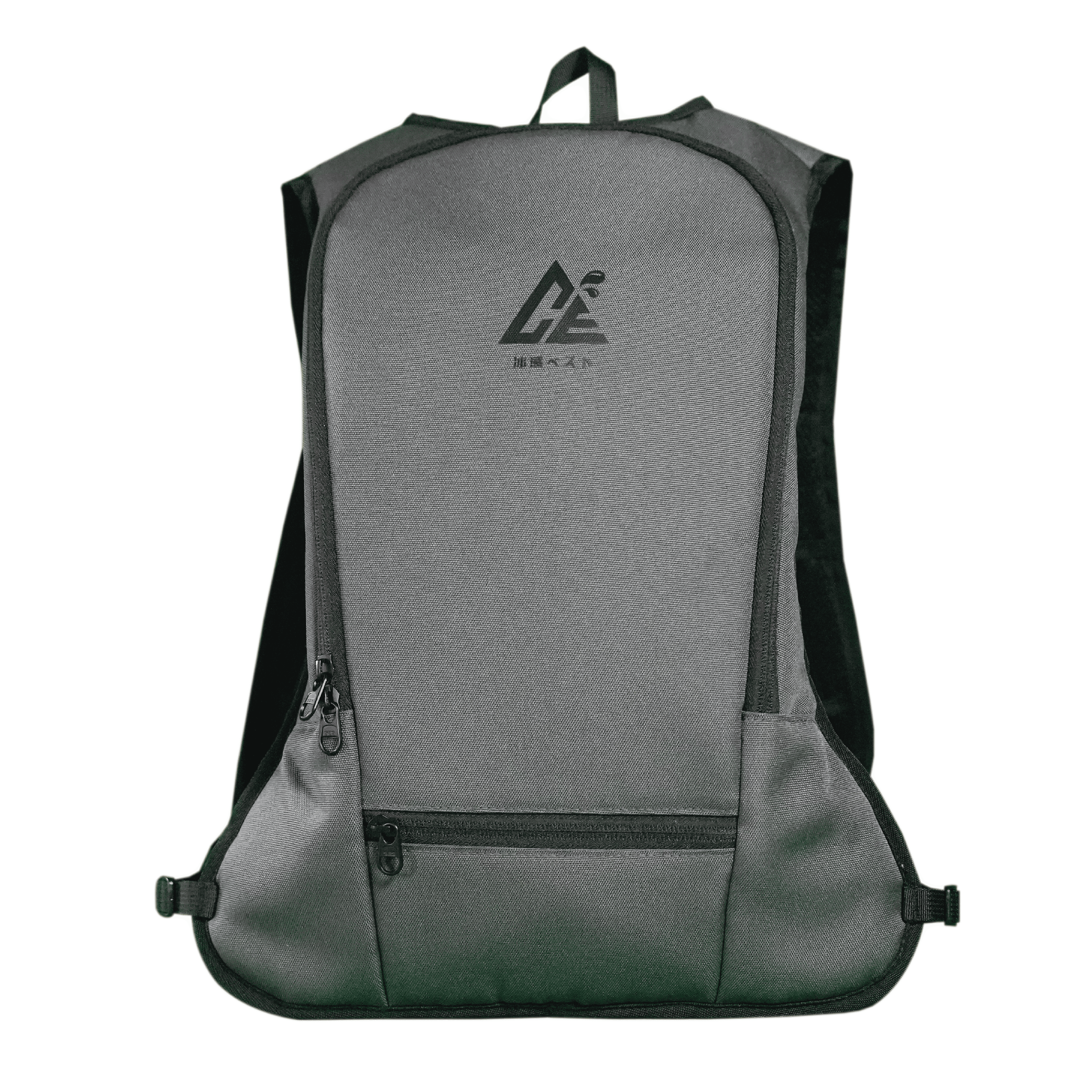
The passive option removes the entire power chain. Reusable ice packs are placed in the vest, adjustable straps hold them against the torso, and a portable backpack-style carrier keeps the load balanced. There is no pump, no water bag, no tubing and no battery. The documented operating mode is passive cooling activated by the ice packs, with a design emphasis on being lightweight, waterproof and breathable, and on a one-size-fits-all fit.
What the passive design gives up is control. Cold delivery is fixed at the moment the packs go in: it starts strong, tapers as the packs melt, and cannot be redistributed or extended without physically swapping packs. What it gains is independence. Any site with a freezer or a cooler box can run it, and no part of the cooling depends on a charged device.
Six Decision Gates: Matching the Vest to the Worksite
Work through these gates in order. The first gate that fails decides the architecture; there is no value in comparing weight or fit until power and shift length are settled.
Gate 1 — Is there a reliable 5V power source?
A water-circulation vest needs a charged low-voltage source for every shift block. That means charging capacity somewhere on site or in the crew vehicle, a rotation of power banks, and a discipline for confirming charge state at the start of a shift. If the answer is a locker room with sockets and a supervisor who checks equipment, circulation is viable. If the answer is a roadside traffic post, a temporary scaffold or a night-market pitch with no dependable outlet, the passive vest removes the problem instead of managing it.
Gate 2 — Does shift length fit inside the 3–4 hour window?
The published cooling duration of 3–4 hours maps cleanly onto work blocks of that length with a reset between them. Longer continuous exposure needs a planned ice-pack change and, for the circulation version, a charged spare. Ask the supplier whether the stated duration refers to pump runtime, ice-pack life or combined system performance — the answer determines what the reset procedure actually is.
Gate 3 — What are the ambient conditions?
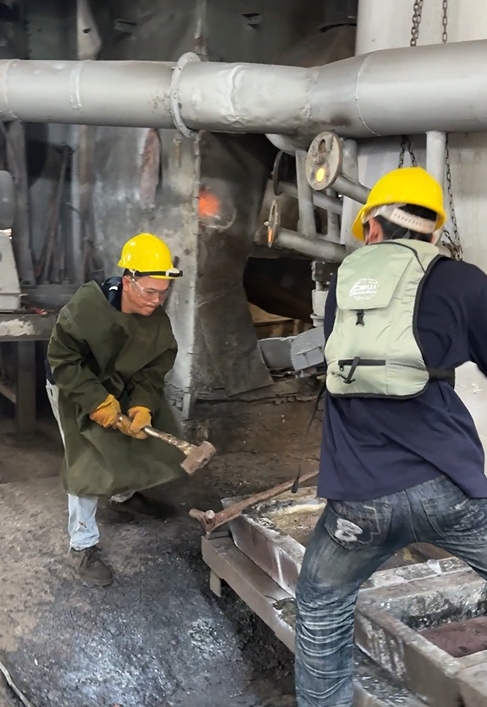
High ambient heat with radiant load, such as a metal-roof factory or a sheet-metal line, is the case where circulating chilled water earns its complexity: the cold is carried to the torso through the loop rather than sitting in one contact patch. Passive packs are simpler but their delivery profile is fixed, and in sustained heat the taper is felt sooner. Neither architecture removes the need for shade, water, work-rest cycles and acclimatisation; both are supports to a heat-management programme, not substitutes for one.
Gate 4 — How much does the worker move?
Mobility decides more purchases than buyers expect. The circulation unit carries a backpack with a reservoir and a pump, listed within 2 kg, plus tubing routed to the vest. That is workable at a stationary machine station, on a traffic post, or during a long patrol. It is less workable where a worker repeatedly enters confined spaces, wears a fall-arrest harness, or climbs in and out of a cab every few minutes. The passive vest has fewer parts to snag and nothing to disconnect, which is why it often suits high-mobility roles even where power is available.
Gate 5 — What documentation does the site require?
Compliance is where head-to-head comparisons usually stop being technical. Shokunin's cooling vest line has received the Disaster Prevention Product and Service Certification Award issued by the Taiwan Disaster Prevention Industry Association — a recognised product credential for disaster-prevention and heat-safety procurement in that market. Separately, because the circulation version contains a pump and is typically run from a power bank, electrical requirements should be confirmed for the destination market. The published materials reviewed for this article do not establish a product-specific CE, UKCA or ANSI marking, so that documentation should be requested during supplier qualification rather than assumed at the order stage.
Gate 6 — Who maintains it, and how often?
Ownership cost is not the purchase price. The circulation version introduces water-bag filling and rinsing, tube inspection, pump and connector checks, and power-bank rotation, alongside the ice packs. The passive version reduces maintenance to pack freezing, strap inspection and cleaning. Match the maintenance load to who actually does it: a site with a designated equipment clerk can run circulation; a distributed crew that manages its own kit is usually better served by the simpler system.
Site-by-Site: Where Each Option Wins
Sheet-metal and metal-roof factories. Sustained radiant heat, fixed workstations and available power make this the clearest case for water circulation. Workers stay in one zone for hours, the loop delivers cooling along the torso rather than at a single contact point, and a 3–4 hour duration aligns with a work block. The backpack is a minor constraint when the worker is not climbing.
Traffic control and roadside posts. These roles combine prolonged sun exposure with long stationary stretches and short vehicle movements. Circulation is workable where the crew vehicle carries charging capacity; where shifts rotate between posts without a power routine, a passive vest is the lower-risk deployment. Weight matters here — a unit listed within 2 kg plus a power bank is carried for the whole shift, not for a demonstration.
Construction sites. Mobility and PPE layering dominate. Where a harness, tool belt or frequent ladder work is involved, the passive vest's lack of tubing and reservoir is an operational advantage. Where a worker is fixed at a rebar station or a cutting bench for hours, circulation is the better thermal answer and the backpack does not interfere.
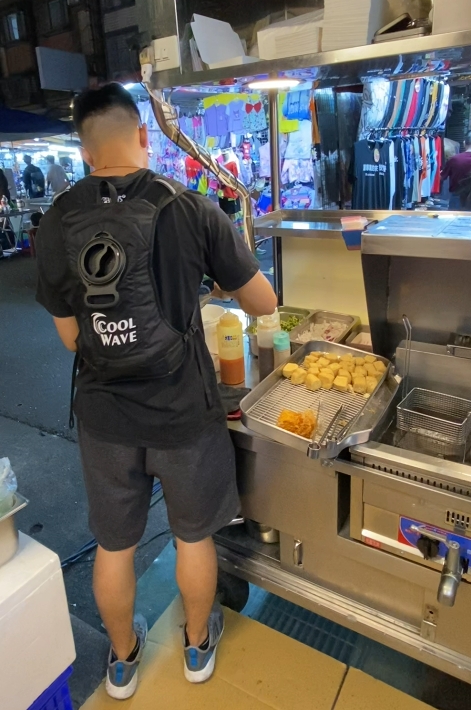
Street vendors and night markets. Long trading hours with unreliable access to charging make the passive option the practical default; a vest that requires a charged power bank at hour seven is a vest that stops working. Where a stall has dependable power, circulation is viable, but the simpler system is usually the one that survives a full season of daily use.
Comparison Table: Water-Circulation vs Passive Ice-Pack Cooling Vests
The table below separates documented specifications from characteristics that are not stated in the published material. Where a value is not published for the passive architecture, it is marked as not specified rather than estimated.
| Decision dimension | Water-circulation (COOLWAVE) | Passive ice-pack vest |
|---|---|---|
| Cooling mechanism | Reusable ice packs chill a reservoir; a pump circulates chilled water through a tube loop | Reusable ice packs held against the torso by adjustable straps; passive cooling activated by the packs |
| Power requirement | Requires a 5V low-voltage source such as a power bank | None — no pump, no battery |
| Pump specification | 5V 150mA (max); flow rate max 320–370 ml/min | Not applicable |
| Published cooling duration | 3–4 hours | Not specified in published materials; set by ice-pack melt and swap timing |
| Weight | Within 2 kg | Not specified in published materials |
| Components | Water-cooled vest backpack ×1, ice packs ×2, TPU water bag, sand-rubber cooling tube, 600D polyester shoulder straps, PEVA body | Vest body, adjustable straps, reusable ice packs, portable backpack-style carrier |
| Listed suitable temperature | Below 10 °C (as published) | Not specified in published materials |
| Mobility profile | Backpack plus routed tubing; best suited to stationary or semi-stationary roles | Fewer parts and no routing; suits frequent entry and exit, harness use and confined spaces |
| Site dependency | Charging routine plus freezer or cooler access for ice packs | Freezer or cooler access for ice packs only |
| Maintenance items | Water-bag filling and rinsing, tube and connector inspection, pump and power-bank rotation | Ice-pack freezing, strap and fabric inspection, cleaning |
| Documented credential | Shokunin cooling vest line holds the Disaster Prevention Product and Service Certification Award from the Taiwan Disaster Prevention Industry Association | Category recognised by NIOSH as a personal cooling system; product-specific certification to be confirmed per supplier |
Procurement Snapshot: Shokunin COOLWAVE
For buyers moving from evaluation to a pilot order, the commercial parameters of the water-circulation option are as follows: an ODM production model with a stated monthly capacity of 3,000 units, a minimum order quantity of 10 units, and lead times of 7–14 days. The water-cooled vest carries a 6-month warranty. The line is offered as a Professional Model in Blue, Gray and Black and as a Basic Model, so a mixed rollout can be specified without changing supplier.
| Commercial parameter | Stated value |
|---|---|
| Minimum order quantity | 10 units |
| Lead time | 7–14 days |
| Monthly capacity (ODM) | 3,000 units |
| Warranty | 6 months for the water-cooled vest |
| Variants | Professional Model (Blue, Gray, Black); Basic Model |
FAQ: Procurement Questions Buyers Ask Before Choosing
Is a cooling vest treated as PPE, and what certification should I ask for?
NIOSH classifies water-cooled garments, air-cooled garments, cooling vests and wetted overgarments as personal cooling systems used against heat exposure, which places cooling wearables inside occupational heat management. On the product side, Shokunin's cooling vest line holds the Disaster Prevention Product and Service Certification Award issued by the Taiwan Disaster Prevention Industry Association. Because the circulation version contains a 5V pump and is normally run from a power bank, electrical requirements should be confirmed separately for your destination market, and a product-specific CE, UKCA or ANSI marking should be requested as documentation during qualification rather than assumed.
Can the water-circulation vest run from an ordinary power bank?
The pump is rated at 5V, 150mA maximum, with a flow rate of 320–370 ml/min, which is a low-voltage load rather than a mains-dependent one. Two things still need confirming with the supplier before you standardise on a power bank: the output and capacity the bank must sustain across a 3–4 hour cooling cycle, and whether the stated 3–4 hour duration refers to pump runtime, ice-pack life or combined system performance. Where a shift block exceeds that window, plan a pack change and a charged spare as part of the shift routine.
What actually drives the cost difference between the two options?
The cost gap comes from component count and the routines around it, not from a single line item. The circulation version adds a pump, a TPU water bag, a sand-rubber tube loop, connectors and a backpack carrier, and it pulls in power banks, charging rotation and connector inspection. The passive version removes that chain but shifts cost into ice-pack inventory and swap labour, because cooling stops when the packs warm. Compare total cost over a season, including replacement packs, power-bank replacement cycles, cleaning labour and downtime for pack changes — a cheap vest that needs three pack swaps a shift is not the cheaper option.
How should we validate a sample before committing to a fleet order?
Test both architectures on the same worker, on the same task, on the same day. Record ambient temperature and shift length, confirm the measured flow on the circulation unit, check tubing routing against the PPE the worker already wears, and inspect the water bag and connectors for leakage after a full shift of movement. Run the passive vest past its cooling window to see how quickly the taper is felt at that workstation. A minimum order quantity of 10 units is small enough to run a genuine multi-worker pilot before scaling, and it is the pilot — not the specification sheet — that tells you which architecture your site can sustain.
What are the lead times and support terms for a pilot order?
Lead time is stated at 7–14 days against a monthly ODM capacity of 3,000 units, with a minimum order quantity of 10 units and a 6-month warranty on the water-cooled vest. That combination supports a staged rollout: pilot a small batch on one site or one crew, verify the charging and ice-pack routine in real conditions, then scale with the same supplier and the same specification. To start that process, request a sample or a quotation through Shokunin, and specify which site conditions the pilot has to survive.
Conclusion: Pick by Site Constraint, Not by Spec Sheet
Neither architecture wins everywhere, and any comparison that claims otherwise is describing a demo rather than a worksite. The water-circulation vest wins where power is dependable, work is semi-stationary, and the 3–4 hour cooling window fits the shift block — the COOLWAVE design, with its 5V 150mA pump, 320–370 ml/min flow, sub-2 kg weight and dual ice-pack-plus-loop architecture, is built for that profile. The passive ice-pack vest wins where power cannot be guaranteed, where mobility and PPE layering dominate, and where fewer parts mean fewer ways for a shift to go wrong.
The decision rule for procurement is short. Start with Gate 1: is there a reliable 5V charging routine? If no, stop and buy passive. If yes, check shift length against the cooling window, then mobility, then documentation, then who maintains the kit. Resolve those five questions and the architecture chooses itself — and the specification sheet becomes what it should be, a confirmation rather than a decision.
Next Step: Test the Architecture on Your Own Site
Shokunin supplies the COOLWAVE Water-Circulation Cooling Vest in Professional (Blue, Gray, Black) and Basic models, with a minimum order quantity of 10 units, 7–14 day lead times and a 6-month warranty on the water-cooled vest — enough to run a genuine pilot before a fleet commitment.
Request a sample, a quotation, or the full product catalogue to compare specifications side by side. Website: www.fstool.com.tw · Email: fsmarketing@fstool.com.tw · Download the catalogue: Shokunin product brochure (PDF)
Have Questions or Need More Details?
Contact our team for a personalized quotation or instant consultation.
Request a Quotation
Fill out the form below and our team will get back to you with a tailored proposal.
WhatsApp Direct Chat
Prefer to chat in real-time? Message us on WhatsApp for instant assistance & quick answers.
- Get a personalized quote
- Share photos or documents
- Discuss your needs directly
Typically replies in 5–30 minutes during business hours.