Ranking the COOLWAVE Water-Circulation Cooling Vests for Construction Sites
Ranking the COOLWAVE Water-Circulation Cooling Vests for Construction Sites
Shokunin's COOLWAVE line is not a good-better-best ladder. The Basic Model and the three Professional Models — Black, Gray, and Blue — share a single cooling platform: 3–4 hours of cooling per charge, under 2 kg total weight, a 320–370 ml/min flow rate, a PEVA/TPU water bag, a 600D polyester shoulder strap, and a sand rubber cooling tube. Because the hardware is identical across the series, the only ranking that helps a construction buyer is a ranking by intended work environment. On that basis, the Basic Model holds the top position for construction sites, general outdoor work, and metal sheet factories, while the Professional colorways extend the same platform into food stalls, street vending, and traffic control.
The COOLWAVE water-circulation cooling vest series runs on one shared cooling platform for construction and other high-heat workplaces.
Problem Definition: Construction Heat Is a Procurement Problem, Not a Comfort Problem
On a metal-roof site in August, or inside a sheet-metal factory where the roof radiates heat back onto the floor, the body's own cooling system stops keeping up long before the shift does. Sweating loses effectiveness as humidity and radiant heat rise, core temperature climbs, and the visible output — pace, accuracy, judgement — falls with it. The discomfort is obvious to the worker; the cost becomes obvious to the employer only after a slowdown, an error, or a heat-related stoppage.
That is why heat is now an obligation rather than a preference. In the United States, OSHA's General Duty Clause (Section 5(a)(1) of the OSH Act) requires employers to provide a workplace free from recognized hazards, and heat stress in high-temperature construction sites falls inside that requirement. Employers buying cooling equipment are therefore answering four procurement questions instead of one comfort question:
- How long does one charge last relative to an unbroken work block?
- What does the vest weigh on a worker who is climbing, bending, and carrying for eight hours?
- What happens when the cooling medium fails mid-shift?
- Who supplies replacements, spares, and warranty service across a full summer — and the seasons after it?
The COOLWAVE series is organised around those questions. Ranking it by colorway would be meaningless; ranking it by the work each configuration is meant to survive is the only ordering that produces a decision.
Industry Background: A Category That Has Moved Into Industrial Procurement
A cooling vest is no longer a novelty purchase. The industrial cooling vest market serving warehouse and logistics workers was valued at USD 412 million in 2024. Industrial applications took a 34.5% revenue share of the cooling vest market in 2025, making them the largest single segment, and Asia-Pacific accounted for a 38.2% revenue share in the same year, driven by rapid industrialisation. Heat-stress prevention products as a broader category, which includes cooling wearables, reached USD 2.86 billion globally in 2025.
One caution on those figures: published market-size estimates for cooling vests diverge widely depending on whether the scope covers vests alone or broader personal cooling systems. They are best used to gauge category momentum rather than to benchmark a purchase order.
Shokunin is the professional brand of Feng Shang Precision Co., Ltd., a manufacturer founded in 2009 and based in Luzhu District, Taoyuan City, Taiwan. The company operates a 1,000 m² factory with 30 employees and five R&D engineers, exports roughly 50% of its output, and serves the USA and ROC markets. Its COOLWAVE water-cooled vest has received the Disaster Prevention Product and Service Certification Award issued by the Taiwan Disaster Prevention Industry Association — recognition that positions the product as heat-protection equipment rather than summer apparel.
The COOLWAVE Platform: What Every Model in the Series Delivers
The specification does not change from model to model in this series. Every COOLWAVE water-circulation cooling vest carries the same core build:
- Cooling duration: 3–4 hours per charge
- Total weight: under 2 kg
- Circulation flow rate: 320–370 ml/min
- Water bag: PEVA/TPU
- Shoulder strap: 600D polyester
- Cooling tube: sand rubber
Two of those numbers do most of the work in a buying decision. The 3–4 hour cooling window is the difference between a vest that covers a working block and one that has to be swapped mid-task: Shokunin's own product comparison records that conventional water-cooled vests typically lose their cooling effect after roughly 30 minutes, while the COOLWAVE vest is rated for 3–4 hours. The same comparison notes that COOLWAVE uses reusable ice packs and durable fabric with minimal maintenance, whereas conventional water-cooled vests require frequent ice pack replacement and carry higher wear and tear.
Weight matters just as much where the vest is worn over existing workwear. Staying under 2 kg keeps it usable as outdoor work cooling gear for a full shift rather than an item a crew removes after an hour.
Leakage — the failure mode that most often ends a water-cooled vest's service life — is controlled at the material level. Shokunin specifies reinforced ice pack material and states that quality is 100% guaranteed before shipment.
Every model in the COOLWAVE range shares the same 3–4 hour cooling window, sub-2 kg weight, and 320–370 ml/min flow rate.
How This Ranking Was Built
This is deliberately not a performance ranking, because the performance is shared across the series. It orders the four configurations by how closely each one matches a specific deployment:
- Primary work environment — the heat source (radiant roof heat, direct sun, road surface, cooking equipment) and whether the site is enclosed or open.
- Continuous exposure — how long a worker stays in that environment without returning to a cooled space.
- Uniform and identification requirements — whether the vest has to sit beneath a high-visibility garment or blend into existing workwear.
- Fleet standardisation — how many units a crew needs, how they are issued, and how easily they can be reordered.
- Service and resupply — warranty handling, spare ice packs, and whether the supplier can repeat the order inside the same season.
Positions 2 to 4 are held by the three Professional colorways, which are the same vest with different trim colours. Treat them as a deployment-fit order, not as a statement that one colour cools better than another.
The Ranking: COOLWAVE Models by Intended Work Environment
COOLWAVE Basic Model — the construction default
Primary environments: construction sites, outdoor work, metal sheet factories.
The Basic Model takes first place because it is the configuration positioned for the environment this article is about. Construction, general outdoor work, and metal sheet factories share the same three demands: continuous heat load, physical labour, and a worker who cannot leave the task to cool down.
In stuffy metal-roof workplaces and sheet-metal factories, heat arrives from two directions at once — radiant heat from the roof structure and residual heat from metal stock — and a vest effectively becomes high-temperature operation cooling equipment rather than optional comfort gear. On open construction sites, the same vest answers a different version of the problem: long-hour sun exposure with no shade between tasks.
The shared specification is what makes the Basic Model workable in both settings. A 3–4 hour cooling window covers a meaningful work block; the sub-2 kg weight keeps it on during bending, carrying, and overhead work; and the 320–370 ml/min flow rate is the reason the cooling registers as continuous rather than intermittent. For steelworkers, electricians, and general site crews buying one worker cooling vest to cover a season, this is the version to start from.
COOLWAVE Professional Model — Black
Primary environments: food stalls, street vending, and outdoor duty where a dark colorway matches the crew's existing uniform.
The Professional Model is the same cooling vest on the same platform, positioned for environments where construction-style heat meets a different kind of exposure: standing work in food stalls, mobile street vending, and similar semi-permanent outdoor stations.
Cooking equipment, steam, and constant handling keep the vest close to grease and soiling throughout a shift, which is where the Black colorway is typically chosen. A darker finish stays presentable across a longer cleaning cycle than a light one, and for a vendor who owns one vest and has no backup, that is a practical consideration rather than a cosmetic one.
Because the cooling hardware is unchanged, the meaningful difference for a buyer is the ordering and cleaning routine — not the cooling output.
COOLWAVE Professional Model — Gray
Primary environments: traffic control and mixed outdoor duty.
For traffic-control crews, the colorway decision usually follows the uniform and the site's visibility rules rather than the cooling system. A cooling vest is not a substitute for high-visibility clothing: where a site requires high-visibility garments under ANSI/ISEA 107-2020 — Class 1, Class 2, or Class 3, depending on the working environment — the cooling vest belongs as an under-layer beneath the compliant outer garment, not in place of it.
Within that constraint, the Gray Professional Model is the neutral option. It pairs with a wide range of outer garment colours and reads as part of a standard workwear system when a crew is assembled from more than one trade.
COOLWAVE Professional Model — Blue
Primary environments: street vending, food stalls, and teams that want one standardised crew colour.
Blue ranks fourth only because it is the most specific of the three Professional colorways. It is chosen when a team wants a single recognisable colour across vendors, marshals, and helpers, or when the vest has to sit alongside an existing blue-based workwear system.
Cooling performance is identical to the Black and Gray Professional Models — the same 3–4 hour duration, the same sub-2 kg weight, the same materials throughout.
Reading the ranking correctly: Basic, Professional Black, Professional Gray, and Professional Blue all use the same water-circulation system and the same specification. Positions 2–4 are a colour-and-context order for non-construction heat environments, not a statement about relative cooling strength.
Step-by-Step: Selecting and Deploying COOLWAVE Vests on Site
Step 1 — Map the heat environment before choosing anything
List the actual conditions: enclosed metal-roof building, open slab in direct sun, roadside vending station, or moving traffic. The Basic Model covers the first two; the Professional colorways cover the third and fourth.
Step 2 — Measure unbroken exposure, not shift length
A 3–4 hour cooling window is valuable when a worker cannot return to a cooled space in the middle of a task block. If a crew can break every hour, one vest per worker is usually enough. If they cannot, plan more than one vest per worker and treat ice packs as consumables in rotation.
Step 3 — Standardise at crew level
Mixed colorways complicate issuing, replacement, and reordering. Choose one configuration per crew or per role and keep it consistent — since the cooling difference between colorways is zero, there is no performance reason to mix them.
Step 4 — Plan the cold chain
The reusable ice packs define the daily logistics: freezer space on site or nearby, a rotation cycle, and spare packs on hand. Reinforced ice pack material is Shokunin's control measure against leakage, and it is the part of the system most worth checking in a daily inspection routine.
Step 5 — Lock the commercial terms before the season starts
The minimum order quantity is 10 units, with a typical production lead time of 7–14 days and a monthly production capacity of 3,000 units. Water-cooled vests carry a 6-month warranty, acceptance is based on a pre-shipment test, payment is made in full before shipment, and freight is paid by the buyer.
Use Cases: Where Each Configuration Earns Its Place
- Construction sites and long-hour sun exposure — Basic Model; the priority is a cooling window that outlasts the task block without a shade break.
- Stuffy metal-roof workplaces and sheet-metal factories — Basic Model; radiant roof heat plus residual heat from metal stock makes continuous cooling gear a shift-length requirement.
- Steelwork and electrical installation — Basic Model; physical work under direct heat, where the sub-2 kg weight matters most.
- Food stalls — Professional Model; the colorway is matched to the vendor's uniform and cleaning routine.
- Street vending — Professional Model; chosen to match the vendor's existing setup and appearance standards.
- Traffic control — Professional Model, worn as an under-layer wherever the site requires high-visibility clothing under ANSI/ISEA 107-2020.
Because every COOLWAVE model shares one specification, crew standardisation and repeat ordering stay simple.
Comparison Table: COOLWAVE Models Side by Side
| Model / Colorway | Primary work environments | Cooling duration | Weight | Flow rate | Materials |
|---|---|---|---|---|---|
| COOLWAVE Basic Model | Construction sites, outdoor work, metal sheet factories | 3–4 hours | Under 2 kg | 320–370 ml/min | PEVA/TPU water bag; 600D polyester shoulder strap; sand rubber cooling tube |
| COOLWAVE Professional — Black | Food stalls, street vending, construction-adjacent outdoor duty | 3–4 hours | Under 2 kg | 320–370 ml/min | PEVA/TPU water bag; 600D polyester shoulder strap; sand rubber cooling tube |
| COOLWAVE Professional — Gray | Traffic control, mixed outdoor duty | 3–4 hours | Under 2 kg | 320–370 ml/min | PEVA/TPU water bag; 600D polyester shoulder strap; sand rubber cooling tube |
| COOLWAVE Professional — Blue | Street vending, food stalls, crew-standardised teams | 3–4 hours | Under 2 kg | 320–370 ml/min | PEVA/TPU water bag; 600D polyester shoulder strap; sand rubber cooling tube |
All four configurations share an identical cooling specification. The differences are the intended work environment and the colorway.
Long-Term Supply, Warranty, and Repeat-Order Readiness
Ranking is a one-off decision; supply is a recurring one. For contractors and distributors building a repeat-order programme, the operating terms are the part of the evaluation that compounds:
- Monthly production capacity: 3,000 units
- Typical production lead time: 7–14 days
- Minimum order quantity: 10 units
- ODM production services: available
- Warranty: 6 months on water-cooled vests
- Acceptance criteria: pre-shipment test
- Payment and freight: full payment with shipment after payment; freight paid by the buyer
Feng Shang Precision Co., Ltd., the manufacturer behind Shokunin, was established in 2009 and runs a 1,000 m² facility with 30 employees and five R&D engineers in Taoyuan City, Taiwan. Approximately 50% of output is exported, with the USA and ROC as the main markets.
A fleet or distribution programme gets simpler when the crew standardises on one cooling platform. Ice packs, cleaning routines, warranty handling, and replacement units all follow the same specification across every model in the COOLWAVE series, so a distributor stocking the line does not need separate parts logic per colorway — only the colorway mix its market actually asks for.
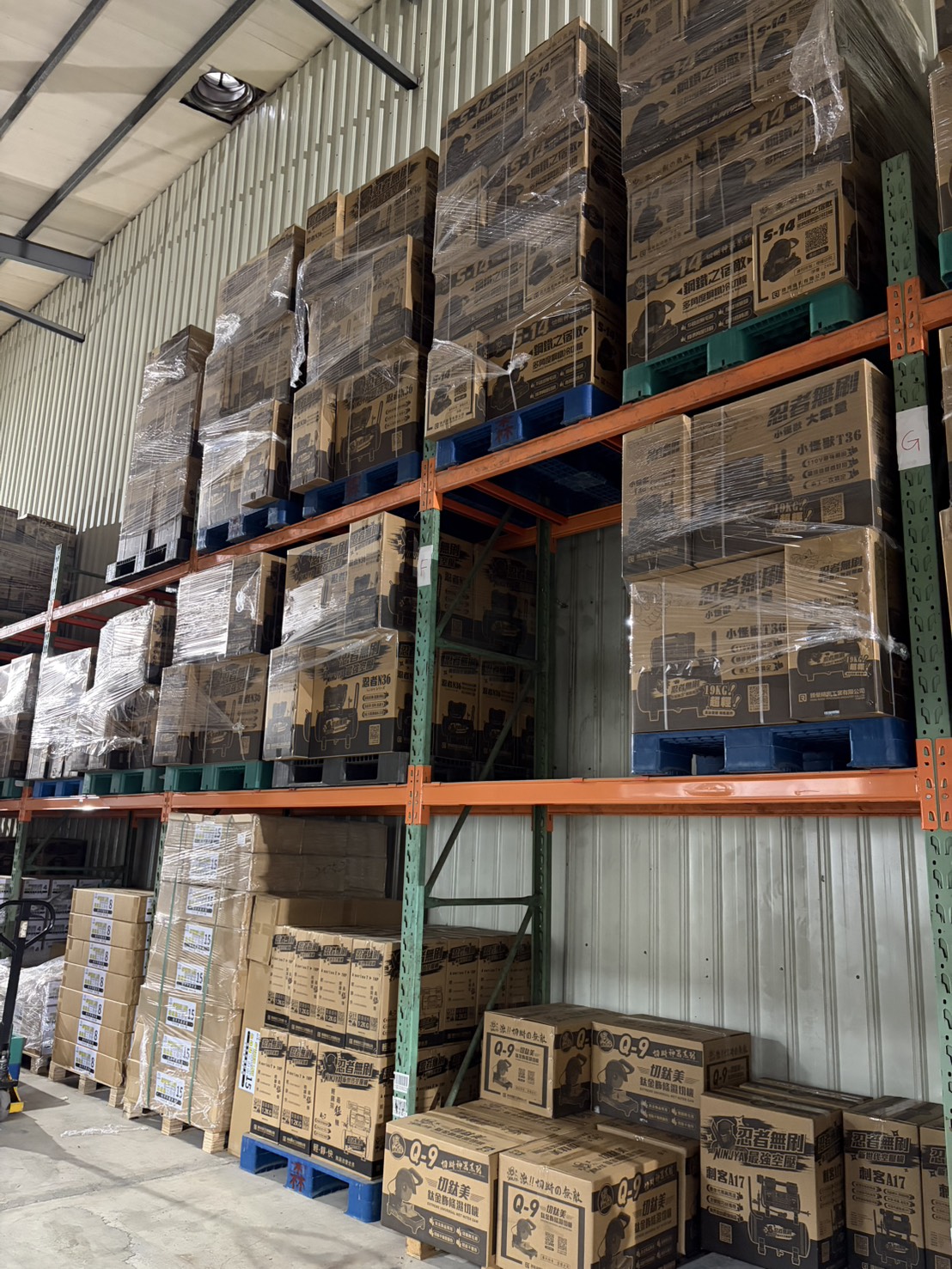
Monthly capacity of 3,000 units and a 7–14 day lead time support staggered orders across multiple sites.
Frequently Asked Questions
Does a COOLWAVE cooling vest help employers meet heat-safety obligations?
It supports them, but it does not replace them. In the United States, OSHA's General Duty Clause — Section 5(a)(1) of the OSH Act — requires employers to provide a workplace free from recognized hazards, and heat stress in high-temperature construction sites falls within that requirement. A water-circulation vest rated for 3–4 hours of cooling per charge gives a crew a longer unbroken cooling window than the roughly 30-minute window recorded for conventional water-cooled vests, but it sits inside a wider programme: hydration, work-rest cycles, shaded recovery, and training. Where a site also mandates high-visibility clothing under ANSI/ISEA 107-2020, the cooling vest is worn as an under-layer beneath the compliant outer garment.
What specifications do all COOLWAVE models share, and how do the models differ?
Every COOLWAVE water-circulation cooling vest in the series uses the same platform: 3–4 hours of cooling, under 2 kg total weight, a 320–370 ml/min circulation flow rate, a PEVA/TPU water bag, a 600D polyester shoulder strap, and a sand rubber cooling tube. Models differ by intended environment and colorway, not by cooling output. The Basic Model is positioned for construction sites, general outdoor work, and metal sheet factories. The Professional Models, available in Black, Gray, and Blue, add suitability for food stalls, street vending, and traffic control.
What are the minimum order quantity, payment, and freight terms?
The minimum order quantity is 10 units. Payment terms are full payment, with shipment after payment. Freight is paid by the buyer. Acceptance is based on a pre-shipment test, and the ice packs use reinforced ice pack material with quality 100% guaranteed before shipment.
How is quality validated before an order ships?
Validation happens at two points. First, the ice packs use reinforced ice pack material — Shokunin's control measure for the leakage risk that shortens the service life of water-cooled vests. Second, the stated acceptance criterion is a pre-shipment test, so the shipment is tested before it leaves rather than after it arrives. Buyers standardising a full crew should confirm the acceptance procedure when the order is placed, so the pre-shipment test reflects the intended site conditions.
What lead time and production capacity should a distributor or contractor plan for?
Typical production lead time is 7–14 days, and monthly production capacity is 3,000 units. That combination matters for repeat-order planning: a contractor rolling cooling vests out across several sites, or a distributor building stock ahead of a summer season, can schedule staggered orders inside the same month. Shokunin also provides ODM production services and backs its water-cooled vests with a 6-month warranty. For the full model range, specifications, and ODM briefs, download the Shokunin product brochure or contact the team directly.
Conclusion: One Platform, Four Deployment Decisions
The COOLWAVE water-circulation cooling vest series answers one engineering question — how to keep a worker in 3–4 hours of continuous cooling at under 2 kg — and then repeats that answer across four configurations. Ranked by intended environment, the Basic Model takes first place for construction sites, outdoor work, and metal sheet factories; the Professional Model in Black follows for food stalls and street vending; the Professional Model in Gray suits traffic control and mixed outdoor duty; and the Professional Model in Blue fits teams standardising on one crew colour.
Because the specification is shared across the line, the ranking is about fit rather than about better or worse. A crew that chooses by environment, standardises at team level, and locks its lead time and warranty terms before the season starts gets the same cooling platform whichever colorway it orders.
Next Step: Sample, Quote, or Distributor Programme
Shokunin supplies the COOLWAVE range with a minimum order of 10 units, a typical 7–14 day lead time, 3,000 units monthly capacity, ODM production services, and a 6-month warranty on water-cooled vests.
Download the Shokunin product brochure | Visit fstool.com.tw
Email: fsmarketing@fstool.com.tw | WhatsApp: +86 18858260055 | Phone: +886 3-312-6606
Feng Shang Precision Co., Ltd. (Shokunin), No. 155-17, Sec. 2, Nanzhu Rd., Luzhu Dist., Taoyuan City 338454, Taiwan. Business hours: Monday to Friday, 8:30 AM – 5:40 PM.
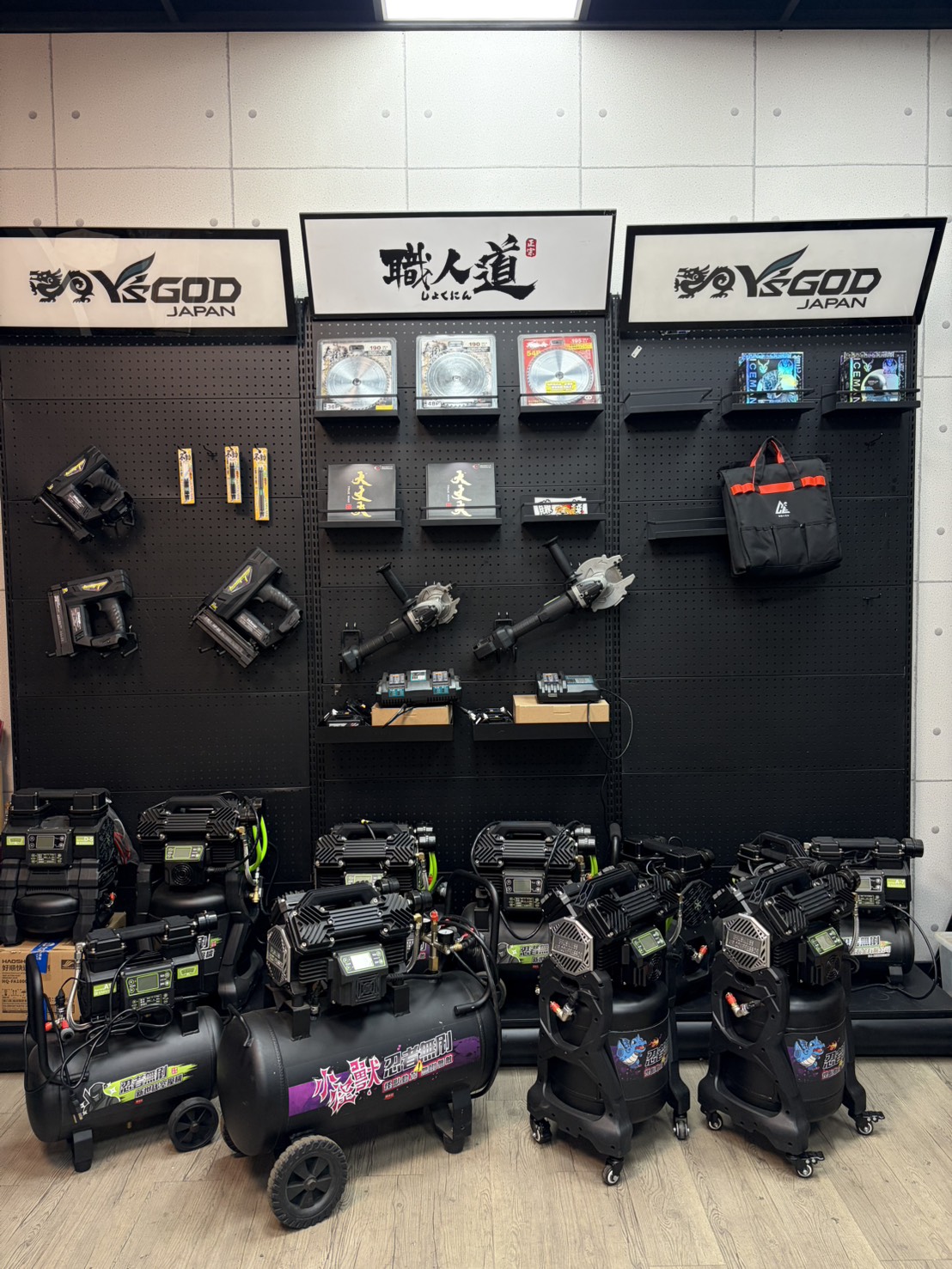
COOLWAVE cooling vest range — Basic and Professional colorways on one shared water-circulation platform.
Have Questions or Need More Details?
Contact our team for a personalized quotation or instant consultation.
Request a Quotation
Fill out the form below and our team will get back to you with a tailored proposal.
WhatsApp Direct Chat
Prefer to chat in real-time? Message us on WhatsApp for instant assistance & quick answers.
- Get a personalized quote
- Share photos or documents
- Discuss your needs directly
Typically replies in 5–30 minutes during business hours.