
Ice Water Circulation Cooling Vest: Power, Endurance, and OEM Options for Industrial Buyers
An ice water circulation cooling vest is a personal heat-stress protection garment that circulates chilled water around the torso to cool the wearer in high-temperature workplaces. Unlike simple evaporative or gel vests, it uses a pump to move ice water through cooling tubes, making it one of the more effective options for construction, outdoor work, metal-sheet factories, street vending, and similar standing or mobile jobs. This guide explains what to check before buying, and how the Shokunin COOLWAVE Dual Cooling Water Cooling Vest fits into OEM/ODM procurement.
What Is an Ice Water Circulation Cooling Vest?
An ice water circulation cooling vest is a wearable cooling system built around a water bag, a small pump, and a network of cooling tubes worn against the body. Ice packs lower the water temperature; the pump moves that chilled water through the tubing; and the wearer’s torso loses heat to the circulating water. Because the water keeps moving, the vest does not rely on a single pocket of melted ice, which tends to produce short-lived and uneven cooling.
The mechanism matters for procurement decisions. Passive ice-pack vests stop cooling when the pack next to the body warms up, while a circulating design is able to transfer heat away from the skin more continuously and deliver a more uniform cooling effect. That is why active circulatory cooling methods using ice water are increasingly deployed in industrial sectors to reduce occupational heat stress.
Where do these vests get used?
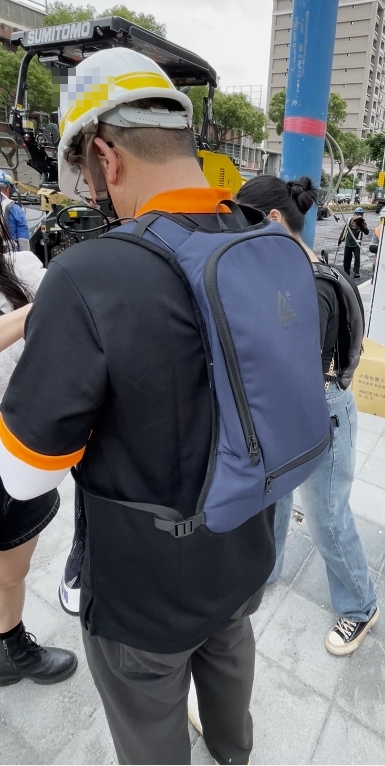
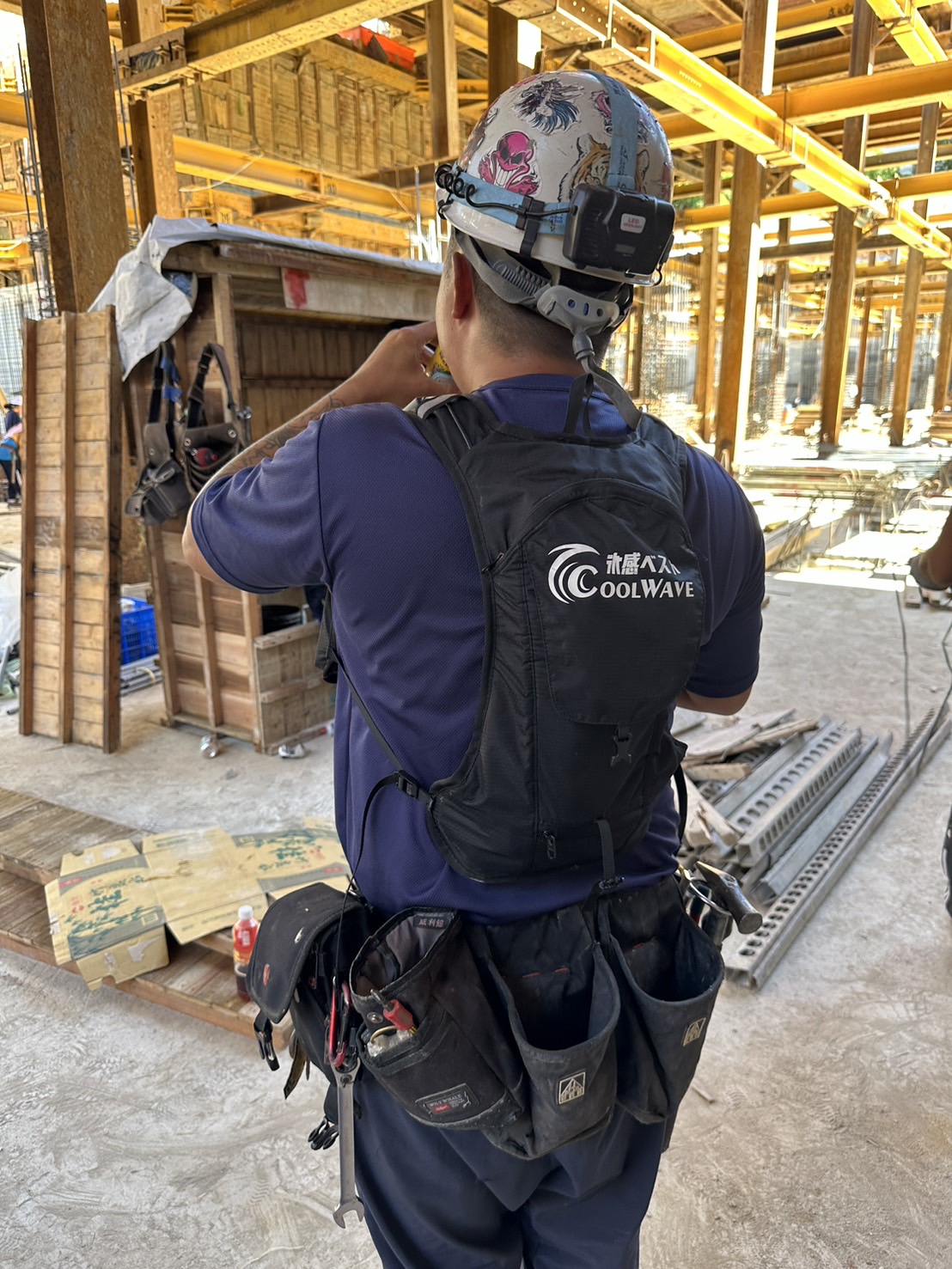
- Construction sites
- Outdoor, prolonged-sun-exposure work
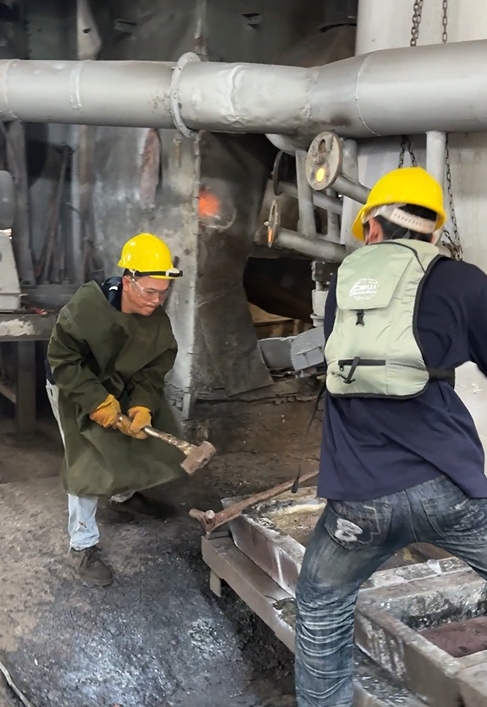
- Metal-sheet factories and other process-adjacent factory floors
- Street vending and food stall operations
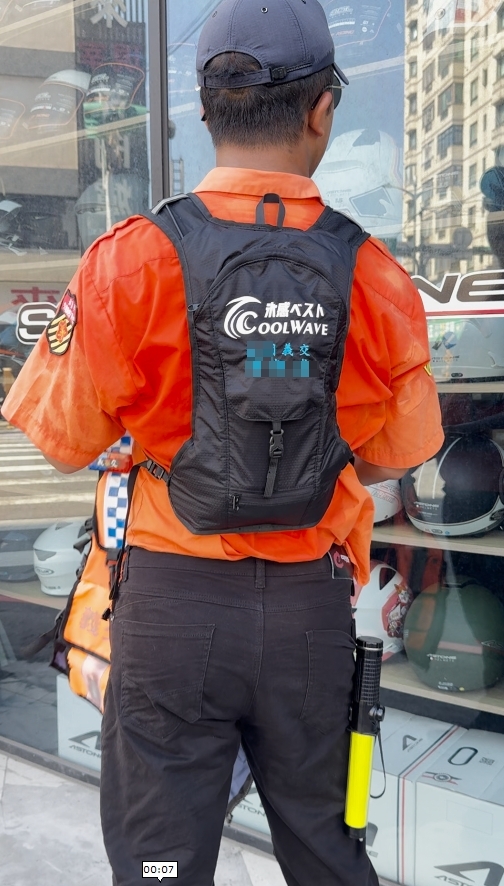
- Traffic control and other standing outdoor roles
Shokunin, the professional e-commerce brand of Feng Shang Precision Co., Ltd., markets this type of product under the name COOLWAVE Water-Circulation Cooling Vest. It is one segment of a portfolio that also includes air compressors, cut-off machines, and other professional tools.
Why Industrial Buyers Are Moving Toward Circulating Cooling
The broader personal cooling device market was valued at USD 25.16 billion in 2024 and is projected to reach USD 94.85 billion by 2035. The narrower cooling vest market was estimated at roughly USD 215 million in 2024, with expectations to grow to USD 385 million by 2033. Asia Pacific is considered the fastest-growing region, driven by rapid industrialization and a large outdoor work population. Industrial applications—including construction and manufacturing—held the largest cooling vest market share at 34.5% in 2025.
For a procurement professional, these numbers mean three things. First, heat protection is no longer a niche accessory purchase; it is a standard category in industrial safety budgets. Second, the supply chain is global and maturing quickly, which makes product specification and vendor verification more important. Third, circulating water-cooled vests are increasingly part of the conversation, particularly in regions with long summers and heavy outdoor labor.
None of these figures changes the fundamental buying question: Which cooling vest will keep my specific workers safe, and which supplier can deliver it reliably?
What to Look for in a Professional Ice Water Circulation Cooling Vest
Buyers evaluating a circulating cooling vest should separate “nice to have” features from verifiable performance and supply terms.
1. Cooling duration and power model
Cooling duration determines how many hours one ice refill can cover. The COOLWAVE basic model is rated for 3 to 4 hours of cooling, which fits a typical work shift segment. Its pump output is 5V 150mA (max), and the maximum flow rate is 320–370 ml/min. The pump runs on low voltage, which is an important factor when workers are in humid or dusty environments.
2. Weight and portability
A vest that is too heavy will create a new ergonomic problem. COOLWAVE is designed to stay within 2 kg of total weight. That keeps it practical for workers who need to climb, bend, or carry materials during a shift.
3. Material and durability
Workplace PPE must handle repeated use, contact with tools, and washing. In the COOLWAVE design, the shoulder strap material is 600D polyester, the water bag is TPU, the outer material is PEVA, the water bag cap is polypropylene, and the cooling tube is sand rubber. These materials are selected for abrasion resistance, water containment, and flexibility rather than for looks.
4. Ice-pack design
Two ice packs are included with the vest. Passive ice-pack cooling is part of the system’s design: it requires no external power supply for the ice itself, and the low-voltage pump can be powered by a portable power bank. That combination supports the “power-bank cooling vest” and “portable cooling vest” use case in places where wall power is not available.
5. Fit and adjustability
The vest uses an adjustable one-size-fits-all design. This matters for procurement teams who need one SKU to fit a wide range of body sizes across shifts.
Certification and Patents: What the COOLWAVE Vest Actually Holds
For an industrial buyer, certification is not a badge to collect: it is a risk-control signal. Three documents are relevant for the COOLWAVE vest.
Disaster Prevention Product and Service Certification Award — issued by the Taiwan Disaster Prevention Industry Association. This is an award-backed certification that recognizes the product as a disaster-prevention item, which is particularly relevant where heat stress is treated as a workplace safety issue.
Water-cooled vest patent certificate — patent number I886033, issued by the Intellectual Property Office, Ministry of Economic Affairs (ROC), with an issue date of June 1, 2025, covering the water-cooled vest structure and cooling system under the Patent Act of the Republic of China. The patent term runs until 2044-08-27.
Quality and electrical compliance context — industry guidance notes that cooling systems generally need ISO 9001:2015 quality management and often require CE or UL marks for electrical components. A buyer should always ask the supplier to confirm which electrical-component and quality certifications apply to the exact model being purchased.
For OEM/ODM projects, the patent is a key competitive point. A patented vest structure reduces the risk of design infringement disputes and gives the buyer a documented technical basis for the product they plan to brand.
COOLWAVE Dual Cooling Vest Specifications
| Specification | COOLWAVE Water-Circulation Cooling Vest (Basic Model) |
|---|---|
| Product type | Industrial cooling apparel / PPE |
| Cooling duration | 3–4 hours |
| Weight | Within 2 kg |
| Suitable temperature | Below 10°C (coolant/water temperature context) |
| Shoulder strap material | 600D polyester |
| Outer material | PEVA |
| Water bag material | TPU |
| Water bag cap | Polypropylene |
| Cooling tube | Sand rubber (black) |
| Pump output | 5V 150mA (max) |
| Flow rate | Max 320–370 ml/min |
| Package contents | Water-cooled vest backpack ×1, ice packs ×2 |
These specifications illustrate what “ice water circulation” means at the component level. The 5V pump can run from a standard power bank, which is why the product is frequently described as a power-bank cooling vest or portable cooling vest. The 320–370 ml/min flow is sufficient to move chilled water across the torso without requiring a heavy, high-voltage pump.
Use Cases and Field Evidence
Documented deployments include construction sites, outdoor work areas, metal sheet factories, street vendors, traffic control, and fishing. A case reference from Taiwan describes 100 units deployed in high-temperature environments over a period associated with the buyer’s 10-year relationship. Users reported effective body cooling, heatstroke prevention, improved work efficiency, and greater worker comfort.
The practical takeaway is not “one vest fits every job.” The takeaway is that the same passive ice-pack plus circulating pump design has worked across both stationary factory roles and highly mobile outdoor roles.
OEM and ODM Capabilities for Cooling Vest Projects
For buyers who need their own brand, the most relevant capability is ODM production. Shokunin/Feng Shang Precision provides ODM production services, which enables customized product development under the customer’s brand rather than a pure build-to-print arrangement.
Operationally, the following numbers matter:
- MOQ: 10 units
- Lead time: 7–14 days
- Monthly capacity: 3,000 units
- After-sales: 6-month warranty for the water-cooled vest
- Quality control: Pre-shipment testing and inspection
An MOQ of 10 units is unusually low for an ODM production program. It allows evaluation-stage buyers to test a small batch before committing to a larger program. The 7–14 day lead time is relevant for stocking distributors that need seasonal inventory. The 3,000-unit monthly capacity tells a buyer whether the supplier can scale when a construction project expands or a retail pilot succeeds.
Shipping and payment terms
Standard terms are shipment after payment, freight paid by the buyer, and full payment required. Buyers should factor freight cost into their total landed cost calculation and should confirm the Incoterms used by their freight forwarder.
Step-by-Step: How to Evaluate a Cooling Vest Supplier
- Define the heat-stress scenario. How long are workers outdoors? Is the heat dry or humid? Are they moving or standing? This determines whether 3–4 hours of cooling and a pump-driven vest are the right fit.
- Set physical requirements. Weight limit, battery/power source, material durability, splash/water resistance, and maintenance access.
- Check certification and patents. At minimum, ask for the exact certificate name, issuing authority, certificate number, and scope. For COOLWAVE, that is patent I886033 plus the disaster-prevention award.
- Ask for a reference deployment. A supplier that has deployed into similar sites can explain practical issues like how often to swap ice packs and how to drain the bag.
- Order a pre-production sample. Small MOQ makes this easier: request 10 units, run a week of field testing, collect worker feedback, then scale.
- Confirm after-sales and spare parts. A 6-month warranty only helps if the buyer can get replacement pumps or bags when needed.
Comparison: Circulating Vest vs. Other Cooling Vest Technologies
Industrial buyers often compare active circulating vests with phase-change-material (PCM) vests and simple evaporative vests. The table below summarizes the differences based on the verified market data and the product facts available for COOLWAVE.
| Technology | Cooling mechanism | Power requirement | Typical advantage | Typical limitation |
|---|---|---|---|---|
| Ice water circulation | Pump moves chilled water through tubes | Low-voltage pump (e.g., 5V 150mA) | Continuous, uniform torso cooling; can run from power bank | Requires ice packs and pump maintenance |
| PCM (phase change material) | Material stores cold and releases it while changing phase | None | No moving parts; lightweight option | Cooling duration limited by pack temperature; needs re-freezing |
| Evaporative / hybrid | Airflow and moisture evaporation | Usually fan-assisted or none | Lightweight; lower cost | Performance drops in humid environments |
Verified market data shows PCM cooling vests captured 28.7% of the market in 2025 as the fastest-growing technology segment. That does not mean PCM is “better” for every buyer. For stationary hot work where continuous cooling across the torso is the priority—such as metal-sheet factories—an ice-water circulating design can be the stronger fit because it actively moves cooled water rather than relying on a passive pack pressed against the body.
Use-Case Fit: Choosing the Right Cooling Vest for the Job
Metal-roof and metal-sheet factories
Factories under metal roofs accumulate heat during long summer afternoons. Workers stay in one zone for hours, which makes continuous circulation valuable. The COOLWAVE design can be worn under a standard work shirt, and the backpack arrangement keeps the pump and water bag out of the way.
Construction and prolonged sun exposure
Construction workers move across open terrain in direct sun. Weight, range, and speed of donning matter. The 2 kg total weight and adjustable one-size-fits-all strap system are designed for this type of mobility.
Street vendors and food stalls
Street vendors cook and serve in uncovered stalls where heat radiates from cooking equipment and the sun together. Passive ice-pack cooling requires no power for the ice, and a power bank can run the pump without an extension cord.
Traffic control
Traffic controllers stand for long periods in fixed positions. Cooling duration and visible fit matter more than walking mobility. Documented images from traffic-control use indicate that the vest can be worn over the uniform without interfering with a safety vest.
Market Context for 2026 Procurement
By 2026, the personal cooling device market is no longer an early-adopter category. The market data from 2024 already showed strong expansion, and Asia Pacific is considered the fastest-growing region for cooling vests specifically. For industrial PPE buyers that means several things:
- Prices are becoming more competitive as more suppliers enter.
- Certification quality is becoming a differentiator, not a checkbox.
- Technical parameters like pump flow, battery compatibility, and material durability matter more when comparing vests.
- OEM/ODM suppliers with spare capacity—like Shokunin’s 3,000 units per month—can support pilot programs without requiring huge minimums.
Buyers should also remember that “ice water circulation” and “dual cooling water cooling vest” are related but not identical phrases in product listings. “Dual cooling” often refers to the combination of ice-pack cooling and water circulation. COOLWAVE is a water-circulation vest whose key features include passive ice pack cooling, no power required for the ice itself, lightweight portability, adjustable sizing, and disaster-prevention certification.
Frequently Asked Questions
Is the COOLWAVE cooling vest certified for industrial use?
The COOLWAVE Water-Circulation Cooling Vest has received the Disaster Prevention Product and Service Certification Award from the Taiwan Disaster Prevention Industry Association. The underlying water-cooled vest structure and cooling system are protected by patent I886033 from the Intellectual Property Office, Ministry of Economic Affairs (ROC). Buyers should still verify the electric pump component’s regional compliance marks against their own market requirements.
What OEM/ODM capabilities does Shokunin offer for cooling vests?
Shokunin/Feng Shang Precision provides ODM production services for the cooling vest. The minimum order quantity is 10 units, typical lead time is 7–14 days, and monthly production capacity is 3,000 units. A 6-month warranty applies to the water-cooled vest. Buyers can test a small branded batch before scaling to a larger program.
How long does the ice water cooling last?
The COOLWAVE basic model is rated for 3–4 hours of cooling per ice refill. The low-voltage pump (5V 150mA max) can be powered by a portable power bank, which makes it suitable for sites without wall power.
Can I get a sample order before committing to volume?
Yes. The 10-unit MOQ functions as a practical sample threshold. Order 10 units, run a field trial, and collect worker feedback on cooling duration, fit, and comfort before moving to a larger order. Pre-shipment testing is part of the supplier’s quality-control process.
How long does production and delivery take?
Typical production lead time is 7–14 days. Freight is paid by the buyer, and shipment occurs after payment. Buyers should add transit time to the production lead time when planning seasonal inventory.
Conclusion and Next Step
An ice water circulation cooling vest is a practical heat-stress control tool when the workplace requires continuous torso cooling and workers stay active for several hours. The Shokunin COOLWAVE Dual Cooling Water Cooling Vest provides 3–4 hours of cooling, a 5V pump compatible with portable power banks, an adjustable one-size-fits-all design, documented deployments in construction and factory environments, and ODM terms that let buyers start with just 10 units.
For procurement teams, the immediate next step is to request the full technical sheet and compare the pump, bag material, and certification documents against your site’s heat-stress plan.
Want the full product specification and ODM terms?
Shokunin is the professional e-commerce brand of Feng Shang Precision Co., Ltd. (No. 155-17, Sec. 2, Nanzhu Rd., Luzhu Dist., Taoyuan City 338454, Taiwan). Contact: fsmarketing@fstool.com.tw | Phone: +886 3-312-6606 | WhatsApp: +86 18858260055
Have Questions or Need More Details?
Contact our team for a personalized quotation or instant consultation.
Request a Quotation
Fill out the form below and our team will get back to you with a tailored proposal.
WhatsApp Direct Chat
Prefer to chat in real-time? Message us on WhatsApp for instant assistance & quick answers.
- Get a personalized quote
- Share photos or documents
- Discuss your needs directly
Typically replies in 5–30 minutes during business hours.