
How to Choose an Ice Water Circulation Cooling Vest for OEM Programs and Industrial Heat Safety
An ice water circulation cooling vest is a wearable personal cooling device that uses chilled water flowing through tubes inside the vest to remove body heat in high-temperature work environments. The practical question for OEM buyers and industrial procurement teams is no longer whether such vests work, but how to select a model that can be customized, delivered on schedule, and trusted across an entire worker safety program. This article explains what matters when evaluating an ice water circulation cooling vest for OEM/ODM projects, what the Shokunin COOLWAVE offers as a reference option, and how to plan for certification, batch delivery, and long-term supply.
Problem Definition: Heat Stress Is Now a Procurement Issue, Not Just a Weather Issue
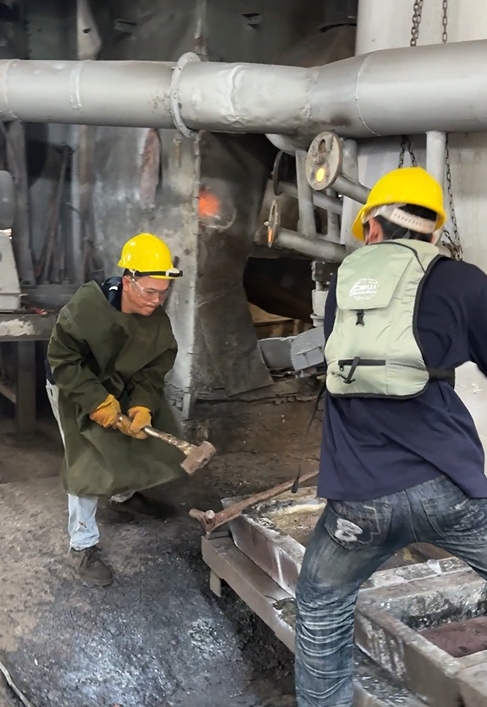
Outdoor and semi-outdoor workers in construction, metal sheet factories, street vending, and traffic control are exposed to prolonged heat that can reduce focus, slow physical work, and create serious heat stress risks. Many operations have moved beyond general heat safety guidance and are looking for concrete, repeatable controls: a cooling product that a worker can wear for hours, that does not interrupt the task, and that a company can purchase or distribute under a clear specification.
The buying problem, therefore, has several layers:
- Evaluation layer: How do you compare a passive ice pack vest with an active circulation vest?
- Execution layer: What parameters matter when the vest must work across job sites for a full shift?
- OEM layer: If you are a brand, distributor, or program manager, can the manufacturer customize the product and meet your volume and timeline?
This article is written primarily for buyers and program owners at the Evaluation and Execution stages. The goal is not to rank every model on the market, but to give you a repeatable framework for choosing a dual cooling water cooling vest for your project.
Industry Background: A Growing Market for Personal and Industrial Cooling
The global market for personal cooling devices was valued at USD 25.16 billion in 2024 and is projected to reach USD 94.85 billion by 2035, according to Market Research Future. Within that broader category, the global cooling vest market was estimated at approximately USD 215 million in 2024, with a projected rise to USD 385 million by 2033 (Dataintelo). These numbers reflect a market that is expanding beyond niche outdoor products into structured workplace heat safety.
Two additional data points are relevant when you select a cooling vest:
- Industrial applications, including construction and manufacturing, held the largest cooling vest market share at 34.5% in 2025 (Dataintelo).
- Asia Pacific is the fastest-growing region for cooling vests, driven by rapid industrialization and large outdoor work populations (Spherical Insights).
From an engineering perspective, active circulatory mechanisms such as ice water circulation are increasingly used in industrial sectors to mitigate occupational heat stress (Strategic Market Research). In practical terms, this means buyers can expect more suppliers to offer water circulation vests, but not every supplier can demonstrate the same level of product structure, certification, and production continuity.
Detailed Solution: What an Ice Water Circulation Cooling Vest Should Deliver for OEM and Industrial Buyers
When a buyer evaluates an ice water circulation cooling vest for an industrial program or OEM project, the product should be judged on five dimensions: cooling principle, wearability and safety, operating parameters, certification and supporting evidence, and manufacturer capability.
1. Cooling Principle: Passive Ice Pack vs. Active Water Circulation
An ice water circulation cooling vest generally uses chilled water or ice packs as the cold source. In the Shokunin COOLWAVE Water-Circulation Cooling Vest, the system uses passive ice pack cooling and requires no power. This is an important distinction: a vest that relies on a battery or pump continuously may offer more active circulation, but it introduces charging, maintenance, and potential failure points. A passive ice pack vest with a water circulation design can be lighter, simpler to deploy, and easier for a worker to wear throughout a shift.
For OEM buyers, this also affects the bill of materials and after-sales complexity. Fewer electronic parts means fewer spare parts to stock and fewer electrical safety questions.
2. Weight, Portability, and One-Size-Fits-All Design
A cooling vest only works if workers actually wear it. The Shokunin COOLWAVE is designed to weigh within 2 kg and is described as lightweight and portable. Its adjustable one-size-fits-all design allows the same inventory unit to serve different body sizes, which is a practical advantage for companies that need to distribute vests across a workforce quickly.
From a procurement perspective, ask the supplier for the total weight, strap material, water bag material, and closure system. These details determine comfort over a 3-to-4-hour wearing period.
3. Operating Parameters That Affect Cooling Performance
Not all cooling vests perform the same way in a hot environment. Here are the parameters used to define the Shokunin COOLWAVE:
| Parameter | Value / Description |
|---|---|
| Cooling duration | 3–4 hours |
| Total weight | Within 2 kg |
| Suitable environment | Designed for high-temperature environments |
| Shoulder strap material | 600D polyester |
| Vest material | PEVA |
| Water bag material | TPU |
| Water bag cap | Polypropylene |
| Cooling tube | Sand rubber (black) |
| Pump output | 5V 150mA (max) |
| Flow rate | Max 320–370 ml/min |
| Package contents | Water-cooled vest backpack × 1, ice packs × 2 |
For sourcing, these specifications help a buyer calculate how many units are needed per shift, how long a worker can stay cool, and how much replacement or accessory inventory is required.
4. Certification and Evidence of Field Use
Industrial buyers should not rely only on brochure claims. In Taiwan, the COOLWAVE product has received the Disaster Prevention Product and Service Certification Award issued by the Taiwan Disaster Prevention Industry Association. In addition, the water-cooled vest structure and cooling system is covered by Taiwan patent I886033 (Intellectual Property Office, Ministry of Economic Affairs, Republic of China), with the patent valid until August 27, 2044.
The product has also been deployed in real working conditions by construction sites, outdoor workers, metal sheet factories, and street vendors. In one documented case in Taiwan, 100 units of a cooling product were deployed for high-temperature environments. Users reported effective body cooling, heatstroke prevention, improved work efficiency, and comfort.
For an OEM buyer, certifications and field evidence serve two purposes: they reduce the effort required to validate the product, and they provide a defensible basis for marketing claims to end customers.
5. Manufacturer Capability: ODM Support, Capacity, and Lead Time
The OEM/ODM capability of the supplier determines whether the vest can become a product under your own brand or program. Shokunin's manufacturer, Feng Shang Precision Co., Ltd., provides ODM production services. This means the manufacturer can handle product development and manufacturing under the buyer's program requirements, rather than simply selling a fixed catalog model.
Key production facts to evaluate:
| Sourcing Parameter | Shokunin COOLWAVE Capability |
|---|---|
| Production mode | ODM |
| Monthly capacity | 3000 units |
| Typical lead time | 7–14 days |
| Minimum order quantity | 10 units |
| After-sales support | 6-month warranty for the water-cooled vest |
| Delivery terms | Shipment after payment; freight paid by buyer |
| Acceptance | Pre-shipment test |
A low MOQ of 10 units allows pilot deployment before a wider rollout. A monthly capacity of 3000 units and a lead time of 7–14 days give a buyer a realistic planning window for initial orders and reorders.
Step-by-Step Breakdown: How to Run an OEM Cooling Vest Sourcing Process
To move from inquiry to execution with an ice water circulation cooling vest supplier, follow this workflow:
- Define the operating environment. Identify the job sites, shift length, ambient heat levels, and the maximum number of workers who need cooling at one time.
- Decide between catalog product and ODM customization. If you need your own branding, packaging, or minor design adjustments, confirm that the manufacturer offers ODM services and can build a product around your program.
- Check certification and patent documents. Ask for the patent number, certification name, and issuing authority. Do not rely on a verbal claim of compliance.
- Verify the specification table. Compare weight, cooling duration, water bag material, sleeve/strap material, and package contents against your worker requirements.
- Request pre-shipment testing and acceptance criteria. A supplier that offers pre-shipment testing is preferable because it creates a clear handover point before freight is arranged.
- Plan the pilot. With a 10-unit MOQ, run a small deployment first, collect user feedback, then scale toward monthly capacity increments or full rollout.
- Establish reorder and aftersales terms. Confirm the 6-month warranty and the process for replacement or repair claims before signing a larger contract.
Use Cases: Where an Ice Water Circulation Cooling Vest Fits Best
The Shokunin COOLWAVE has been used across several high-heat settings. The table below summarizes the fit logic for a dual cooling water cooling vest in each environment.
| Scenario | Why the Vest Fits | Sourcing Considerations |
|---|---|---|
| Construction sites | Workers are outdoors or in semi-enclosed structures for long periods; passive cooling is simple to use without interrupting tasks. | Use adjustable one-size-fits-all design to cover crews quickly; expect 3–4 hours of cooling per ice pack set. |
| Metal sheet factories | Radiant heat from metal surfaces and machinery can make indoor environments extremely hot. | Verify that materials (PEVA, TPU, 600D polyester) can withstand the job site's physical demands. |
| Outdoor work and traffic control | Workers face prolonged sun exposure with limited access to air-conditioned rest areas. | Prioritize lightweight and portable design; the vest should not restrict movement or create a heat trap. |
| Street vendors and food stall operators | Long hours near cooking equipment or in open-air markets create continuous heat exposure. | Consider ease of cleaning and whether the vest can be worn comfortably under a uniform or apron. |
| Industrial OEM / distributor programs | A reusable cooling vest gives brands a concrete heat stress product to offer under private label. | Use ODM services to adapt branding and packaging; align MOQ, capacity, and lead time with commercial forecasts. |
For OEM buyers, the clearest fit is any program that needs a repeatable, low-complexity cooling device for multiple workers. Because the COOLWAVE uses ice packs instead of a rechargeable battery as the primary cold source, the operation is straightforward: prepare ice packs, insert them into the water bag system, and wear the vest.
Comparison: What to Compare in a Dual Cooling Water Cooling Vest
When ranking cooling vests for industrial procurement, the market includes well-known global suppliers such as Techniche International, Glacier Tek, Polar Products Inc., and Ergodyne. Rather than comparing brands in the abstract, compare the specific dimensions below:
| Comparison Dimension | What to Ask | Why It Matters |
|---|---|---|
| Cooling source | Ice pack, phase change material, water circulation, or battery-powered pump? | Determines operating cost, preparation time, and reliance on electrical components. |
| Duration | How many hours of effective cooling per set of ice packs or PCM packs? | Determines whether one vest covers a full shift or requires mid-shift changes. |
| Weight and fit | Total weight, closure system, and whether one size fits multiple body types. | A heavy or poorly fitted vest will be abandoned by workers. |
| Certification | Disaster prevention certification, patent, ISO, CE/UL for electrical parts. | Certification signals that the product has passed formal review and can be used in risk-managed programs. |
| Supplier agility | ODM support, MOQ, capacity, lead time, pre-shipment testing, warranty. | Determines whether the product scales from pilot to program without procurement failure. |
A useful benchmark for the active circulation approach is the Shokunin COOLWAVE specification: 3–4 hours of cooling duration, weight within 2 kg, passive ice pack cooling, and no power required. These parameters are not necessarily better than every other technology for every scenario, but they create a clear baseline for comparing quotes.
Note on technology: Phase change material (PCM) cooling vests captured 28.7% of the cooling vest market in 2025 and are the fastest-growing technology segment (Dataintelo). PCM vests are an alternative to ice water circulation for some applications. If you are evaluating both technologies, compare charging time (freezing time), duration, and the logistics of preparing packs in the field.
FAQ
Can an ice water circulation cooling vest be made through an OEM or ODM program?
Yes. The manufacturer behind the Shokunin COOLWAVE, Feng Shang Precision Co., Ltd., provides ODM production services. In an ODM arrangement, the manufacturer handles product development and manufacturing under your program requirements, while you can apply your own brand, packaging, and commercial specifications. The practical terms are a 10-unit minimum order quantity, a typical lead time of 7–14 days, and a monthly capacity of 3000 units.
Is the Shokunin COOLWAVE certified, and does it require batteries or a power supply?
The Shokunin COOLWAVE is certified as a disaster prevention product and has received the Disaster Prevention Product and Service Certification Award issued by the Taiwan Disaster Prevention Industry Association. Its water-cooled vest structure and cooling system is patented under Taiwan patent I886033. The vest uses passive ice pack cooling and requires no power, which reduces dependence on batteries and simplifies daily use.
What are the key specifications and budget considerations for a dual cooling water cooling vest?
The Shokunin COOLWAVE delivers 3–4 hours of cooling, weighs within 2 kg, and uses a 5V 150mA pump with a max flow rate of 320–370 ml/min. Package contents include one water-cooled vest backpack and two ice packs. For budgeting, the MOQ is 10 units and typical lead time is 7–14 days, which allows a relatively low-cost pilot before full-scale rollout. Freight, payment terms, and any customization work should be discussed directly with the supplier.
Can you provide a sample or reference case for an industrial cooling program?
In Taiwan, a 100-unit deployment was carried out for high-temperature environments involving construction sites, outdoor workers, metal sheet factories, and street vendors. Users reported effective body cooling, heatstroke prevention, improved work efficiency, and comfort. To obtain a sample quote or discuss a similar deployment for your program, contact the Shokunin team directly with your target quantity and operating environment.
What is the lead time for a new OEM cooling vest program?
The typical production lead time is 7–14 days for standard ODM production. For a new program, you should combine that production window with time for specification confirmation, pre-shipment testing, and freight. Because the MOQ is 10 units, you can start with a small order to validate the product and logistics before increasing volume.
Conclusion and Next Steps
Choosing an ice water circulation cooling vest for an industrial heat safety program comes down to a clear specification, field-proven design, and supplier capability. The Shokunin COOLWAVE offers one reference point: 3–4 hours of passive ice pack cooling, no power requirement, lightweight construction within 2 kg, adjustable one-size-fits-all design, disaster prevention certification, and a patented cooling structure. For OEM buyers, the manufacturer supports ODM production with a 10-unit MOQ, 7–14 day lead time, and 3000-unit monthly capacity.
Start by defining your environment and target worker count. Then request the supplier's specification sheet, certification documents, and pre-shipment test procedure. If the numbers fit your shift and the supplier's production terms match your forecast, run a pilot before committing to a large order.
Need a quote or sample for your cooling vest program?
Contact the Shokunin team or download the company brochure for product and OEM details.
Visit Shokunin Download BrochureHave Questions or Need More Details?
Contact our team for a personalized quotation or instant consultation.
Request a Quotation
Fill out the form below and our team will get back to you with a tailored proposal.
WhatsApp Direct Chat
Prefer to chat in real-time? Message us on WhatsApp for instant assistance & quick answers.
- Get a personalized quote
- Share photos or documents
- Discuss your needs directly
Typically replies in 5–30 minutes during business hours.