How to Build a Reliable Construction Cooling Vest Supply Chain for Long-Haul Summer Projects
When a construction project runs through summer months, heat stress is not a seasonal inconvenience — it is an operational risk that affects worker safety, output, and project scheduling. For buyers and managers responsible for equipping crews, the central question is not only whether to provide cooling gear, but how to secure a dependable, repeatable supply of construction cooling vests over the full length of a hot-weather work season.
A reliable supply chain for high-temperature work cooling equipment must include: a product that can operate continuously through a shift, a supplier with stable production capacity, clear warranty terms, and a predictable reordering process. This article explains how to evaluate these requirements, what evidence to request from a supplier, and how to build a procurement relationship that supports both single-season needs and multi-year heat stress prevention programs.
The Real Problem: Heat Stress Prevention Becomes a Procurement Question
The difficulty of supplying worker cooling vests for construction sites often appears only after the first order is placed. A foreman buys a batch of high-temperature work cooling vests, workers try them during a peak afternoon shift, and within two weeks the project manager must order again. At that point the purchasing team faces several unresolved questions:
- Will the same model remain available for the full season?
- If a vest leaks or the cooling effect fades early, who handles replacements?
- Can the supplier deliver the next batch before the next heat wave, or will a 30-day lead time stall the project?
- Does the unit last 30 minutes or long enough to cover an outdoor shift of three to four hours?
Outdoor work cooling vests are not emergency consumables, but they are also not treated as capital equipment. They sit in a category between PPE and work gear. That ambiguity can create serious gaps — buyers apply ordinary procurement methods to a product whose failure mode directly affects worker safety.
Thermal stress exposure in high-temperature construction work is recognized as a workplace hazard in the United States, where OSHA’s General Duty Clause (Section 5(a)(1) of the OSH Act) obligates employers to provide a workplace free from recognized hazards, which includes heat stress in high-temperature construction sites. This makes the choice of heatstroke prevention gear for hot construction sites a compliance-relevant decision, not only a comfort issue. A procurement failure can become a safety failure.
Industry Context: Cooling Vests Are a Fast-Growing Industrial Segment
The broader market for heat stress prevention products reached USD 2.86 billion globally in 2025, with cooling wearables identified as a primary growth driver. Industrial applications represented the largest segment of the cooling vest market in 2025, with a 34.5% revenue share. The Asia-Pacific region contributed the largest regional share at 38.2%, reflecting rapid industrialization and the expansion of outdoor and semi-outdoor workforces.
Several recognized global manufacturers serve the industrial cooling apparel market, including Glacier Tek, TechNiche International, Polar Products, Ergodyne, and Occunomix. For buyers balancing quality, lead time, and logistics, this competitive landscape makes supplier assessment equally important as product selection. A well-regarded product name is useful, but the relationship that keeps sites stocked through a nine-week summer program is built on production capacity, responsiveness, and contract terms.
What Long-Term Supply Requires From a Construction Cooling Vest
Long-duration outdoor cooling gear only generates value if it actually operates for the period of real exposure. A cooling vest that stops performing after 30 minutes creates a serious operational gap in an eight-hour outdoor shift. Many water-cooled vests on the market have shorter cooling durations and lose their cooling effect after about 30 minutes. That limitation makes them a poor fit for prolonged construction work, where re-cooling intervals may not align with shift breaks.
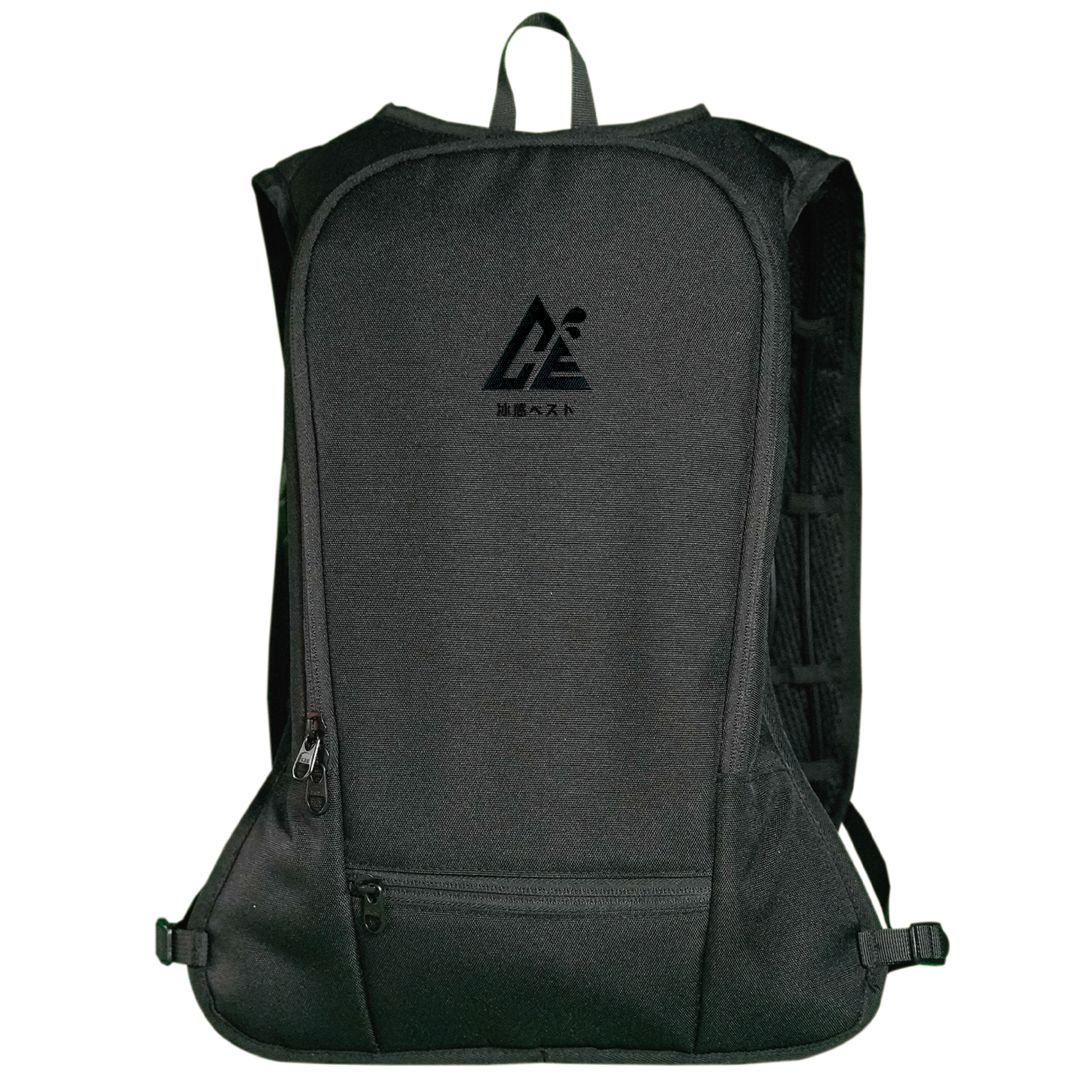
The COOLWAVE system produced by Shokunin illustrates the alternative approach. Shokunin is a brand launched by Feng Shang Precision Co., Ltd., a Taiwan-based tool and equipment manufacturer founded in 2009, focused on products that support professional craftsmen working in demanding conditions. The Shokunin COOLWAVE Water-Circulation Cooling Vest delivers cooling that lasts three to four hours per cycle, which is enough to cover a meaningful portion of a work shift without interrupting tasks. Two reusable ice packs are included with the vest, letting the user swap cooling packs at a defined break and continue working, instead of tolerating a vest that has already returned to ambient temperature.
Reusable ice packs are a central factor in the long-term economics of worker cooling vests. Products that rely on frequent ice pack replacement create a hidden consumable cost and add wear-and-tear to both the garment and the procurement budget. The Shokunin vest is built around reusable ice packs, durable fabric, and minimal maintenance. Reinforced ice pack material reduces the risk of leakage, a common failure point in low-cost cooling products. This type of design lowers the total number of replacement parts a site manager has to hold in inventory, which is a meaningful advantage when supplying multiple outdoor teams.
Step-by-Step Plan for Building a Reliable Cooling Vest Supply Chain
Buyers should approach construction cooling products through a staged process that covers product validation, supplier qualification, initial order, and repeat order planning. The following sequence provides a practical framework.
Step 1: Define Shift-Based Cooling Requirements
Before contacting suppliers, inventory the site conditions and shift patterns. Record the typical hours of sun exposure, whether workers are stationed on heat-absorbing surfaces such as steel roofs or metal sheet factories, and the expected daily duration of heat exposure. These factors will determine whether a short-duration vest is unacceptable and whether multi-cycle cooling vests are mandatory.
Step 2: Compare Cooling Duration Against the Shift Profile
Use shift duration as the primary product filter. For summer construction heat management, the relevant spec is not the initial temperature drop, but the time the vest remains below a comfortable threshold. A vest with a three-to-four-hour cooling duration supports most sustained outdoor work patterns. A 30-minute vest may be acceptable only for very short rotations or intermittent outdoor tasks. When in doubt, choose the longer-duration unit; the cost difference is small compared to the cost of replacing failed units mid-season.
Step 3: Verify the Cooling Mechanism and Consumables
Confirm the operating mechanism: how water flows through the vest, how the ice packs are contained, and what parts the user must replace. For the COOLWAVE system, the backpack assembly holds water, the pump circulates chilled water through tube channels, and the cooling effect is delivered through the vest body. The specification should include pump output, water bag material, capacity, and flow rate. The Shokunin system runs at a maximum pump output of 5V 150mA and a flow rate of up to 320 to 370 ml per minute, with a total system weight within 2 kg. Water bags use TPU material; the water bag cap is polypropylene; cooling tubes use sand rubber. Verifying these details matters because materials determine both the leak risk and the long-term service interval.
Step 4: Evaluate Thermal Endurance Using Objective Criteria
Ask the supplier for the effective cooling duration under realistic conditions. A product that claims to keep workers cool for 3–4 hours is more useful to outdoor construction teams than one that requires constant re-icing. Confirm that the unit includes enough ice packs to achieve a full cycle: in the COOLWAVE case, two ice packs ship with the vest, allowing for continuous rotation.
Step 5: Assess Production and Lead Time Capacity
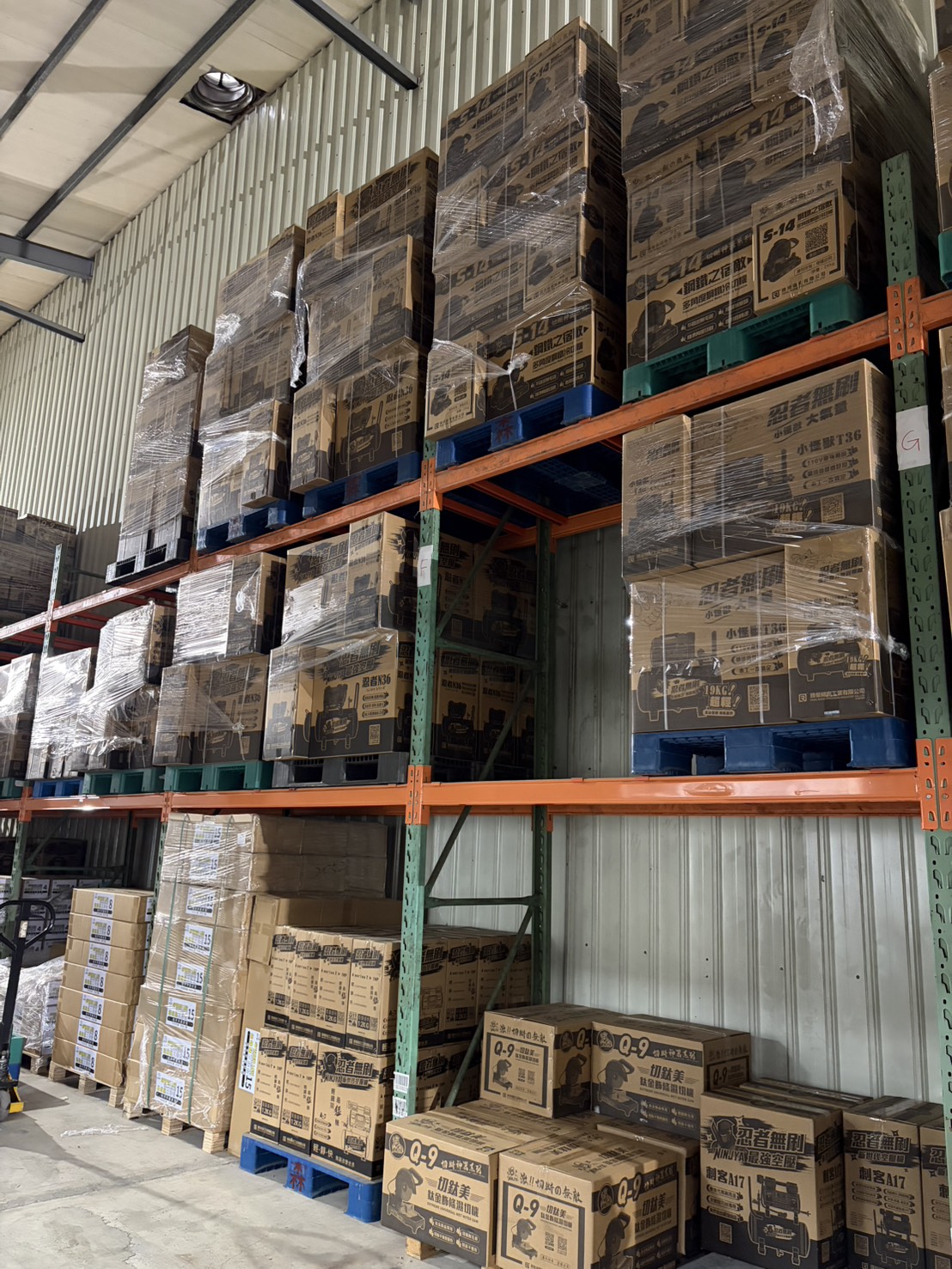
A reliable supplier must be able to match order volumes to your crew expansion plans. For Shokunin, monthly production capacity reaches 3,000 units, with a typical production lead time of 7 to 14 days. Ask any candidate supplier for these two numbers in writing. If a manufacturer cannot answer both questions precisely, it lacks the scheduling visibility that a long-term buyer needs. Confirming capacity also allows the buyer to plan seasonal stock levels rather than racing against heat warnings.
Step 6: Confirm Compliance and Certification Position
Verify which standards the vest meets and whether the supplier can provide objective documentation. Shokunin’s COOLWAVE vest has received the Disaster Prevention Product and Service Certification Award issued by the Taiwan Disaster Prevention Industry Association. For buyers shipping to certain markets, also consider whether the vest design must interact with other standardized safety garments such as ANSI/ISEA 107-2020 compliant high-visibility vests, which apply to reflective and contrast materials used in construction safety apparel. A cooling vest that prevents heat stress while remaining compatible with required high-visibility layers will integrate more easily into existing safety programs.
Step 7: Review Quality Control and Leak Prevention
Water-cooled vests fail most often through leaks. Ask the supplier how they control this risk. Shokunin applies reinforced ice pack material and performs a 100% quality check on all vests before shipment. That factory-level commitment is more useful than a vague claim of “good quality control.” For repeat orders, quality assurance should be documented consistently in every batch, not just in the first sample.
Step 8: Define Ordering Terms and Logistics
Before placing a purchase order, confirm ordering conditions such as minimum order quantity, payment arrangement, freight responsibility, shipment method, and product acceptance process. Shokunin applies a 10-unit MOQ, ships after payment with freight to be paid by the buyer, and includes a pre-shipment test before each shipment. These terms suit buyers who are moving beyond single-unit testing and want predictable batch ordering. Discuss whether a consolidated pre-season order or smaller staged reorders works better for the project schedule.
Step 9: Plan the Repeat-Order Cycle
Given the 7-to-14-day lead time and the 3,000-unit monthly capacity, a project manager ordering 100 vests can safely plan for delivery in roughly one to two weeks. If the team grows mid-season, the buyer should place reorders with enough buffer to avoid exposure gaps. Knowing capacity limits in advance prevents an awkward situation where a supplier accepts an order that cannot be filled before temperatures peak.
Step 10: Use the First Season as a Reference for Future Orders
Track field performance in the first season: how many vests required replacement, how often workers changed ice packs, how the vests held up after repeated use in metal-roof workplaces or open sun. That evidence becomes the basis for next year’s order quantity and for moving from single orders to a consolidated annual supply agreement.
Use Cases: Matching Supply Strategy to Work Conditions
Long-Hour Sun Exposure on Open Construction Sites
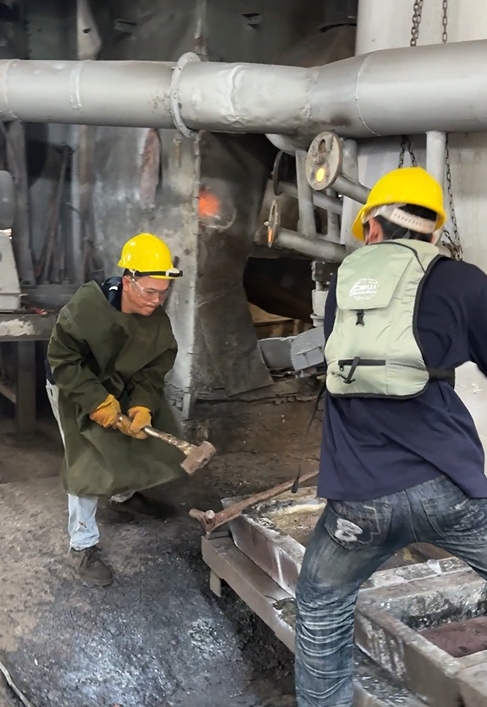
Workers on high-rise concrete structures or exposed building envelopes face steady solar load through the day. Cooling gear for long-hour sun exposure must sustain its effect across the full afternoon. A crew supervisor should stock enough replacement ice packs per shift to support continuous rotation. In this use case, the measurable success criterion is simple: workers finish the shift without reporting heat-related fatigue that impacts task quality.
Steel and Metal-Roof Workplaces
Steel fabricators, roofing crews, and technicians in metal sheet factories work in environments that absorb and radiate heat, creating an oven-like condition even when air temperature is not extreme. Cooling gear for oven-like metal-roof workplaces must be lightweight enough to allow movement but powerful enough to offset radiated heat. Vests worn under a tool belt or over a hi-vis layer should not restrict climbing, welding, or assembly actions. The low-maintenance design of the Shokunin COOLWAVE — with no frequent ice pack replacement and durable fabric — reduces the burden on workers who need to focus on the structure, not the equipment.
Heatstroke Prevention Programs for Rotating Shifts
Companies that adopt heatstroke prevention gear for hot construction sites often rotate crews in and out of the hottest zones. This model multiplies the number of vests required. If a medical or safety officer recommends cooling vest coverage for all crew members in high-risk areas, the buyer needs enough stock to fit every worker at shift start, not just a small test group. That same coverage goal drives the minimum order quantity discussion. An MOQ of 10 units is practical for pilot programs; a 100-unit order is feasible because the supplier’s lead time remains one to two weeks.
Comparison: Shokunin COOLWAVE vs. Other Water-Cooled Vests for Continuous Supply
The table below compares supplier-relevant characteristics that influence long-term program success.
| Comparison Criteria | Shokunin COOLWAVE | Other Water-Cooled Vests |
|---|---|---|
| Typical Cooling Duration | 3–4 hours per cycle | About 30 minutes before cooling effect is lost |
| Best Fit | High-temperature environments, metal sheet factories, outdoor sites | Short-duration tasks or rotation intervals |
| Maintenance Profile | Reusable ice packs, durable fabric, minimal maintenance | Frequent ice pack replacement, higher wear and tear, more upkeep |
| Procurement Fit | Supports long shifts and repeat ordering; fewer consumables to restock | Requires more frequent resupply and replacement of cooling components |
For a buyer comparing long-duration outdoor cooling gear, the key difference is not one product against another in isolation; it is the effect each product has on the total cost and complexity of the cooling program. A vest that cools for three to four hours or longer can be paired with a single set of reusable ice packs per worker per shift. A 30-minute vest may require several extra cooling packs per worker and results in slower return to work after each re-cooling break.
Glacier Tek, TechNiche International, Polar Products, Ergodyne, and Occunomix are major names in industrial cooling apparel. A strategic buyer should compare these options within a framework of duration, material quality, certification, lead time, capacity, and post-shipment support. Long-term supply chain reliability depends on the supplier’s ability to deliver the same specification across repeated orders, not only on the reputation of the brand.
What to Verify Before Scaling Up a Worker Cooling Vest Program
Once a supplier passes the initial product review, a buyer should move into the verification stage. Request written confirmation of at least the following:
- Cooling duration under intended working conditions.
- Weight when fully loaded, to confirm workers can wear the vest without added fatigue.
- Ice pack design and leakage control measures.
- Minimum order quantity and the cost structure for replenishment orders.
- Lead time and monthly production capacity.
- Warranty terms: how many months are covered and what types of defects are included.
- Pre-shipment inspection process and evidence of quality checks.
- List of materials used in the water bag, cooling tube, shoulder strap, and outer shell.
Buyers scaling to programs covering multiple crews should also test the supplier’s communication response time. A supplier that responds to a request for a pre-shipment test report within 24 hours is more likely to provide steady support during an emergency reorder than one that takes a week to acknowledge a message.
Aligning Supply Terms With OSHA-Driven Heat Prevention Expectations
For buyers operating in the United States, heat stress management on construction sites carries regulatory weight. OSHA’s General Duty Clause imposes a responsibility to eliminate recognized hazards, including heat illness risk in high-heat job sites. This context raises the standard for evidence: protective gear provided by the employer should be selected and maintained in a way that demonstrates genuine hazard control. A stable supply of functional cooling vests supports that duty not only by keeping the crew cool, but by providing a consistent, documented answer to the question “what are you doing about heat stress on this site?”
Employers should pair cooling vests with a complete heat management program: hydration stations, scheduled rest breaks, task rotation, and heat illness training. Cooling vests are most effective when integrated into those routines, not treated as a silver bullet. The checklist below summarizes the operational conditions that make the vest program effective:
- Each worker has access to a vest at the start of the shift.
- Spare ice packs are stored where workers take breaks.
- A responsible supervisor checks vests for damage before each heat-risk shift.
- Replacements can be requested through a simple procedure, not a lengthy purchase order process.
- The supplier can replenish quickly during a stretch of consecutive hot days.
If cooling equipment is part of a bid or project plan, documenting supplier lead time and replacement terms strengthens the safety officer’s ability to confirm continuity across the season.
Frequently Asked Questions About Construction Cooling Vest Supply Programs
Is a construction cooling vest required to meet a specific safety standard?
Cooling vests themselves are not uniformly covered by a single international standard in the way high-visibility garments are. However, heat stress is a recognized hazard under OSHA’s General Duty Clause for high-temperature construction environments in the United States. Buyers should also verify whether the cooling vest must be worn beneath ANSI/ISEA 107-2020 compliant high-visibility vests, in which case compatibility and layering matter more than the cooling vest’s own reflective properties.
How long should a construction cooling vest maintain its cooling effect?
For most long outdoor shifts, the vest should deliver cooling for three to four hours per recharge. That duration allows a worker to complete a substantial portion of a work period before pausing to rotate ice packs. Vests that lose their effect after roughly 30 minutes are less suitable for full-shift construction applications because the worker would have to stop repeatedly to exchange cooling elements.
What is the minimum order quantity and lead time for repeat orders?
Shokunin applies a minimum order quantity of 10 units for its water-cooled vests. Typical production lead time is 7 to 14 days, with monthly production capacity of 3,000 units. For planned seasonal purchasing, these figures allow a buyer to schedule staged deliveries and still hold the option of emergency replenishment within roughly two weeks.
Does the supplier provide warranty coverage for repeated use on construction sites?
Shokunin offers a 6-month warranty on its water-cooled vests. This warranty, combined with reinforced ice pack material and a 100% pre-shipment quality check, gives buyers recourse if units fail during the first two quarters of deployment. Review the exact warranty terms with the supplier before committing to a volume order.
Can Shokunin produce custom versions of the cooling vest for a specific contractor program?
Yes. In addition to standard production, the manufacturer provides ODM production services. Buyers with specific color, branding, sizing, or accessory requirements can discuss custom configurations through the Shokunin sales channel. Custom programs should be planned against the same 7-to-14-day lead time whenever possible, with adjustments depending on modification complexity.
Next Step: Structure Your Cooling Vest Supply Agreement Early
Construction cooling vest supply is easier to manage when you define shift duration, cooling performance, quality checks, and reorder terms before the heat arrives. Shokunin’s COOLWAVE water-circulation system operates for 3–4 hours per cycle, and the factory runs at 3,000 units of monthly capacity with a 7-to-14-day lead time and a 10-unit MOQ. To review current specifications, request a quote, or arrange a pre-shipment test, contact the Shokunin team. A company brochure with product details is available for reference.
Building a Cooling Vest Supply Program That Lasts
Long-term success with worker cooling vests depends less on a single impressive spec sheet and more on whether the product, supplier, and procurement terms support continuous field use. A vest that cools for three to four hours, backed by a manufacturer with 3,000-unit monthly capacity, a 7-to-14-day lead time, and a 6-month warranty, gives a project manager a stable foundation for heat stress prevention. Compare that against a vest that expires after 30 minutes and requires frequent replacement — the logistics alone make the short-duration product more expensive to sustain, even if the initial price is lower.
Shokunin’s COOLWAVE water-circulation system is designed for the environments that challenge construction teams most: outdoor sun exposure, metal-roof workplaces, long shifts, and high-temperature conditions. The brand operates through Feng Shang Precision Co., Ltd., a Taiwan-based factory with experience producing professional work tools. For buyers ready to move from evaluation to execution, the practical next step is to confirm current model specifications and begin a trial order of ten units — enough to run a small crew test and validate the 3-to-4-hour cooling performance before scaling to full seasonal coverage.
Download the Shokunin brochure for detailed product and company information.
Have Questions or Need More Details?
Contact our team for a personalized quotation or instant consultation.
Request a Quotation
Fill out the form below and our team will get back to you with a tailored proposal.
WhatsApp Direct Chat
Prefer to chat in real-time? Message us on WhatsApp for instant assistance & quick answers.
- Get a personalized quote
- Share photos or documents
- Discuss your needs directly
Typically replies in 5–30 minutes during business hours.