
Heat Stress in Sheet Metal Factories: How a Dual Cooling Water Cooling Vest Improves Worker Comfort
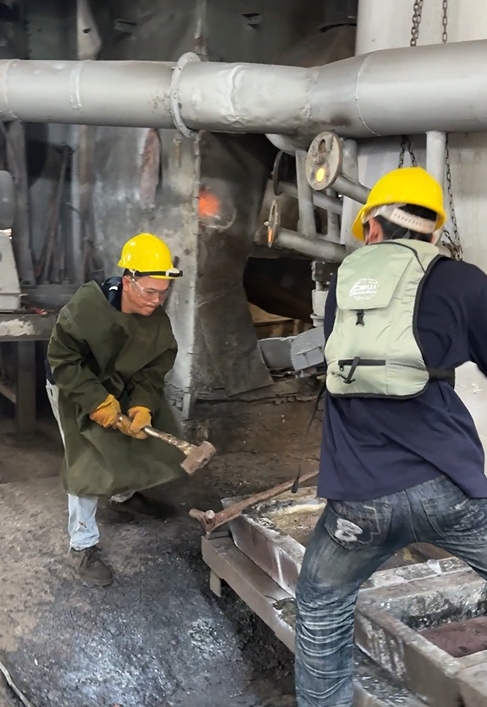
A dual cooling water cooling vest is a wearable cooling system that moves chilled water through tubing held against the wearer's torso. The COOLWAVE Water-Circulation Cooling Vest, produced by the Shokunin brand of FENG SHANG PRECISION CO., LTD., is classified as Industrial Cooling Apparel under Personal Protective Equipment (PPE). It provides 3 to 4 hours of cooling per charge, has a net weight within 2 kg, and is built from a TPU water bag, sand rubber cooling tubes, and 600D polyester shoulder straps.
Sheet metal factories are one of the environments this product was designed for, together with construction, outdoor work, food stall operations, street vending, and traffic control. The reason is structural rather than seasonal: a sheet metal shop combines radiant heat from metal roofing and metal stock with fixed-post work, so a worker cannot simply step out of the heat when body temperature climbs.
There is field evidence for this configuration. In a Taiwan deployment, 100 COOLWAVE Water-Circulation Cooling Vests were delivered to crews working in high-temperature conditions, and the reported results covered four areas: effective body cooling, heatstroke prevention, improved work efficiency, and improved worker comfort. This article sets out the heat problem those crews face, what the vest actually does, how a factory can roll it out shift by shift, and where the same logic applies to street vendors, traffic controllers, and outdoor work groups.
Defining the Problem: What Heat Stress Looks Like in a Sheet Metal Factory
Heat stress in sheet metal work is not the same as heat stress on an open construction site. Three conditions stack on top of each other, and each one reduces the worker's ability to shed heat on their own.
Retained and radiant heat. Metal roofing, steel structure, and stacked metal stock absorb heat through the day and continue releasing it into the working zone. That means the heat load does not drop the moment the sun moves off the building. In semi-open sheds and older workshops, this effect is amplified because air movement is limited.
Fixed-post work. A worker at a cut-off machine, a press, a welding bench, or a finishing station is tied to one position. Personal cooling strategies that depend on finding shade or moving to a cooler area simply do not apply. The cooling has to travel with the worker, not the other way around.
Layered protection and low airflow. Gloves, sleeves, and protective layers reduce the airflow and evaporation that normally help the body cool. The vest has to work underneath or alongside that protection, which is why wearable cooling is more relevant here than a fan pointed at the aisle.
Why breaks only partly solve it. Break-based cooling works during the break and stops working minutes after the worker returns to the post. The practical result is a repeating cycle: cool down, heat up, slow down. Factory managers recognise this cycle in the form of a slower task rhythm, longer recovery time after each break, and a higher risk of heat-related illness during the hottest shifts.
Industry Background: Cooling Vests Are Moving From Optional to Standard
The category is no longer a niche purchase. The global personal cooling device market was valued at USD 25.16 billion in 2024 and is projected to reach USD 94.85 billion by 2035, according to Market Research Future. The narrower cooling vest segment was valued at approximately USD 215 million in 2024 and is projected to grow to USD 385 million by 2033, according to Dataintelo. The two figures describe different scopes — the broader estimate includes handheld fans and other personal cooling devices — which is why published market sizes for this category vary.
Industrial demand is a major driver of that growth. Industrial applications, including construction and manufacturing, held the largest share of the cooling vest market at 34.5% in 2025, according to Dataintelo. Asia Pacific is the fastest-growing region, driven by rapid industrialisation and high outdoor work populations, according to Spherical Insights.
Technology is shifting as well. Phase Change Material (PCM) cooling vests captured 28.7% of market share in 2025 and represent the fastest-growing technology segment, according to Dataintelo, while active circulatory mechanisms such as ice water circulation are increasingly deployed in industrial sectors to mitigate occupational heat stress, according to Strategic Market Research. In other words, the market is splitting between passive cooling and pump-driven circulation — and buyers are increasingly expected to understand the difference before specifying.
Key global competitors in the cooling vest market include Techniche International, Glacier Tek, Polar Products Inc., and Ergodyne, as listed by Spherical Insights. Buyers comparing across that landscape usually work from the same short list of criteria: cooling mechanism, cooling duration, weight, materials, and how the garment is classified for workplace safety purposes. On the compliance side, cooling systems must comply with ISO 9001:2015 for quality management and often require CE or UL marks for electrical components, per the International Organization for Standardization and UL.
The Solution: What the COOLWAVE Water-Circulation Cooling Vest Provides
Shokunin is the professional tool brand of FENG SHANG PRECISION CO., LTD., a precision tool manufacturer established in 2009 in Taoyuan City, Taiwan. The company employs approximately 30 staff, operates a 1000 m² manufacturing facility, has an annual production capacity of 10,000 units, and maintains an in-house R&D team of 5 engineers. Its product lines include air compressors, cut-off machines, water-cooled vests, lithium batteries, diamond saws, nail guns, spider stands, and screwdriver bits, with major markets in the USA and Taiwan (ROC) and export business accounting for 50% of total sales.
Product classification and model range
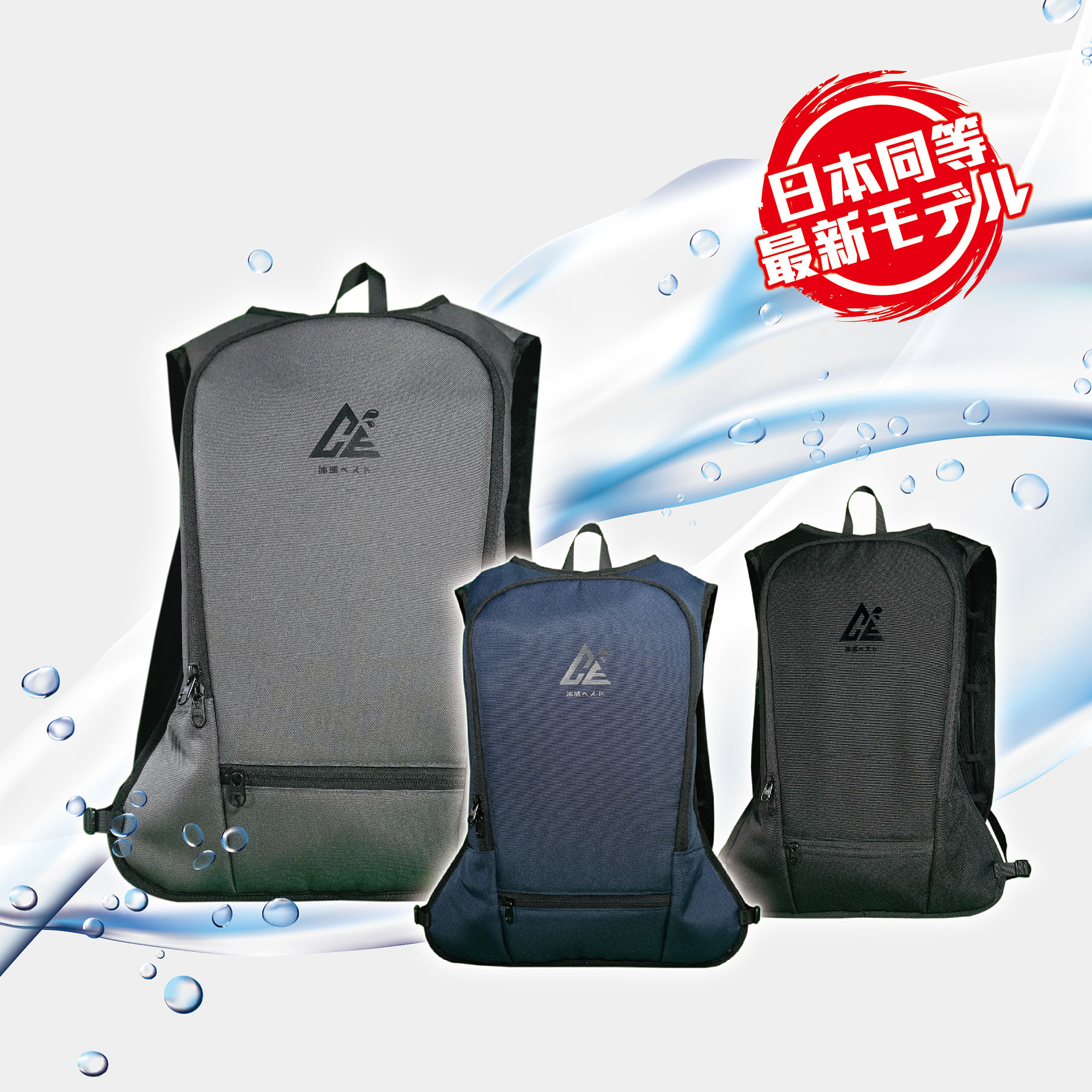
The COOLWAVE Water-Circulation Cooling Vest is an industrial cooling apparel product classified under Personal Protective Equipment (PPE). It is intended for construction workers, outdoor workers, food stall operators, street vendors, traffic controllers, and sheet metal factory workers. It is available in several model designations: the Basic Model and the Professional Model in Black, Gray, and Blue. The supplied contents are a water-cooled vest backpack and two ice packs.
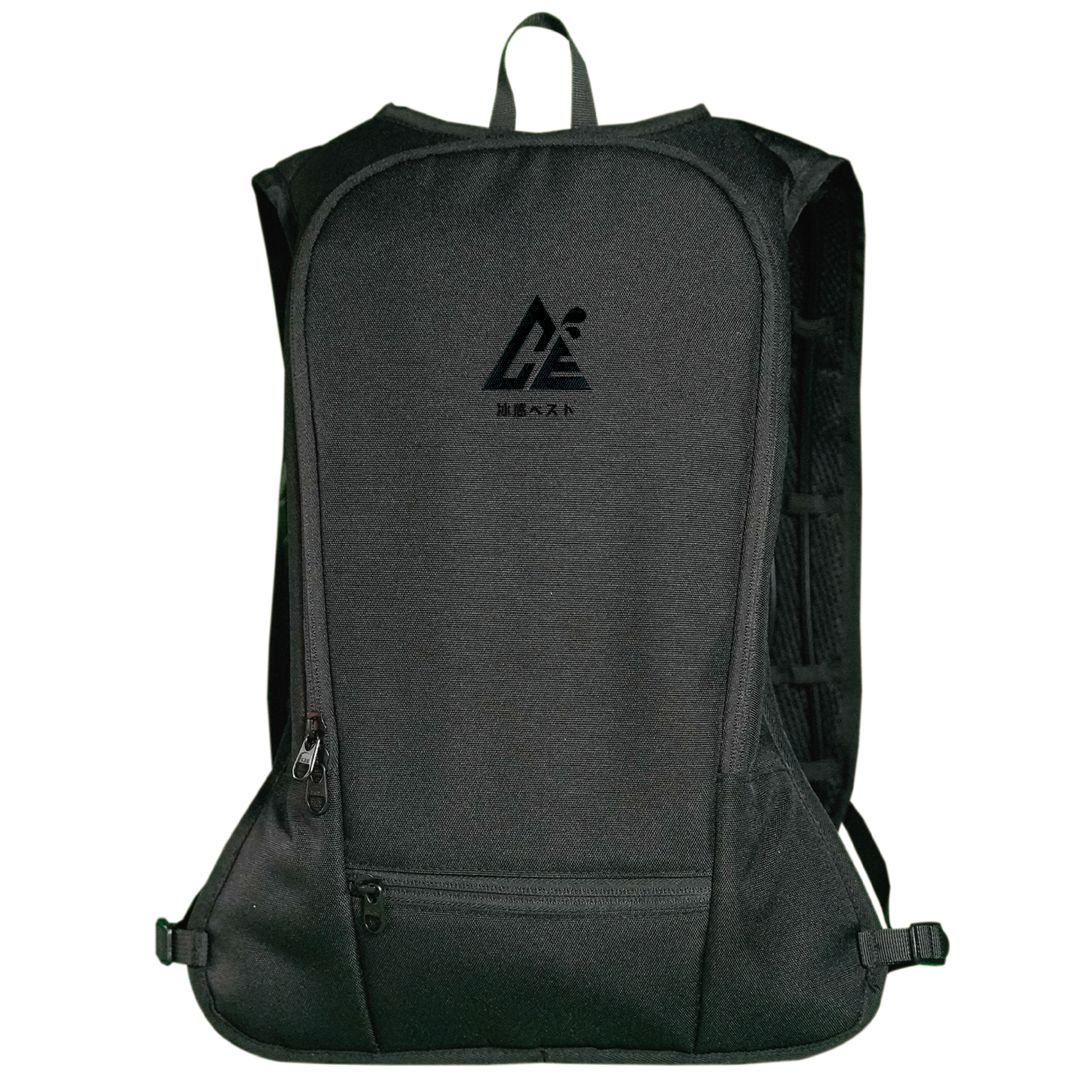
Specifications on record
| Parameter | Recorded specification |
|---|---|
| Product type | Industrial Cooling Apparel / Personal Protective Equipment (PPE) |
| Operating mode | Water-circulation cooling, activated by ice packs |
| Cooling duration | 3 to 4 hours |
| Net weight | Within 2 kg |
| Suitable ambient temperature (as specified) | Below 10°C |
| Pump output | 5V, 150 mA (max) |
| Flow rate | Max 320–370 ml/min |
| Water bag material | TPU (thermoplastic polyurethane) |
| Water bag cap | Polypropylene |
| Cooling tube | Sand rubber (black) |
| Shoulder strap | 600D polyester |
| Body material | PEVA |
| In the box | Water-cooled vest backpack ×1, ice packs ×2 |
| Model designations | Basic Model; Professional Model in Black, Gray, and Blue |
Why the material set matters on a shop floor
The vest uses specified industrial materials rather than disposable gel packs. The water bag is TPU, the water bag cap is polypropylene, the cooling tube is sand rubber, the shoulder strap is 600D polyester, and the body material is PEVA. For a factory buyer, the material list answers a practical question: what has to survive repeated filling, repeated chilling, and repeated handling across a season of shifts.
The matching equipment set is also reusable: reusable ice packs, adjustable vest straps, and a portable backpack design. That combination keeps the cooling source on the worker rather than in a break room, and it keeps the wearable portion adjustable across a mixed-size workforce.
Weight, cooling window, and shift planning
Two product figures drive most rollout decisions. The first is weight: within 2 kg net. That matters in sheet metal work because the vest sits under or alongside existing protective layers, and a heavy system gets removed first when a task becomes awkward. The second is the cooling window: 3 to 4 hours per charge.
Three to four hours maps onto roughly half a standard shift, which makes the deployment model predictable. A two-pack arrangement per worker gives one cooling window in the water bag and one replacement on standby, so the mid-shift break becomes a swap point rather than a recovery period that the worker has to spend cooling back down.
Classification and recognition
Cooling garments are frequently treated as general workwear, which complicates procurement because they are not budgeted as safety equipment. The COOLWAVE vest is classified within the manufacturer's product system as Industrial Cooling Apparel under Personal Protective Equipment (PPE). The COOLING water-cooled vest has also received the Disaster Prevention Product and Service Certification Award issued by the Taiwan Disaster Prevention Industry Association — a recognition structure that exists specifically for disaster-prevention and heat-safety products.
Step-by-Step: Rolling Out the Vest in a Sheet Metal Factory
- Map the fixed-post heat zones first. Identify the stations where a worker cannot leave the position — press, cut-off, welding, finishing, loading. Heat stress programmes usually fail when cooling gear is issued plant-wide instead of to the posts with continuous exposure.
- Match the model tier to the role. The product range covers a Basic Model and a Professional Model in Black, Gray, and Blue. Roles with heavier contact with metal stock and dust are the natural candidates for the professional tier; support and mixed-duty roles can be evaluated against the basic tier.
- Size the order around the cooling window, not just headcount. Because each vest delivers 3 to 4 hours per charge and ships with two ice packs, plan the fleet so that a worker on a full shift has a second cooling set available at the mid-shift break.
- Pre-chill the ice packs and fill the water bag before the shift. Chilling is done ahead of the working window rather than during it, so the vest is ready at the start of the hot period.
- Fit the vest and start the pump. The adjustable straps and one-size-fits-all design let the same vest be issued to different workers. The pump is rated at 5V and 150 mA, delivering a maximum flow rate of 320–370 ml/min through the sand rubber cooling tube.
- Run the cooling window and swap at the break. The recorded cooling duration is 3 to 4 hours. At the mid-shift break, the ice packs are exchanged so the second half of the shift is covered without the worker having to cool down passively.
- Clean, dry, and rotate. Because the vest, water bag, and ice packs are reusable, the end-of-shift routine is rinse, dry, and return to storage — which is what makes a seasonal programme viable rather than a one-off purchase.
Use Cases: The Same Vest, Different Fixed Posts
The product's intended use covers construction workers, outdoor workers, food stall operators, street vendors, traffic controllers, and sheet metal factory workers. What connects these groups is the same constraint that defines the sheet metal problem: continuous exposure at a position the worker cannot leave.
Sheet metal and metal-working factories
Fixed-post operators and crews working near furnaces, presses, and stacked metal stock use the vest as the wearable part of a heat-safety routine, alongside hydration and work-rest scheduling. The 3 to 4 hour cooling window is aligned to a half shift so supervisor checkpoints stay simple.
Construction and outdoor crews

Outdoor work has the same fixed-position problem during tasks such as formwork handling, ground works, and clean-up phases. Because the vest is a wearable backpack configuration, it can be worn during the task instead of set aside on a bench where it will not be used.
Traffic controllers and street vendors
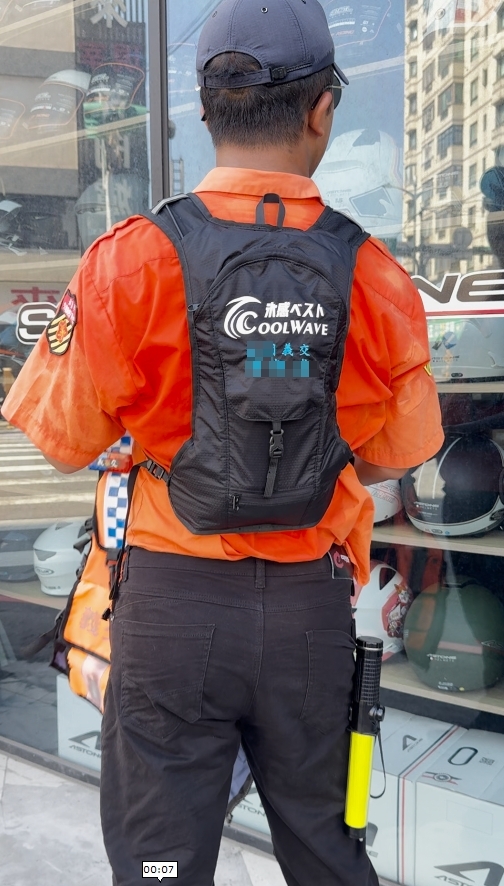
Traffic controllers and street vendors hold position in direct sun for the length of a shift, with no shaded recovery point available. The application record for this product lists street vending, food stall operations, and traffic control alongside sheet metal factories, using reusable ice packs, adjustable vest straps, and a portable backpack design.
Comparison Table: Active Water Circulation vs. PCM Cooling Vests
The simplest way to place the COOLWAVE vest in the market is to compare the two cooling mechanisms that dominate industrial purchasing decisions: pump-driven ice water circulation, and passive phase change material.
| Cooling approach | Mechanism | Cooling duration on record | Weight on record | Market signal (2025) | Source |
|---|---|---|---|---|---|
| Active ice water circulation — COOLWAVE Water-Circulation Cooling Vest | Pump moves chilled water at a maximum of 320–370 ml/min through sand rubber cooling tubes; ice packs supplied with the unit | 3 to 4 hours | Within 2 kg | Active circulatory mechanisms, including ice water circulation, are increasingly deployed in industrial sectors to mitigate occupational heat stress | Shokunin product specification; Strategic Market Research (2025) |
| Phase Change Material (PCM) vests | Passive phase change packs | Not stated in available sources | Not stated in available sources | 28.7% market share; fastest-growing technology segment | Dataintelo (2025) |
| Industrial cooling vest demand overall | Applies to all mechanisms above | Not applicable | Not applicable | Industrial applications, including construction and manufacturing, held the largest market share at 34.5% | Dataintelo (2025) |
Table cells are limited to facts on record. Where a cited source does not state a value, the cell says so rather than estimating it. That is deliberate: in this category, an unverified performance number creates more procurement risk than a blank cell.
FAQ: Dual Cooling Water Cooling Vest Questions Buyers Ask First
1. Is a water-circulation cooling vest classified as PPE, and what should a buyer check?
Yes. The COOLWAVE Water-Circulation Cooling Vest is classified under Industrial Cooling Apparel / Personal Protective Equipment (PPE). Its manufacturer, FENG SHANG PRECISION CO., LTD. (brand Shokunin), states that the COOLING water-cooled vest received the Disaster Prevention Product and Service Certification Award issued by the Taiwan Disaster Prevention Industry Association. At category level, cooling systems must comply with ISO 9001:2015 for quality management and often require CE or UL marks for electrical components, per ISO and UL. Buyers should confirm which requirements apply to the specific model and destination market before releasing a purchase order.
2. How long does the cooling last, and how heavy is the vest?
The recorded cooling duration is 3 to 4 hours per charge, and the net weight is within 2 kg. The pump operates at 5V and 150 mA with a maximum flow rate of 320–370 ml/min, and the unit ships with two ice packs. The suitable ambient temperature stated in the specification is below 10°C. Because the cooling window covers roughly half a standard shift, the practical configuration is one vest plus a spare set of ice packs per worker, swapped at the mid-shift break.
3. What drives the cost of a dual cooling water cooling vest?
The product has no published public price list. Cost is driven by the model tier chosen (Basic Model versus Professional Model in Black, Gray, or Blue), the material and component configuration (TPU water bag, polypropylene cap, sand rubber cooling tube, 600D polyester shoulder strap, PEVA body, 5V pump, two ice packs), the order volume, and any customisation requested. Because the vest, water bag, and ice packs are reusable, the more useful budgeting frame is cost per worker per hot season rather than the unit price alone. Request a quote with your headcount, shift pattern, and model preference for a configuration-based answer.
4. Can we test a vest before committing to a fleet order?
Validation is normally done on the buyer's own site, because fit and comfort depend on the layers a worker already wears. The product range supports this: the same specification applies across the Basic and Professional designations, and the supplied contents are the water-cooled vest backpack plus two ice packs, which is what a tester receives. Sample and trial arrangements can be requested from FENG SHANG PRECISION CO., LTD. by email at fsmarketing@fstool.com.tw, by phone at +886 3-312-6606, or via WhatsApp at +86 18858260055.
5. What supply capacity and lead time sit behind the product?
FENG SHANG PRECISION CO., LTD. operates a 1000 m² manufacturing facility with approximately 30 staff and an R&D team of 5 engineers, and reports an annual production capacity of 10,000 units. Its major markets are the USA and Taiwan (ROC), with export business accounting for 50% of total sales. Lead time depends on the model mix, configuration, and order volume in a given period, so delivery schedules should be confirmed directly with the supplier when the specification is fixed.
Conclusion: Cooling That Stays on the Worker
Heat stress in sheet metal factories is produced by a combination that ordinary measures struggle to resolve: radiant heat from metal structures and stock, fixed-post work, and protective layers that reduce airflow. Breaks and ventilation address part of it; they do not cool a worker during the working window.
A dual cooling water cooling vest addresses that specific gap. The COOLWAVE Water-Circulation Cooling Vest delivers 3 to 4 hours of cooling per charge, weighs within 2 kg, and uses a reusable industrial build — TPU water bag, sand rubber cooling tube, 600D polyester shoulder straps, PEVA body — with a pump rated at 5V and 150 mA and a maximum flow rate of 320–370 ml/min. It is classified as Industrial Cooling Apparel under PPE, and the COOLING water-cooled vest has received the Disaster Prevention Product and Service Certification Award from the Taiwan Disaster Prevention Industry Association.
The clearest evidence remains the deployment record: in Taiwan, 100 units were delivered to crews working in high-temperature conditions, with reported outcomes of effective body cooling, heatstroke prevention, improved work efficiency, and improved worker comfort. For factories, the same result depends on getting the rollout order right — map the fixed posts, tier the models, and size the ice-pack inventory to the shift.
Next Step: Request a Sample or Quote
If you manage heat safety for a sheet metal plant, an outdoor crew, or a market operation, the fastest way to evaluate the COOLWAVE Water-Circulation Cooling Vest is to test one on your own site.
- Sample or quote requests: fsmarketing@fstool.com.tw | +886 3-312-6606 | WhatsApp
- Product and company information: www.fstool.com.tw
- Download the product brochure: Shokunin product brochure (PDF)
FENG SHANG PRECISION CO., LTD. | No. 155-17, Sec. 2, Nanzhu Rd., Luzhu Dist., Taoyuan City 338454, Taiwan | Business hours: Monday to Friday, 8:30 AM – 5:40 PM.
Have Questions or Need More Details?
Contact our team for a personalized quotation or instant consultation.
Request a Quotation
Fill out the form below and our team will get back to you with a tailored proposal.
WhatsApp Direct Chat
Prefer to chat in real-time? Message us on WhatsApp for instant assistance & quick answers.
- Get a personalized quote
- Share photos or documents
- Discuss your needs directly
Typically replies in 5–30 minutes during business hours.