
Dual Cooling vs Passive Ice-Pack Vests: A Comparison Guide for Construction and Outdoor Work
Dual Cooling vs Passive Ice-Pack Vests: A Comparison Guide for Construction and Outdoor Work
For construction and outdoor crews, the choice between a dual cooling water cooling vest and a passive ice-pack vest is decided by duty cycle, not by product category. A cooling vest only prevents heat strain if it is still removing heat during the hardest hour of the shift and stays comfortable enough that the worker keeps it on.
The COOLWAVE Water-Circulation Cooling Vest (Basic Model) is a dual cooling design from Shokunin. It ships as a kit — one water-cooled vest backpack plus two ice packs — and pairs passive ice-pack cooling with a 5V, 150 mA (max) pump that circulates water at a maximum flow rate of 320–370 ml/min. The stated cooling duration is 3–4 hours and the net weight stays within 2 kg. A passive ice-pack vest does the same job with no pump and no power requirement at all.
This guide is written for the people who specify and issue heat-relief equipment — site managers, safety officers and procurement teams — and covers what each architecture does well, where each one breaks down, and how to match a design to a specific crew. Shokunin is the professional tool brand of FENG SHANG PRECISION CO., LTD, a Taiwan-based manufacturer founded in 2009 whose COOLWAVE water-cooled vest line is built for outdoor and high-temperature work.
Problem Definition: What a Cooling Vest Has to Solve on a Real Work Site
Heat stress is a duration problem, not a temperature problem. Ice packs start cold and warm up; a worker's heat load peaks in the middle of the shift; comfort decides whether the vest is worn at hour six. A cooling vest therefore has to satisfy four conditions at once: enough cooling duration to cover the exposure window, a cooling mechanism that keeps working while the worker moves, a weight and fit a crew will accept, and a compliance position that procurement can file.
The failure modes differ by architecture. A passive ice-pack vest needs no power, nothing to charge and nothing to switch on, which makes it simple to issue — but the cooling effect depends entirely on the packs themselves, with no mechanism to redistribute cold around the torso. A pump-driven water circulation system adds an active loop that keeps moving chilled water, but it introduces a power dependency and components that can be forgotten, charged incorrectly or left in a locker.
The honest framing is that neither design is universally better. The dual cooling water cooling vest answers the question "how do we keep a worker cool through a long, fixed exposure window?" The passive ice-pack vest answers "how do we cool a worker who has no power source and moves constantly?" Everything below is a decision framework for working out which question a specific crew is actually asking.
One more input belongs in the problem definition: documentation. Buyers in the evaluation stage are not only comparing cooling physics, they are comparing what can be filed. A patent number, a certification award and a warranty term are as much part of the specification as a flow rate.
Industry Background: Why Cooling Vests Are Moving From Optional to Specified
Market data reflects what site managers already experience. According to Market Research Future, the global personal cooling device market was valued at USD 25.16 billion in 2024 and is projected to reach USD 94.85 billion by 2035. Dataintelo's narrower estimate for the cooling vest category alone places the market at approximately USD 215 million in 2024, projected to grow to USD 385 million by 2033.
Those two figures are not directly comparable, and buyers should treat them separately. The wider personal cooling device definition includes handheld fans and personal air conditioners; the narrower figure covers cooling vests only. For budgeting and category planning, both are useful — one describes the direction of the thermal-comfort category, the other describes the size of the vest segment.
Regionally, Asia Pacific is the fastest-growing region for cooling vests, driven by rapid industrialization and large outdoor work populations, according to Spherical Insights. By application, industrial use — including construction and manufacturing — held the largest share of the cooling vest market at 34.5% in 2025, per Dataintelo. That industrial segment is precisely the audience for this comparison.
Technology is shifting as well. Dataintelo reports that phase change material (PCM) vests captured 28.7% of market share in 2025 and represent the fastest-growing technology segment, while Strategic Market Research notes that active circulatory mechanisms such as ice water circulation are increasingly deployed in industrial sectors to mitigate occupational heat stress. In other words, the category is moving away from vests that simply hold cold toward vests that actively move it.
The vendor field is well populated. Spherical Insights lists Techniche International, Glacier Tek, Polar Products Inc. and Ergodyne among key global competitors in the cooling vest market. A buyer evaluating a dual cooling water cooling vest is therefore selecting an architecture and a supplier at the same time — which is why the comparison below focuses on operating profile rather than on claims.
Detailed Solution: How the COOLWAVE Dual Cooling Water Cooling Vest Is Built
The COOLWAVE Water-Circulation Cooling Vest (Basic Model) is classified as industrial cooling apparel and personal protective equipment. Its design intent is dual: ice packs provide the cold source and a no-power fallback, and the electric pump drives a circulation loop around the torso when active cooling is required.
Components and published specifications
- Kit contents: water-cooled vest backpack ×1, ice packs ×2
- Pump output: 5V, 150 mA (max)
- Flow rate: max 320–370 ml/min
- Cooling duration: 3–4 hours
- Net weight: within 2 kg
- Shoulder strap material: 600D polyester
- Outer material: PEVA
- Water bag material: TPU
- Water bag cap: polypropylene
- Cooling tube: sand rubber (black)
Three numbers do most of the work in a comparison like this one. Flow rate, quoted at a maximum of 320–370 ml/min, is the pump's published output and the clearest measurable way to describe circulation intensity in a water-circulation vest. Cooling duration, stated at 3–4 hours, defines the working window before the system needs attention. Together they describe an active system rather than a static one — the vest does not wait for cold to travel through fabric on its own.
Weight decides whether a vest is still worn at the end of a shift. The COOLWAVE net weight is within 2 kg, which keeps it in the lightweight cooling vest class for daily industrial use, and the deployment record for the product describes it as lightweight and portable with an adjustable one-size-fits-all design. For a site issuing gear to dozens of workers, an adjustable fit removes the sizing-inventory problem that otherwise turns PPE distribution into a logistics exercise.
Dual mode is what separates this vest from a single-architecture product. The deployment record describes the product with passive ice-pack cooling and no power requirement — the packs can carry the cooling on their own. Running the pump is a choice, not a precondition. That gives a crew two operating profiles from one piece of equipment: passive ice-pack cooling when no 5V supply is available and the task is short, and circulated cooling when a power bank or 5V supply can be carried and the exposure window is long.
Patent and certification position
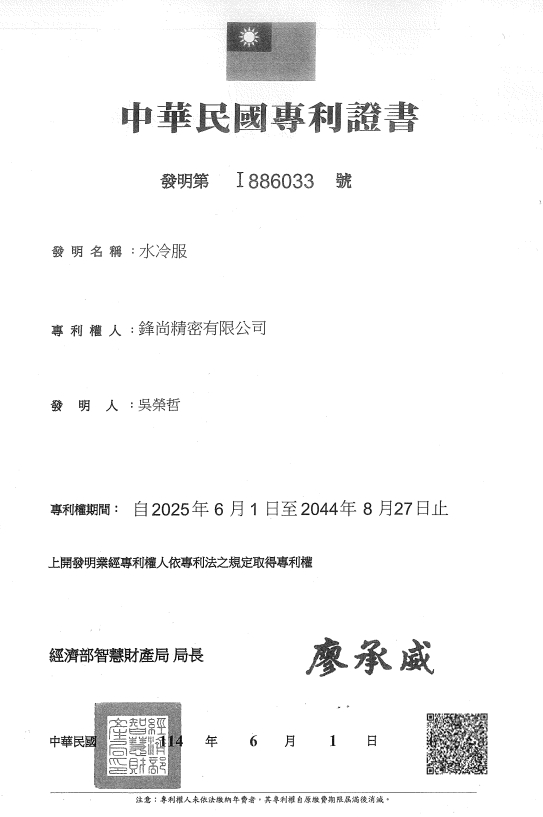
The water-cooled vest structure and cooling system is protected by patent I886033, issued by the Intellectual Property Office, Ministry of Economic Affairs (ROC) on 1 June 2025 and valid to 27 August 2044 under the Patent Act of the Republic of China. The scope of the patent is the water-cooled vest structure and cooling system.
The water-cooled vest has also received the Disaster Prevention Product and Service Certification Award issued by the Taiwan Disaster Prevention Industry Association. Where a procurement file needs a broader standards reference, cooling systems are generally expected to comply with ISO 9001:2015 for quality management, and electrically driven components such as pumps commonly require CE or UL marks.
Step-by-Step Breakdown: Choosing Between Dual Cooling and Passive Ice Packs
Use Cases: Where Each Cooling Architecture Fits
Construction sites
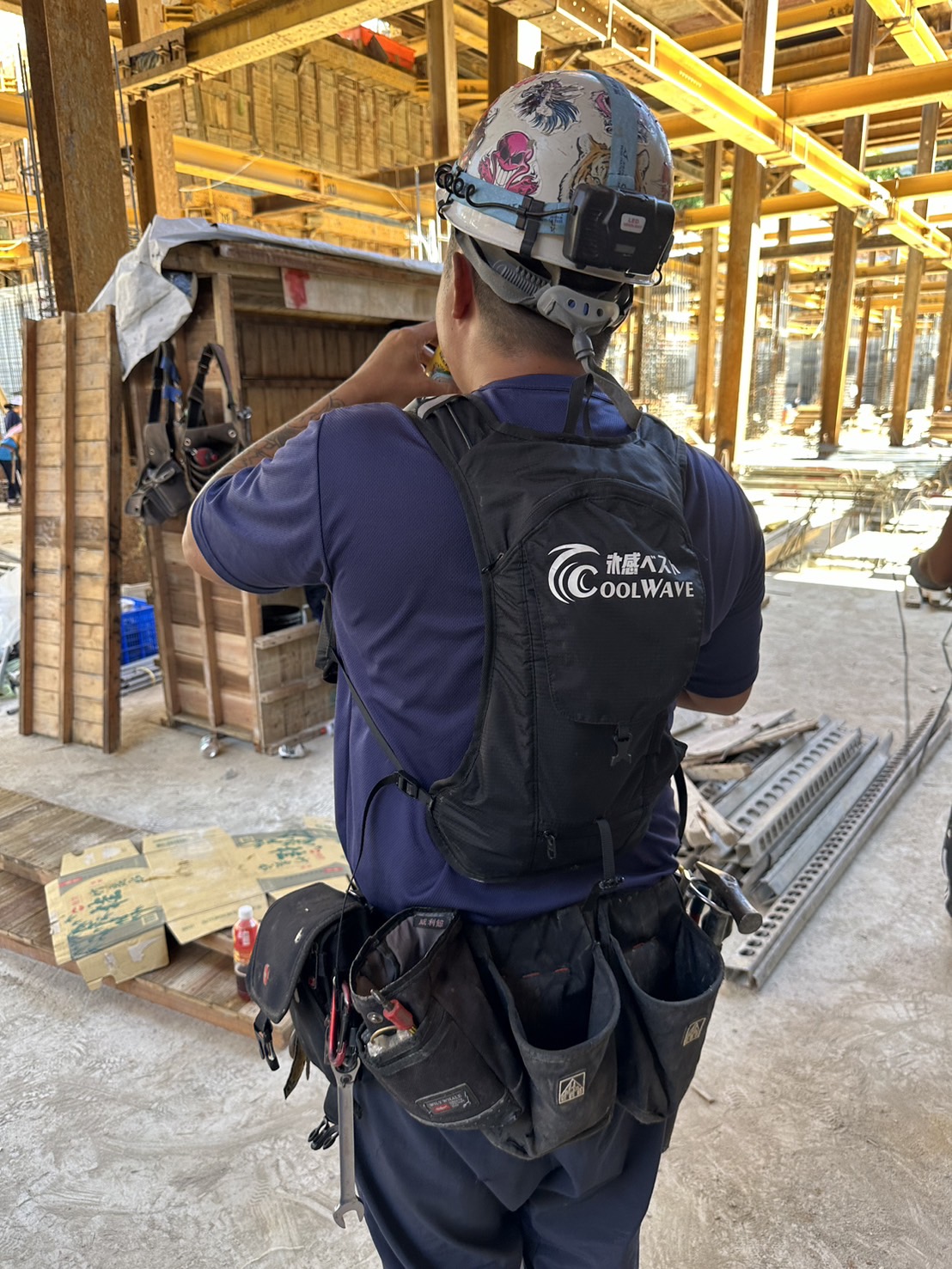
Construction is the reference case for this comparison. In Taiwan, 100 units of the water-cooled vest were deployed for workers in high-temperature environments, covering construction sites, outdoor workers, metal sheet factories and street vendors. The reported outcome was effective body cooling, heatstroke prevention, improved work efficiency and greater worker comfort. For site managers, the operational detail behind that result matters more than the headline: the deployed product combined ice-pack cooling with a no-power option and an adjustable fit — the three attributes that decide whether gear stays on a crew for a full season.
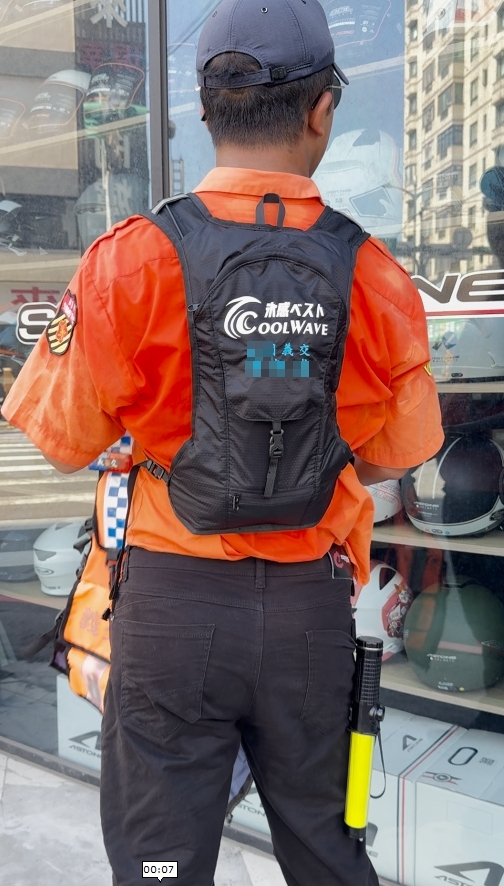
Traffic control and direct-traffic posts
Traffic controllers hold position in direct sun with limited shade and little opportunity to step away. Sustained radiant exposure with low air movement is the profile where active circulation earns its place: the pump keeps chilled water moving around the torso rather than waiting for passive transfer. Where a 5V supply can be carried, circulation extends the useful cooling window; where it cannot, the same vest still runs on ice packs with no power at all.
Metal sheet factory crews
Metal sheet factories and metal-roof buildings combine radiant heat from the structure with hot, slow-moving indoor air. These are environments where a cooling solution for metal-roof factories cannot depend on airflow, and where an industrial cooling vest has to work without evaporative assistance. The dual architecture helps here for two reasons: circulated chilled water provides a continuous cooling path around the torso, and a two-ice-pack kit allows swap rotation when the 3–4 hour window is exceeded.
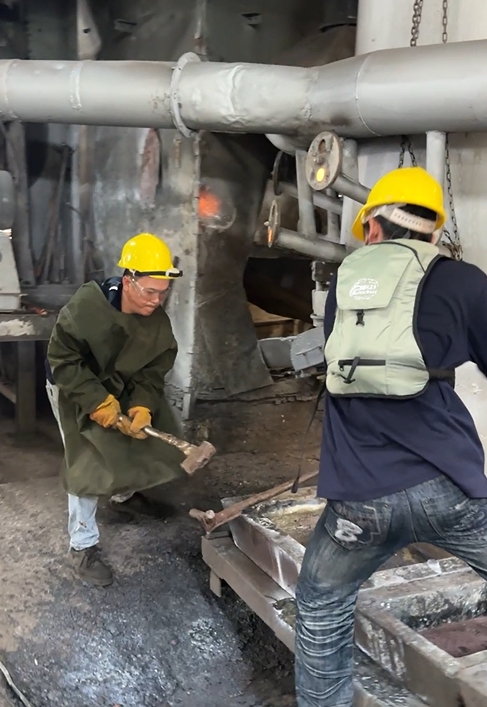
Outdoor workers, street vendors and food stall operators
The product's applicable industries also include outdoor workers, food stall operators and street vendors. These crews need sweat-proof cooling gear that is light enough to work in and simple enough to restart every day, which is where a vest within 2 kg with an adjustable one-size-fits-all fit has an advantage over heavier industrial cooling equipment. Daily restart simplicity matters as much as peak cooling performance.
Where passive ice-pack vests still make sense
A no-power ice-pack vest remains a reasonable choice in defined situations: short exposure windows, tasks with constant movement between locations, sites where no 5V supply can be carried or recharged, and crews that will not maintain a powered device. The trade-off is the loss of active circulation — cooling depends on the packs alone, and once their capacity is spent there is no second mechanism. Where exposure is genuinely short and mobility is high, that trade-off is acceptable. Where workers are held in place in radiant heat for hours, it is not.
Comparison Table: Dual Cooling vs Passive Ice Packs
The table below compares the two architectures using the published COOLWAVE specification and the deployment record. Where a figure is not available in the source data, it is marked as not stated rather than estimated.
| Decision factor | Passive ice-pack vest (no pump) | COOLWAVE dual cooling water cooling vest (Basic Model) |
|---|---|---|
| Cooling mechanism | Ice packs only; no active circulation | Ice packs plus pumped water circulation (dual mode) |
| Power requirement | None — no power required | No power required in ice-pack mode; 5V, 150 mA (max) for circulation mode |
| Circulation flow rate | Not applicable (no pump) | Max 320–370 ml/min |
| Stated cooling duration | Not stated in the source data | 3–4 hours |
| Net weight | Not stated in the source data | Within 2 kg |
| Kit contents | Ice packs | Water-cooled vest backpack ×1, ice packs ×2 |
| Materials | Not stated in the source data | 600D polyester shoulder strap, PEVA, TPU water bag, polypropylene water bag cap, sand rubber cooling tube |
| Fit | Not stated in the source data | Adjustable one-size-fits-all design |
| Documented IP / recognition | Not stated in the source data | Patent I886033 (ROC, valid to 27 August 2044); Disaster Prevention Product and Service Certification Award (Taiwan Disaster Prevention Industry Association) |
| Warranty | Not stated in the source data | 6-month warranty for the water-cooled vest |
| Typical fit | Light mobility, short-duration tasks, no power source available | Construction, outdoor work, traffic control, metal sheet factory crews |
FAQ: Dual Cooling Water Cooling Vest Questions Buyers Ask
Is the COOLWAVE dual cooling water cooling vest covered by a patent or certification?
Yes. The water-cooled vest structure and cooling system is covered by patent I886033, issued by the Intellectual Property Office, Ministry of Economic Affairs (ROC) under the Patent Act of the Republic of China. The patent was issued on 1 June 2025 and expires on 27 August 2044. The water-cooled vest has also received the Disaster Prevention Product and Service Certification Award from the Taiwan Disaster Prevention Industry Association. For electrically driven cooling products generally, ISO 9001:2015 quality management compliance and CE or UL marks on electrical components are common procurement requirements.
How long does the cooling last, and can the vest run without power?
The COOLWAVE Water-Circulation Cooling Vest (Basic Model) has a stated cooling duration of 3–4 hours and a net weight within 2 kg. It ships with one water-cooled vest backpack and two ice packs, and the deployment record for the product describes passive ice-pack cooling with no power requirement — so the vest can cool without any power source. When circulation is wanted, the pump runs at 5V and 150 mA (max) with a flow rate of up to 320–370 ml/min, which is what enables the dual cooling profile: passive ice packs, or active circulated water. Production runs in ODM mode with a monthly capacity of 3,000 units.
What drives the cost of a dual cooling vest program?
Cost in this category is driven by architecture and consumable planning rather than by the vest alone. An ice-pack-only vest requires packs and a freeze-and-rotate routine. A dual cooling water cooling vest adds the pump, water bag, cooling tube and the water-cooled vest backpack, so the unit carries more components — but it also offers a passive mode that still works when power is unavailable. The practical variables to plan for are how many ice packs per worker are needed to cover the 3–4 hour cooling window, how 5V power supplies are issued and recharged, and the warranty coverage attached to the equipment. The COOLWAVE water-cooled vest carries a 6-month warranty.
Can we test a sample before committing to volume?
Yes, and sampling is the sensible first step for an evaluation-stage project. The minimum order quantity for this product is 10 units, which allows a crew-level pilot rather than a single-piece test. A useful sample evaluation covers four things: fit across different body types using the adjustable one-size-fits-all design, actual cooling duration under site conditions against the stated 3–4 hours, the ice-pack rotation routine with a two-pack kit, and a documentation review of patent I886033 and the disaster prevention product certification. The full product brochure is available through the link at the end of this guide.
What are the lead time, capacity and after-sales terms?
Lead time is 7–14 days, monthly production capacity is 3,000 units, and production is handled in ODM mode with export markets listed as global. After-sales coverage is a 6-month warranty for the water-cooled vest. To move from evaluation to a pilot, request a sample or a quotation from Shokunin directly: email fsmarketing@fstool.com.tw, call +886 3-312-6606 during business hours (Monday to Friday, 8:30 AM – 5:40 PM), or message +86 18858260055 on WhatsApp.
Conclusion: Match the Cooling Architecture to the Crew
Dual cooling and passive ice-pack cooling answer different questions. A dual cooling water cooling vest answers "how do we keep a worker cool through a long, fixed exposure window?" — with ice packs plus a 5V circulation pump at up to 320–370 ml/min, a stated 3–4 hour duration and a net weight within 2 kg. A passive ice-pack vest answers "how do we cool a worker who has no power source and moves constantly?" — with the simplest possible system and no maintenance beyond freezing the packs.
For construction, traffic control, metal sheet factory and outdoor crews, four factors decide the outcome: the length of the exposure window, the availability of a 5V supply, the mobility pattern of the task, and the maintenance discipline of the crew. The Taiwan deployment of 100 units — used across construction sites, outdoor work, metal sheet factories and street vendors, with reported results of effective body cooling, heatstroke prevention, improved work efficiency and worker comfort — is a practical reference for equipping a mixed-site program from a single dual-mode product.
The evaluation path is short: confirm the exposure window, decide the power profile, pilot 10 units, and review the compliance documents. The cooling architecture follows from those four decisions.
Next Step: Sample, Quote, or Full Specifications
Shokunin supplies the COOLWAVE Water-Circulation Cooling Vest (Basic Model) with a 10-unit minimum order quantity and a 7–14 day lead time. Request a sample for crew-level testing, or ask for a quotation for your site or distribution program.
Email: fsmarketing@fstool.com.tw · Phone: +886 3-312-6606 · WhatsApp: +86 18858260055
Download the product brochure: COOLWAVE Cooling Vest Brochure (PDF)
Website: www.fstool.com.tw
Shokunin is the professional tool brand of FENG SHANG PRECISION CO., LTD, founded in 2009 and operating from a 1,000 m² facility at No. 155-17, Sec. 2, Nanzhu Rd., Luzhu Dist., Taoyuan City 338454, Taiwan, with 30 employees, a 5-engineer R&D team, an annual output of 10,000 units and a 50% export ratio serving the USA and ROC markets.
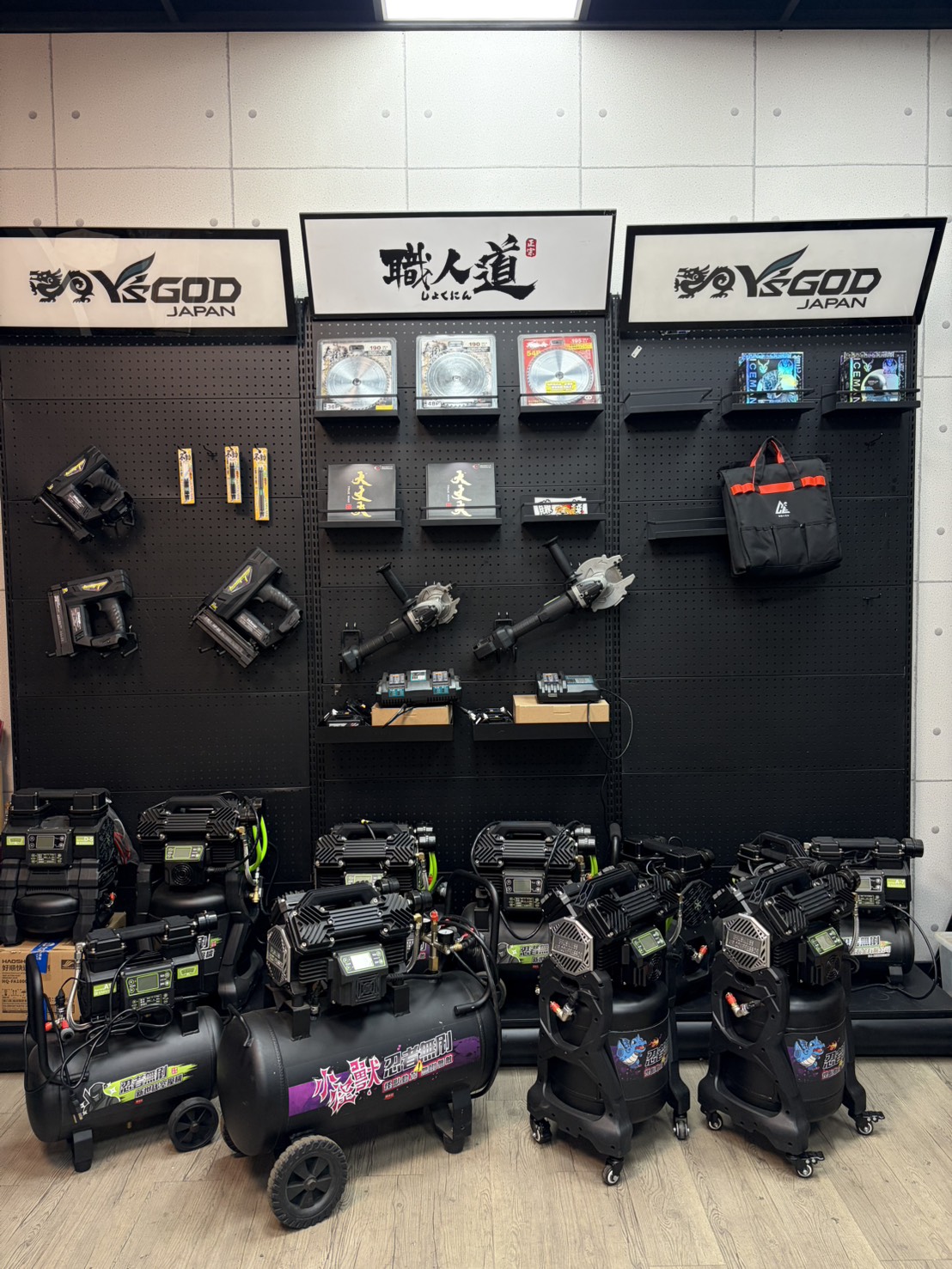
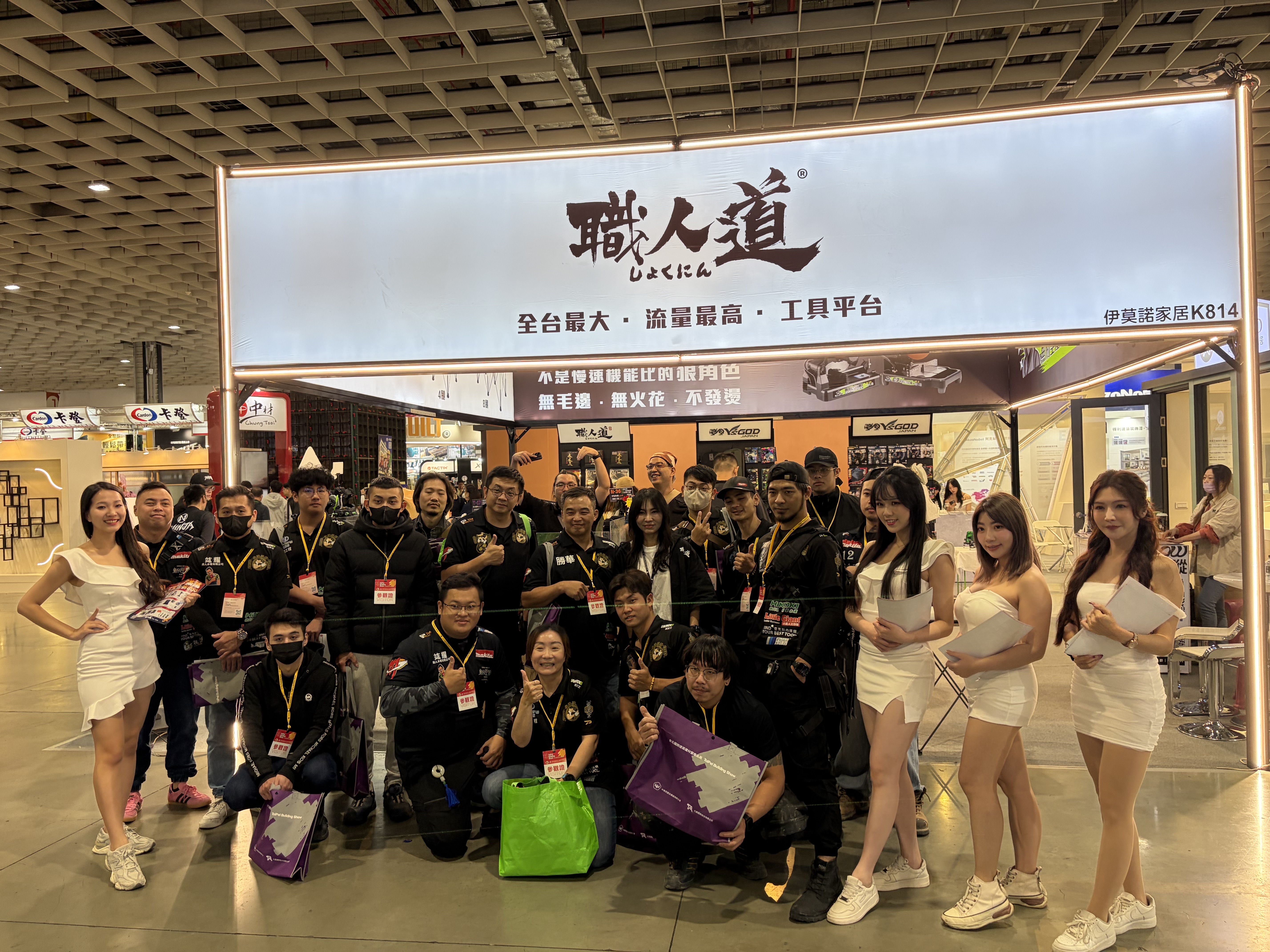
COOLWAVE dual cooling water cooling vest — display area.
Have Questions or Need More Details?
Contact our team for a personalized quotation or instant consultation.
Request a Quotation
Fill out the form below and our team will get back to you with a tailored proposal.
WhatsApp Direct Chat
Prefer to chat in real-time? Message us on WhatsApp for instant assistance & quick answers.
- Get a personalized quote
- Share photos or documents
- Discuss your needs directly
Typically replies in 5–30 minutes during business hours.