
Dual Cooling Water Cooling Vest: An Application Guide for Construction, Traffic Control, and Street Vending Crews
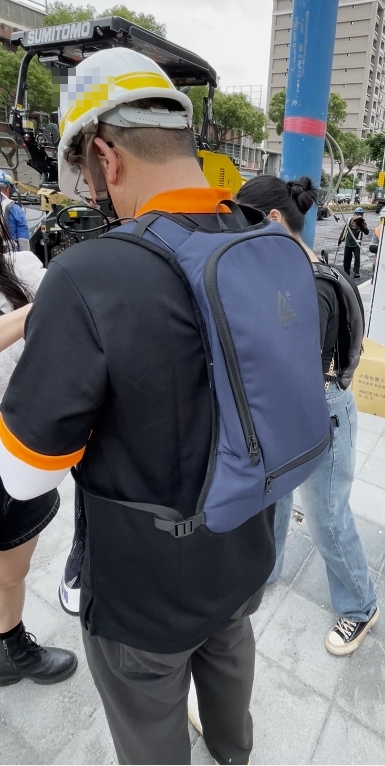
A COOLWAVE Water-Circulation Cooling Vest in use on a construction site in Taiwan, where 100 units were deployed across heat-exposed crews.
A dual cooling water cooling vest holds two cooling functions in one garment: ice packs that store the cold, and a pump that moves chilled water through tubing built into the vest. The COOLWAVE Water-Circulation Cooling Vest, produced under the Shokunin brand by Feng Shang Precision Co., Ltd. in Taiwan, is specified for 3–4 hours of cooling per cycle, weighs within 2 kg, runs a 5 V / 150 mA (maximum) pump, and circulates water at a maximum flow rate of 320–370 ml/min. It ships as a water-cooled vest backpack with two ice packs.
Those numbers answer a specification question. They do not answer the question most project buyers actually face: how do you put this vest to work across a construction crew, a traffic control post, a night market stall or a metal sheet factory without the cooling running out halfway through a shift?
Short answer: match the vest to the work block, not to the whole shift. A 3–4 hour cooling window covers one standard work block; anything longer is handled by rotating ice packs, rotating vests between crews, or placing a refreeze point within reach of the work area. The rest of this guide sets out that deployment logic crew by crew, with the specifications and credentials a buyer should confirm first.
The Problem: When the Work Cannot Move, the Heat Has Nowhere to Go
Heat control normally relies on three levers: shade, rest and hydration. Crews in construction, traffic control and street vending often lose access to two of them at the same time. The post is fixed, and the schedule is fixed either by the task or by customers.
Construction crews
Rebar tying, formwork, roofing and finishing work keep both hands occupied and keep the worker in direct sun or in contact with heat-retaining material. Water breaks are possible, but the heat load coming off the work surface does not pause while the worker drinks.
Traffic controllers
A controller holds a fixed position, often on asphalt, wearing high-visibility clothing that adds another layer over the body. Leaving the post during a service window is not an option, and shade is rarely within reach of the post itself.
Street vendors and food stall operators
A vendor's exposure starts with setting up the stall in direct sun and continues through hours of service next to a cooking heat source. Stepping away during a rush directly reduces sales, so the vendor stays where the heat is.
All three crews share one requirement: the cooling effect has to be carried on the body and keep working while both hands stay busy. That is the demand pattern the water-circulation category is built for. Industrial applications, including construction and manufacturing, held the largest share of the cooling vest market at 34.5% in 2025, according to Dataintelo's cooling vest market report — a pattern consistent with fixed-position industrial and outdoor work driving demand rather than recreational use.
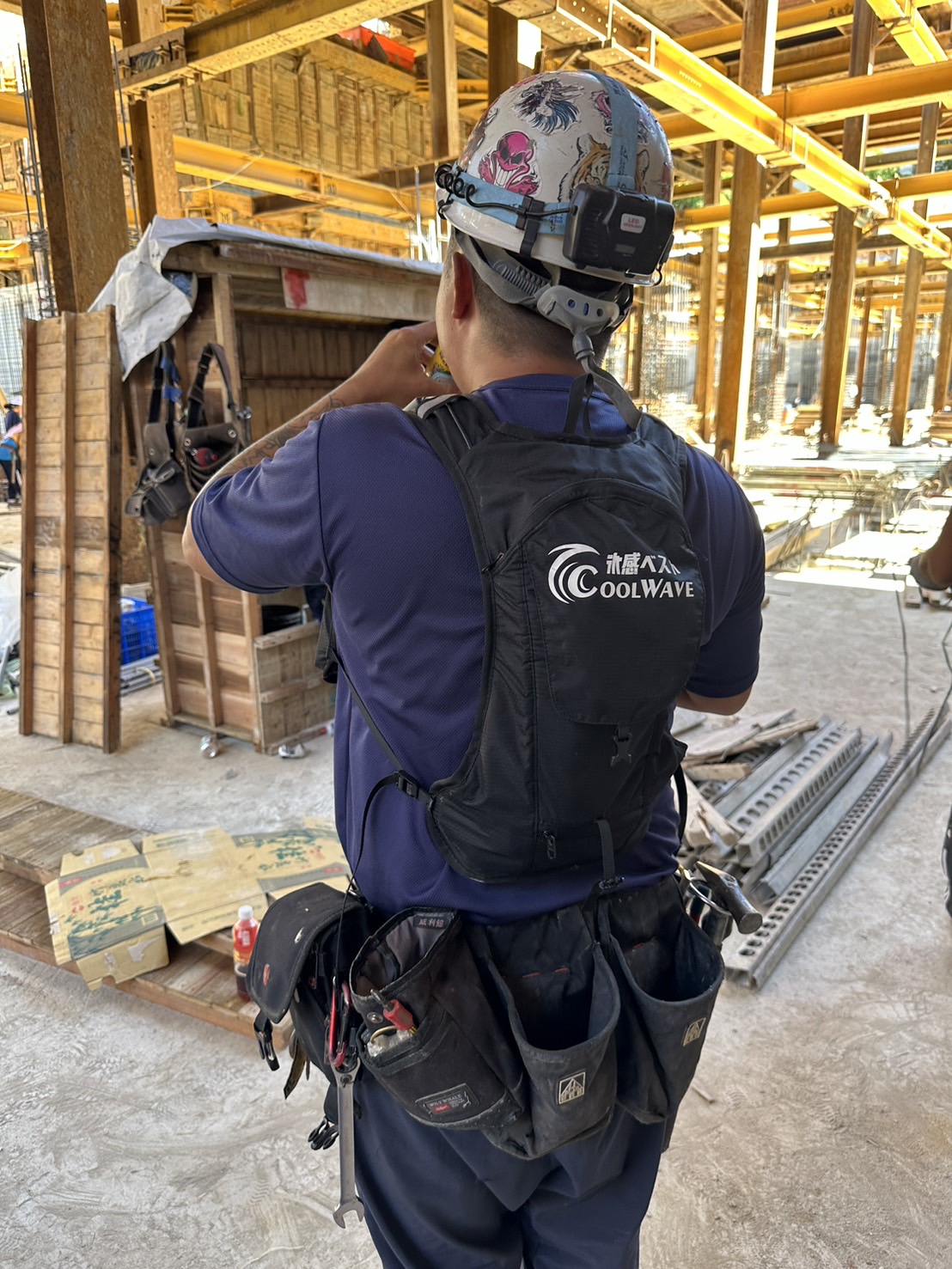
Construction crews working in direct sun are the largest single user group for water-circulation cooling vests.
Industry Background: A Growing Category With a Scope Question
The cooling category is expanding quickly, but published market figures describe different things. The global personal cooling device market was valued at USD 25.16 billion in 2024 and is projected to reach USD 94.85 billion by 2035 (Market Research Future). The narrower cooling vest segment was valued at approximately USD 215 million in 2024 and is projected to grow to USD 385 million by 2033 (Dataintelo). The size gap is a scope gap: the wider figure includes handheld fans and other personal cooling devices, not vests alone. Buyers building an internal business case should check which definition sits behind any market number they quote.
On the demand side, Asia Pacific is the fastest-growing region for cooling vests, driven by rapid industrialization and large outdoor work populations (Spherical Insights). On the technology side, industry analysis notes that active circulatory mechanisms — moving chilled water rather than relying only on static packs — are increasingly deployed in industrial sectors to mitigate occupational heat stress (Strategic Market Research).
That technology shift changes the buyer's checklist. An active circulation vest adds a power source, a maintenance routine and electrical documentation to the specification, on top of the textile and sizing questions that apply to any cooling garment. Cooling systems are generally expected to comply with ISO 9001:2015 for quality management, and electrically powered components often require CE or UL marks (International Organization for Standardization / UL). Treat those as documentation entry requirements tied to your market, not as performance claims.
The credentials on record for the COOLWAVE water-cooled vest are different from those generic standards. The vest structure and cooling system are covered by Taiwanese patent certificate I886033, issued on 1 June 2025 by the Intellectual Property Office, Ministry of Economic Affairs, and valid until 27 August 2044. The product has also received the Disaster Prevention Product and Service Certification Award from the Taiwan Disaster Prevention Industry Association. If your market requires CE or UL documentation for the pump or other electrical parts, request component-level documents from the supplier before ordering; a structure patent and a disaster-prevention award do not automatically cover those requirements.
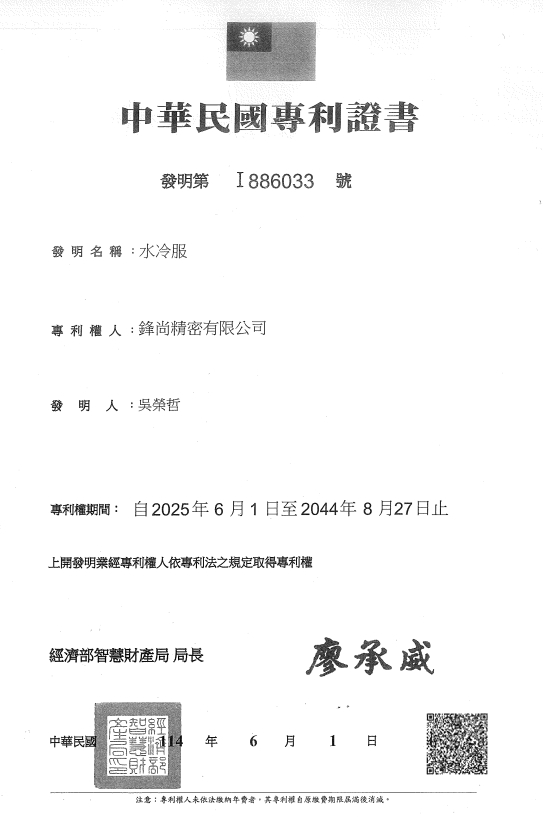
Water-cooled vest patent certificate I886033, covering the vest structure and cooling system.
The Product: COOLWAVE Water-Circulation Cooling Vest at a Glance
Shokunin is a professional e-commerce brand launched by Feng Shang Precision Co., Ltd., a Taiwan-based manufacturer founded in 2009 with a 1,000 m² production facility, 30 employees, 5 R&D engineers, an annual output of 10,000 units, roughly 50% export share and main markets in the USA and Taiwan. Its cooling line centres on the COOLWAVE Water-Circulation Cooling Vest, classified as Industrial Cooling Apparel / Personal Protective Equipment (PPE). The current product line is also the reason the deployment logic in this guide differs from a simple garment purchase: this is a powered cooling system with consumable parts.
| Specification | Documented value |
|---|---|
| Cooling duration | 3–4 hours per cycle |
| Weight | Within 2 kg |
| Suitable temperature (as listed) | Below 10°C |
| Pump output | 5 V, 150 mA (maximum) |
| Flow rate | Maximum 320–370 ml/min |
| Shoulder strap material | 600D polyester |
| Body material | PEVA |
| Water bag material / cap | TPU / polypropylene |
| Cooling tube | Sand rubber (black) |
| In the box | Water-cooled vest backpack ×1, ice packs ×2 |
| After-sales | 6-month warranty for the water-cooled vest |
The dual cooling design works in sequence. The two ice packs provide the cooling capacity; the water bag, made from TPU with a polypropylene cap, holds the chilled water; the 5 V pump pushes that water through black sand-rubber cooling tubes at up to 320–370 ml/min; and the PEVA body with 600D polyester shoulder straps holds the assembly against the wearer. Water circulation matters because it keeps moving chilled water past the body instead of leaving a static pack to warm up in one spot.
Two further points belong in the pre-purchase checklist. First, the standard shipment contains the backpack-style vest and two ice packs; the pump is rated at a maximum of 5 V / 150 mA, so confirm whether a power source ships with the unit or is supplied locally. A 3–4 hour cooling window paired with two ice packs means a crew working a longer shift needs a spare pack set, a second vest, or access to a freezer — that is a planning decision, not a product fault.
Step-by-Step: Deploying the Vest Across a Working Crew
The sequence below is written for the person who has to make the vest work on site: a safety officer, a site manager, a vendor operating a stall, or a buyer equipping a mixed team.
- Map the exposure window for each crew. Write down the actual block of continuous exposure — for example the morning casting block, the peak traffic period, or the stall's lunch service. Compare each block against the 3–4 hour cooling window before deciding how many vests a crew needs.
- Prepare both ice packs before the start of the block. Two ice packs ship with each unit, and the cooling cycle depends on them being fully frozen at shift start.
- Fit and adjust the vest. The design is adjustable and one-size-fits-all, which simplifies issuing vests across a mixed crew without holding multiple sizes.
- Confirm the pump power source. The pump draws a maximum of 5 V / 150 mA. Decide with the supplier whether the power source is included or supplied locally, and assign responsibility for charging or replacing it.
- Set the rotation rule before day one. Decide in advance what happens at the end of the cooling window: swap in a second pack set, swap in a second vest, or rotate the vest to a crew coming on shift.
- Place the refreeze point where the work is. A freezer at the site office is useless if the crew is working on the far side of the site. Locate the refreeze point so a pack swap takes minutes, not a walk.
- Name one person per crew to own the rotation. Cooling garments fail operationally when nobody owns the freezing schedule, not when the specification is wrong.
- Pilot, then scale. Start at the minimum order quantity of 10 units, confirm behaviour on your own site, and scale through ODM production.
On commercial terms, the minimum order quantity is 10 units, payment is full payment, freight is paid by the buyer, and shipment follows payment. A pre-shipment test forms part of the acceptance process, and the vest carries a 6-month warranty. Typical production lead time is 7–14 days against a monthly capacity of 3,000 units, and the manufacturer provides ODM production services for branded or programme-specific requirements. For larger projects, the constraint is usually the delivery schedule rather than the unit itself, so brief the supplier with your rollout dates first.
Use Cases by Crew Type
Construction sites
On a construction site the vest fits inside the normal work block rather than replacing it. A crew tying rebar or working a roof deck can carry the vest through the block and hand it back at the refreeze point when the block ends. Because the vest weighs within 2 kg, it can be worn over normal work clothing without adding a meaningful load to climbing or carrying tasks, and the adjustable one-size-fits-all design lets a site store one pool of vests instead of sizing them per worker.
Traffic control posts
Traffic control is the clearest case for a cooling garment, because the controller's position is fixed and shade is usually unavailable. The relevant planning question is not whether the vest cools, but how the controller gets a fresh pack set without abandoning the post. The practical answer is a rotating vest pool: one controller wears a vest while a second chilled unit waits at the post or the site vehicle, so the swap takes seconds.
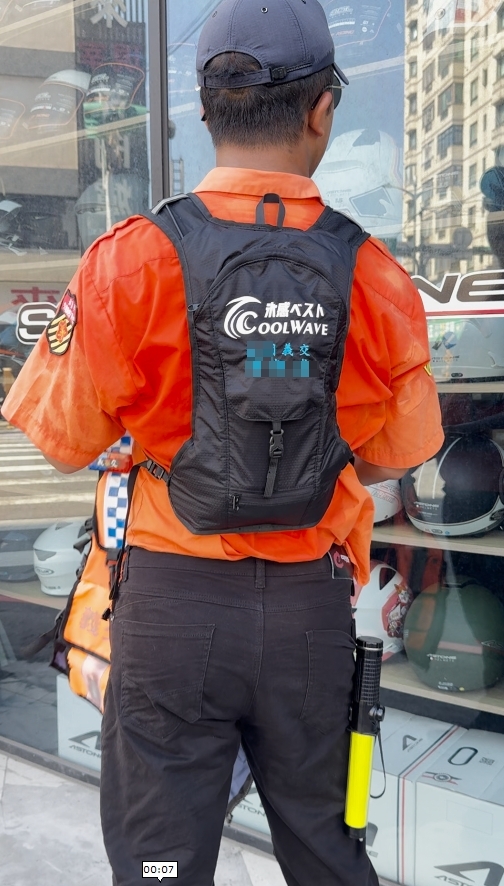
Traffic control is a fixed-post role where shade is rarely available, which makes vest rotation the key planning decision.
Street vendors and food stall operators
For a street vendor or food stall operator, exposure is split between setting up in direct sun and serving next to a heat source. The service window is when the vendor cannot step away, so the vest has to be worn through service rather than only during setup. A two-pack rotation works well here: one set is in use during the busiest window while the second set freezes, and the changeover happens between customer waves rather than during them.
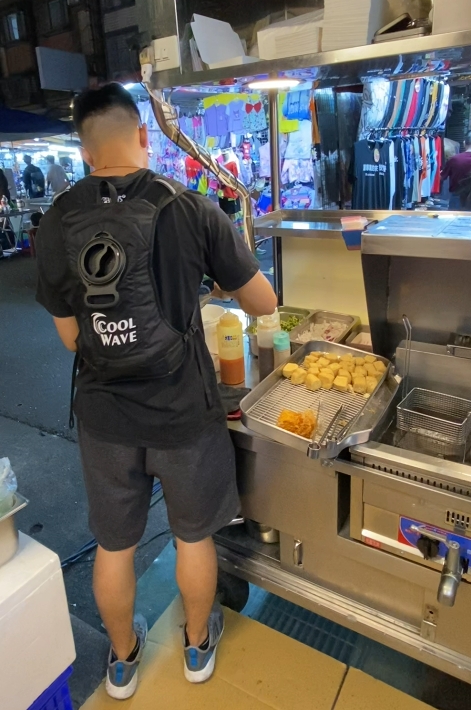
Street vendors face a fixed service window in which leaving the stall means losing sales.
Metal sheet and fabrication factories
Indoor metal sheet work combines radiant heat from machinery and material with limited airflow, and the exposure lasts the full shift rather than a single outdoor block. Here the 3–4 hour cooling window is best used as a shift partition: vests are issued for the first half of the shift, collected, and reissued with fresh packs for the second half. Indoor deployment also makes the refreeze point easy to place, since it can sit inside the same building.
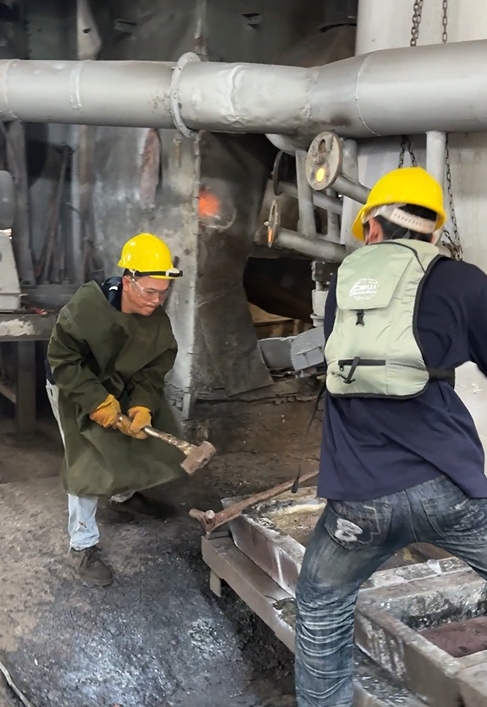
Metal sheet factories combine radiant heat with limited airflow, and the exposure lasts a full shift.
What the Taiwan deployment showed
The most useful reference point is a documented deployment in Taiwan, where 100 units were put into cooling use in high-temperature environments. The crews covered were construction sites, outdoor workers, metal sheet factories and street vendors — the same mix of fixed-position roles described above. The reported results were effective body cooling, heatstroke prevention, and improved work efficiency and worker comfort. The deployment record also describes the cooling approach as ice-pack based, with a lightweight, portable, adjustable one-size-fits-all design and disaster prevention product certification.
The scale of that record is worth noting for procurement planning. A 100-unit order is roughly ten times the minimum order quantity of 10 units, and it sits well inside the 3,000 units per month production capacity — so a multi-crew rollout does not require a long build-up before the first delivery.
Crew-by-Crew Comparison: What Changes, What Stays the Same
The vest specification is fixed; the deployment plan is not. The table below compares how the same 3–4 hour cooling window, sub-2 kg weight and two-ice-pack kit fit each environment.
| Work environment | Where the heat comes from | Fit with the 3–4 hour cooling window | Deployment note |
|---|---|---|---|
| Construction site | Direct sun plus heat from the material being worked | One cooling cycle per work block | Pool vests at site level; one adjustable size for a mixed crew. Documented use on construction sites in Taiwan. |
| Traffic control post | Fixed post on asphalt, plus high-visibility clothing | One cooling cycle per duty rotation | Use a two-vest swap at the post so the controller does not leave position. Documented use in direct traffic control. |
| Street vending / food stall | Direct sun during setup, cooking heat during service | Coverage must span setup and the peak service window | Two-pack rotation between customer waves. Documented use by night market vendors in Taiwan. |
| Metal sheet factory | Radiant heat from machinery and material, limited airflow | Split the shift into two cooling cycles | Refreeze point inside the building; collect and reissue vests at the half-shift mark. Documented use in metal sheet factories. |
| Shifts longer than 4 hours | Any of the above, extended in duration | Exceeds a single cooling cycle | Plan for a spare pack set, a second vest, or a vest rotation between crews; keep pack inventory at roughly twice the number of vests in use. |
Frequently Asked Questions
Is the COOLWAVE water-circulation cooling vest certified for industrial heat-safety programmes?
The vest structure and cooling system are covered by Taiwanese patent certificate I886033, issued on 1 June 2025 by the Intellectual Property Office, Ministry of Economic Affairs, and valid to 27 August 2044. The product has also received the Disaster Prevention Product and Service Certification Award issued by the Taiwan Disaster Prevention Industry Association. Buyers whose markets require CE or UL documentation for electrical components should request component-level documents separately, because general standards such as ISO 9001:2015 and CE or UL marks apply to electrical parts and are not automatically covered by a structure patent or a disaster-prevention award.
How long does the cooling last, and what does one unit include?
The cooling duration is specified at 3–4 hours per cycle, and the unit weighs within 2 kg. The pump is rated at a maximum of 5 V / 150 mA and circulates water at a maximum flow rate of 320–370 ml/min through black sand-rubber cooling tubes. Each unit ships with a water-cooled vest backpack and two ice packs. A crew whose shift runs longer than 3–4 hours therefore needs a rotation plan — spare packs, a refreeze point, or a second vest set — rather than relying on one vest for an entire shift.
What are the order terms and minimum quantities?
The minimum order quantity is 10 units. Payment terms are full payment, freight is paid by the buyer, and shipment follows payment. A pre-shipment test is part of the acceptance process, and the water-cooled vest carries a 6-month warranty. Because production runs under an ODM model with a monthly capacity of 3,000 units, order terms are normally discussed against the delivery schedule rather than unit price alone.
Can we test the vest before a full rollout?
Yes. Order at the 10-unit minimum, run the pre-shipment test before acceptance, and pilot the vest with one crew over a defined exposure window. A useful pilot answers two questions: how long the cooling holds under your own site conditions, and where the refreeze point needs to sit relative to the work area. Both answers determine how many extra ice pack sets the full rollout will need.
How long does production take, and how do we start?
Typical production lead time is 7–14 days against a monthly capacity of 3,000 units, and the manufacturer provides ODM production services for branded or programme-specific requirements. To start, send your crew profile — number of units, shift length and work environment — and request a sample or quotation at fsmarketing@fstool.com.tw. The full product catalogue is available in the brochure linked at the end of this guide.
Conclusion: Plan the Rotation, Then Buy the Vest
The COOLWAVE Water-Circulation Cooling Vest solves a specific problem for construction crews, traffic controllers, street vendors and metal sheet factory workers: it puts a 3–4 hour cooling cycle, under 2 kg of weight and a 320–370 ml/min water flow, directly onto a worker whose hands and position are already committed. The evidence for that fit is not in the marketing language but in the deployment record — 100 units used across construction sites, outdoor work, metal sheet factories and street vendors in Taiwan, with reported results of effective body cooling, heatstroke prevention, improved work efficiency and comfort.
What separates a successful rollout from an expensive one is planning, not specification. Match the vest to the work block, keep two ice packs in the rotation, put the refreeze point where the crew actually works, and confirm in writing whether the listed suitable temperature of below 10°C refers to the chilled water in the loop or to ambient conditions. Then pilot at the 10-unit minimum order quantity before scaling through ODM production at a 7–14 day lead time.
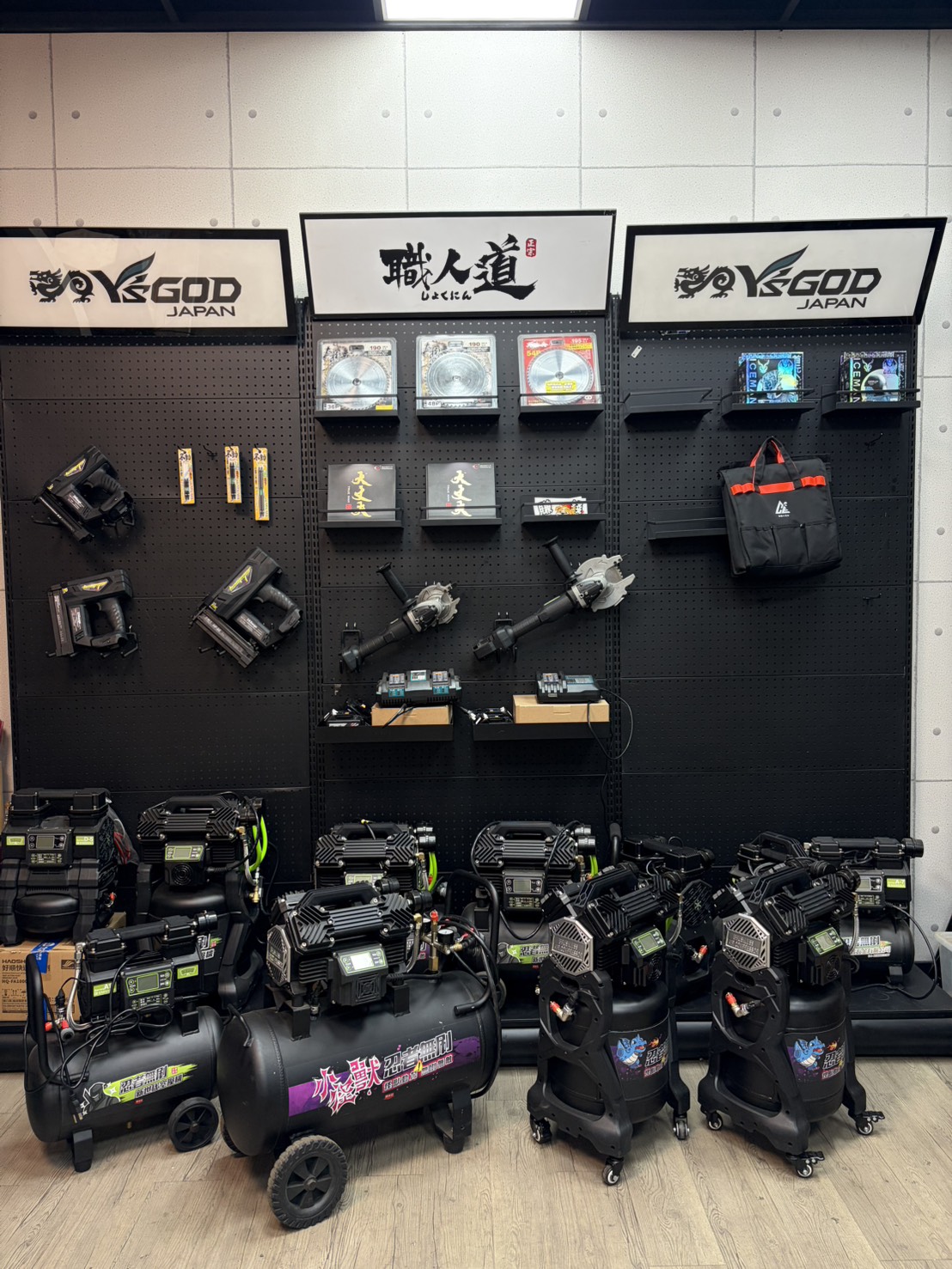
Sample units and bulk orders are prepared from the Shokunin cooling product display area.
Next Step: Sample, Quotation or Catalogue
If you are equipping a crew, start with a sample and a pilot. Send your unit count, shift length and work environment, and the team will confirm configuration, lead time and delivery schedule for your project.
Email: fsmarketing@fstool.com.tw | Phone: +886 3-312-6606 | WhatsApp: +86 18858260055
Product catalogue (PDF): Download the Shokunin cooling product brochure
Company website: www.fstool.com.tw
Shokunin is a brand of Feng Shang Precision Co., Ltd., No. 155-17, Sec. 2, Nanzhu Rd., Luzhu Dist., Taoyuan City 338454, Taiwan. Business hours: Monday to Friday, 8:30 AM – 5:40 PM.
Have Questions or Need More Details?
Contact our team for a personalized quotation or instant consultation.
Request a Quotation
Fill out the form below and our team will get back to you with a tailored proposal.
WhatsApp Direct Chat
Prefer to chat in real-time? Message us on WhatsApp for instant assistance & quick answers.
- Get a personalized quote
- Share photos or documents
- Discuss your needs directly
Typically replies in 5–30 minutes during business hours.