
Dual Cooling Water Cooling Vest for Industrial Projects: A Scenario-by-Scenario Fit Guide
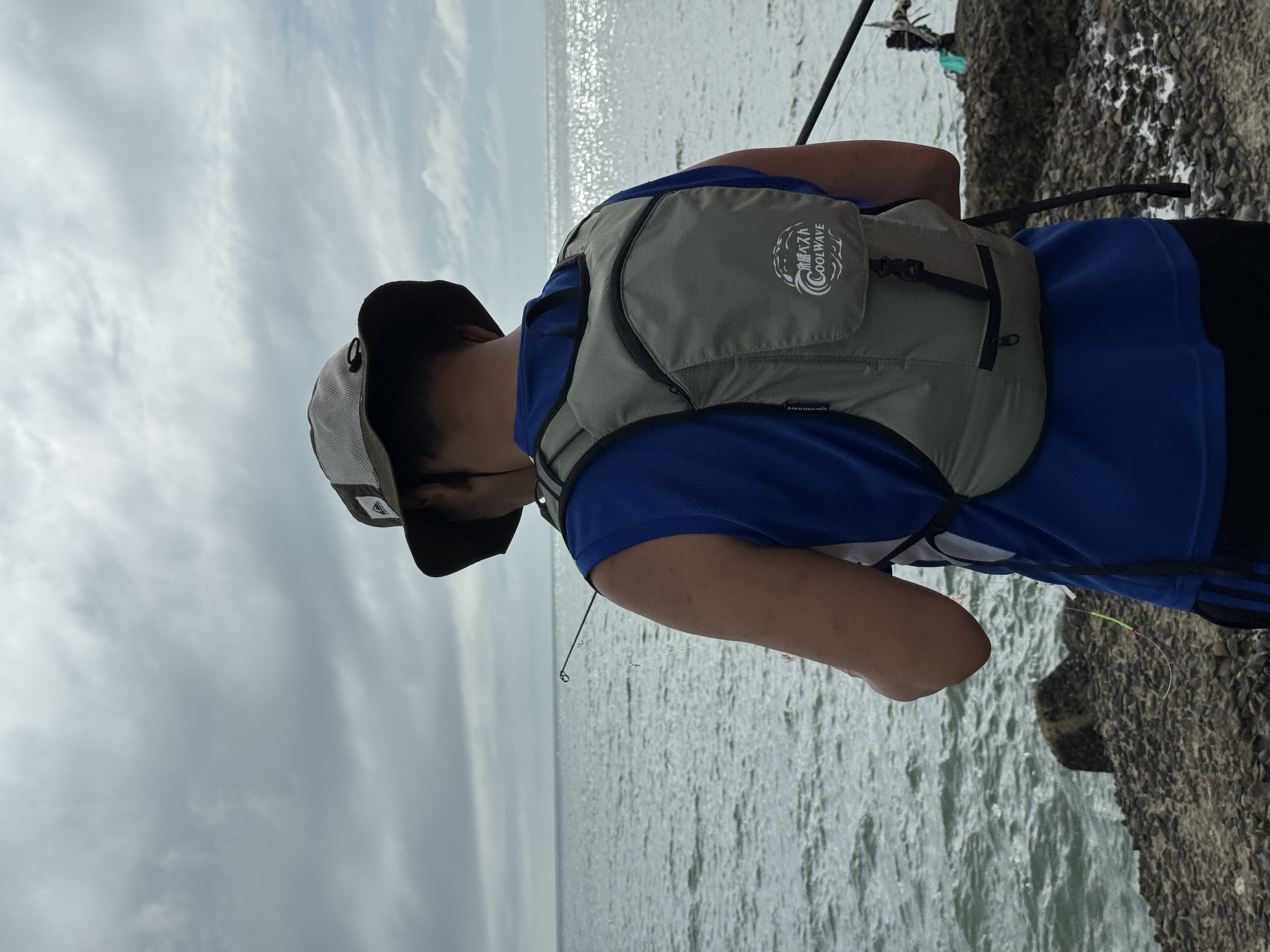
When an industrial project involves heat stress, buyers need to identify which cooling vest solution actually fits the work site. This article is a scenario-by-scenario fit guide for project planners, safety officers, and procurement teams evaluating a dual cooling water cooling vest. It maps common high-heat environments to the relevant vest features, operating conditions, and decision factors.
The Shokunin COOLWAVE Water-Circulation Cooling Vest is used in this guide as a specific reference because it has been deployed across construction sites, metal sheet factories, outdoor work, food stalls, and traffic control in Taiwan. The guidance covers how to evaluate fit for a project, not only what the product specifications are.
What Problem Does a Dual Cooling Water Cooling Vest Solve in Industrial Projects?
Dual cooling refers to a system that combines two mechanisms: circulating ice water through tubes inside the vest and replaceable ice packs. In the COOLWAVE system, the backpack holds the water bag and pump, the cooling tube runs through the vest, and two ice packs extend the cooling cycle. This approach is classified as active circulatory cooling because a small pump moves water through the tubes rather than relying only on passive phase change material.
The core problem is occupational heat stress. Workers in construction, metal sheet factories, traffic control, food stalls, and prolonged outdoor environments are exposed to high ambient temperatures. The vest addresses personal heat stress relief at the individual worker level. It is also relevant for heatstroke prevention, which is why the Shokunin COOLWAVE received the Disaster Prevention Product and Service Certification Award issued by the Taiwan Disaster Prevention Industry Association.
Industry Background: Where the Cooling Vest Market Is Heading
The cooling vest market is expanding, and industrial applications represent the largest segment. According to Dataintelo, industrial applications including construction and manufacturing held 34.5% of the global cooling vest market in 2025. The global cooling vest market was valued at approximately USD 215 million in 2024 and is projected to grow to USD 385 million by 2033. Asia Pacific is cited as the fastest-growing region for cooling vests, driven by rapid industrialization and large outdoor work populations.
For project planners, these market signals matter because they confirm that heat stress protection is becoming a standard procurement category, not an experiment. Active circulatory mechanisms such as ice water circulation are increasingly deployed in industrial sectors to mitigate occupational heat stress, according to Strategic Market Research. That aligns with what the COOLWAVE system does: a 5V 150mA pump circulates water at a maximum flow rate of 320–370 ml/min through the cooling tube.
How to Match a Cooling Vest to an Industrial Project: Step-by-Step
Project fit depends on more than the vest model. Use this step-by-step process to evaluate whether a dual cooling water cooling vest is right for a specific site.
Step 1: Define the Work Environment and Duration
List the actual working conditions: temperature, sun exposure, humidity, indoor or outdoor, and the length of each work shift. The Shokunin COOLWAVE provides 3–4 hours of cooling duration per fill, and is positioned for use in environments below 10°C? No—this is the product specification for the suitable operating environment; the vest is designed for high-temperature environments, but the specification states "Suitable temperature: Below 10°C"—that is the water temperature of the ice pack, not the ambient temperature. This distinction matters for procurement teams reading specification sheets incorrectly.
In practice, the vest is designed for people working in outdoor and high-temperature environments. The cooling duration of 3–4 hours must be mapped against shift length and the number of ice pack changes available.
Step 2: Identify the Cooling Mechanism
A dual cooling water cooling vest combines two cooling mechanisms. In the COOLWAVE system, the cooling tube is made of sand rubber (black) and the water bag is made of TPU. Ice packs are placed in the backpack, and the pump pushes chilled water through the tubes. The pump output is 5V 150mA (max), which is low-power and suitable for portable operation.
If the project requires continuous operation beyond 3–4 hours, plan for ice pack replacement or additional vests per shift. If the site has no access to ice or power, the project may need a different cooling strategy.
Step 3: Check Weight and Mobility Constraints
Each COOLWAVE vest weighs within 2 kg. The portable backpack design keeps the water-cooled vest system mobile. For workers who move frequently—traffic controllers, construction workers, street vendors—weight and mobility are primary constraints. The shoulder strap material is 600D polyester, and the vest material is PEVA, which provides a degree of waterproofing.
For static workstations such as a food stall or a stationery operator, weight matters less. For dynamic tasks like roofing or scaffolding, test the vest with the actual movements required on site.
Step 4: Define Installation and Site Requirements
A dual cooling water cooling vest is personal protective equipment, not a fixed industrial cooling installation. It does not require a power outlet, so it can support workers in locations without fixed electrical infrastructure. The pump runs on low voltage (5V), so battery or power-bank operation is feasible. That is why the COOLWAVE is often described as a power-bank-compatible cooling vest.
Site requirements are minimal, but the project must provide a clean water supply for refilling the water bag and access to ice or cooling packs for extended shifts.
Step 5: Evaluate Certification and Compliance Evidence
Heat stress protection products should be vetted for documented certification. The Shokunin COOLWAVE received the Disaster Prevention Product and Service Certification Award issued by the Taiwan Disaster Prevention Industry Association. The company profile also indicates a 6-month warranty for the water-cooled vest under its ODM/after-sales policy. For electrical components, ISO 9001:2015 quality management compliance and CE or UL marks are typically relevant standards in the industry—consult the manufacturer for specific product markings.
Step 6: Determine Quantities and Supply Lead Time
For project-scale deployment, quantities matter. Shokunin's documented ODM capability includes a monthly capacity of 3000 units and a lead time of 7–14 days, with a minimum order quantity of 10 units. This information is useful for project planners estimating whether a heat stress protection rollout can be scheduled within a construction or procurement window.
Project Fit by Scenario: Which Settings Are Best Served by a Dual Cooling Water Cooling Vest?
The best way to evaluate fit is to compare scenarios. The table below summarizes how the COOLWAVE dual cooling vest maps to common high-heat working conditions.
| Scenario | Primary Heat Exposure | Key Cooling Requirement | COOLWAVE Fit Factors | Fit Assessment |
|---|---|---|---|---|
| Construction site | Sun exposure, physical labor, metal structures | Mobility, adjustable fit, continuous body cooling | Lightweight design (within 2 kg), adjustable one-size-fits-all straps, portable backpack | Strong fit for personal heat stress relief during active work |
| Metal sheet factory | Radiant heat from metal surfaces and processing | Durable materials, heatstroke prevention | PEVA material, 600D polyester straps, TPU water bag | Strong fit for prolonged shift heat exposure |
| Traffic control | Prolonged sun exposure, limited shade | Portability, long effective cooling time | 3–4 hours duration, hands-free operation | Good fit with 3–4 hour duty cycles |
| Food stalls and street vending | Ambient heat, cooking heat sources | Comfort, minimal power requirement | Passive ice pack activation, no fixed power source required | Good fit for stationary work with refill access |
| Outdoor maintenance / fishing | Sun exposure, high humidity | Waterproofing, wearer comfort | Waterproof materials, portable backpack design | Good fit for mobile outdoor tasks |
Use Cases: Real Application Patterns for the COOLWAVE Dual Cooling Vest
Shokunin has documented application patterns in construction sites, outdoor work, metal sheet factories, and street vending in Taiwan. The documented client profile includes a recurring order of 100 units for cooling use in high-temperature environments. That scale gives project planners a reference point: a single project can require 100 or more units, which affects lead time and after-sales planning.
In construction, the vest is used by site supervisors and laborers exposed to direct sun and heat from materials. In metal sheet factories, the vest addresses radiant heat from processing. Traffic controllers use the vest for prolonged sun exposure during shift work. Food stall operators and street vendors use the vest in environments where cooling infrastructure is not available. In all of these cases, the common function is effective body cooling, heatstroke prevention, and improved work efficiency and worker comfort.
The highlighted product features in these use cases are: passive ice pack cooling, no power required for the basic operation, lightweight and portable, adjustable one-size-fits-all design, and certified disaster prevention product status.
How Does the COOLWAVE Dual Cooling Vest Compare to Broader Market Options?
Global competitors in the cooling vest market include Techniche International, Glacier Tek, Polar Products Inc., and Ergodyne, according to Spherical Insights. This guide does not rank one competitor against another, but it provides a comparison frame for procurement teams: technology type, cooling duration, weight, application environment, and certification evidence.
Phase Change Material (PCM) cooling vests captured 28.7% of the market in 2025 and represent the fastest-growing technology segment, per Dataintelo. A PCM vest uses materials that absorb heat while changing phase, while an ice water circulation vest actively moves chilled water. The choice depends on project conditions: whether workers have access to ice, how long a cooling cycle must last, and whether a pump/battery is acceptable.
When evaluating a dual cooling water cooling vest against other options, buyers should compare four things:
- Cooling duration: How long does the system remain effective before refilling or re-freezing?
- Weight and ergonomics: Will the vest and backpack interfere with the tasks performed?
- Power requirements: Does the system need mains power, a battery, or no power at all?
- Replacement and spare parts: Are ice packs, tubes, and water bags available for sustained programs?
Decision Matrix: When to Choose a Dual Cooling Water Cooling Vest
Based on the scenario analysis, the following decision matrix can help project evaluators determine whether a dual cooling water cooling vest is the right fit.
| Project Condition | Choose Ice Water Circulation Vest If... | Consider Other Solutions If... |
|---|---|---|
| Shift duration | Work shifts align with 3–4 hour cooling windows or ice pack replacement is manageable | Shifts exceed 4 hours without any opportunity to replace ice packs |
| Worker mobility | Workers need to move freely; the vest is portable and hands-free | Tasks require zero additional body load; workers cannot carry the within-2-kg system |
| Power access | Sites lack stable power; low-power 5V pump can run on batteries or power banks | Sites can supply fixed air conditioning or stationary cooling units more efficiently |
| Heat severity | High ambient heat with sun exposure or radiant heat from materials | Heat is primarily from heavy PPE that traps body heat; a cooling base layer may be needed |
| Compliance requirements | Buyers require documented product certification and after-sales support | Buyers require site-specific third-party testing not yet available |
FAQ: Dual Cooling Water Cooling Vest Project Fit
Does the Shokunin COOLWAVE dual cooling water cooling vest meet industrial compliance requirements?
Shokunin, the e-commerce brand of FENG SHANG PRECISION CO., LTD., markets the COOLWAVE as a certified disaster prevention product. The COOLWAVE received the Disaster Prevention Product and Service Certification Award issued by the Taiwan Disaster Prevention Industry Association. For electrical components, general industry standards include ISO 9001:2015 quality management systems and CE or UL marks for electrical components; buyers should confirm the specific markings on the model they receive. Shokunin also provides a 6-month warranty for the water-cooled vest, which supports after-sales planning for industrial rollouts.
What cooling performance and capability can a project expect from the COOLWAVE vest?
The COOLWAVE Water-Circulation Cooling Vest (Basic Model) provides a cooling duration of 3–4 hours, weighs within 2 kg, and uses a pump output of 5V 150mA max to circulate water at a maximum flow rate of 320–370 ml/min. The system includes a water-cooled vest backpack and two ice packs. The vest is suitable for construction workers, outdoor workers, food stall operators, street vendors, traffic controllers, and metal sheet factory workers. Project planners should treat 3–4 hours as the standard duty window and schedule ice pack changes for longer shifts.
What is the budget and MOQ for a project-scale order?
Shokunin's documented ODM capability includes a minimum order quantity of 10 units and a monthly capacity of 3000 units. The lead time is 7–14 days. For a project-scale deployment, this MOQ is low enough for pilot testing and high enough for production planning. Buyers should request a current quotation from Shokunin, because project budgets depend on order quantity, shipping terms, and the selected model variant (Blue, Gray, Black, or Basic).
Can buyers request a sample or product demonstration before a full rollout?
Yes, sample and quotation requests are a practical next step for project evaluation. Because the COOLWAVE is available in Blue, Gray, and Black professional model variants plus a Basic Model, a sample evaluation lets site teams verify weight, fit, and cooling duration under real working conditions before committing to larger quantities. Project buyers should contact Shokunin directly to request a sample order and lead-time confirmation.
How long does it take to receive units after placing an order?
Shokunin's documented lead time for ODM production is 7–14 days, with a monthly capacity of 3000 units. For custom ODM requests, production time may vary depending on specifications, so buyers should confirm the lead time with the manufacturer at the quotation stage. For standard models, the 7–14 day lead time is a useful baseline for project scheduling.
Next step for project evaluation: If you are planning a heat stress protection rollout, request a sample or quotation from Shokunin. You can also download the Shokunin product brochure to review the COOLWAVE lineup before contacting the sales team.
Conclusion
A dual cooling water cooling vest is a practical personal heat stress protection tool for industrial projects where workers are exposed to high ambient heat, prolonged sun, or radiant heat from materials. The Shokunin COOLWAVE offers 3–4 hours of cooling, a portable within-2-kg design, and a documented track record in construction, metal sheet factories, traffic control, and outdoor work.
Project fit depends on matching cooling duration to shift length, mobility requirements, access to ice and water, and compliance evidence. For project-scale deployment, Shokunin's 10-unit MOQ, 7–14 day lead time, and 3000-unit monthly capacity make it a viable option for pilot programs and larger rollouts. Evaluate the vest under real site conditions, confirm the current quotation, and choose the color or model variant that matches the workers' environment and branding needs.
Have Questions or Need More Details?
Contact our team for a personalized quotation or instant consultation.
Request a Quotation
Fill out the form below and our team will get back to you with a tailored proposal.
WhatsApp Direct Chat
Prefer to chat in real-time? Message us on WhatsApp for instant assistance & quick answers.
- Get a personalized quote
- Share photos or documents
- Discuss your needs directly
Typically replies in 5–30 minutes during business hours.