
Dual Cooling Water Cooling Vest: Technical Selection Guide
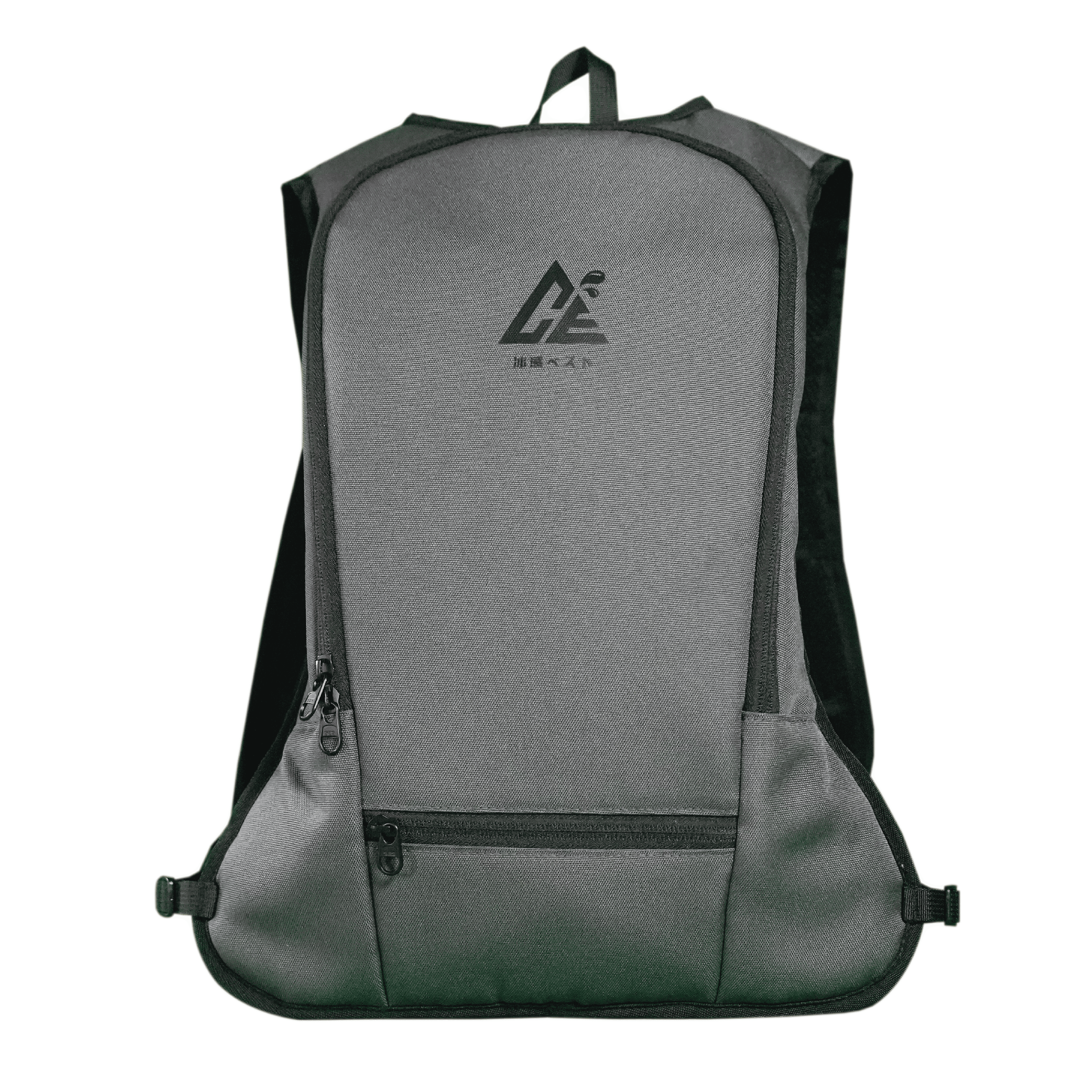
Dual cooling is a system architecture, not a marketing label. In the COOLWAVE Water-Circulation Cooling Vest, two cooling paths run together: reusable ice packs supply the cold, and a low-voltage pump moves chilled water through a tube loop worn against the torso. The result is a wearable system specified for 3–4 hours of cooling at a total weight of under 2 kg.
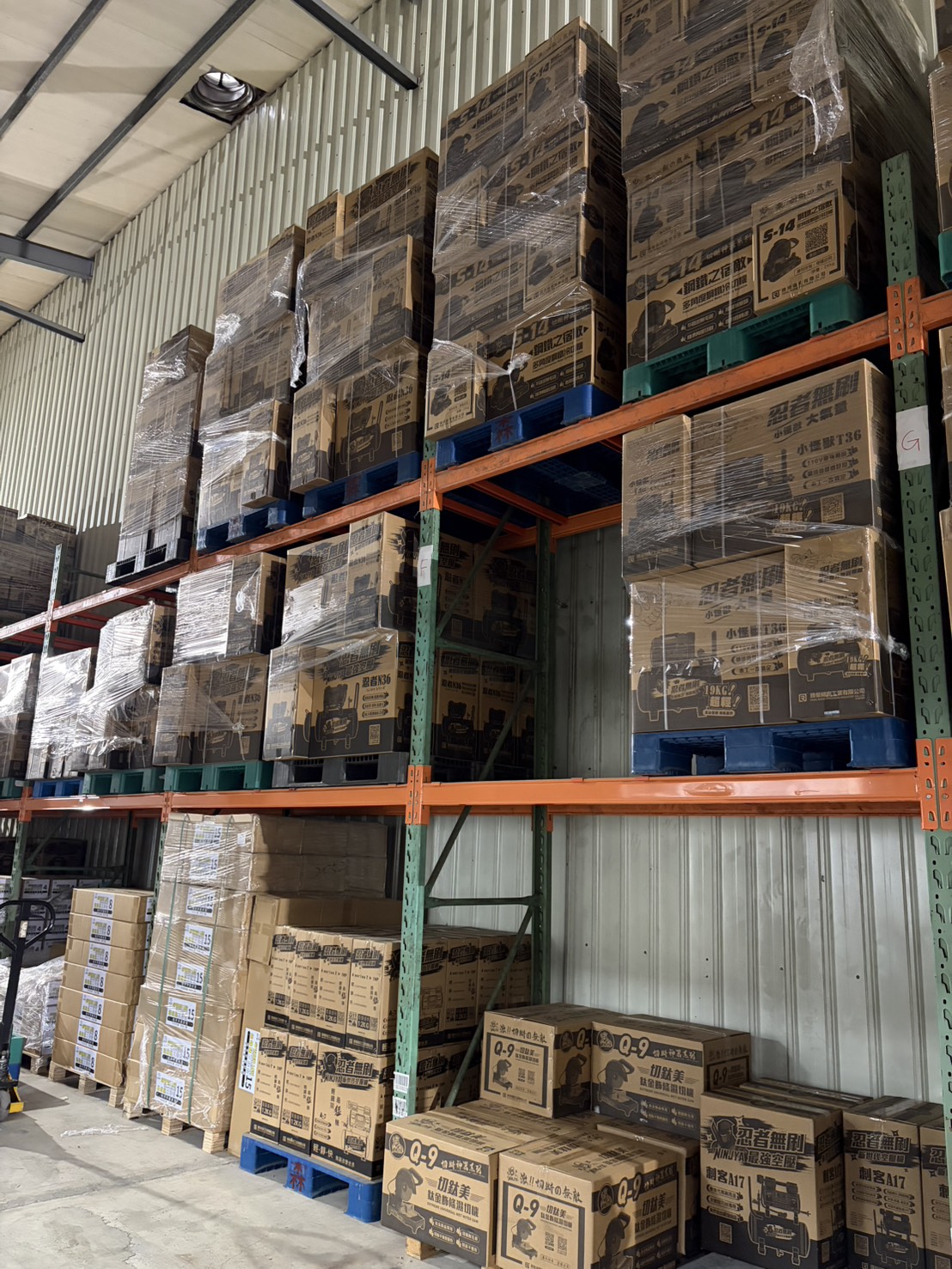
Shokunin is a professional tool brand operated by Feng Shang Precision Co., Ltd., a Taiwan-based manufacturer founded in 2009 whose product range covers air compressors, cut-off machines, water-cooled vests, lithium batteries, diamond saws, nail guns, spider stands, and screwdriver bits.
This guide is written for engineers, safety officers, and procurement teams who need to decide whether a dual cooling vest fits a specific work site — and how to read its specification correctly before ordering. It explains what each component does, which parameters actually change on-site performance, and how to convert a shift pattern into a specification rather than a guess.
Problem Definition: Where Single-Path Cooling Breaks Down
Human cooling depends on evaporation. Sweat must evaporate from the skin surface to remove heat, and that process is blocked in exactly the conditions where cooling vests are used: high ambient temperature, high humidity, direct sun exposure, and layered protective clothing. When evaporation slows, core temperature climbs and the physiological cost shows up as reduced concentration, slower work pace, and — in the worst case — heat illness.
Passive ice-pack vests address the problem with conduction alone. They are simple and require no power, but they carry three structural limits that matter on a real site:
- Cold is local, not distributed. Pack placement determines which body zones get cooled; the coverage usually cannot be extended to the whole torso.
- Cooling decays in a curve, not a plateau. Output is highest at the start and falls as the pack warms.
- Turnaround is a freezer dependency. Packs must be re-frozen before the next shift, which ties deployment to site infrastructure.
A dual cooling design changes the first two limits by separating the cold source from the delivery path. The ice pack still provides the cold, but it now chills a water reservoir instead of only touching the body. The pump then moves that chilled water through a tube loop, so the cooling effect is spread across the torso and stays more even across the working window.
Industry Background: Why Active Circulation Is Moving Into Industrial PPE
Cooling apparel has moved from a niche comfort product into a specified category of protective equipment. Market research on the personal cooling device segment valued it at USD 25.16 billion in 2024, with a projection of USD 94.85 billion by 2035 (Market Research Future). Narrowing to cooling vests specifically, the segment was valued at approximately USD 215 million in 2024, projected to reach USD 385 million by 2033 (Dataintelo).
Two structural signals are more useful to a specifier than the headline numbers. First, industrial applications — construction and manufacturing — held the largest application share at 34.5% in 2025 (Dataintelo), which confirms the demand driver is occupational heat exposure rather than consumer leisure. Second, Asia Pacific is identified as the fastest-growing region for cooling vests, driven by rapid industrialization and large outdoor work populations (Spherical Insights).
On the technology side, active circulatory mechanisms such as ice water circulation are increasingly deployed in industrial sectors to mitigate occupational heat stress (Strategic Market Research). Phase change material (PCM) vests captured 28.7% of market share in 2025 and represent the fastest-growing technology segment (Dataintelo), so a buyer evaluating a dual cooling system is choosing within a technology field that also includes PCM and conventional passive ice packs. Established names operating in this space include Techniche International, Glacier Tek, Polar Products Inc., and Ergodyne (Spherical Insights).
For compliance context, cooling systems are generally expected to comply with ISO 9001:2015 for quality management, and electrical components frequently require CE or UL marks depending on the destination market (ISO / UL). That requirement applies to the pump assembly as an electrical component, and it is one of the reasons the pump specification matters at the procurement stage rather than only at the engineering stage.
Detailed Solution: Inside the Dual Cooling Architecture
The COOLWAVE vest is classified as industrial cooling apparel and personal protective equipment (PPE). Its technical behavior comes from how five sub-systems interact: the cold source, the water reservoir, the circulation loop, the pump, and the structural textiles.
The cold source: two reusable ice packs
Each unit ships with two reusable ice packs. They perform two functions simultaneously — they act as the primary cold reservoir that chills the circulating water, and they provide direct conductive cooling where they sit against the body. This is the origin of the term "dual cooling": one energy source feeding two delivery paths, a passive conductive path and an active pumped path.
The water reservoir: TPU bag with a polypropylene cap
The reservoir is made from TPU (thermoplastic polyurethane), a material selected for flexibility and resistance to repeated flexing as the wearer moves. The closure is a polypropylene cap. In practical terms, TPU matters because a water bag on a construction site is folded, compressed, and refilled repeatedly across its service life; a stiff or brittle reservoir would fail at the seams long before the pump or tube loop did.
The circulation loop: sand rubber tube
Chilled water travels through a sand rubber cooling tube (black). The tube is the delivery interface with the body, so its function is to distribute cold over a wider surface area than a single ice pack could reach. Loop routing determines whether the cooling effect concentrates on the chest and back or spreads more evenly across the torso.
The pump: 5 V DC, 150 mA maximum
The pump is specified at 5 V DC and a maximum output of 150 mA. Two things follow from that number. First, it is a low-voltage, low-current device, which is why this product category is often described as a power-bank cooling vest — the electrical demand sits within the range that portable USB-class power sources are designed to deliver. Second, at 150 mA maximum, the pump is not the limiting factor in the system's duty cycle; the ice pack is.
The textiles: PEVA body and 600D polyester shoulder straps
The main body material is PEVA, and the shoulder straps use 600D polyester. 600D is a denier count associated with abrasion-resistant webbing, which is the relevant property for a strap that carries a water-filled backpack and is repeatedly put on and taken off over a work shift. The application requirement for this product line specifies a lightweight, waterproof, breathable, one-size-fits-all construction with adjustable straps.
System-level output. Assembled, the COOLWAVE vest is specified at a cooling duration of 3–4 hours, a total weight within 2 kg, a suitable temperature rating below 10 °C, and a maximum flow rate of 320–370 ml/min. Contents per unit: water-cooled vest backpack × 1, ice packs × 2. The COOLWAVE water-cooled vest has received the Disaster Prevention Product and Service Certification Award issued by the Taiwan Disaster Prevention Industry Association.
Selection Parameters: Which Numbers Actually Change Performance
Specification sheets list parameters; selection work is about knowing which ones bind. On a dual cooling water cooling vest, five parameters determine whether the product fits a site, and the rest are largely fixed by the design.
1. Cooling duration versus shift length
The rated cooling duration is 3–4 hours. That is the parameter that should drive quantity planning. A standard eight-hour shift will therefore require a planned change-out or re-freeze interval, and the supplied quantity of ice packs per unit tells you how many cooling cycles one vest can support before a freezer is needed. Buyers who treat the 3–4 hour figure as a full-shift rating will under-order ice packs.
2. Flow rate and pump draw
Maximum flow rate is 320–370 ml/min, delivered by a pump drawing up to 150 mA at 5 V. Flow rate governs how quickly chilled water is redistributed along the tube loop, which is what keeps cooling even rather than front-loaded. Higher flow moves cold to the far end of the loop faster; the practical constraint is not the pump's capability but the water temperature inside the reservoir.
3. Weight and layering
Total system weight is within 2 kg. That figure has to be evaluated against what the worker already wears. In metal sheet factories and on construction sites, the vest is often worn under or over additional protective clothing, so the 2 kg is an incremental load rather than a total load. For workers doing sustained manual handling, weight is the parameter that most often decides between a vest that gets worn and one that gets left in the site office.
4. Materials and maintenance reality
Material specification is a maintenance forecast. The relevant questions are whether the reservoir can be refilled and drained daily (TPU bag with polypropylene cap), whether the strap webbing tolerates abrasion (600D polyester), and whether the tube loop can be routed repeatedly without kinking (sand rubber tube). A vest that cannot be dried and refilled quickly between shifts will not survive a multi-shift rota regardless of its cooling rating.
5. Cooling water temperature and cold-source availability
The specified suitable temperature is below 10 °C. This is the parameter that ties the vest to site infrastructure. A dual cooling vest does not manufacture cold — it transports it. If a site cannot freeze ice packs overnight or maintain chilled water below the specified range, the performance figure on the spec sheet is unreachable in practice. Cold-source logistics belong in the procurement decision, not in the afterthought column.
6. Fit range
The design is one-size-fits-all with adjustable vest straps. That reduces sizing complexity in mixed crews, but adjustable straps still need to be checked against the layering plan, because strap length interacts with whether the vest sits over a t-shirt or over protective workwear.
Step-by-Step Breakdown: Specifying a Vest for a Specific Site
The following sequence converts site conditions into a defensible specification. It can be run by a safety officer without engineering support.
- Define the heat exposure window. Record the longest continuous period a worker is exposed to high temperature, direct sun, or radiant heat from equipment — not the total shift length.
- Convert the exposure window into cooling cycles. Divide the exposure window by the 3–4 hour rated cooling duration. This gives the number of ice pack sets required per worker per day.
- Audit the cold source. Confirm that a freezer or chilled water supply can bring ice packs and reservoir water to the specified range of below 10 °C, and confirm where that happens on site.
- Audit the power source. The pump requires a 5 V DC supply drawing up to 150 mA. Confirm what portable power the crew already carries before assuming a separate purchase is needed.
- Define the layering stack. Establish whether the vest is worn against a base layer or over workwear, then check strap adjustment and total carried weight against the 2 kg system figure.
- Match the vest to the exposure type. Radiant heat from metal surfaces, direct sun, and high humidity shift the priority between coverage area and cooling duration.
- Plan the order quantity and replenishment. Minimum order quantity is 10 units, monthly capacity is 3,000 units, and lead time runs 7–14 days. Order quantity should be driven by crew size multiplied by the ice pack sets identified in step 2, not by crew size alone.
Use Cases: Where the Specification Fits
The COOLWAVE vest is specified for construction workers, outdoor workers, food stall operators, street vendors, traffic controllers, and metal sheet factory personnel. These are not interchangeable applications, and the selection emphasis changes between them.
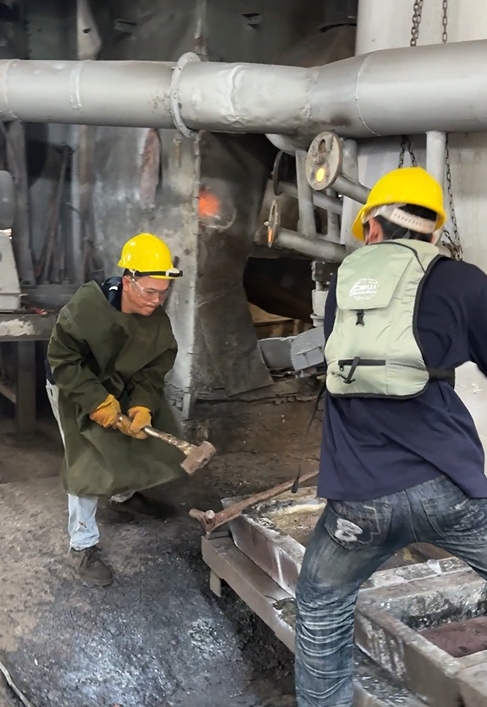
Metal sheet factories and industrial indoor heat
Indoor industrial environments combine high ambient temperature with radiant heat from hot metal. Here the priority is even distribution across the torso rather than peak intensity at a single point, which is the operating condition the tube loop is designed for.
Construction sites
Construction work combines direct sun exposure with sustained physical activity. The 2 kg system weight and the abrasion-resistant 600D polyester shoulder straps are the parameters that determine whether the vest stays in service across a full project rather than a single week.
Traffic control and roadside work
Traffic controllers work stationary in direct sun for extended periods, which makes cooling duration the binding parameter rather than cooling intensity. Stationary work also reduces the physical penalty of carried weight.
Street vendors and market operators
Night market and food stall operators work long continuous service hours in dense outdoor environments where ice pack re-freezing is difficult to schedule. Mobility and quick ice pack exchange matter more here than maximum cooling output.
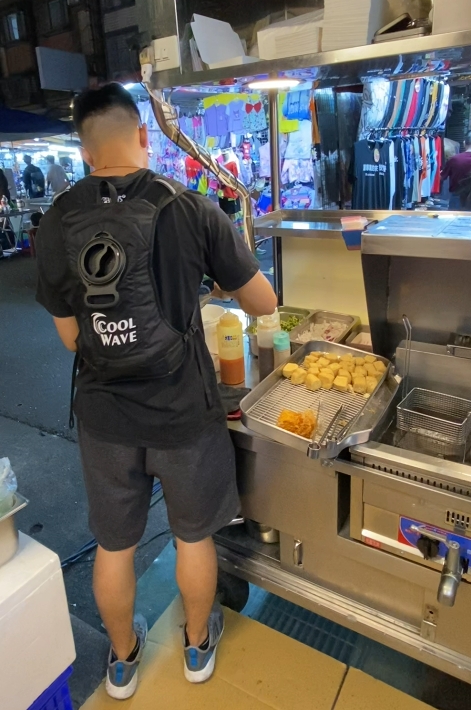

One documented deployment illustrates the operational picture. A Taiwan-based user group covering construction sites, outdoor work, metal sheet factories, and street vendors has run 100 units in high-temperature cooling applications over a 10-year period, reporting effective body cooling, heatstroke prevention, and improved work efficiency and worker comfort. The stated advantages in that deployment were passive ice pack cooling, no requirement for mains power, lightweight portable construction, adjustable one-size-fits-all design, and certified disaster prevention status.
Comparison Table: COOLWAVE Model Specifications
The COOLWAVE Water-Circulation Cooling Vest is offered in three professional colorways and one basic configuration. The technical specification is identical across the range; the differences are color and model designation. Buyers should read the table as a confirmation of the fixed parameters rather than as a performance ranking between models.
| Parameter | Professional Model — Blue / Gray / Black | Basic Model |
|---|---|---|
| Cooling duration | 3–4 hours | 3–4 hours |
| System weight | Within 2 kg | Within 2 kg |
| Suitable temperature | Below 10 °C | Below 10 °C |
| Pump output | 5 V 150 mA (max) | 5 V 150 mA (max) |
| Flow rate | Max 320–370 ml/min | Max 320–370 ml/min |
| Water bag material | TPU | TPU |
| Water bag cap | Polypropylene | Polypropylene |
| Body material | PEVA | PEVA |
| Shoulder strap material | 600D polyester | 600D polyester |
| Cooling tube | Sand rubber (black) | Sand rubber (black) |
| Contents per unit | Water-cooled vest backpack × 1, ice packs × 2 | Water-cooled vest backpack × 1, ice packs × 2 |
| Type | Industrial cooling apparel / PPE | Industrial cooling apparel / PPE |
The applicable industries listed for all four configurations are construction workers, outdoor workers, food stall operators, street vendors, traffic controllers, and metal sheet factories. Because the technical figures do not vary, model selection is a visibility and identification decision — for example, matching colorways to different crews or departments — rather than a cooling performance decision.
FAQ
Does the COOLWAVE dual cooling vest carry any recognized certification?
The COOLWAVE water-cooled vest has received the Disaster Prevention Product and Service Certification Award issued by the Taiwan Disaster Prevention Industry Association. Beyond that product-level recognition, buyers should factor in the wider compliance expectations for this category: cooling systems are generally expected to comply with ISO 9001:2015 for quality management, and electrical components such as pumps frequently require CE or UL marks depending on the destination market. Because the pump is an electrical component, procurement teams should confirm which marks apply for their region before finalizing a specification.
What flow rate and cooling duration does the vest actually deliver?
The COOLWAVE Water-Circulation Cooling Vest is specified at a maximum flow rate of 320–370 ml/min, a cooling duration of 3–4 hours, and a suitable temperature of below 10 °C. The pump is rated at 5 V and up to 150 mA, and the total system weight is within 2 kg. Each unit includes one water-cooled vest backpack and two ice packs. Cooling duration is tied to the ice pack set rather than to the pump, so a shift longer than 3–4 hours requires a planned change-out.
What drives the cost structure of a dual cooling vest?
In this category, cost is determined by the specified component set rather than by a single headline figure. The bill of materials on the COOLWAVE vest includes a 5 V 150 mA pump, a TPU water bag with a polypropylene cap, a sand rubber cooling tube, a PEVA body, 600D polyester shoulder straps, and two reusable ice packs. Purchase structure also affects total cost: minimum order quantity is 10 units, monthly production capacity is 3,000 units, and lead time runs 7–14 days. Buyers comparing options should compare these components and the number of ice packs included per unit, since ice pack count directly determines how many cooling cycles a crew can run per day without returning to a freezer.
Can we validate the vest on site before committing to a larger order?
The manufacturer operates an ODM production model with a minimum order quantity of 10 units, which allows a site trial to be run with a small first batch rather than a full fleet rollout. For validation to be meaningful, the trial should reproduce the actual working conditions — the exposure window, the layering stack, and the cold-source logistics identified during specification — because the 3–4 hour cooling duration and the below 10 °C temperature requirement only hold when ice pack re-freezing is available on schedule. Export markets for the water-cooled vest range are global, with the manufacturer's main markets listed as the USA and ROC.
What is the lead time and after-sales structure for repeat orders?
Lead time is 7–14 days, monthly capacity is 3,000 units, and the water-cooled vest carries a 6-month warranty. For repeat orders, the practical planning figure is ice pack turnover rather than vest count, since the vest itself has no consumable beyond the ice packs and the water it holds. Feng Shang Precision Co., Ltd. was founded in 2009, operates a 1,000 m² facility with 30 employees and a 5-engineer R&D team, and produces 10,000 units annually with an export ratio of 50%. For specification support, current pricing structure, or a full product catalogue, contact the team at fsmarketing@fstool.com.tw or download the product brochure below.
Conclusion: Specify the Cold Source, Not Just the Vest
The engineering value of a dual cooling water cooling vest is that it separates the cold source from the delivery path. Ice packs provide the energy; the pump and tube loop distribute it. That architecture produces a 3–4 hour cooling window at under 2 kg, with a maximum flow rate of 320–370 ml/min from a 5 V, 150 mA pump.
The selection consequence is straightforward. A buyer who specifies only the vest and ignores the cold source will not achieve the rated performance, because the stated suitable temperature of below 10 °C can only be met if ice packs and reservoir water are managed on a schedule. The parameters that decide a successful deployment are cooling duration against exposure window, flow rate against coverage needs, weight against the layering stack, and materials against the maintenance routine the site can actually sustain.
Industrial cooling demand is not a seasonal trend. Industrial applications held the largest application share at 34.5% in 2025, and Asia Pacific is the fastest-growing region for cooling vests — a reflection of how many workers still perform physical labor in high heat. Specifying the right system, with the right component set and the right replenishment plan, is how that demand gets met without relying on guesswork.
Next Step
Download the full Shokunin product catalogue with technical specifications for the COOLWAVE Water-Circulation Cooling Vest range:
Download the product brochure (PDF)
For specification questions, minimum order quantity details, or lead time confirmation, contact Feng Shang Precision Co., Ltd. at fsmarketing@fstool.com.tw or visit www.fstool.com.tw.
Have Questions or Need More Details?
Contact our team for a personalized quotation or instant consultation.
Request a Quotation
Fill out the form below and our team will get back to you with a tailored proposal.
WhatsApp Direct Chat
Prefer to chat in real-time? Message us on WhatsApp for instant assistance & quick answers.
- Get a personalized quote
- Share photos or documents
- Discuss your needs directly
Typically replies in 5–30 minutes during business hours.