
Dual Cooling Water Cooling Vest: Dedicated Issue vs. Rotation Pool
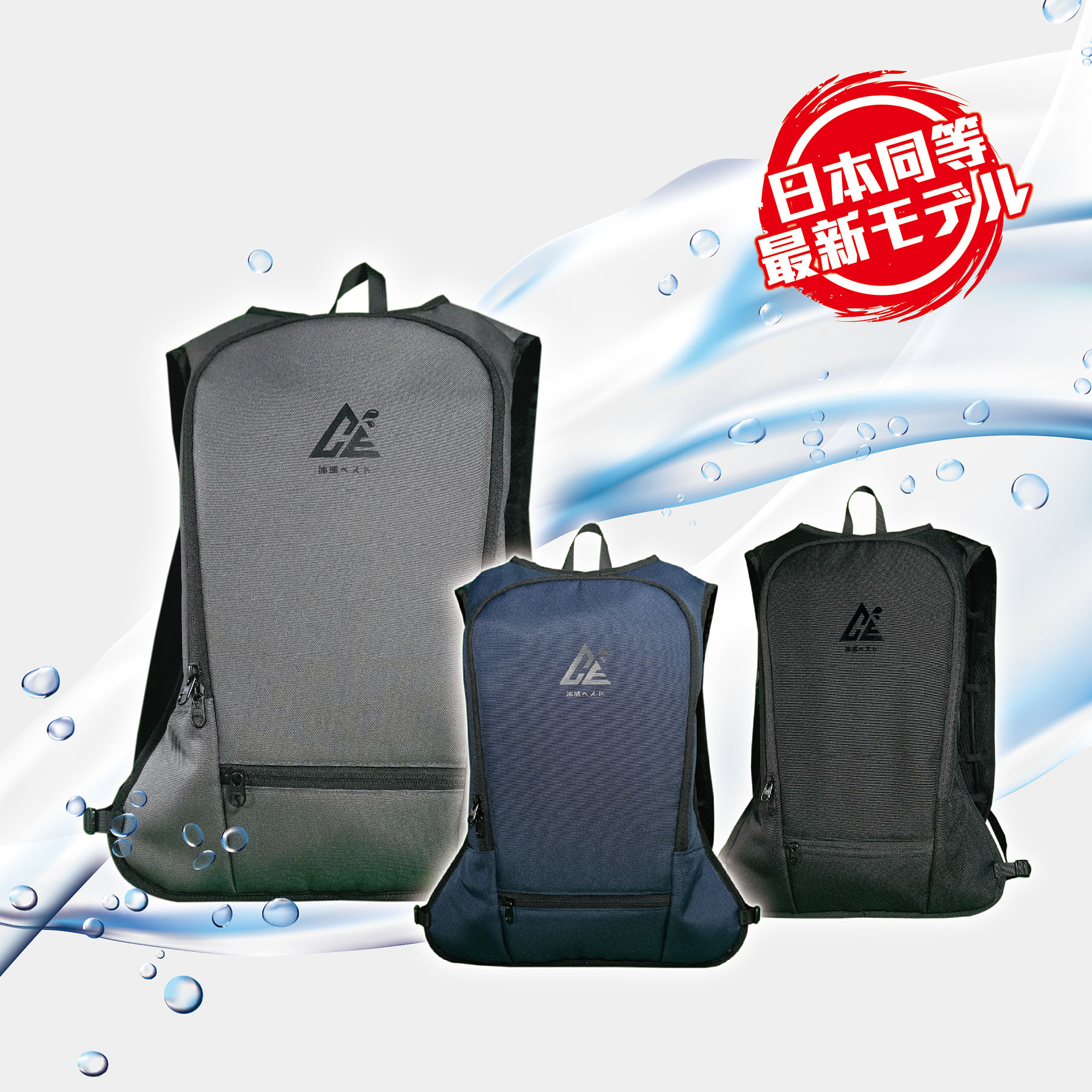
The Dual Cooling Water Cooling Vest decision is usually framed as a product choice. In deployment it is an equipping-model choice: one vest per worker, or a shared rotation pool.
The head-to-head decision on a Dual Cooling Water Cooling Vest is not only “which vest” — it is “which equipping model”. Two options cover almost every industrial deployment: Model A, dedicated issue, where each worker is assigned a vest and a set of ice packs; and Model B, a rotation pool, where fewer vests circulate across shifts and the ice-pack inventory plus a swap schedule carry the cooling coverage.
Decision in brief
Choose dedicated issue when the same crew works the same hot zone every day and each worker must keep cooling for the whole shift. Choose a rotation pool when headcount fluctuates, when multiple sites share one equipment budget, or when vest numbers must stay low while cooling coverage stays continuous. Most industrial buyers end up on a hybrid: an assigned vest per worker, with ice packs held and swapped from a central pool.
Problem Definition: The Cost of Choosing a Model by Accident
Cooling performance is what buyers compare, but cooling continuity is what crews experience. A vest that is comfortable at 9 a.m. is a different procurement problem at 3 p.m., when the ice packs have been in use for a full cycle and nobody owns the swap.
When the equipping model is never decided, three failures recur: the assigned cooling cycle ends in the middle of a task; thawed ice packs sit in a vehicle because freezing capacity was never planned; and the purchase record no longer matches daily site reality, so the next order is sized from a guess rather than a schedule. None of these are product defects. They are model defects.
The category itself is well established. The U.S. National Institute for Occupational Safety and Health (NIOSH) classifies water-cooled garments, air-cooled garments, cooling vests and wetted overgarments as examples of auxiliary or personal cooling systems for heat exposure. That framing matters for procurement: the vest is one component of a cooling arrangement, and the arrangement is what must be specified.
Industry Background: Why the Model Decision Moved Up the Agenda
Industrial demand, not leisure demand, is where cooling-vest volume sits. A 2026 Dataintelo market report values the global cooling-vest market at USD 342 million in 2025 and reports that industrial applications accounted for 34.5% of revenue share in that year. When the revenue centre is industrial, the buying criteria shift from comfort features to shift coverage, documentation, and repeatable supply.
The second shift is documentation-driven. Heat-exposed work increasingly requires a paper trail: what was issued, to whom, under which certificate, and with what replacement plan. A dedicated-issue model produces a clean per-worker record. A pool model produces a clean per-shift record but weak per-worker traceability unless a log is enforced.
The third shift is a data limitation that buyers should plan around. Public information on cooling vests does not include a standardised cooling-capacity test with disclosed ambient temperature, humidity, workload and clothing layers. Supplier-listed runtime figures therefore describe a product claim, not a measured site result. The practical consequence is that the equipping model must be validated with a pilot on the actual site, not selected from a datasheet.
Detailed Solution: The Two Models, and the Product Facts Behind Them
Model A — Dedicated Issue
Each worker is assigned a vest and a personal ice-pack set. The vest stays with the worker across shifts and is his or her responsibility to hang, dry and return.
- Sizing administration is low. The COOLWAVE vest uses an adjustable one-size-fits-all design, so a dedicated-issue programme does not need a size matrix per crew.
- No power infrastructure. The vest is documented as passive ice-pack cooling that requires no power, so there is no charging station, battery log or electrical risk assessment to run alongside the programme.
- Cycle planning is per person. With a supplier-listed cooling duration of 3–4 hours per charge or ice-pack cycle, an eight-hour shift spans roughly two to three listed cycles. That arithmetic, not a comfort claim, is what sets the ice-pack count per worker.
- Warranty and replacement are traceable. The water-cooled vest carries a 6-month warranty, and a dedicated-issue register makes it obvious which unit is which.
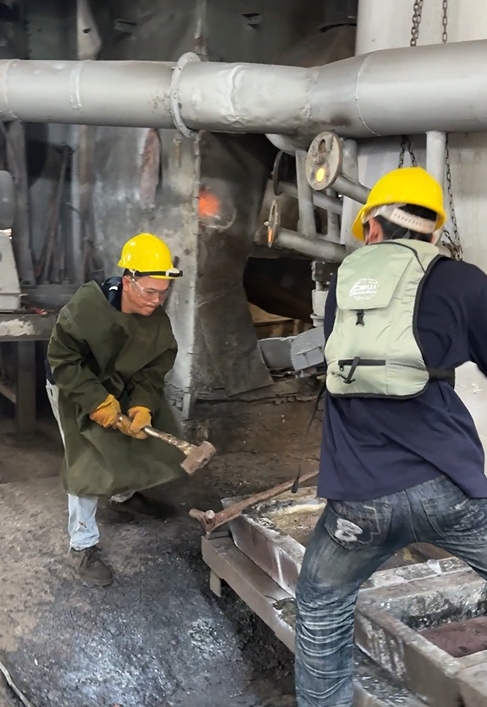
Metal sheet factories are one of the documented application environments for the COOLWAVE water-circulation cooling vest, alongside construction sites, outdoor work and street vendors.
Model B — Rotation Pool
A smaller number of vests circulates. Cooling coverage is maintained by ice packs and a fixed swap schedule at breaks, not by giving every worker a vest.
- The adjustable fit is what makes pooling work. A one-size-fits-all adjustable vest can move between workers at shift handover without a re-issue process.
- The investment shifts from vests to ice packs. Fewer units are purchased, but the ice-pack inventory, the freezer capacity and the swap labour become the binding constraints.
- Hygiene and drying become operating tasks. A pooled vest needs a defined dry-and-return step between users, and that step needs an owner.
- Supervision is the failure point. A pool only delivers continuous cooling if the swap happens on schedule; a missed swap converts a cooling programme into a discomfort complaint.
The Product Facts That Change the Decision
The facts below come from Shokunin and Feng Shang Precision Co., Ltd. documentation and from supplier-published product descriptions. They are listed with their status, because the reliability of each fact differs and the decision should reflect that.
| Fact | Value / statement | What it changes in the model decision |
|---|---|---|
| Cooling method | Passive ice-pack cooling; no power required (first-party documentation) | Removes charging infrastructure and battery logistics from both models; pool viability depends on ice-pack freezing capacity instead |
| Fit | Adjustable one-size-fits-all design (first-party documentation) | Makes a shared rotation pool administratively practical; removes a size matrix from dedicated issue |
| Portability | Lightweight and portable; supplier-listed weight within 2 kg | Supports continuous wear; confirm on a sample against the actual task |
| Cooling duration | 3–4 hours per charge / ice-pack cycle (supplier-listed; test conditions not disclosed) | Sets ice-pack sets per worker and the number of swaps per shift |
| Certification | Taiwan Disaster Prevention Product and Service Certification, issued by the Taiwan Disaster Prevention Industry Association | Provides a documentable certificate for procurement and HSE files |
| Patent | Patent I886033, water-cooled vest structure and cooling system; Intellectual Property Office, Ministry of Economic Affairs; issued 2025-06-01, expiry 2044-08-27 | Relevant to buyers comparing a standard supply route against an ODM programme |
| Warranty | 6-month warranty for the water-cooled vest | Sets the replacement and spare-unit allowance for a pooled fleet |
| Field record | 100 units deployed in Taiwan across construction sites, outdoor work, metal sheet factories and street vendors, over a 10-year period | Evidence that the product has been run at crew scale, not only sampled |
One divergence to resolve before ordering.
First-party documentation describes the product as passive ice-pack cooling that requires no power. Supplier-published product descriptions also describe a water-circulation loop that uses reusable ice packs as the cold source, and list pump data of 5 V, 150 mA with a stated flow of 320–370 ml/min. The runtime and flow figures are supplier-listed and the measurement conditions are not disclosed. Write the configuration, the power requirement and the flow measurement basis into the pre-shipment acceptance criteria rather than assuming either description.
Step-by-Step Breakdown: Choosing a Model in Six Steps
Step 1 — Map exposure and shift structure.
Record the hot zones, shift length, break pattern and how many workers are present in each zone at peak. A pool model only works if breaks are long enough to complete a swap.
Step 2 — Convert the listed cooling cycle into a pack budget.
Divide shift hours by the supplier-listed 3–4 hour cooling duration to estimate cycles per shift, then multiply by workers or by pooled vests. Treat the result as a planning assumption, then verify it during the pilot, because test conditions for the listed duration are not published.
Step 3 — Draw the ownership boundary.
Decide separately who owns vests and who owns ice packs. A dedicated vest with pooled ice packs is a legitimate and common hybrid, and it separates the hygiene question from the freezing-logistics question.
Step 4 — Lock the compliance file.
Collect the Taiwan Disaster Prevention Product and Service Certification and the patent reference (I886033) for the procurement file, and confirm separately whether the destination market requires its own PPE classification or conformity route. Certification in one market is not a substitute for another market's requirement.
Step 5 — Size the first order against real supply terms.
The minimum order quantity is 10 units, typical production lead time is 7–14 days, and stated monthly production capacity is 3,000 units. Note that a separate source quotes annual company-wide output of 10,000 units, so ask the supplier to define the capacity basis before you build a rollout calendar on either figure.
Step 6 — Set acceptance, payment and review terms.
Current commercial terms list shipment after payment, freight paid by the buyer, full payment, and a pre-shipment test as the acceptance criterion. Add a two-week post-issue review of swap compliance to that list — it is the measurement that tells you whether the model, not the vest, is working.
Use Cases: Where Each Model Fits
Construction sites
Construction crews mix fixed and moving headcount, which favours a hybrid: an assigned vest for permanent crew, a small pooled reserve for subcontractors and visitors. Vest durability and a clear drying routine matter more than the number of units.
Metal sheet factories and metal-roof buildings
Fixed workstations and stable shifts make dedicated issue the cleaner choice. The same worker returns to the same hot zone every day, so per-worker ice-pack sets and a documented swap at the mid-shift break produce predictable coverage.
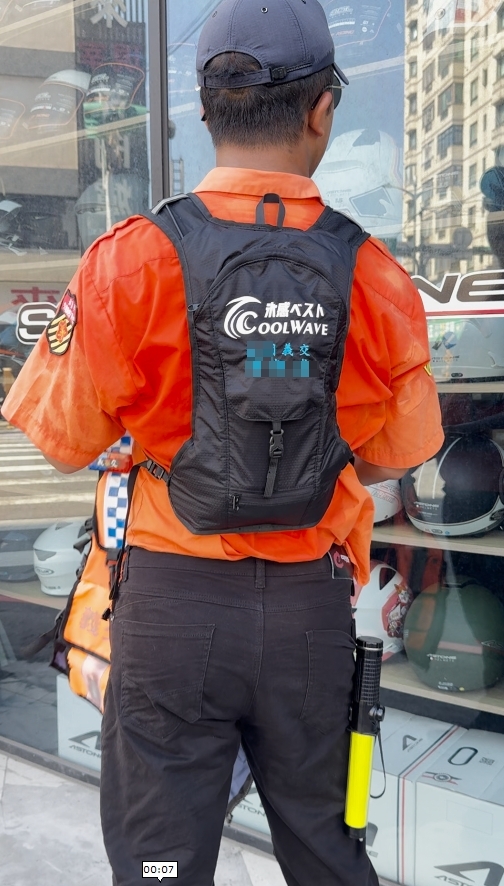
Outdoor work with prolonged sun exposure is a documented use environment; here the constraint is usually ice-pack turnaround rather than vest quantity.
Outdoor work with prolonged sun exposure
When workers are away from a fixed base, a pool must travel with them: a cooler for spare ice packs and a named person responsible for the swap. If neither exists, dedicated issue with a personal spare set is the lower-risk model.
Street vendors and small fixed crews
Small crews rarely justify a pool. The 10-unit minimum order quantity covers a single small site, and dedicated issue keeps the operating routine simple enough to actually be followed.
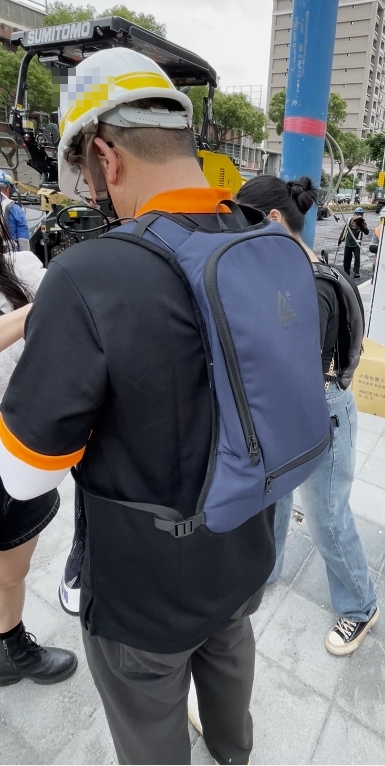
A 100-unit deployment in Taiwan has covered construction sites, outdoor work, metal sheet factories and street vendors over a 10-year period.
Comparison Table: Dedicated Issue vs. Rotation Pool vs. Hybrid
The comparison below is structural. No prices are shown because verified unit pricing, Incoterms beyond the stated freight arrangement, and tooling costs are not available in the current documentation — those must come from a quotation.
| Decision dimension | Dedicated issue | Rotation pool | Hybrid (assigned vest, pooled ice packs) |
|---|---|---|---|
| Vests required | One per worker | Fewer than headcount | One per permanent worker |
| Ice-pack inventory | Per worker, per shift | Largest single cost driver | Central, sized to shift cycles |
| Swap discipline | Worker-managed | Supervisor-managed schedule | Supervisor-managed for packs only |
| Hygiene and drying control | Personal responsibility | Requires a defined return step | Personal vest, shared packs |
| Power / charging infrastructure | None required | None required | None required |
| Sizing administration | Low — adjustable one-size-fits-all | Lowest | Low |
| Traceability of issue | Strong, per worker | Per shift only | Strong for vests |
| Best fit | Fixed hot zones, stable crews, full-shift wear | Fluctuating headcount, multi-site budgets, shift handover | Mixed crews and subcontractor-heavy sites |
| Main risk | Ice packs thaw because nobody owns the swap | Missed swaps and hygiene lapses | Two owners instead of one — needs a single coordinator |
FAQ
Is the COOLWAVE Dual Cooling Water Cooling Vest certified, and what documentation can go into a procurement file?
The COOLWAVE water-cooled vest has received the Disaster Prevention Product and Service Certification awarded by the Taiwan Disaster Prevention Industry Association. The product is also covered by patent I886033, registered with the Intellectual Property Office of the Ministry of Economic Affairs, covering water-cooled vest structure and cooling system, issued on 2025-06-01 with an expiry date of 2044-08-27. Buyers should treat this as a Taiwanese certification record and confirm separately whether the destination market requires its own PPE classification, electrical-safety assessment or conformity marking.
Can the manufacturer support a dedicated-issue rollout as well as a pooled fleet?
Yes. The manufacturer provides ODM production services, states a monthly production capacity of 3,000 units, and lists a minimum order quantity of 10 units with a typical lead time of 7–14 days. Feng Shang Precision Co., Ltd. reports company-wide annual output of 10,000 units. Because the two capacity figures use different bases, ask the supplier to define whether the stated capacity is installed, practical or available capacity before committing a rollout calendar.
What drives the budget difference between the two models?
The difference is inventory composition, not the vest alone. Dedicated issue multiplies vest count by headcount and adds ice packs per worker per shift. A rotation pool reduces vest count but raises the ice-pack inventory, freezer capacity and swap labour. Using the supplier-listed cooling duration of 3–4 hours per cycle, an eight-hour shift implies roughly two to three cycles, which is the multiplier to apply to whichever model you choose. A verified unit price list is not available in current documentation, so request a quotation with freight and payment terms stated.
How should a buyer validate the vest before scaling to a full site?
Start at or near the 10-unit minimum order quantity and run a pilot on the actual hot zone. The current commercial terms list a pre-shipment test as the acceptance criterion, which is where you should also document the configuration (passive ice-pack only or pump-assisted circulation), the power requirement, the measured flow basis and the number of ice-pack sets issued per worker. Publish the swap schedule at the same time, so the pilot measures the model as well as the product.
What lead time and warranty should be planned into a first order?
Typical production lead time is 7–14 days, and the water-cooled vest carries a 6-month warranty. Current terms list shipment after payment, freight paid by the buyer, and full payment. Plan the warranty window against the shift cycle, because pooled vests accumulate wear faster than personally assigned ones. To move from evaluation to a real pilot, request a sample and quotation against your site’s shift structure and crew count.
Conclusion
The Dual Cooling Water Cooling Vest is a straightforward product to compare and a less straightforward product to deploy. The head-to-head decision that matters is dedicated issue versus a rotation pool: the first buys certainty per worker and pays for it in vest count; the second buys equipment efficiency and pays for it in swap discipline, hygiene control and ice-pack inventory.
Two facts narrow the choice considerably. Because the vest is documented as passive ice-pack cooling requiring no power, neither model needs charging infrastructure — the real constraint is freezing capacity. Because the vest uses an adjustable one-size-fits-all design, pooling is administratively practical rather than a compromise.
For most industrial sites, the defensible answer is the hybrid: an assigned vest per worker for traceability and hygiene, with ice packs held and swapped centrally against a documented schedule. Test it at 10 units, write the configuration and acceptance criteria into the order, then scale against verified lead time rather than a datasheet claim.
Sample requests start from the 10-unit minimum order quantity, with a typical production lead time of 7–14 days.
Next step: size the model before you size the order
Shokunin is the professional tool brand of Feng Shang Precision Co., Ltd., based in Taoyuan, Taiwan, and the supplier of the COOLWAVE water-circulation cooling vest. Send your shift length, crew count and hot-zone layout, and we will return a dedicated-issue or pool-based proposal with the ice-pack multiplier attached.
Email: fsmarketing@fstool.com.tw · Phone: +886 3-312-6606 · WhatsApp: +86 18858260055 · Website: www.fstool.com.tw
Download the product brochure (PDF)About the supplier
Feng Shang Precision Co., Ltd. was founded in 2009 and operates a 1,000 m² facility with 30 employees, including 5 R&D engineers. Reported annual output is 10,000 units, with an export ratio of 50% and main markets in the USA and Taiwan. Address: No. 155-17, Sec. 2, Nanzhu Rd., Luzhu Dist., Taoyuan City 338454, Taiwan. Business hours: Monday to Friday, 8:30 AM – 5:40 PM.
Have Questions or Need More Details?
Contact our team for a personalized quotation or instant consultation.
Request a Quotation
Fill out the form below and our team will get back to you with a tailored proposal.
WhatsApp Direct Chat
Prefer to chat in real-time? Message us on WhatsApp for instant assistance & quick answers.
- Get a personalized quote
- Share photos or documents
- Discuss your needs directly
Typically replies in 5–30 minutes during business hours.