
Construction Cooling Vest: Field-Tested Choices for Outdoor Work in Extreme Heat
For construction managers, safety officers, and procurement teams, the challenge is no longer whether to provide cooling gear, but which construction cooling vest actually delivers reliable, long-duration relief on a real job site. This guide evaluates today’s leading options using a practical framework: cooling duration, power dependency, comfort, certification, and total cost of ownership. It also explains why passive water-circulation vests are gaining traction among outdoor workers who spend 8-hour shifts in direct sun, metal-roof structures, and other oven-like environments.
Heat Stress on Construction Sites Is a Measurable Safety Issue
Heat stress is one of the most visible hazards in outdoor construction. Workers on asphalt, rebar, metal roofing, or concrete surfaces often absorb significant radiant heat in addition to high air temperatures. When the body cannot shed heat fast enough, the risk of heat exhaustion and heat stroke rises sharply. That is why heat stress prevention products have become a serious budget line for construction firms. The global market for these products reached USD 2.86 billion in 2025, and cooling wearables were identified as a primary growth driver.
Cooling vests sit at the center of this category because they are wearable, job-site compatible, and can be used while the worker remains active. Industrial applications already represent the largest segment of the cooling vest market, accounting for 34.5% of global revenue in 2025. The Asia-Pacific region led all regions with a 38.2% revenue share in the same year, fueled by rapid industrialization and intense summer conditions.
For U.S. buyers, regulatory pressure also matters. The OSHA General Duty Clause — Section 5(a)(1) of the OSH Act — requires employers to provide a workplace free from recognized hazards, which includes heat stress on high-temperature construction sites. Even when a specific heat standard is not yet finalized, OSHA can cite employers for failing to address heat hazards. This shifts cooling vests from “optional comfort item” to “documented risk mitigation tool.”
Defining the Problem: Why Ordinary Cooling Methods Fail on Site
Many construction sites still rely on a mix of water breaks, shade, and rotating shifts. These measures help, but they do not provide continuous skin-contact cooling. The worker returns to the same radiant heat environment after each break, and core temperature can keep climbing during intense physical work.
Some teams try disposable ice packs or frozen gel vests. These work for 20–40 minutes at most, then become warm, heavy, and uncomfortable. Other teams try fan-based cooling vests. These require batteries and airflow, and their performance drops in high-humidity conditions or when the vest is worn under a work shirt. The result is frustrated workers, inconsistent usage, and safety budgets spent on gear that does not perform.
What construction crews actually need is a cooling vest that delivers meaningful cooling for a full work cycle, does not depend on constant recharging, and is light enough to be worn under or over required workwear.
Industry Background: Where the Construction Cooling Vest Market Is Heading
The broader cooling vest market is expanding, but the construction segment deserves a closer look. In 2024, the global industrial cooling vest market for warehouse and logistics workers alone was valued at USD 412 million. Warehouse is only one slice of industrial cooling; construction and mining are equally heat-intensive. The specialized segment of cooling vests with fans also reached USD 1.32 billion in 2024, reflecting strong demand for active cooling in construction and mining environments.
At the same time, buyers are becoming more sophisticated. They are comparing cooling duration, pump flow rate, material quality, certification, and supplier reliability instead of simply choosing the cheapest option. Passive water-circulation vests are moving to the forefront because they address the two biggest complaints about cooling PPE: short duration and limited mobility.
Several global manufacturers are active in industrial cooling vests, including Glacier Tek, TechNiche International, Polar Products, Ergodyne, and Occunomix. Buyers evaluating the market should position any Taiwanese vendor such as Shokunin against this competitive field, not just against local sellers.
Why Shokunin’s COOLWAVE Vest Is Built for Construction Heat
Shokunin is the professional e-commerce brand of Feng Shang Precision Co., Ltd., a Taiwan-based manufacturer founded in 2009. The company produces tools and PPE from a 1,000 m² facility in Taoyuan City, with a team of 30 people and an in-house R&D team of 5 engineers. Around 50% of its production is exported, primarily to the USA and ROC (Taiwan). Shokunin’s product line includes air compressors, cut-off machines, and the COOLWAVE water-circulation cooling vest.
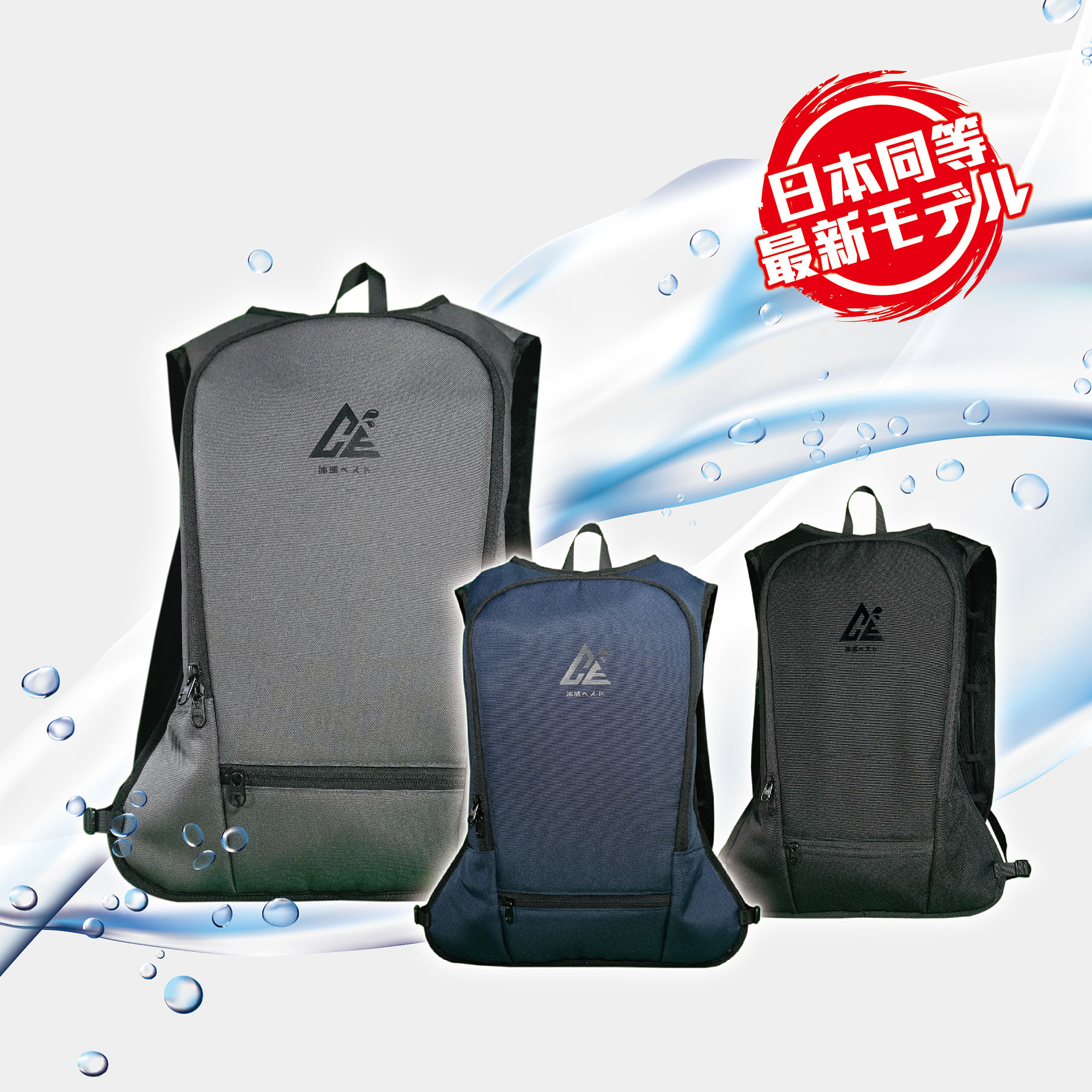
The COOLWAVE Water-Circulation Cooling Vest is a passive cooling system designed for construction workers, outdoor workers, metal sheet factory staff, traffic controllers, and street vendors. It uses ice packs and a water circulation pump to move chilled water through tubes across the body. The system requires no external power source beyond a small battery-driven pump, which is far less demanding than fan-based vests.
How the COOLWAVE System Works
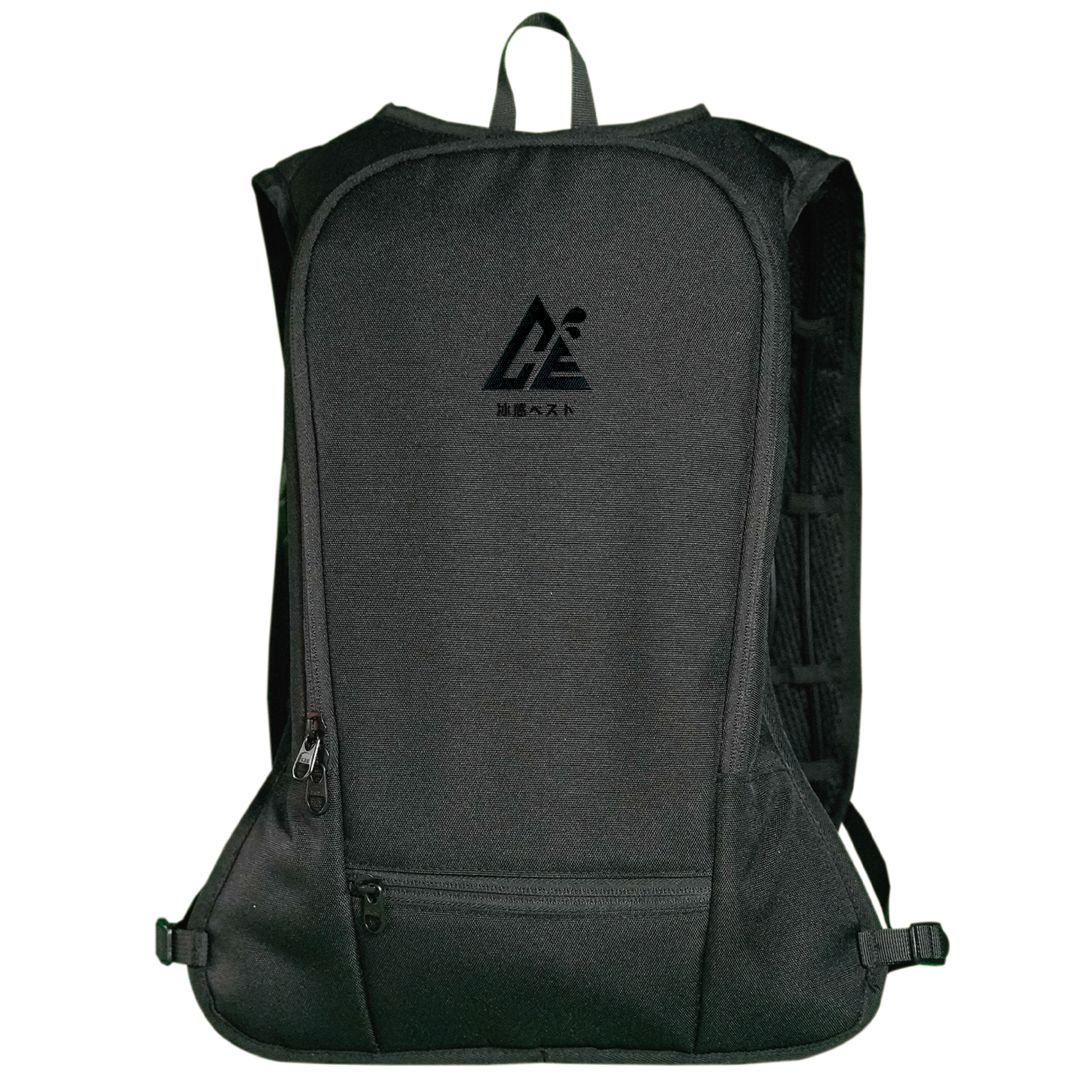
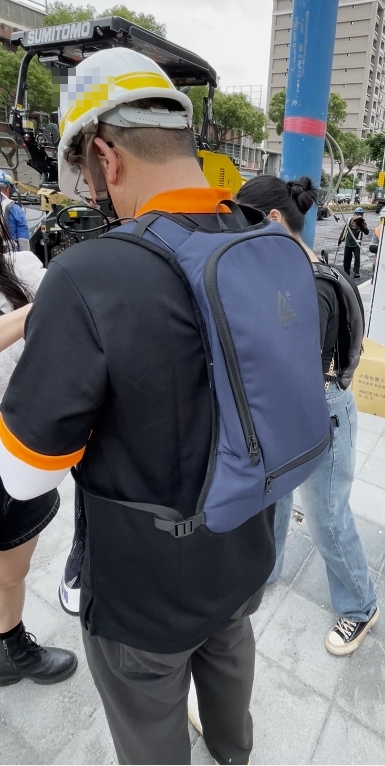
The vest consists of a backpack holding two ice packs and a water bag, plus a pump that circulates chilled water through tubes sewn into the vest. As the worker moves, the water circulates continuously, transferring heat away from the torso. The ice packs provide sustained cooling energy, which is why the vest maintains its effect for 3–4 hours per ice pack set.
Key technical parameters include:
- Cooling duration: 3–4 hours
- Total weight: within 2 kg
- Pump output: 5V, 150 mA (max)
- Flow rate: max 320–370 ml/min
- Shoulder strap material: 600D polyester
- Water bag material: TPU
- Cooling tube: sand rubber (black)
- Contents: water-cooled vest backpack ×1, ice packs ×2
This design addresses the most common failure point of cooling vests: short cooling duration. A 30-minute vest is almost useless for an 8-hour construction shift. A 3–4 hour passive water-circulation vest aligns with the natural work period between meal breaks and shift rotations.
Certifications: A Distinguished Safety Record
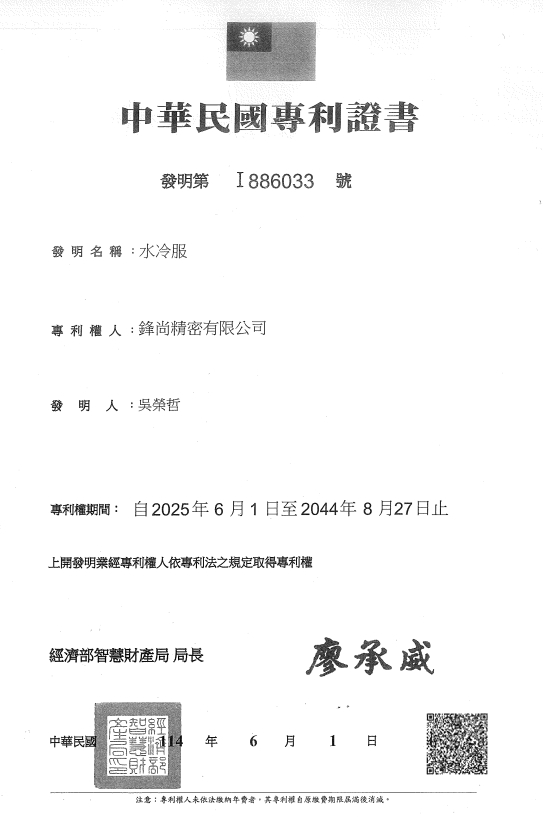
One of the strongest signals of quality is independent recognition. The COOLWAVE Water-Circulation Cooling Vest received the Disaster Prevention Product and Service Certification Award from the Taiwan Disaster Prevention Industry Association. The company also holds a confirmed patent for the water-cooled vest structure and cooling system:
- Patent certificate: Water-cooled vest patent certificate
- Patent number: I886033
- Issued by: Intellectual Property Office, Ministry of Economic Affairs
- Issue date: 2025-06-01
- Scope: Water-cooled vest structure and cooling system
For procurement teams, a recognized patent helps confirm that the product design is original and not a generic import. The certification also supports the case for using company budget on a proven product rather than an untested commodity.
How to Choose a Construction Cooling Vest: A Step-by-Step Framework
Whether you are buying for 10 workers or 1,000, the selection process should follow the same logic. Use this step-by-step framework to evaluate any cooling vest vendor.
Step 1: Define the Work Cycle and Heat Exposure
Start by mapping the actual shift pattern. If workers spend 4 hours straight in direct sun on a metal roof, a 30-minute cooling vest will fail. If workers move between a hot kitchen and a cooler storage room, a lighter vest may be enough. The most demanding conditions — metal roof work, long sun exposure, and oven-like enclosed spaces — require a vest with an extended cooling duration of 3–4 hours.
Step 2: Determine Power Dependency
Cooling vests generally fall into two categories: active (fan-based) and passive (ice / water / phase-change). Fan-based vests depend on batteries and airflow, which can be uncomfortable when worn inside a work shirt. Passive water-circulation vests like the COOLWAVE use ice packs plus a small pump; they keep working even without high airflow. For hot and humid sites, passive cooling is often the more reliable choice.
Step 3: Check the Cooling Duration Metric
Ask the supplier directly: how long does the vest remain effective with a fresh set of ice packs? A realistic benchmark for construction is 3–4 hours. This matches the natural interval between meal breaks and allows workers to manage their own cooling schedule without stopping work every hour.
Step 4: Verify Materials and Comfort
Cooling vests are worn against the skin or over a base layer. If the material is flimsy or the water tubes are poorly routed, workers will not use the vest. Check for durable components such as 600D polyester straps, TPU water bags, and sand rubber cooling tubes. Also confirm that the vest includes an adjustable one-size-fits-all design, which simplifies sizing for a mixed crew.
Step 5: Validate Certifications and Patents
Ask for document numbers, not vague claims. In the case of Shokunin, the supplier can provide the actual patent number (I886033) and a named industry certification. If a vendor cannot produce a concrete certification or patent number, treat that as a red flag.
Step 6: Assess Supplier Capacity and After-Sales Support
Cooling vests are consumables in the sense that they face daily wear in harsh environments. Buyers need a supplier with enough capacity to handle repeat orders. Shokunin’s production cell supports a monthly capacity of 3,000 units for ODM production, a minimum order quantity of 10 units, and a typical lead time of 7–14 days. The company also offers a 6-month warranty on the water-cooled vest.
- Production mode: ODM
- Monthly capacity: 3,000 units
- Lead time: 7–14 days
- MOQ: 10 units
- Warranty: 6 months
Evaluation: Shokunin vs. Leading Global Cooling Vest Manufacturers
To make the comparison useful, this table positions Shokunin against the major global cooling vest manufacturers identified in verified market data. It focuses on factors that matter during evaluation, such as product approach, power dependency, and evidence available to buyers.
| Vendor | Cooling Approach | Typical Power Dependency | Why It Is Considered |
|---|---|---|---|
| Shokunin (Feng Shang Precision Co., Ltd.) | Passive water circulation with ice packs | Low — small 5V pump only, no fan required | 3–4 hour cooling duration, patented structure (I886033), Taiwan OEM/ODM supplier with 6-month warranty |
| Glacier Tek | Phase-change cooling (Glacier Tek phase-change inserts) | None | Recognized global cooling vest brand, common in industrial heat stress programs |
| TechNiche International | Evaporative and phase-change cooling | None | One of the most referenced names in industrial cooling apparel |
| Polar Products | Water-circulation and phase-change systems | Low to moderate depending on model | Long-established cooling brand; used in military, medical, and industrial applications |
| Ergodyne | Evaporative and phase-change cooling | None | Strong presence in U.S. construction safety equipment catalogs |
| Occunomix | Evaporative cooling, cooling vests, and high-visibility PPE | None | Known in traffic safety and road construction segments |
This comparison is not a claim that Shokunin outperforms these vendors in every category. Instead, it gives buyers a simple framework: look for a vendor whose cooling method matches your site conditions, power constraints, and maintenance capacity. Shokunin’s differentiator is its focus on long passive cooling duration, ODM flexibility, and Taiwan-based production with accessible communication channels.
Use Cases: Where a 3–4 Hour Cooling Vest Delivers the Most Value
Metal-Roof and Sheet Metal Workplaces
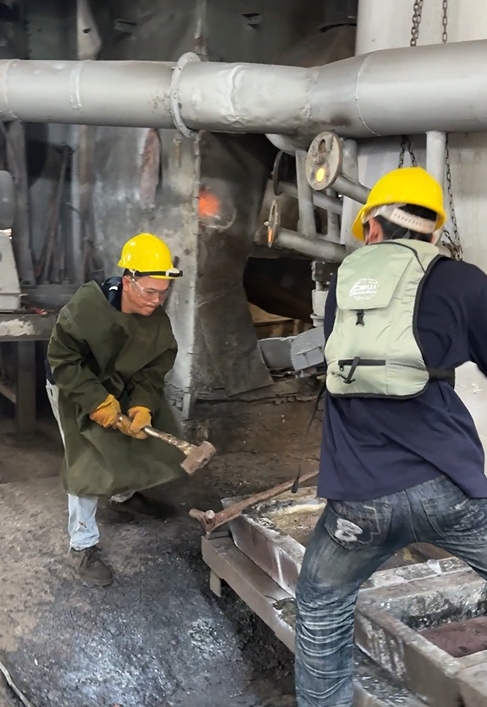
Metal roofs absorb heat quickly and turn a work area into an “oven-like” environment. Workers installing panels, sealing seams, or performing maintenance often cannot stop work for frequent cooling breaks. Shokunin’s field use includes metal sheet factories and construction work in this exact setting. The passive water-circulation vest keeps the torso cool while the worker climbs, lifts, and moves across the roof.
Long-Hour Sun Exposure on Site
Traffic controllers, road crews, and construction workers exposed to full sun for 6–8 hours need continuous cooling without tethering to a power outlet. The COOLWAVE vest requires only a small pump battery and two ice packs. In Shokunin’s documented use cases, this configuration has been applied for construction sites and direct traffic control with results including effective body cooling, heatstroke prevention, and improved worker comfort.
Outdoor Work with Heavy Personal Protective Equipment
Electricians, steelworkers, and general laborers who already wear hard hats, gloves, and safety vests cannot add a bulky power unit. A vest that stays within 2 kg and routes cooling tubes through a comfortable vest body is more likely to be accepted by the crew. The adjustable one-size-fits-all design in Shokunin’s case documentation is an advantage for mixed-height teams.
Stuffy Enclosed Workplaces
Some construction cooling equipment is needed indoors: factories without air conditioning, boiler rooms, and enclosed metal structures. In these spaces, fan-based vests lose efficiency because the ambient air is already warm or humid. Passive water-circulation cooling removes heat at the skin level regardless of air movement, which is why Shokunin’s product is also used by street food vendors and night market workers in Taiwan.
Field Evidence: What Shokunin’s Cooling Vest Data Shows
Shokunin’s documented case data provides a concrete example of adoption in high-temperature work. One long-term use case covers construction sites, outdoor work, metal sheet factories, and street vendors in Taiwan over a 10-year usage span. The quantity reached 100 units, and the stated application was cooling use in high-temperature environments. The results: effective body cooling, heatstroke prevention, improved work efficiency, and improved worker comfort.
This does not prove that every construction crew will see identical results. But it shows that the product has been used beyond the prototype stage and has a documented adoption history in the exact work categories described in this article.
Limitations and Selection Trade-offs
No cooling vest is universal. Buyers should weigh these trade-offs before choosing a passive water-circulation model:
- Ice packs require preparation. Workers need access to a freezer to re-freeze the ice packs for the next shift. This works well for fixed construction sites and factories but less well for fully mobile crews with no base camp.
- Weight adds to body load. A vest within 2 kg is acceptable for most construction tasks, but it is still additional weight. Workers who already carry tool belts may need time to adapt.
- Cooling duration depends on maintenance. The 3–4 hour duration assumes properly sealed ice packs, correct water levels, and a functioning pump. Routine checks are necessary.
- Not a replacement for broader heat safety programs. Cooling vests reduce heat stress risk but should be combined with hydration, shade, rotation, and training. They are one layer of protection, not a complete solution.
Construction Cooling Vest FAQ
Buyers in the evaluation stage consistently ask the same questions. Below are the most important ones, with direct answers based on verified product information and confirmed market data.
Do construction cooling vests need to meet specific occupational safety standards?
Cooling vests are not yet governed by a single universal performance standard in the way that high-visibility clothing is. The OSHA General Duty Clause (Section 5(a)(1) of the OSH Act) requires U.S. employers to keep workplaces free from recognized heat hazards, so the vest must be selected as part of a broader heat illness prevention program. If the vest also includes high-visibility elements, those elements should meet ANSI/ISEA 107-2020 for reflective material and contrast fabric (Class 1, 2, or 3). In the case of Shokunin, the COOLWAVE vest is backed by a Taiwan patent (No. I886033) and the Disaster Prevention Product and Service Certification Award from the Taiwan Disaster Prevention Industry Association.
How long does a passive water-circulation cooling vest really last between ice pack changes?
It depends on the ice pack quality and the pump’s circulation efficiency. Shokunin’s COOLWAVE vest is designed to provide 3–4 hours of cooling with two included ice packs. This is a meaningful benchmark because many lower-cost vests deliver only 30 minutes of effective cooling before the ice melts. For an 8-hour construction shift, a 3–4 hour vest typically supports one full half-day cycle, with ice packs swapped at the meal break.
Can cooling vests be worn comfortably with other PPE?
Yes, if the vest design is compact and the weight is controlled. The Shokunin COOLWAVE vest weighs within 2 kg and uses an adjustable one-size-fits-all design, which makes it compatible with standard hard hats, safety glasses, gloves, and high-visibility outer wear. The cooling tubes and pump are positioned to allow normal bending, climbing, and lifting. Workers should test the vest with their full PPE ensemble before large-scale purchase.
What should a buyer look for in a supplier’s after-sales service?
At minimum, the supplier should provide a clear warranty, an accessible contact channel, and responsive replacement of defective parts. Shokunin offers a 6-month warranty for the water-cooled vest. For organizations integrating cooling vests into an annual safety budget, repeat-order capacity also matters. Shokunin supports ODM production with a monthly capacity of 3,000 units, a 7–14 day lead time, and an MOQ of 10 units, which is practical for both pilot programs and larger deployments.
Can a construction cooling vest be customized for a company’s work conditions?
Yes. Shokunin operates in ODM production mode, meaning the company can adjust the vest to meet specific buyer requirements for materials, sizing, branding, or packaging within the limits of its production line. Buyers who need a customized cooling solution should start with a technical discussion about site conditions, expected cooling hours, and integration with existing workwear. For construction managers who need evidence before committing, a sample order or a small pilot batch is the recommended next step.
Conclusion
Selecting a construction cooling vest is no longer a simple purchase decision. It is a safety investment that affects worker comfort, heat stress risk, productivity, and regulatory compliance. The best choice for a given site depends on shift length, ambient conditions, power accessibility, and supplier reliability.
For extreme construction heat — metal roofs, long sun exposure, and long outdoor shifts — passive water-circulation vests with a 3–4 hour cooling duration represent the most practical balance of performance and usability. Shokunin’s COOLWAVE vest demonstrates this approach with a patented structure, a confirmed cooling duration, field use across construction and metal sheet workplaces, and manufacturing support that fits both initial trials and larger procurement programs. Evaluate your heat hazard, compare vendors using the framework above, and choose the vest your workers will actually wear all shift.
For a full overview of Shokunin’s product line and company capabilities, download the company brochure: Shokunin Brochure (PDF).
Have Questions or Need More Details?
Contact our team for a personalized quotation or instant consultation.
Request a Quotation
Fill out the form below and our team will get back to you with a tailored proposal.
WhatsApp Direct Chat
Prefer to chat in real-time? Message us on WhatsApp for instant assistance & quick answers.
- Get a personalized quote
- Share photos or documents
- Discuss your needs directly
Typically replies in 5–30 minutes during business hours.