
Construction Cooling Vest Buyer's Review: Certifications, Specs, and Real Outdoor Use
When a construction site routinely pushes past 35°C, a cooling vest can mean the difference between a productive shift and a heat-related shutdown. But not every vest on the market is backed by verifiable specifications. This review focuses on the construction cooling vest category from a procurement perspective: what to check first, which certifications matter, and what real outdoor work conditions demand.
We use the Shokunin COOLWAVE Water-Circulation Cooling Vest as a reference example because its technical parameters, patent status, and disaster-prevention certification are publicly documented. The goal is to give safety officers and purchasing teams a practical checklist for evaluating outdoor work cooling vests without falling for marketing claims.
Problem Definition: Heat Stress Is Not Just a Comfort Issue
Heat stress on construction sites is a recognized hazard. In the United States, OSHA's General Duty Clause (Section 5(a)(1) of the OSH Act) requires employers to provide a workplace free from recognized hazards, including heat stress in high-temperature construction environments. That places a legal and operational duty on contractors to actively manage worker exposure.
Outdoor workers, steelworkers, electricians, and roofers face particularly high radiant heat loads. A worker in direct sun may experience body-core temperature rises even when the air temperature is only moderate. Without intervention, the result can be heat exhaustion, reduced physical coordination, and longer recovery time. This is why heatstroke prevention work gear has moved from an optional accessory to a planned purchase in many companies.
Industry Background: The Cooling Vest Market Is Expanding
The market for personal cooling equipment has grown because industrial applications need practical heat relief. According to Dataintelo, industrial applications represented the largest segment of the cooling vest market in 2025 with a 34.5% revenue share. The same report shows Asia-Pacific leading with 38.2% of global revenue, driven by rapid industrialization and hot climates.
More broadly, heat stress prevention products reached a global market value of USD 2.86 billion in 2025, according to The Business Research Company. The specialized segment of cooling vests with fans reached USD 1.32 billion in 2024. These figures indicate that buyers now recognize cooling wearables as a legitimate investment in worker safety and productivity.
However, the market is fragmented. Key global manufacturers such as Glacier Tek, TechNiche International, Polar Products, Ergodyne, and Occunomix offer different technologies. For a buyer in construction, the challenge is not finding a vest but verifying that the vest's cooling duration, weight, materials, and certifications match the site's actual shift pattern and heat exposure.
Detailed Solution: Shokunin COOLWAVE Water-Circulation Cooling Vest
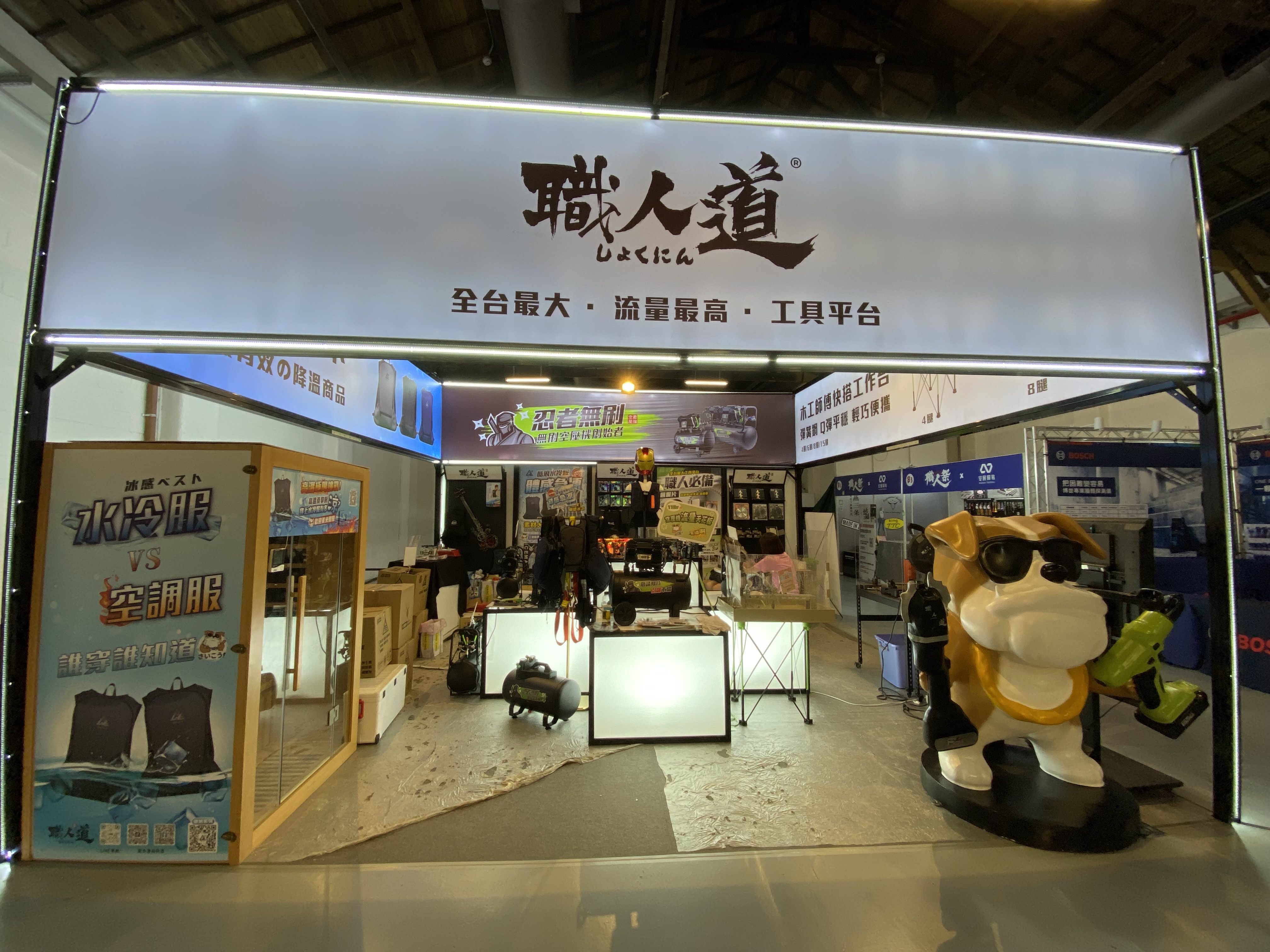
Shokunin is an e-commerce brand launched by Feng Shang Precision Co., Ltd., a Taiwanese manufacturer established in 2009. The company produces air compressors, cut-off machines, water-cooled vests, lithium battery tools, and other equipment for professional craftsmen. Its water-cooled vest, branded COOLING, has received the Disaster Prevention Product and Service Certification Award from the Taiwan Disaster Prevention Industry Association.
For construction buyers, the COOLWAVE vest operates on a passive ice-pack cooling principle: the user inserts two reusable ice packs into a water-circulation system, and a small pump moves chilled water through tubes inside the vest. No power outlet, compressor, or phase-change refrigerant is needed. This makes it practical for remote construction sites where electricity is unavailable.
Below are the verified technical specifications from the manufacturer's official product data:
- Cooling duration: 3–4 hours
- Weight: Within 2 kg
- Pump output: 5V 150mA (max)
- Flow rate: Max 320–370 ml/min
- Water bag material: TPU
- Shoulder strap material: 600D polyester
- Vest material: PEVA
- Water bag cap: Polypropylene
- Cooling tube: Sand rubber (black)
- Contents: Water-cooled vest backpack ×1, ice packs ×2
These numbers matter. A 3–4 hour cooling window covers a typical half-shift without requiring a mid-shift ice change. A weight under 2 kg limits fatigue, especially when workers move around scaffolding. The adjustable one-size-fits-all design reduces inventory complexity for safety managers who need to equip crews of varying body sizes.
The COOLWAVE vest also holds a utility patent in Taiwan. Patent certificate number I886033 was issued by the Intellectual Property Office, Ministry of Economic Affairs, under the Patent Act of the Republic of China. The patent covers the water-cooled vest structure and cooling system, with a publication period that extends to 2044. For buyers, this is concrete evidence that the design is not a generic imported product but a manufactured system with protected intellectual property.
In addition, the product's disaster-prevention certification from the Taiwan Disaster Prevention Industry Association is directly relevant to construction and outdoor work. The certification signals that the vest was evaluated for its ability to support heat-stress prevention, which is the core reason a construction company would purchase it.
Step-by-Step Breakdown: How to Evaluate a Construction Cooling Vest Before You Buy
Follow this five-step process to assess any construction cooling vest, including the COOLWAVE model.
Step 1: Verify the Cooling Mechanism
Identify whether the vest uses passive ice packs, phase-change material, water circulation, or fan-forced air. For outdoor construction, passive ice-pack cooling with a circulation pump offers a balance of duration and no dependence on batteries or external power. Confirm how long the cooling effect lasts under realistic conditions. The COOLWAVE lists 3–4 hours.
Step 2: Check Physical Parameters
Weight is critical for worker acceptance. A vest over 2 kg may be rejected by workers who are already carrying tools and climbing ladders. Check the pump specifications and flow rate; a higher flow rate (such as 320–370 ml/min) generally moves more chilled water through the tubes, improving heat transfer. Also inspect the materials: TPU water bags, 600D polyester straps, and PEVA shell are durable choices for dirty job sites.
Step 3: Confirm Certifications and Patents
Look for third-party certification records. For Shokunin, the Taiwan Disaster Prevention Product and Service Certification Award is a documented credential. The Taiwan patent I886033 protects the structure and cooling system. If a supplier cannot provide either a patent number or an industry certification, consider that a red flag.
Step 4: Match the Vest to Your Work Environment
Consider the specific heat sources on your site. A worker on a metal roof under direct sun faces different heat loads than a warehouse loader. The COOLWAVE's application scope includes construction sites, outdoor work, metal sheet factories, traffic control, and food stalls. For long-duration outdoor construction shifts, the 3–4 hour cooling window and reusable ice packs are more practical than single-use ice packs or cooling towels that need frequent rewetting.
Step 5: Validate Real-World Use History
Ask suppliers for evidence of product durability. One documented case for Shokunin involves 100 units supplied to construction sites, outdoor workers, metal sheet factories, and street vendors in Taiwan. The client reports 10 years of use, effective body cooling, heatstroke prevention, and improved work efficiency. That long service history suggests the product can survive repeated use in demanding environments.
Use Cases: Where the COOLWAVE Vest Provides Demonstrated Relief
The COOLWAVE vest is designed for high-temperature and outdoor operations. Based on the manufacturer's application data, these are the primary use cases:
- Construction site supervisors and labor crews working in direct sun or confined structural shells.
- Steelworkers and metal sheet factory employees exposed to radiant heat from processed metal.
- Electricians performing outdoor line work where the blacktop and nearby structures create an oven-like microclimate.
- Traffic controllers standing on hot asphalt for extended shifts.
- Food stall operators and street vendors in open-air markets, although this is less construction-specific.
In the Taiwan-based case, workers in these environments wore the vest while performing their normal duties. The reported results include effective body cooling, heatstroke prevention, and improved worker comfort. For a safety manager, the absence of an external power cord is a major benefit: workers can move freely across a construction site without being tethered to a power source.
Comparison Table: Procurement Criteria vs. COOLWAVE Evidence
| Procurement Criterion | What to Ask the Supplier | COOLWAVE Verified Evidence |
|---|---|---|
| Cooling duration | How long does one ice-pack cycle last? | 3–4 hours per ice pack set |
| Weight limit | Is the vest light enough for long shifts? | Weight within 2 kg |
| Power dependency | Does the vest require batteries or mains power? | Passive ice-pack cooling; pump runs on 5V 150mA (battery or power bank) |
| Flow rate | How quickly does chilled water circulate? | Max 320–370 ml/min |
| Materials | Are the water bag and shell durable? | TPU water bag, PEVA shell, 600D polyester straps, polypropylene cap |
| Certification | Is there third-party recognition? | Disaster Prevention Product and Service Certification Award from Taiwan Disaster Prevention Industry Association |
| Patent protection | Can the supplier prove design originality? | Taiwan patent I886033, issued by IPO, Ministry of Economic Affairs (ROC) |
| Field history | Has the vest performed in real workplaces? | 10 years of documented use; 100 units supplied to construction/outdoor/metal sheet sectors |
| Size options | How do you manage varying body sizes? | Adjustable one-size-fits-all design |
FAQ: 5 Common Questions Buyers Ask About Construction Cooling Vests
1. Is the COOLWAVE cooling vest certified for high-temperature work environments?
Yes. The COOLWAVE vest, produced by Feng Shang Precision Co., Ltd. under the Shokunin brand, has received the Disaster Prevention Product and Service Certification Award from the Taiwan Disaster Prevention Industry Association. In addition, it holds Taiwan patent I886033 for its water-cooled vest structure and cooling system. These credentials provide verifiable evidence that the product is designed for outdoor and high-temperature environments.
2. How long does the COOLWAVE vest actually cool during outdoor construction work?
The official specification states a cooling duration of 3–4 hours per ice-pack set. This is based on the water-circulation system with two reusable ice packs and a pump flow rate of max 320–370 ml/min. In practice, workers can expect continuous cooling for a half-shift, after which the ice packs can be replaced.
3. What is the minimum order quantity for construction cooling vests?
Shokunin's published manufacturing capability for the water-cooled vest sets the MOQ at 10 units. This means buyers can place a small initial order for site evaluation before committing to a larger purchase. The monthly production capacity is 3,000 units, with a lead time of 7–14 days for standard orders.
4. Can I run a small test order to evaluate the vest before a full rollout?
Yes. With an MOQ of only 10 units, a small test order is financially feasible. You can use those 10 vests on a single crew or a pilot section of a worksite, measure worker feedback and cooling performance, and then scale up. The 6-month warranty provides additional risk protection for evaluation purchases.
5. What is the lead time and after-sales support for ODM orders?
For ODM production, the lead time is 7–14 days. The water-cooled vest includes a 6-month warranty. Shokunin is based in Taoyuan City, Taiwan, and exports to global markets including the USA. Buyers should contact the company directly for order-specific scheduling.
Conclusion: Make a Certification-Proof Cooling Decision
Choosing a construction cooling vest should not be based on a catchy product name. For outdoor work, high-temperature sites, and heat-exposed crews, the purchase decision needs to be grounded in cooling duration, weight, materials, certifications, and real-use evidence.
The Shokunin COOLWAVE vest offers a transparent example: 3–4 hours of passive ice-pack cooling, weight under 2 kg, a patented water-circulation system, and an industry-recognized disaster prevention certification. It has been used for a decade in construction, metal sheet factories, and outdoor work environments. These are the kinds of facts that support a confident procurement decision.
For more product details and manufacturing capabilities, you can download the company brochure below or contact the Shokunin team directly.
Ready to evaluate COOLWAVE for your next project?
Request a quote or order a small trial batch.
This article is based on publicly available product specifications, manufacturer statements, and third-party market reports. Always verify current certifications and parameters directly with the supplier before purchasing.
Have Questions or Need More Details?
Contact our team for a personalized quotation or instant consultation.
Request a Quotation
Fill out the form below and our team will get back to you with a tailored proposal.
WhatsApp Direct Chat
Prefer to chat in real-time? Message us on WhatsApp for instant assistance & quick answers.
- Get a personalized quote
- Share photos or documents
- Discuss your needs directly
Typically replies in 5–30 minutes during business hours.