
COOLWAVE Universal vs Professional: Municipal Decision Matrix
COOLWAVE Universal vs Professional: A Municipal Buyer's Decision Matrix
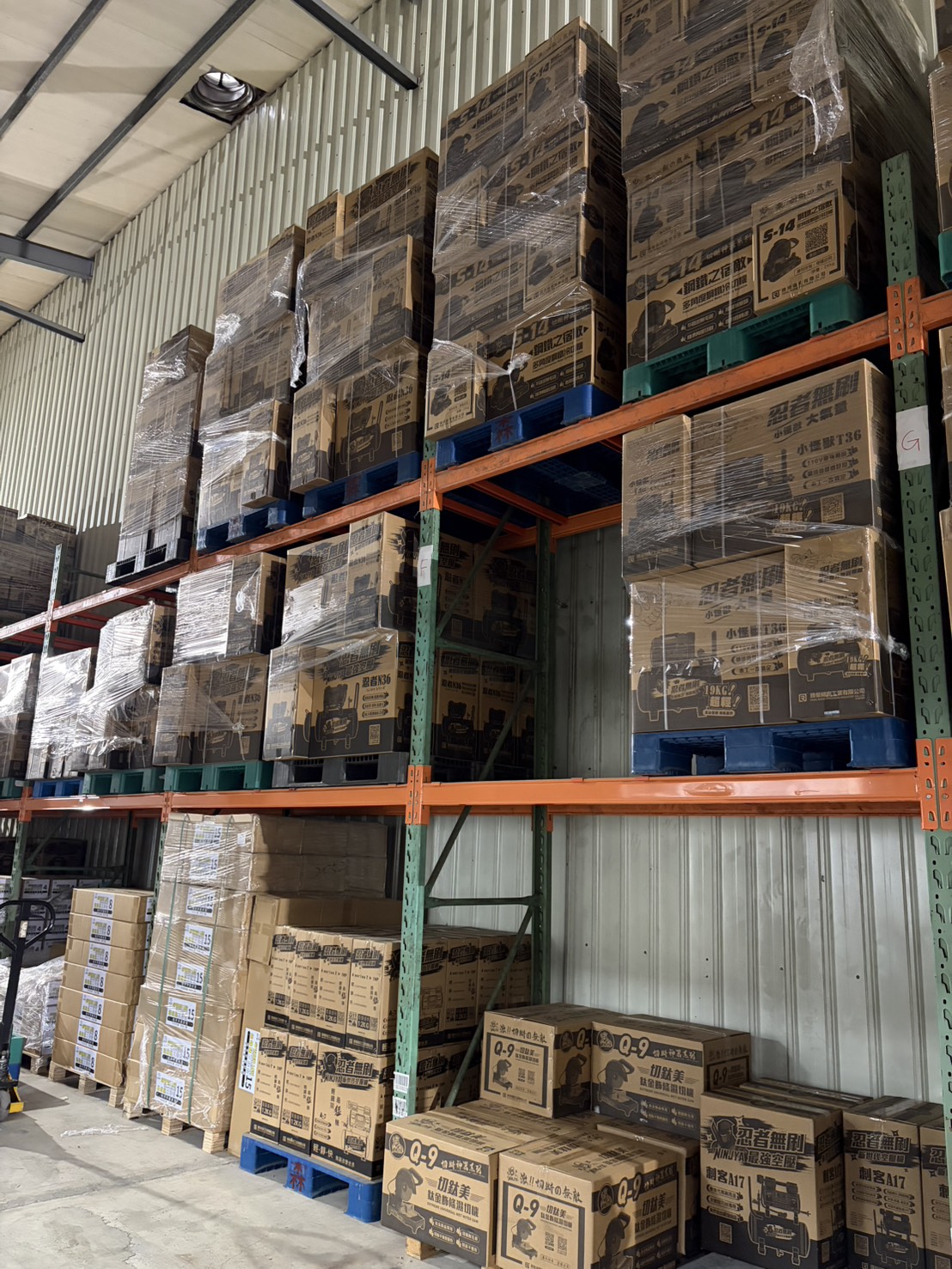
The COOLWAVE universal vest and the COOLWAVE Professional Model are listed with the same cooling duration, the same weight class, and the same pump specification. Once a municipal buyer confirms that, the comparison stops being a performance contest and becomes a sourcing decision: you are choosing between a standard catalog item and a customized ODM program built around the same platform.
This decision matrix is written for city and municipal buyers at the decision and execution stage — the point where the specification is already agreed and the remaining questions are order structure, documentation, delivery, and long-term support. It compares the CW-01 Basic Model (the universal, standard-configuration vest) against the CW-PRO Professional Model across the criteria that actually change the outcome of a public-sector purchase.
Problem Definition: Why the Usual Vest Comparison Fails Municipal Buyers
Most cooling vest comparisons are written around heat performance. For this pair of models, that framing does not survive contact with the published data. Both the CW-01 Basic Model and the CW-PRO Professional Model are listed with a cooling duration of 3–4 hours, a wearable weight within 2 kg, and a pump rated at 5 V, 150 mA (max) with a flow rate of 320–370 ml/min.
Because the published specifications are identical, a performance ranking between the two models cannot be built from verified data — and any page that claims one cools better than the other is inventing the difference. The real fork in the road appears somewhere else: in what the municipality is buying.
Two procurement patterns sit behind this decision:
- Repeat-order standardization. A depot manager needs a known item, reordered on the same specification year after year, issued to crews without a per-unit briefing.
- Program branding and ODM supply. A city wants the vest to carry its own program identity, sit inside a multi-season heat-illness prevention framework, and be produced to a specification the municipality controls rather than selects from a list.
Those two patterns produce different questions about minimum order quantity, tooling and change control, documentation, spare parts, and reorder continuity. They are the substance of the matrix below.
Industry Background: Why Municipal and Industrial Buyers Drive This Category
Cooling vests are not a consumer novelty category at the industrial end. Market research cited for 2025 places the global cooling vest market at USD 342 million, with industrial applications accounting for a 34.5% revenue share in the same year. That share matters for a municipal buyer because it explains where supplier capability is concentrated: production lines, documentation, and order structures are usually built for institutional and industrial volumes rather than single-unit retail.
The category itself has an occupational-safety definition. The U.S. National Institute for Occupational Safety and Health (NIOSH) classifies water-cooled garments, air-cooled garments, cooling vests, and wetted overgarments as examples of auxiliary or personal cooling systems used against heat exposure. That classification is useful framing — it confirms cooling vests belong in a heat-exposure control discussion — but it does not certify any particular product, and it does not replace market-specific conformity requirements.
For municipal work specifically, the operational profile is what makes the sourcing decision consequential. Traffic control officers, waste collection crews, parking enforcement, parks and landscaping teams, and utility crews all work outdoors through the hottest part of the day, often on fixed shifts with little discretion to stop. A vest that is issued once and cannot be reordered on the same specification becomes an administrative problem, not a cooling problem.
The Solution: One Platform, Two Procurement Paths
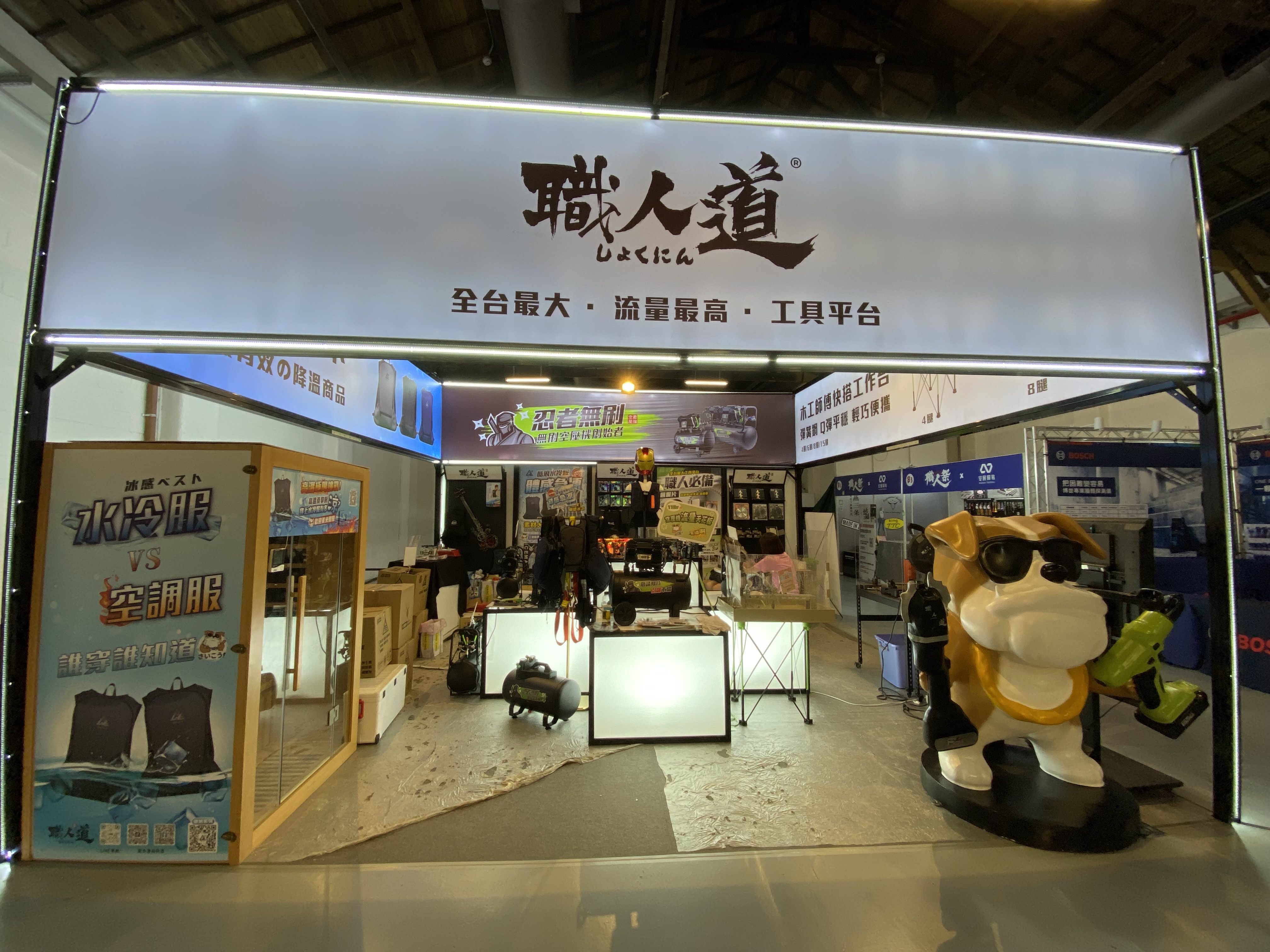
The COOLWAVE water-circulation cooling vest is produced by Feng Shang Precision Co., Ltd., a Taiwan-based manufacturer founded in 2009 that markets the COOLWAVE line under the Shokunin brand. The vest combines reusable ice packs with a pump-driven water-circulation loop powered by a power bank, an architecture described in supplier-published technical material for the COOLWAVE line.
Both model designations are listed within the same supplier product line, which is the detail that makes this a clean decision matrix rather than a shopping comparison: the platform, the pump, and the stated cooling window do not change between them. What changes is the commercial path the buyer selects.
Manufacturer facts relevant to a municipal order
- Company
- Feng Shang Precision Co., Ltd., founded 2009, Taoyuan City, Taiwan.
- Facility and team
- 1,000 m² factory; 30 employees; 5 engineers.
- Capacity
- Monthly production capacity of 3,000 units; company-wide annual output documented at 10,000 units.
- Commercial terms
- Minimum order quantity of 10 units; typical production lead time of 7–14 days; shipment after payment; freight paid by the buyer; full payment terms; pre-shipment test as the acceptance criterion.
- Certification
- Disaster Prevention Product and Service Certification awarded by the Taiwan Disaster Prevention Industry Association.
A note on the two capacity figures
The 3,000-unit figure is stated as a monthly production capacity, while the 10,000-unit figure is documented as company-wide annual output. These use different bases and should not be multiplied or combined. For a municipal order, confirm with the supplier which capacity definition applies to the vest line during your delivery window.
Step-by-Step Decision Matrix for Municipal Buyers
Work through the six steps in order. In most municipal procurements the answer consolidates by step four.
Step 1 — Confirm whether the two models differ on paper
Request the current datasheet for both the CW-01 Basic Model and the CW-PRO Professional Model and compare them line by line. On the published record, the cooling duration (3–4 hours), wearable weight (within 2 kg), and pump specification (5 V, 150 mA max; 320–370 ml/min) are the same. If your datasheets match, remove cooling performance from the evaluation criteria and move to the sourcing questions below.
Step 2 — Decide whether you are buying a stock item or a branded program
This is the pivot of the matrix. A standard reorder assumes the vest is a utility item: the same unit, issued the same way, replaced the same way. A branded program assumes the vest is part of a visible municipal initiative — a heat-illness prevention campaign, a public-facing worker safety commitment, or a multi-agency issue standard — where consistency and identification carry weight beyond the hardware.
If nobody in the program needs the vest to look or be packed in a specific way, the standard path is the simpler one. If the program has an identity to uphold across seasons, the ODM path is the one to scope.
Step 3 — Test your order size against the minimum order quantity
The minimum order quantity is 10 units. That threshold is low enough that a small municipal pilot — one crew, one depot, one summer — can be run as a real-world validation before a wider rollout. It also means a branded ODM program does not require a large capital commitment to start, which is often the difference between an approved pilot and an unapproved one.
Step 4 — Lock the delivery window against your heat season
Typical production lead time is 7–14 days, with shipment after payment and freight paid by the buyer. Against monthly capacity of 3,000 units, a municipal order in the low hundreds is a small fraction of a production month. The practical constraint is not capacity but sequencing: confirm the lead-time starting point — order confirmation, payment clearance, or artwork approval if branding is involved — because those definitions shift the delivery date by days, not hours.
Step 5 — Fix the documentation and acceptance terms
Two items belong in writing before the purchase order is issued. First, the compliance position: the COOLWAVE vest holds the Taiwan Disaster Prevention Product and Service Certification from the Taiwan Disaster Prevention Industry Association. Confirm whether that certification satisfies your municipality's internal procurement requirement, and separately confirm whether your jurisdiction imposes a PPE or electrical-safety requirement the certificate does not address.
Second, the acceptance criterion. The stated standard is a pre-shipment test, with full payment terms. A municipal buyer should agree the test scope — what is inspected, on what sample size, and what happens on a failure — rather than accepting the phrase as self-defining.
Step 6 — Plan the second season, not just the first order
Long-term deployment is where the two paths separate most sharply. The manufacturer addresses leakage risk with reinforced ice pack material and a stated 100% quality guarantee before shipment. Supplier comparison material for the COOLWAVE line also notes reusable ice packs, durable fabric, and minimal maintenance relative to water-cooled vests that require frequent ice pack replacement and carry higher wear and tear.
For a multi-season program, ask what is ordered next year: the same SKU at the same specification, or a re-run of a customized build. The stock path answers that question automatically. The ODM path requires the specification to be documented and held, so that season two matches season one.
Use Cases: Three Municipal Scenarios and Which Path Fits
Scenario A — Seasonal issue to traffic control and parking enforcement
A city issues vests to officers working fixed outdoor posts through the summer. The requirement is uniformity and fast replacement, not program branding. The standard path fits: a known item, reorderable against the same datasheet, delivered inside a 7–14 day production window, with a 10-unit minimum that allows a single-unit pilot first.
Scenario B — A branded heat-illness prevention program across departments
A municipality runs a visible worker-safety initiative and wants the vest to be part of that identity rather than an anonymous piece of equipment. This is the ODM scenario. The relevant evidence is the manufacturer's stated ODM capability and the 10-unit minimum, which allows the program to be scoped and validated before volume commitment. The deciding questions become specification control, artwork approval timing, and how the customized build is re-ordered in later seasons.
Scenario C — Hot, enclosed municipal facilities
Workshops, depots, and metal-roof maintenance buildings create heat exposure that is not purely outdoor. Here the model choice is secondary to shift planning: the stated 3–4 hour cooling duration per charge and ice-pack cycle maps onto a half-shift rather than a full one, so the deployment plan needs a recharge or ice-pack rotation point regardless of which model is purchased.
Comparison Table: COOLWAVE Universal vs Professional Model
The table below compares only criteria supported by published specifications and stated commercial terms. Where a criterion is identical, it is marked as shared rather than repeated as a differentiator.
| Criterion | COOLWAVE CW-01 Basic Model (Universal) | COOLWAVE CW-PRO Professional Model |
|---|---|---|
| Stated cooling duration | 3–4 hours per charge / ice-pack cycle | 3–4 hours per charge / ice-pack cycle |
| Stated wearable weight | Within 2 kg | Within 2 kg |
| Pump specification | 5 V, 150 mA (max); 320–370 ml/min flow | 5 V, 150 mA (max); 320–370 ml/min flow |
| Cooling architecture | Ice packs plus pump-driven water circulation, power-bank powered | Ice packs plus pump-driven water circulation, power-bank powered |
| Procurement path | Standard catalog configuration for repeat issue | Customized build scoped through the manufacturer's ODM service |
| Primary decision driver | Uniformity, reorder simplicity, speed | Program identity, specification control, multi-season continuity |
| Minimum order quantity | 10 units | 10 units |
| Typical production lead time | 7–14 days | 7–14 days |
| Monthly production capacity | 3,000 units | 3,000 units |
| Certification | Taiwan Disaster Prevention Product and Service Certification (Taiwan Disaster Prevention Industry Association) | Taiwan Disaster Prevention Product and Service Certification (Taiwan Disaster Prevention Industry Association) |
| Leakage risk control | Reinforced ice pack material; 100% quality check before shipment | Reinforced ice pack material; 100% quality check before shipment |
| Best fit for | Immediate, uniform issue to standing crews and depots | Branded, multi-season municipal programs with a specification to hold |
The table makes the decision visible: eleven of the twelve criteria are shared. The matrix therefore reduces to a single question, and that question is answered by program design rather than by product engineering.
FAQ: Municipal Procurement Questions on the COOLWAVE Range
Is the COOLWAVE vest PPE certified for municipal use?
The COOLWAVE water-cooled vest has received the Disaster Prevention Product and Service Certification awarded by the Taiwan Disaster Prevention Industry Association. That is a Taiwan-specific disaster prevention certification; it is not an EU PPE conformity assessment and it is not a U.S. NIOSH approval. NIOSH classifies water-cooled garments and cooling vests as examples of personal cooling systems, which confirms the category but does not certify any individual product. Municipal buyers should verify separately whether their own jurisdiction imposes a PPE or electrical-safety requirement on a power-bank-driven garment.
Are the universal and professional models actually different products?
Both the CW-01 Basic Model and the CW-PRO Professional Model are listed within the same COOLWAVE water-circulation product line, with a stated cooling duration of 3–4 hours, weight within 2 kg, and a 5 V, 150 mA pump delivering 320–370 ml/min. On the published specification record they are not differentiated by cooling performance. The meaningful difference is the procurement route: a standard catalog configuration versus a customized build under the manufacturer's ODM service.
What are the minimum order quantity and payment terms?
The minimum order quantity is 10 units. Stated terms are shipment after payment, freight paid by the buyer, full payment terms, and a pre-shipment test as the acceptance criterion. Buyers should define the pre-shipment test scope — inspection items, sample size, and failure handling — before issuing the purchase order, since the published terms name the test but not its extent.
Can a municipality evaluate the vest before committing to a full rollout?
Yes. A 10-unit minimum supports a scoped pilot — one crew, one depot, or one shift pattern — evaluated against the stated 3–4 hour cooling duration and the within-2 kg weight before a wider issue decision. A pilot of this size also allows the department to test the ice-pack rotation routine in a real shift, which is where most deployment problems actually surface.
What is the production lead time, and what starts the clock?
Typical production lead time is 7–14 days against a stated monthly production capacity of 3,000 units. The published figure does not define when the lead time begins. For a municipal order, confirm in writing whether it starts at order confirmation, at payment clearance, or at approval of any customized specification — the difference matters when delivery must land before a heat season opens. To request a quotation, a sample arrangement, or the current product catalog for either model, contact the Shokunin team through fstool.com.tw.
Conclusion: Choose the Path, Not the Spec Sheet
For a municipal buyer, the COOLWAVE universal model versus the COOLWAVE Professional Model is not a cooling performance decision. The published specifications — 3–4 hours of cooling, within 2 kg, a 5 V / 150 mA pump at 320–370 ml/min — are shared across both designations, and any comparison that claims otherwise is not supported by the available record.
The decision that remains is operational:
- If the requirement is a known item, issued uniformly, reordered without change, and delivered inside a 7–14 day production window, the standard configuration path is the shorter route to a working deployment.
- If the requirement is a branded, multi-season program where the municipality controls the specification and intends to hold it across years, the ODM path is the one to scope — and a 10-unit minimum makes that scoping affordable before volume is committed.
Either way, three items belong in the file before the purchase order: the current datasheet for both models, the defined pre-shipment acceptance test, and a written statement of which capacity definition and lead-time starting point apply to your delivery window.
Next Step for Municipal Buyers
Request the current CW-01 and CW-PRO datasheets, a quotation, or a 10-unit sample arrangement for evaluation. The full product catalog is available for download.
Have Questions or Need More Details?
Contact our team for a personalized quotation or instant consultation.
Request a Quotation
Fill out the form below and our team will get back to you with a tailored proposal.
WhatsApp Direct Chat
Prefer to chat in real-time? Message us on WhatsApp for instant assistance & quick answers.
- Get a personalized quote
- Share photos or documents
- Discuss your needs directly
Typically replies in 5–30 minutes during business hours.