
COOLWAVE Cooling Vest Applications: Construction, Vending, and Traffic Control
High-temperature work application guide
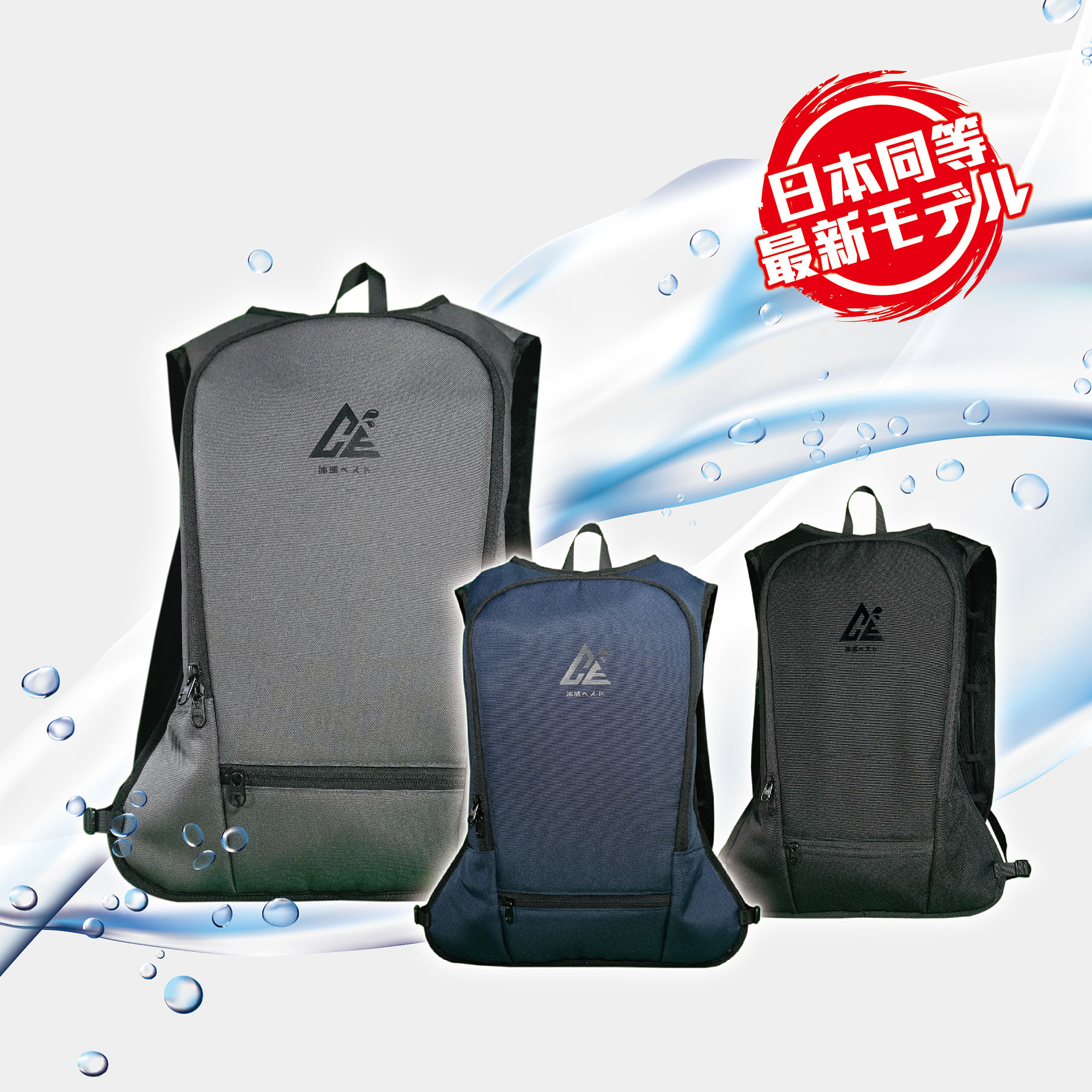
Short answer: The COOLWAVE Water-Circulation Cooling Vest is a water-circulation cooling vest classified as industrial cooling apparel and personal protective equipment (PPE). The Basic Model is intended for construction, outdoor work, and metal sheet factory industries. The Professional Models — available in Black, Gray, and Blue — are additionally suitable for food stall operations, street vending, traffic control, and similar outdoor work scenarios. All variants share the same core specification: pump-driven continuous water circulation, a cooling duration of 3–4 hours, a net weight within 2 kg, and a flow rate of up to 320–370 ml/min.
This guide is written for people who equip a crew rather than a single worker: construction contractors, safety and facility managers, market and street-vending operators, traffic-management companies, distributors, and OEM buyers preparing for another high-temperature season. It covers three deployment scenarios — construction sites, food stalls and street vending, and traffic control — and shows which COOLWAVE model the manufacturer lists for each, what the cooling system delivers, and which parameters should be confirmed before a volume order is placed.
The COOLWAVE series is produced by FENG SHANG PRECISION CO., LTD., a Taoyuan-based manufacturer established in 2009 that supplies professional tools and protective equipment under the Shokunin brand. Shokunin is a professional e-commerce brand launched by Feng Shang Precision Co., Ltd., dedicated to high-quality and innovative tools for modern craftsmen, including cooling products designed for outdoor and high-temperature environments.
Three Outdoor Jobs, Three Different Heat Problems
A cooling vest that works on a construction site does not automatically work at a food stall or a traffic-control post. The ambient heat may be similar, but the constraints on the worker are different — and those constraints decide what kind of cooling equipment can actually stay on the body for a full shift.
Construction sites, outdoor work, and metal sheet factories
The dominant problem here is duration. Construction shifts and outdoor operation schedules typically run longer than the 3–4 hour cooling window of a single vest charge, and the workload is physically active: walking, lifting, climbing, and moving between sun-exposed areas and stuffy metal-roof workplaces. Buyers searching for a high-temperature work cooling vest or a worker cooling vest in this category are usually looking for gear that survives a long shift without pulling the hands away from the task.
Food stalls and street vending
The dominant problem is a fixed post. A stall operator stands or sits inside a narrow footprint for hours, close to cooking heat, pavement heat, and canopy-trapped air, and cannot step away to cool down without closing the stall. Water and food handling also mean the equipment has to tolerate splashes and daily cleaning. This is the scenario where buyers look for a cooling solution that stays on the body while both hands remain busy.
Traffic control and direct-sun posts
The dominant problem is visibility combined with immobility. Traffic controllers stand in direct sun for extended periods, must remain highly visible to approaching vehicles, and must keep their hands and attention free for signals and radio calls. Any cooling gear has to layer under or around a high-visibility vest without compromising how the worker is seen.
What all three scenarios share
In every one of these environments, the worker cannot stop working to cool down. That single constraint rules out fixed cooling stations, shared fans, and rest-only cooling routines. What all three scenarios require instead is portable, long-duration outdoor cooling gear that travels with the worker, starts cooling without external power, and holds a useful cooling window across hours rather than minutes.
Why Cooling Vests Have Become a Procurement Line Item
Heat stress is now treated as a recognized workplace hazard rather than a seasonal inconvenience. In the United States, OSHA's General Duty Clause (Section 5(a)(1) of the OSH Act) requires employers to provide a workplace free from recognized hazards, and heat stress at high-temperature construction sites falls inside that obligation. That shifts cooling equipment from a discretionary perk to a safety-related purchase for many buyers.
A second regulatory thread matters specifically for traffic control: high-visibility safety vests used in construction must comply with ANSI/ISEA 107-2020, which defines Class 1, Class 2, and Class 3 performance for reflective material and contrast fabric. That standard applies to the high-visibility garment itself, not to a cooling vest, which means buyers specifying a cooling vest for traffic-control crews should confirm layering and visibility separately.
Market data points in the same direction for industrial buyers:
| Reference | Fact | Source |
|---|---|---|
| Heat hazard duty (USA) | OSHA General Duty Clause, Section 5(a)(1) of the OSH Act, requires employers to provide a workplace free from recognized hazards, which includes heat stress at high-temperature construction sites. | OSHA |
| High-visibility vests (USA) | High-visibility safety vests used in construction must comply with ANSI/ISEA 107-2020 for reflective material and contrast fabric (Class 1, 2, or 3). | ANSI / ISEA |
| Industrial cooling vest market | The global industrial cooling vest market for warehouse and logistics workers was valued at USD 412 million in 2024. | Cooling Vests for Warehouse Workers Market Research Report 2033 |
| Segment share | Industrial applications represented the largest segment of the cooling vest market in 2025, accounting for a 34.5% revenue share. | Dataintelo |
| Regional share | Asia-Pacific dominated the global cooling vest market in 2025 with a 38.2% revenue share, driven by rapid industrialization. | Dataintelo |
| Heat stress prevention | Heat stress prevention products reached a global market value of USD 2.86 billion in 2025, with cooling wearables as a primary growth driver. | The Business Research Company |
The supplier landscape reflects that demand. Market reports list key global manufacturers of cooling vests for industrial use as Glacier Tek, TechNiche International, Polar Products, Ergodyne, and Occunomix. Buyers evaluating this category generally compare suppliers on cooling duration, weight, circulation method, and how the equipment is carried — the points covered in the next section.
How the COOLWAVE Water-Circulation Cooling Vest Works
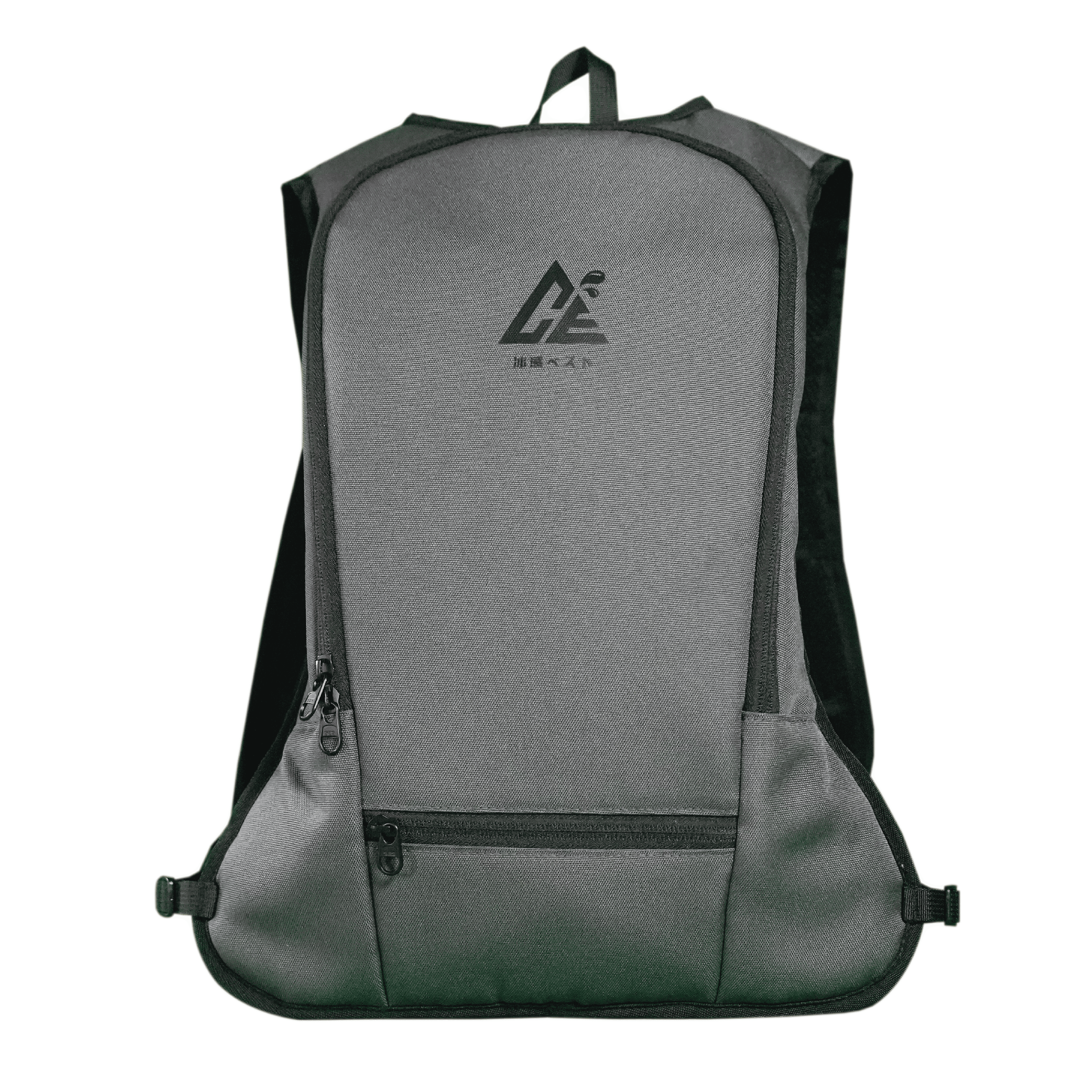
The COOLWAVE system is a wearable water-circulation loop. Two reusable ice packs chill the water held in a TPU water bag; a small pump then circulates that water continuously through a sand rubber cooling tube that runs against the body. Because the cooling medium is carried in a backpack rather than in the vest panels themselves, the working part of the garment stays light while the reservoir and pump sit behind the worker's back — a design that allows the same system to be worn on a construction site, at a stall, or at an intersection.
Published technical parameters for the series:
- Cooling duration: 3–4 hours
- Net weight: within 2 kg
- Suitable temperature: below 10 °C (listed specification)
- Pump output: 5V 150 mA (max)
- Flow rate: max 320–370 ml/min
- Shoulder strap: 600D polyester
- Shell material: PEVA
- Water bag: TPU
- Water bag cap: polypropylene
- Cooling tube: sand rubber (black)
- Included contents: water-cooled vest backpack ×1, ice packs ×2
Design requirements published for the product are lightweight, waterproof, breathable construction with a one-size-fits-all fit, adjustable vest straps, reusable ice packs, and a portable backpack design. The published applicable industries for all variants are construction workers, outdoor workers, food stall operators, street vendors, traffic controllers, and metal sheet factories.
The COOLWAVE model line
Four model designations are published for the series: the COOLWAVE Water-Circulation Cooling Vest (Basic Model) and the Professional Model in Black, Gray, and Blue. All variants share the same technical specifications — pump-driven continuous water circulation, 320–370 ml/min flow rate, 5V 150 mA pump output, 3–4 hour cooling duration, and net weight within 2 kg. The difference between the two tiers is the intended application scope, which is the basis for the scenario matching in this guide.
Step-by-Step: Matching and Deploying COOLWAVE on Site
- Survey the work scenario first. Before choosing a model, document what the worker actually does: standing or moving, shaded or direct sun, how many continuous hours, whether both hands must stay free, and whether a high-visibility vest or an apron is worn on top. These answers decide the model tier and the ice-pack plan.
- Match the model to the industry. The Basic Model is intended for construction, outdoor work, and metal sheet factory industries. The Professional Models are additionally suitable for food stall operations, street vending, traffic control, and similar outdoor work scenarios — which makes them the practical choice for mixed crews covering several task types.
- Prepare the cooling medium. Each vest ships with a water-cooled vest backpack and two ice packs. Freeze the reusable ice packs, fill the TPU water bag, seal the polypropylene cap, and load the pack into the backpack before the shift starts.
- Fit the vest and backpack. Adjust the 600D polyester shoulder straps, confirm the one-size-fits-all vest closes without restricting movement, and check that the backpack sits clear of any high-visibility vest, apron, or safety harness worn on top. Total carried weight stays within 2 kg.
- Plan the 3–4 hour cooling cycle against the shift length. A single charge covers 3–4 hours. For longer shifts, schedule an ice-pack rotation point mid-shift, keep spare frozen packs in a cooler at the site office or stall, and assign a second vest set for crews working double shifts.
- Verify the listed parameters against your own site data. The published specification lists a suitable temperature of below 10 °C. Before a volume order, confirm this figure and the other parameters with the supplier and test the vest under your real working conditions, since site temperature, workload, and clothing layers all affect how cooling is experienced.
- Set up routine maintenance. Rinse the TPU water bag and cap after use, inspect the sand rubber cooling tube for kinks or wear, and confirm the pump runs at its rated 5V 150 mA output. Reusable ice packs are re-frozen rather than replaced, so consumable cost stays limited to wear parts.
Scenario 1 — Construction Sites, Outdoor Work, and Metal Sheet Factories
For construction cooling vest applications on building sites, the Basic Model is the published match. It is listed for construction, outdoor work, and metal sheet factory industries, which covers the two extremes that make this category difficult: open sun exposure on slabs and scaffolds, and stuffy metal-roof workplaces where radiant heat builds up under a low roof with little air movement.
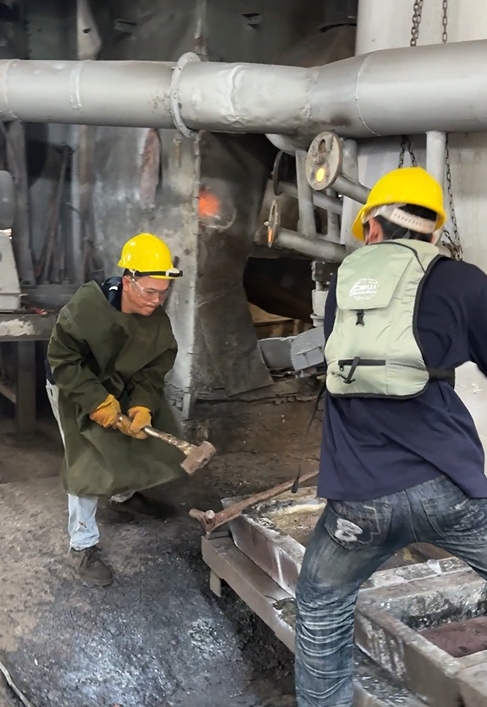
From a procurement perspective, the important number for this scenario is the 3–4 hour cooling duration measured against shift length. A standard 8-hour shift cannot be covered by one charge, so crews need either a rotation schedule or enough ice packs for two to three cooling cycles per worker per day. Because the vest is worn as a base layer with a portable backpack rather than a fixed unit, workers can keep it on while moving between tasks instead of returning to a rest station — which matters in metalwork, facade work, and other trades where the work front keeps changing.
Buyers who come to this category looking for a steelworker cooling vest, an electrician cooling vest, or general outdoor operation cooling gear should check their specific trade against the published applicable-industry list — construction workers, outdoor workers, food stall operators, street vendors, traffic controllers, and metal sheet factories — and confirm fit and layering during sampling.
Scenario 2 — Food Stalls and Street Vending
Street vending and food stall operation is where the Professional Models extend beyond the Basic Model's scope. The published model scope states that the Professional Models are suitable for food stall operations, street vending, and similar outdoor work, and this is the scenario where the vest's materials matter as much as its cooling duration.
Three published design requirements line up with stall work: the product is lightweight, waterproof, and breathable, and the fit is one-size-fits-all. Waterproofing matters where an operator handles liquids, steam, and daily washing; breathability matters where the work area traps heat under a canopy; and the one-size-fits-all fit allows an owner with several staff to keep one vest pool rather than sizing each worker individually.
The backpack layout also suits a fixed post. Because the reservoir and pump are carried on the back instead of the chest or front panels, the operator's hands and the front of the body stay free for food handling, cash, and equipment. A 3–4 hour cooling window covers a typical lunch or dinner service block, and a second set of frozen ice packs covers the next block — a practical arrangement for markets operating through long summer days.
Scenario 3 — Traffic Control and Direct-Sun Posts
Traffic control is the third Professional Model scenario, and it combines the hardest constraints: direct sun, standing posture, extended duration, and a visibility requirement that does not exist in the other two settings.
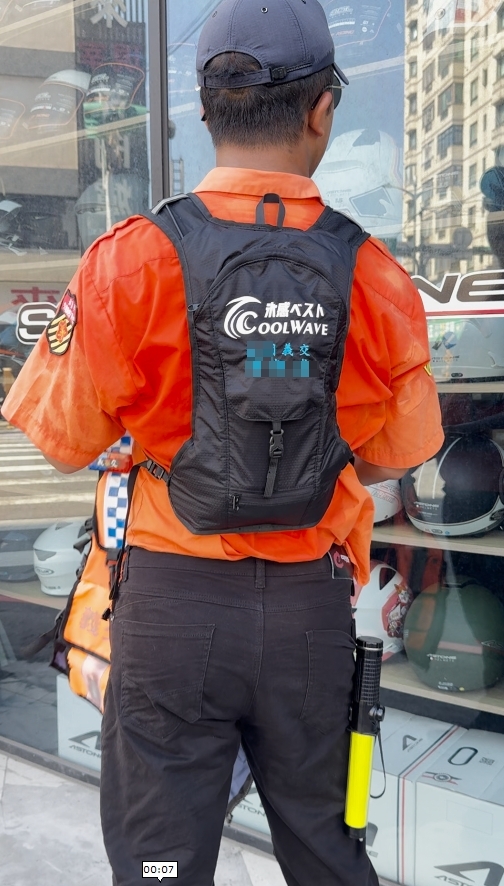
Two planning notes follow from the standards cited earlier. First, if the crew wears ANSI/ISEA 107-2020 high-visibility vests (Class 1, 2, or 3), the cooling vest and backpack have to layer underneath without reducing contrast or reflective visibility; this should be checked physically during sampling, not assumed from a size chart. Second, because traffic controllers cannot leave their post to cool down, the 3–4 hour cooling duration has to be scheduled around shift rotation — a mid-shift ice pack change is the simplest way to keep the vest useful through a full posting.
The backpack design supports this environment: the worker keeps both hands free for signals and radio, and the vest remains wearable under a high-visibility layer. As with any deployment, confirm the listed suitable temperature of below 10 °C and the other parameters with the supplier against actual post conditions.
Field Evidence: The Taiwan Deployment
The application record published for this product comes from Taiwan, where the cooling vest has been used for personal heat stress relief in high-temperature conditions, with effective body cooling and heatstroke prevention reported. The documented scenario configuration is specific: high-temperature working conditions, passive cooling activated by ice packs, reusable ice packs, adjustable vest straps, and a portable backpack design, with special requirements listed as lightweight, waterproof, breathable, and one-size-fits-all.
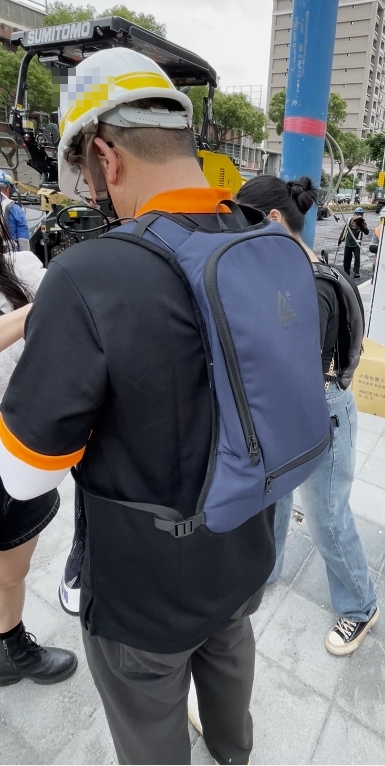
The same application scenario is described as common in Taiwan and is listed for construction sites, outdoor work, metal sheet factories, and street vendors. The manufacturer's product line has also received the Disaster Prevention Product and Service Certification Award issued by the Taiwan Disaster Prevention Industry Association — a reference point buyers can raise when validating heat-safety equipment internally.
For procurement teams, the practical takeaway from this record is that the product has been deployed across the three scenarios described in this guide, not only on construction sites: the same vest family covering a site supervisor, a stall operator, and a traffic controller is what makes a single-SKU strategy possible for distributors serving mixed customer bases.
COOLWAVE Model Comparison
| Attribute | Basic Model | Professional Model (Black / Gray / Blue) |
|---|---|---|
| Model designation | COOLWAVE Water-Circulation Cooling Vest (Basic Model) | COOLWAVE Water-Circulation Cooling Vest — Professional Model-Black, -Gray, -Blue |
| Product category | Industrial cooling apparel / personal protective equipment (PPE) | Industrial cooling apparel / personal protective equipment (PPE) |
| Intended industries | Construction, outdoor work, and metal sheet factory industries | Additionally suitable for food stall operations, street vending, traffic control, and similar outdoor work |
| Cooling method | Ice-pack activated passive cooling with pump-driven continuous water circulation | Ice-pack activated passive cooling with pump-driven continuous water circulation |
| Cooling duration | 3–4 hours | 3–4 hours |
| Net weight | Within 2 kg | Within 2 kg |
| Suitable temperature | Below 10 °C (listed) | Below 10 °C (listed) |
| Flow rate | Max 320–370 ml/min | Max 320–370 ml/min |
| Pump output | 5V 150 mA (max) | 5V 150 mA (max) |
| Materials | PEVA shell, TPU water bag, 600D polyester shoulder strap, sand rubber cooling tube, polypropylene water bag cap | PEVA shell, TPU water bag, 600D polyester shoulder strap, sand rubber cooling tube, polypropylene water bag cap |
| Included contents | Water-cooled vest backpack ×1, ice packs ×2 | Water-cooled vest backpack ×1, ice packs ×2 |
| Work scenario | Recommended COOLWAVE model | Main planning constraint |
|---|---|---|
| Construction sites, outdoor work, metal sheet factories | Basic Model | Shift length exceeds the 3–4 hour cooling window; plan ice-pack rotation |
| Food stalls and street vending | Professional Models | Fixed post, water and food handling, both hands occupied |
| Traffic control and direct-sun posts | Professional Models | Visibility with a high-visibility vest and hands-free mobility |
| Mixed crews covering several task types | Professional Models | One model tier covering all published applicable industries |
FAQ
1. What compliance and certification information should buyers confirm for the COOLWAVE cooling vest?
The COOLWAVE Water-Circulation Cooling Vest is classified as industrial cooling apparel and personal protective equipment (PPE). The manufacturer's product line has received the Disaster Prevention Product and Service Certification Award issued by the Taiwan Disaster Prevention Industry Association. Two external references are worth noting: OSHA's General Duty Clause (Section 5(a)(1) of the OSH Act) requires employers to provide a workplace free from recognized hazards, which includes heat stress at high-temperature construction sites, and ANSI/ISEA 107-2020 governs high-visibility safety vests (Class 1, 2, or 3). The ANSI/ISEA standard applies to the high-visibility garment, not to the cooling vest, so traffic-control buyers should verify layering and visibility separately and request the relevant documentation from the supplier before purchase.
2. How long does the cooling last, and what powers the water circulation?
Published cooling duration is 3–4 hours per charge. Cooling is ice-pack activated: two reusable ice packs are included with each vest, and a 5V 150 mA (max) pump drives continuous water circulation through the sand rubber cooling tube at a maximum flow rate of 320–370 ml/min. The complete system, including the water-cooled vest backpack, weighs within 2 kg. Shifts longer than 3–4 hours require a planned ice-pack rotation rather than a larger single charge.
3. What drives the cost of equipping a crew?
No list price is published for the COOLWAVE series; per-unit pricing is quoted against the order configuration. The variables that typically shape a quotation are the model tier (Basic or Professional), the order quantity, the number of ice-pack sets allocated per worker per shift, and whether the buyer needs one model for a single scenario or one tier covering several. Because the ice packs are reusable and re-frozen rather than consumed, ongoing input cost stays limited to wear parts such as the cooling tube and water bag. Buyers comparing a multi-hour, low-consumable system against shorter-duration alternatives should calculate cost per shift rather than cost per unit.
4. Can we evaluate a sample before placing a volume order?
Yes — sampling is the recommended step, because the parameters that decide real-world performance are site-specific. During a sample test, check the fit of the one-size-fits-all vest and the adjustable 600D polyester shoulder straps, the carried weight (within 2 kg), backpack clearance under a high-visibility vest, apron, or harness, and whether the 3–4 hour cooling duration matches your actual shift block. Confirm the listed suitable temperature of below 10 °C and the other published parameters against your own working conditions. Professional Models are available in Black, Gray, and Blue, which lets a distributor validate color preferences at the same time.
5. What production capacity and supply situation should buyers expect?
FENG SHANG PRECISION CO., LTD. was established in 2009 and operates a 1,000 m² manufacturing facility with approximately 30 staff, an R&D team of 5 engineers, and an annual production capacity of 10,000 units. The published export ratio is 50%, with the USA and ROC listed as main markets. Lead times are confirmed per order by the supplier, so buyers planning for a high-temperature season should raise volumes early and confirm scheduling directly.
To start, request a COOLWAVE sample or a quotation with your target model tier, quantity, and ice-pack plan. The product brochure with the full specification set is available for download.
Request a Sample or Quote
Tell us your scenario — construction, street vending, traffic control, or a mixed crew — and we will confirm the model tier, the ice-pack plan, and the current lead time.
Email: fsmarketing@fstool.com.tw
Phone: +886 3-312-6606 (Monday to Friday, 8:30 AM – 5:40 PM)
WhatsApp: +86 18858260055
Website:www.fstool.com.tw
Product brochure (PDF):Download the COOLWAVE brochure
Conclusion
Construction sites, food stalls, and traffic-control posts create different heat problems, but they can be served by one product family with a clear matching rule: the Basic Model is intended for construction, outdoor work, and metal sheet factory industries, while the Professional Models extend the same system to food stall operations, street vending, and traffic control. The shared specification — pump-driven continuous water circulation, a 3–4 hour cooling duration, under 2 kg carried weight, and a portable backpack design — is what makes the vest practical across all three, because it cools without taking the worker's hands, position, or attention away from the job.
For buyers, the work that remains is local: confirm the listed suitable temperature and the published parameters against your own site conditions, plan ice-pack rotation around shift length, verify layering with any high-visibility or PPE garment, and lock in supply before the season starts.
Have Questions or Need More Details?
Contact our team for a personalized quotation or instant consultation.
Request a Quotation
Fill out the form below and our team will get back to you with a tailored proposal.
WhatsApp Direct Chat
Prefer to chat in real-time? Message us on WhatsApp for instant assistance & quick answers.
- Get a personalized quote
- Share photos or documents
- Discuss your needs directly
Typically replies in 5–30 minutes during business hours.