
Beat the Heat: Solving Heat Stress on Construction Sites with COOLWAVE Cooling Vests
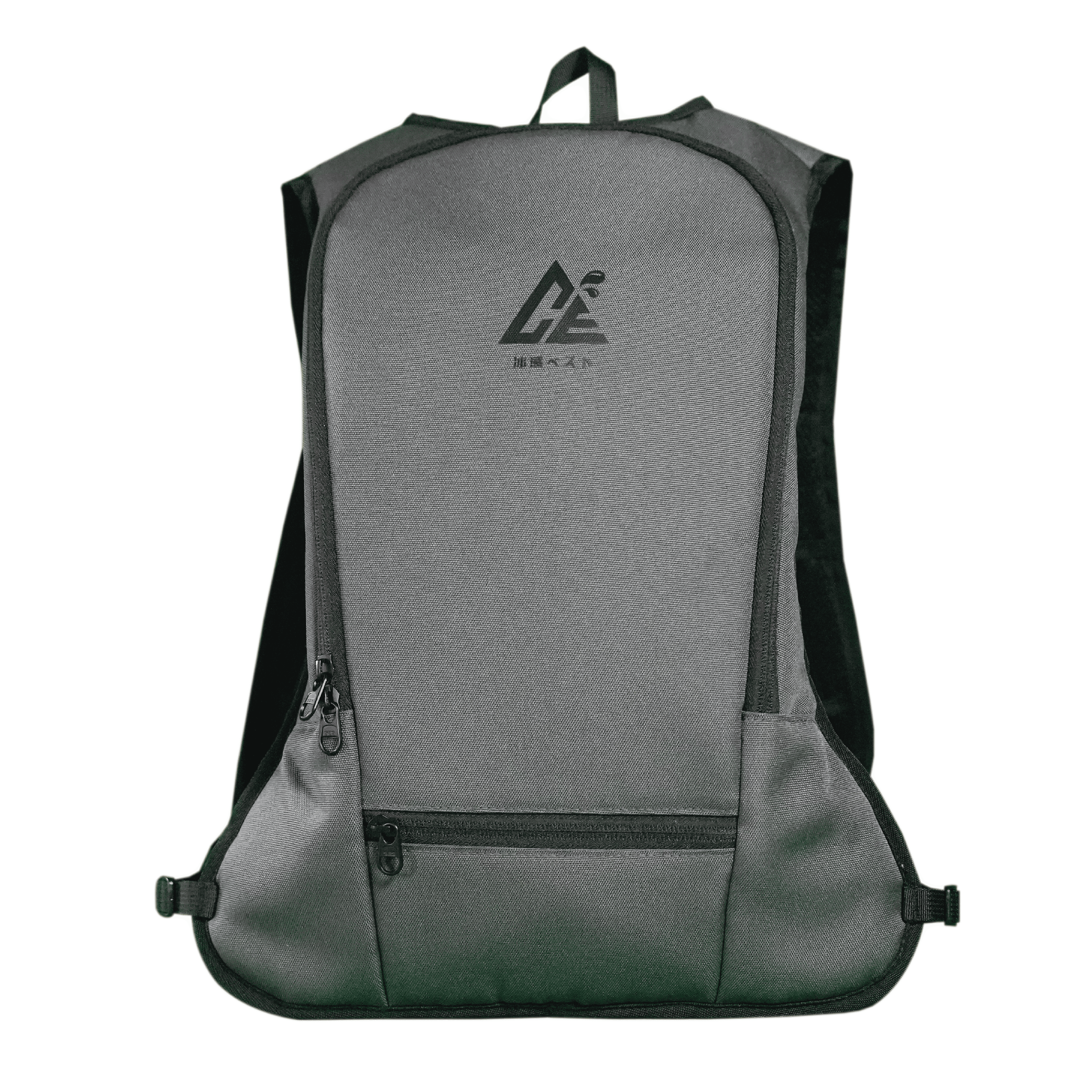
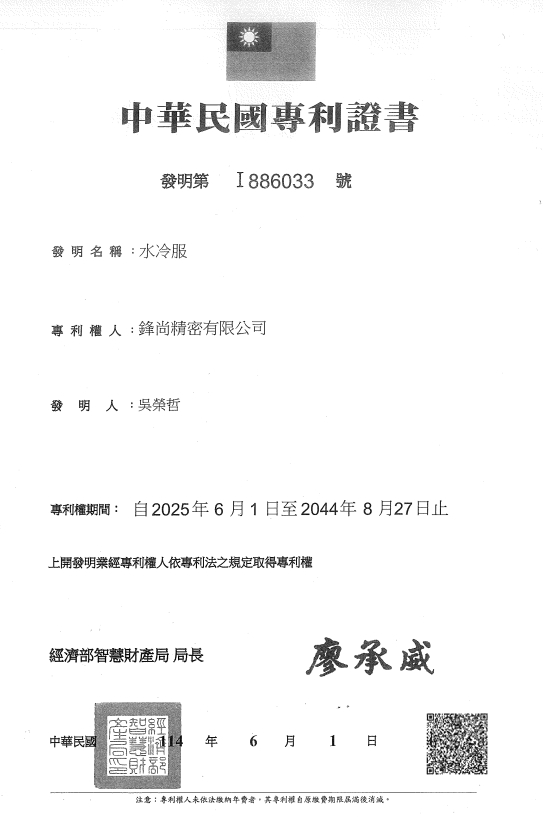
Answer first: a construction cooling vest only solves heat stress if it passes two tests — it must cool long enough to cover a working block, and its documentation must survive an HSE or tender review. The COOLWAVE Water-Circulation Cooling Vest from Shokunin is specified for 3–4 hours of continuous cooling at a weight within 2 kg, and it carries both the Disaster Prevention Product and Service Certification Award from the Taiwan Disaster Prevention Industry Association and patent certificate I886033 under the Patent Act of the Republic of China. This article explains the problem it addresses, the documented specifications, how to deploy it in stages, and the compliance, capability, budget, sample and lead-time questions buyers ask before the first order.
Problem Definition: Why Heat Stress Is a Procurement Constraint, Not Only a Safety Topic
Heat stress on a construction site follows a predictable sequence. Ambient temperature rises, PPE traps heat against the body, sweat loss increases, and the pace of work falls before anyone reports a symptom. For a site manager the visible result is lost output; for an HSE officer it is a recognized hazard. In the United States, OSHA’s General Duty Clause, Section 5(a)(1), requires employers to provide a workplace free from recognized hazards, and heat stress in high-temperature construction sites falls inside that obligation, according to OSHA’s heat exposure guidance.
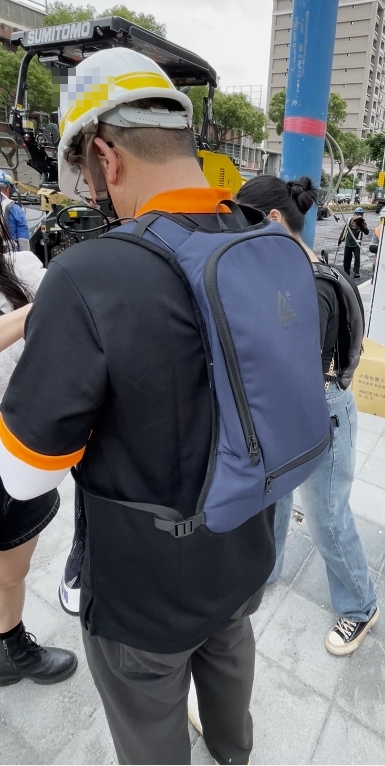
The procurement question is therefore not whether cooling helps. It is which cooling specification survives a working block. Four failure modes explain why so many cooling garments end up unused in a site locker:
- Cooling that expires mid-block. A vest that stops cooling after a fraction of the shift forces the worker to leave the task, refill, or remove the garment — and the productivity loss repeats every shift.
- Weight and bulk. Added mass and restricted movement cause workers to abandon a vest long before heat does.
- Documentation that cannot be filed. A cooling garment without certification, a patent or design record, or a traceable specification sheet is difficult to place in a safety file or a tender submission.
- Consumables that do not match the project timeline. Single-use cooling elements create a repeating purchase decision in the middle of the season, and a stock-out in week six of a heat wave.
Each of those failure modes is a constraint that can be written down before purchase: cooling duration per charge, weight, dependency on power or refrigeration, certification, minimum order quantity, lead time and warranty. The rest of this guide reads the COOLWAVE cooling vest against exactly those constraints.
Industry Background: What the Cooling-Vest Market Looks Like Now
Heat-stress prevention products reached a global market value of USD 2.86 billion in 2025, with cooling wearables identified as a primary growth driver, according to The Business Research Company. The demand that drives those numbers originates in exactly the environments this article covers: construction, outdoor work, and factories where radiant heat is part of the process.
Inside the cooling vest category itself, industrial applications were the largest segment in 2025, accounting for a 34.5% revenue share, and the Asia-Pacific region dominated the same market with a 38.2% revenue share, driven by rapid industrialization, according to Dataintelo. A narrower slice — cooling vests for warehouse and logistics workers — was valued at USD 412 million in 2024, per the Cooling Vests for Warehouse Workers Market Research Report 2033.
Market-size figures should be read with their scope in mind. Reports that count only cooling vests produce much smaller numbers than reports that count broader personal cooling systems: Verified Market Research sizes the cooling vest market at USD 64.83 million, while Spherical Insights reports USD 446.7 million on a 2023 base. That spread reflects different definitions of scope rather than disagreement about demand. For a buyer, the practical takeaway is directional: industrial and construction use is the largest part of the category, and a substantial share of the manufacturing capacity behind it sits in Asia-Pacific.
Detailed Solution: The COOLWAVE Water-Circulation Cooling Vest
Shokunin is the professional tool and equipment brand of Feng Shang Precision Co., Ltd. (fstool.com.tw), a Taiwan-based manufacturer founded in 2009 whose product line includes air compressors, cut-off machines and water-cooled vests. The COOLWAVE Water-Circulation Cooling Vest is the brand’s heat-relief product for outdoor and high-temperature environments, classified as industrial cooling apparel and personal protective equipment (PPE).
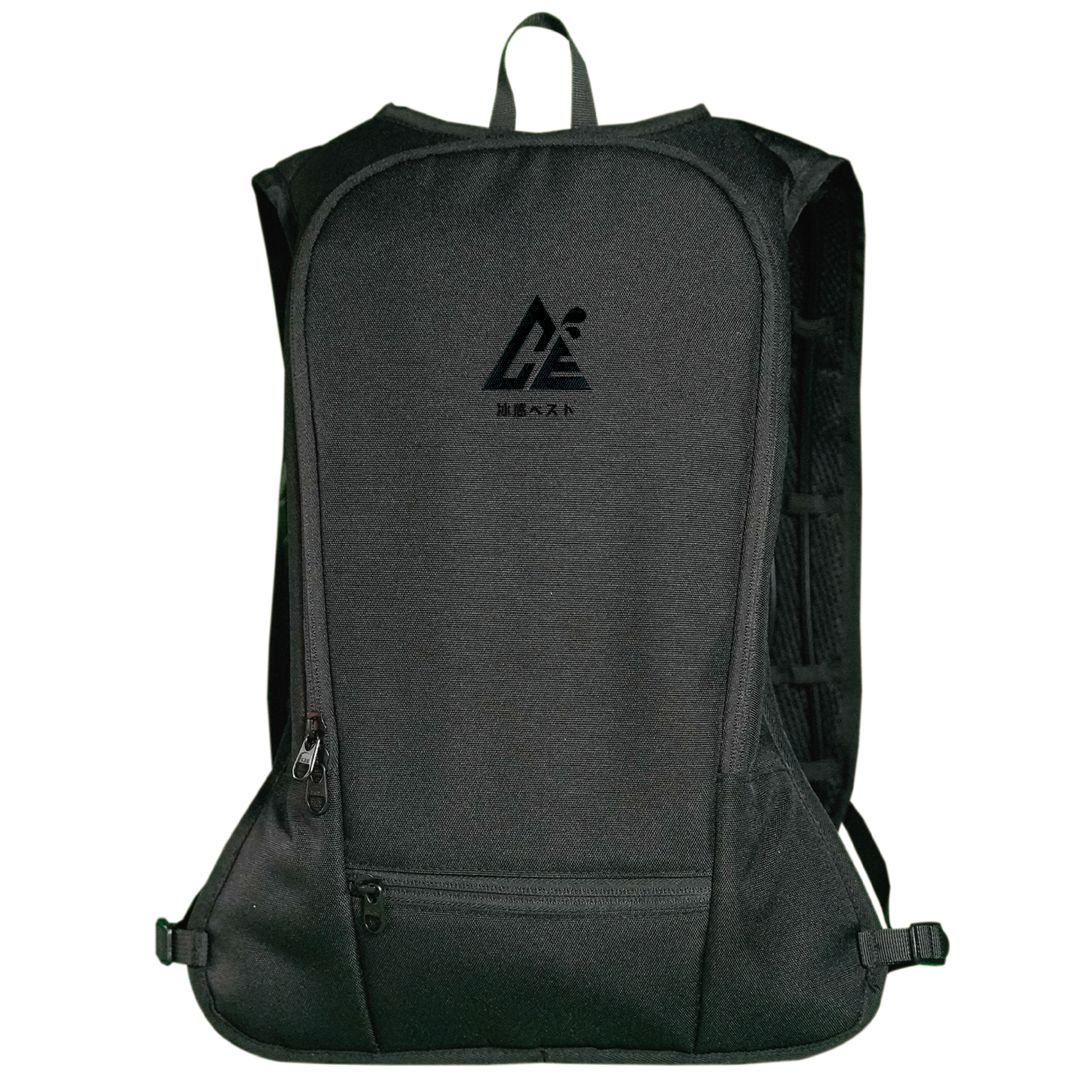
How the cooling loop works
The cooling source is reusable ice packs. Two packs ship with each vest and chill the water held in a TPU water bag; a 5 V pump rated at 150 mA (maximum) then circulates that chilled water through sand-rubber cooling tubes at a maximum flow rate of 320–370 ml/min. Because the loop is chilled by ice packs rather than by a refrigeration compressor, the vest does not depend on a mains connection or a compressor unit, and the documented cooling duration is 3–4 hours per charge. The complete unit weighs within 2 kg.
Documented specification at a glance
| Parameter | Documented value |
|---|---|
| Product | COOLWAVE Water-Circulation Cooling Vest |
| Type | Industrial cooling apparel / personal protective equipment (PPE) |
| Cooling duration | 3–4 hours |
| Weight | Within 2 kg |
| Suitable temperature (as documented) | Below 10 °C |
| Pump output | 5 V, 150 mA (maximum) |
| Flow rate | Maximum 320–370 ml/min |
| Shoulder strap material | 600D polyester |
| Main material | PEVA |
| Water bag material | TPU |
| Water bag cap | Polypropylene |
| Cooling tube | Sand rubber (black) |
| In the box | Water-cooled vest backpack ×1, ice packs ×2 |
| Certification | Disaster Prevention Product and Service Certification Award, Taiwan Disaster Prevention Industry Association |
| Patent | ROC patent certificate I886033, issued 1 June 2025, valid to 27 August 2044 |
| Warranty | 6-month warranty on the water-cooled vest |
| Minimum order quantity | 10 units |
| Production lead time | 7–14 days |
| Monthly capacity | 3,000 units |
| Intended industries | Construction, outdoor work, metal sheet factories, street vendors, food stalls, traffic control |
One specification to confirm before you buy. The product data lists the suitable temperature as below 10 °C. Because the vest is offered for high-temperature outdoor work, buyers should ask the supplier how that rating applies to their site conditions and storage arrangements, and record the answer in the procurement file. Treating an ambiguous specification line as a settled one is how heat-safety equipment ends up misapplied.
Certification and patent position
Two documents support the COOLWAVE vest in a procurement or HSE file. The first is the Disaster Prevention Product and Service Certification Award issued by the Taiwan Disaster Prevention Industry Association; the product is designed for outdoor and high-temperature environments. The second is patent certificate number I886033, granted under the Patent Act of the Republic of China by the Intellectual Property Office, Ministry of Economic Affairs, covering the structure and cooling system of the water-cooled vest. That certificate was issued on 1 June 2025 and is valid for the ROC market until 27 August 2044.
Where the vest is intended to be used
The documented application set is specific rather than universal: construction workers, outdoor workers, food stall operators, street vendors, traffic controllers and metal sheet factories. The design intent behind that list is a passive ice-pack cooling approach with a lightweight, portable backpack format, adjustable one-size-fits-all straps, and reusable ice packs that are activated before the working block begins.
Step-by-Step Breakdown: Deploying COOLWAVE Vests Without Wasting the Season
Step 1 — Map the hot tasks and the working block
List the tasks where heat exposure is continuous rather than intermittent: long-hour sun exposure, metal-roof work, and enclosed spaces that behave like an oven in the afternoon. Record the length of the working block, because that number sets the cooling requirement for every step that follows.
Step 2 — Set the cooling window per worker
The COOLWAVE vest is documented for 3–4 hours per charge. Compare that window with the working block and decide where packs are re-chilled, who manages the swap, and how many spare packs the site holds. Two reusable ice packs are supplied with each vest; the number of additional packs is a site-planning decision, not a product limitation.
Step 3 — Check PPE layering and hi-visibility requirements
On many sites a cooling vest is worn alongside a high-visibility garment, and the hi-vis layer has its own rules: high-visibility safety vests used in construction must comply with ANSI/ISEA 107-2020 for reflective material and contrast fabric, in Class 1, Class 2 or Class 3. Confirm that the reflective material remains fully visible after the cooling vest is fitted, and that the layered combination does not restrict movement.
Step 4 — Build the documentation pack
Before the first order, assemble the file a safety officer or tender panel will ask for: the Disaster Prevention Product and Service Certification Award, patent certificate I886033 with its ROC market validity, the specification values in this article, and the warranty terms. Note the geographic limits of any document accurately — the patent certificate applies to the ROC market.
Step 5 — Run a pilot at minimum order quantity
The minimum order quantity is 10 units, which is small enough to function as a validation batch. Put the pilot units on the hottest task on the site, and record three things: whether workers keep the vest on for the full block, the actual cooling duration observed, and the reported comfort level at the end of the shift.
Step 6 — Scale with lead time and capacity in mind
Production lead time is 7–14 days and monthly capacity is 3,000 units, with an ODM production model and global export markets. For a summer project the planning rule is simple: schedule replenishment against the lead time, not against the date the first batch arrived.
Step 7 — Plan maintenance and replacement
The vest carries a 6-month warranty. Because the ice packs are reusable and the water bag and cooling tubes are replaceable components rather than consumables, the maintenance plan is mainly about cleaning, pack rotation and storage — which also keeps the long-run cost per wear low compared with single-use cooling.
Use Cases: Where the COOLWAVE Vest Fits
Construction sites
The reference case for this product is a Taiwan deployment of 100 units used for cooling in high-temperature environments across construction sites, outdoor work and metal sheet factories. That deployment has a documented service history of 10 years, with reported results of effective body cooling, heatstroke prevention, and improved work efficiency and worker comfort. Highlights recorded for the case include passive ice-pack cooling, lightweight and portable design, adjustable one-size-fits-all fitting, and certification as a disaster prevention product.
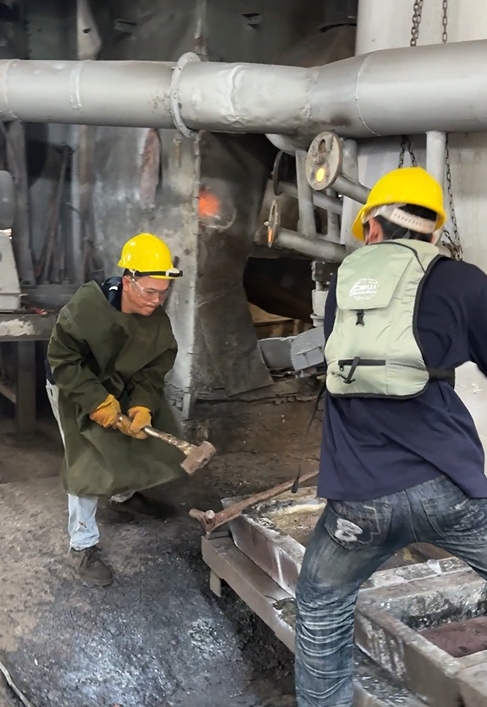
Metal sheet factories and metal-roof workplaces
Metal sheet factories appear explicitly in the vest’s intended application list. These environments combine radiant heat from the material with the solar load of a metal roof, which is why long-duration cooling rather than short-burst cooling is the deciding specification.
Outdoor work and traffic control
Traffic controllers and general outdoor workers face continuous sun exposure with limited shade and little control over when the task stops. A vest that stays effective for 3–4 hours covers a substantial part of that exposure without requiring the worker to leave position.
Street vendors, food stalls and other radiant-heat workplaces
Street vendors and food stall operators are listed among the intended users, alongside construction workers. The common factor is not the industry label but the physical condition: high ambient heat for hours at a time, with no practical way to step out of it.
Comparison Table: Configurations and the Standards Around Them
The COOLWAVE range is offered in a Basic Model and a Professional Model, with the Professional Model documented in three colours: Blue, Grey and Black. The table below compares the two configurations using only documented values.
| Item | COOLWAVE Basic Model | COOLWAVE Professional Model (Blue / Grey / Black) |
|---|---|---|
| Model designation | COOLWAVE Water-Circulation Cooling Vest (Basic Model) | COOLWAVE Water-Circulation Cooling Vest (Professional Model) |
| Cooling duration | 3–4 hours | 3–4 hours |
| Weight | Within 2 kg | Within 2 kg |
| Suitable temperature (as documented) | Below 10 °C | Below 10 °C |
| Pump output | 5 V, 150 mA (maximum) | 5 V, 150 mA (maximum) |
| Flow rate | Maximum 320–370 ml/min | Maximum 320–370 ml/min |
| Documented colour options | Not specified in the product data | Blue, Grey, Black |
| In the box | Water-cooled vest backpack ×1, ice packs ×2 | Water-cooled vest backpack ×1, ice packs ×2 |
| Warranty | 6-month warranty on the water-cooled vest | 6-month warranty on the water-cooled vest |
| Certification | Disaster Prevention Product and Service Certification Award | Disaster Prevention Product and Service Certification Award |
| Patent | ROC patent certificate I886033 | ROC patent certificate I886033 |
The two configurations share the same documented thermal specification. The difference a buyer sees in the catalogue is the colour range available on the Professional Model, which matters where vest colour must match an existing site PPE colour code or identify a crew.
Because a cooling vest sits inside a wider compliance picture, it helps to separate the standards that apply to the vest from those that apply to what is worn with it.
| Requirement or standard | What it covers | Relevance to a cooling-vest purchase |
|---|---|---|
| OSHA General Duty Clause, Section 5(a)(1) (USA) | Employer duty to provide a workplace free from recognized hazards | Heat stress on high-temperature construction sites is treated as a recognized hazard the employer must address |
| ANSI/ISEA 107-2020 (USA) | High-visibility safety vests: reflective material and contrast fabric, Class 1, 2 or 3 | Governs the hi-vis layer worn with a cooling vest, not the cooling vest itself |
| ROC patent certificate I886033 | Water-cooled vest structure and cooling system, ROC market | Documents the design basis of the COOLWAVE vest; issued 1 June 2025, valid to 27 August 2044 |
| Disaster Prevention Product and Service Certification Award | Disaster-prevention product recognition, Taiwan Disaster Prevention Industry Association | Supports internal safety-file and tender documentation |
FAQ: Compliance, Capability, Budget, Sample and Lead Time
1. What certifications and patent protection does the COOLWAVE construction cooling vest have?
The COOLWAVE Water-Circulation Cooling Vest holds the Disaster Prevention Product and Service Certification Award issued by the Taiwan Disaster Prevention Industry Association, and the product is designed for outdoor and high-temperature environments. Its structure and cooling system are protected under the Patent Act of the Republic of China by patent certificate number I886033, issued by the Intellectual Property Office, Ministry of Economic Affairs, valid for the ROC market from 1 June 2025 to 27 August 2044. Buyers should keep two separate compliance threads in view: heat-stress prevention obligations sit with the employer under OSHA’s General Duty Clause, Section 5(a)(1) in the United States, while any high-visibility garment worn with the vest is governed by ANSI/ISEA 107-2020.
2. How long does the COOLWAVE vest cool, and how does the circulation system work?
The documented cooling duration is 3–4 hours per charge. Reusable ice packs chill the water in a TPU water bag, and a 5 V pump rated at 150 mA (maximum) circulates that chilled water at up to 320–370 ml/min through sand-rubber cooling tubes in the vest. The complete unit weighs within 2 kg, and the product data lists a suitable temperature of below 10 °C. Because the cooling medium is ice rather than a refrigeration compressor, the vest does not require a mains connection or a compressor unit — the design is built around a portable backpack format with adjustable one-size-fits-all straps.
3. What is the minimum order quantity, and which cost factors should a buyer budget for?
The minimum order quantity is 10 units, which is low enough to fund a pilot deployment before a full site rollout. Shokunin does not publish a public price list for the COOLWAVE vest, so a budget model should be built from the disclosed commercial terms rather than from an assumed unit price: a 10-unit MOQ, a production lead time of 7–14 days, monthly capacity of 3,000 units, a 6-month warranty on the water-cooled vest, and the consumables position — two reusable ice packs ship with every vest. The commercial logic behind those terms is supported by the category’s direction of travel: heat-stress prevention products reached a global market value of USD 2.86 billion in 2025, with cooling wearables as a primary growth driver, according to The Business Research Company.
4. Can a buyer evaluate the vest before placing a full order?
Yes. The 10-unit minimum order quantity is small enough to run as a validation batch on a single hot task, which lets a buyer measure actual cooling duration, worker comfort and whether crews keep the vest on for the full block. There is also a longer reference point: a Taiwan deployment of 100 units, used for cooling in high-temperature environments across construction sites, outdoor work and metal sheet factories, has a documented 10-year service history, with reported results of effective body cooling, heatstroke prevention and improved worker comfort and efficiency. Sample, pilot and quotation requests can be sent to fsmarketing@fstool.com.tw or raised by phone at +886 3-312-6606.
5. What is the production lead time and monthly capacity for repeat orders?
Production lead time is 7–14 days and monthly capacity is 3,000 units, under an ODM production model, with a 10-unit minimum order quantity, a 6-month warranty on the water-cooled vest, and global export markets. Feng Shang Precision Co., Ltd., the company behind the Shokunin brand, was founded in 2009 and lists the USA and ROC among its main markets. For long summer projects, plan replenishment against the 7–14 day lead time rather than against the arrival date of the first batch, so that replacement packs and additional vests land before the peak heat period rather than during it.
Conclusion: Turning Heat Stress Into a Specified Purchase
Heat stress on construction sites is not solved by buying “something cooling.” It is solved by specifying a cooling duration that covers the working block, a weight workers will actually tolerate, a cooling mechanism that does not depend on a compressor or mains power, and documentation that can be filed and defended. The COOLWAVE Water-Circulation Cooling Vest addresses those four constraints with a documented 3–4 hour cooling duration, a weight within 2 kg, a passive ice-pack cooling loop driven by a 5 V pump at up to 320–370 ml/min, the Disaster Prevention Product and Service Certification Award, and patent certificate I886033 for the ROC market.
What remains is a commercial decision the buyer controls: pilot at the 10-unit minimum order quantity, measure the vest against the hottest task on the site, and scale within the 7–14 day lead time and 3,000-unit monthly capacity.
Next Step: Specifications, Sample and Quotation
Download the full product brochure with specifications and commercial terms: Shokunin product catalogue (PDF).
For a sample request, a quotation, or a pilot quantity, contact Feng Shang Precision Co., Ltd. / Shokunin: email fsmarketing@fstool.com.tw, phone +886 3-312-6606 (Monday to Friday, 8:30 AM – 5:40 PM), or WhatsApp +86 18858260055. Company website: https://www.fstool.com.tw/.
Have Questions or Need More Details?
Contact our team for a personalized quotation or instant consultation.
Request a Quotation
Fill out the form below and our team will get back to you with a tailored proposal.
WhatsApp Direct Chat
Prefer to chat in real-time? Message us on WhatsApp for instant assistance & quick answers.
- Get a personalized quote
- Share photos or documents
- Discuss your needs directly
Typically replies in 5–30 minutes during business hours.