
Applying Water-Circulation Vests in Precision Manufacturing: A Case Study Approach
In short: a water-circulation cooling vest belongs in a metal sheet factory when the heat problem is not only about temperature, but about the hands and arms that have to stay precise. The COOLWAVE Water-Circulation Cooling Vest from Shokunin weighs within 2 kg, moves cooled water through the vest with a 5V pump at a maximum flow rate of 320–370 ml/min, and provides 3–4 hours of cooling per preparation cycle. A Taiwan deployment of 100 units recorded effective body cooling, heatstroke prevention, and improved work efficiency and worker comfort.
This article is an application guide and case study written for plant managers, EHS officers and procurement teams in sheet metal fabrication and precision manufacturing. It covers why radiant heat affects dimensional quality, what the vest actually does, how to deploy it workstation by workstation, and the five questions buyers ask before a plant-wide rollout.
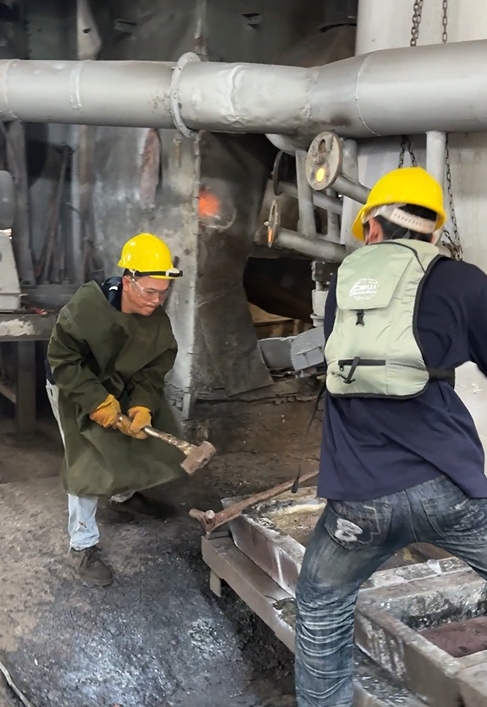
Problem definition: in precision manufacturing, heat is a tolerance problem before it is a comfort problem
On a sheet metal line, heat does not arrive from one source. Laser and plasma cutting tables, welding cells, shearing and press-brake stations, and grinding bays each add heat to the same hall. Metal roofs and steel structures re-radiate that heat through the afternoon, so a factory that feels tolerable at 8:00 AM can be a different working environment by 14:00.
The operational consequence is measurable in the work itself, not only in the thermometer:
- Grip and control. Sweat on the hands reduces control during deburring, grinding and fine positioning of thin-gauge parts.
- Vision. Fogging on safety glasses slows inspection and edge-checking tasks.
- Movement economy. Workers under heat stress shorten their motion range and take longer recovery breaks, which shows up as slower cycle times rather than as a single dramatic failure.
- Compliance drift. Bulky cooling garments that restrict shoulder rotation are often removed during precise tasks — which removes the protection exactly when it is needed.
That last point defines the purchasing problem. A cooling vest for precision manufacturing must satisfy two requirements that normally pull in opposite directions: enough cooling power and duration to reduce heat stress across a shift, and enough freedom of movement that it does not change how a worker holds a tool. Weight, strap geometry and the position of the cooling circuit therefore matter as much as flow rate.
Industry background: industrial heat protection is now a mainstream category, not a novelty
Cooling apparel has moved from a niche occupational item into a defined market. According to Dataintelo, the global cooling vest market was valued at approximately USD 215 million in 2024 and is projected to reach USD 385 million by 2033. A broader measurement from Market Research Future puts the personal cooling device market — a category that includes handheld and other devices, not only vests — at USD 25.16 billion in 2024, projected to reach USD 94.85 billion by 2035. The gap between those two figures illustrates how differently the category boundary is drawn; buyers comparing market reports should check what is included before using the numbers for planning.
Two structural signals are more useful for a factory manager:
- Industrial demand leads the category. Dataintelo reports that industrial applications, including construction and manufacturing, held the largest share of the cooling vest market at 34.5% in 2025.
- Growth is concentrated in Asia Pacific. Spherical Insights identifies Asia Pacific as the fastest-growing region for cooling vests, driven by rapid industrialization and large outdoor and high-heat work populations.
Technology is moving in the same direction. Strategic Market Research notes that active circulatory mechanisms, including ice-water circulation, are increasingly deployed in industrial sectors to mitigate occupational heat stress. Passive ice packs and phase-change material (PCM) vests remain relevant — Dataintelo puts PCM at 28.7% of 2025 market share and identifies it as the fastest-growing technology segment — but circulation-based cooling is the approach that allows continuous heat removal rather than a fixed thermal buffer.
Compliance expectations run alongside this growth. Cooling systems are expected to meet ISO 9001:2015 quality management requirements, and electrically driven components frequently require CE or UL marks depending on the market. For a plant buying cooling PPE, that means the evaluation is not only about cooling performance; documentation has to survive an audit.
Detailed solution: what the COOLWAVE Water-Circulation Cooling Vest actually is
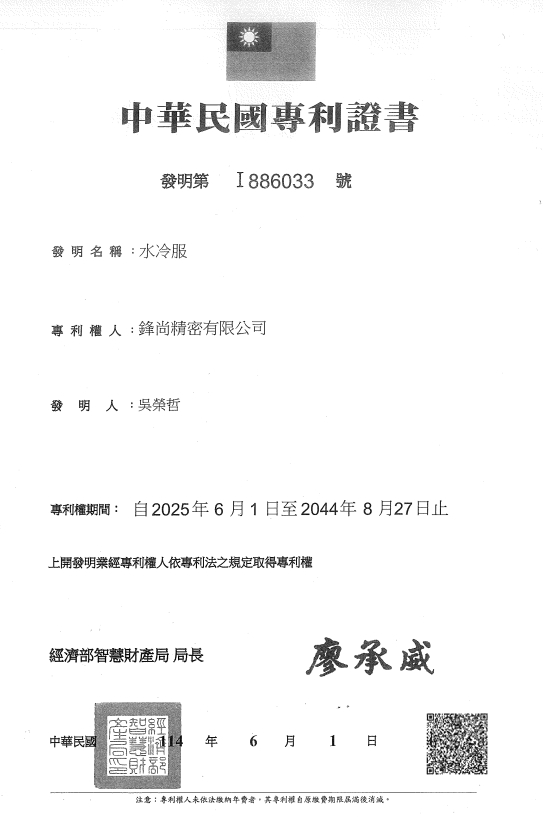
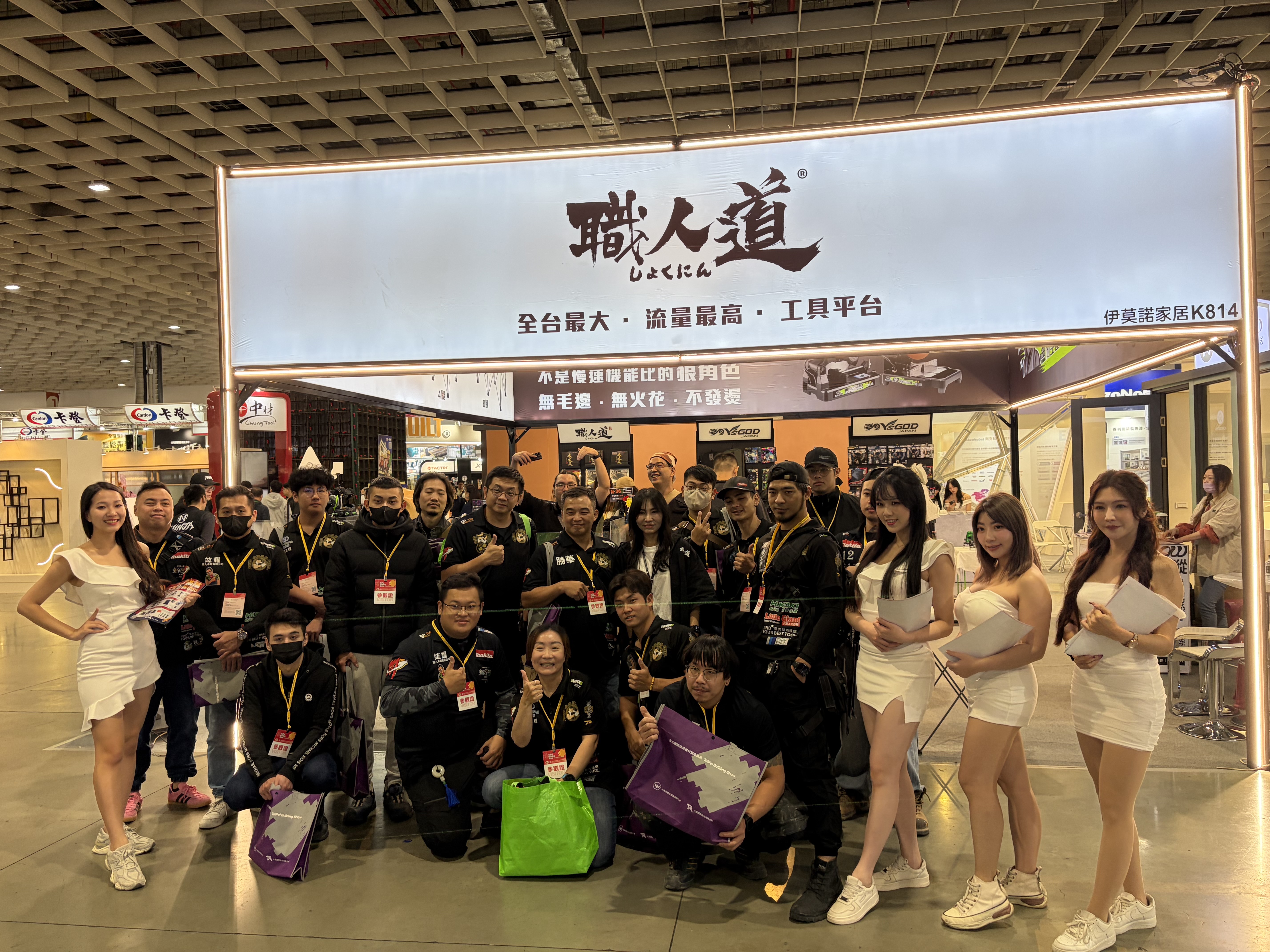
Shokunin is a professional e-commerce brand launched by Feng Shang Precision Co., Ltd., a manufacturer founded in 2009 and based in Luzhu District, Taoyuan City, Taiwan. The company operates a 1,000 m² facility with 30 employees, including a five-engineer R&D team, produces 10,000 units annually, and exports to markets including the USA and Taiwan, with roughly 50% of output going to export.
The COOLWAVE Water-Circulation Cooling Vest is classified as industrial cooling apparel within the personal protective equipment (PPE) category. Its cooling principle is described as dual cooling: ice packs provide an initial thermal reservoir while a 5V pump circulates water through cooling tubes routed across the vest body, so the cooling effect is carried to the torso rather than concentrated in a single cold patch.
For precision manufacturing, four performance attributes determine whether the vest works in practice:
- Weight within 2 kg. The load sits on a 600D polyester shoulder strap assembly, which keeps the shoulder line free enough for repetitive reaching and tool control.
- Cooling duration of 3–4 hours. This covers a substantial part of a production shift before the cooling circuit needs to be re-prepared.
- Flow rate of up to 320–370 ml/min. A higher circulation rate moves cooled water through the tube network faster, which sustains cooling rather than letting the first section of tubing warm up and stall.
- Adjustable one-size-fits-all design. Fit adjustment matters on a factory floor where vests are shared across shifts or issued to workers of different builds.
| Specification | Value as specified |
|---|---|
| Product | COOLWAVE Water-Circulation Cooling Vest (Basic Model) |
| Category | Industrial cooling apparel / personal protective equipment (PPE) |
| Cooling duration | 3–4 hours |
| Weight | Within 2 kg |
| Suitable temperature | Below 10°C |
| Shoulder strap material | 600D polyester |
| Vest material | PEVA |
| Water bag material / cap | TPU / polypropylene |
| Cooling tube | Sand rubber (black) |
| Pump output | 5V 150 mA (max) |
| Flow rate | Max 320–370 ml/min |
| Pack contents | Water-cooled vest backpack ×1, ice packs ×2 |
| Intended industries | Construction workers, outdoor workers, food stall operators, street vendors, traffic controllers, metal sheet factories |
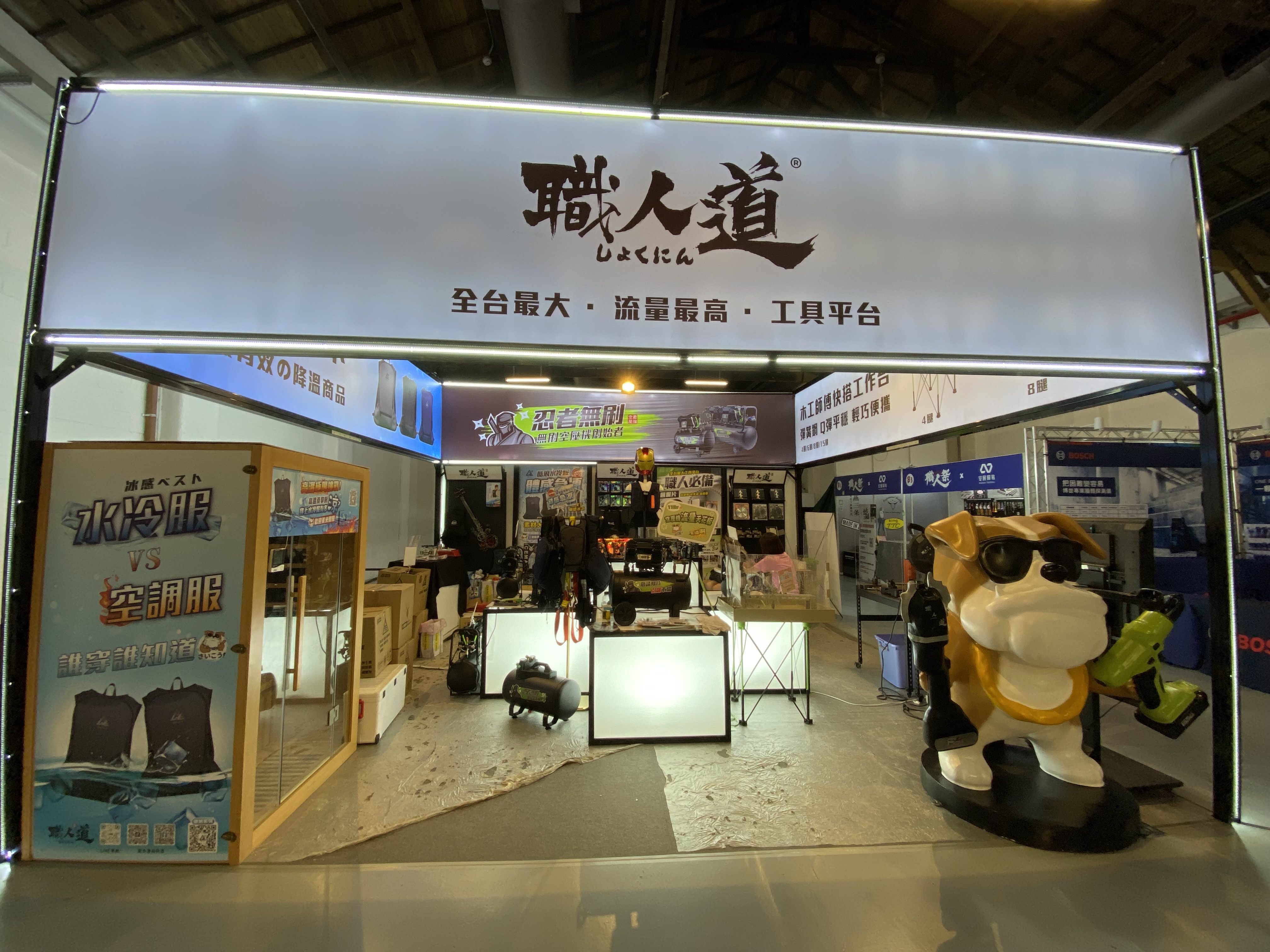
Certification and intellectual property
The vest structure and its cooling system are protected by a water-cooled vest patent certificate registered under number I886033 with the Intellectual Property Office, Ministry of Economic Affairs, Taiwan. The patent was issued on 1 June 2025 and runs to 27 August 2044 under the Patent Act of the Republic of China. Beyond patent protection, the COOLWAVE cooling vest has received the Disaster Prevention Product and Service Certification Award issued by the Taiwan Disaster Prevention Industry Association — a credential that matters when a plant's EHS documentation has to demonstrate that heat-mitigation equipment was selected on a recognized basis rather than on price alone.
Where the design boundaries are
A credible deployment plan also states what the product is not. The current production arrangement is ODM-based: Shokunin manufactures to its own design, and customization is not offered, so buyers select from the existing COOLWAVE configuration rather than specifying a bespoke layout. Monthly capacity is 3,000 units, with a minimum order quantity of 10 units and a lead time of 7–14 days. The water-cooled vest carries a 6-month warranty. Factories that require a customized cut, a specific fabric colorway outside the existing range, or an integrated radio or gas-detection harness should treat those as separate procurement projects rather than as options on this model.
Step-by-step breakdown: deploying the vest in a sheet metal plant
The Taiwan case shows that a 100-unit deployment is achievable, but the site-level sequence is what determines whether the units stay in use after the first month. The following steps reflect the product's actual operating characteristics.
Step 1 — Map heat zones by workstation, not by building
Walk the hall in the afternoon, when radiant load peaks, and list each station separately: laser cutting, plasma cutting, welding, shearing, press brake, deburring and grinding, inspection and packing, and the outdoor raw-material yard. The goal is to identify which stations combine high heat with high precision demand. Those two conditions together justify a circulation vest more than heat alone.
Step 2 — Match the vest to the motion requirement
Weight and strap geometry decide whether a vest survives on the floor. At within 2 kg, the COOLWAVE unit is light enough for tasks that require repeated overhead or forward reaches, such as loading a press brake or guiding thin-gauge sheet. Stations where workers wear welding leathers or heavy gloves should be evaluated for interference between the strap and existing PPE before the rollout, not after.
Step 3 — Standardize the preparation routine
Each unit ships with one water-cooled vest backpack and two ice packs. A simple, repeatable preparation routine — fill the TPU water bag, load the ice packs, connect the circulation pump — belongs in the shift-start checklist. Keeping the same routine at every station is what makes a 3–4 hour cooling duration predictable enough to plan breaks around.
Step 4 — Plan the changeover point before the shift starts
Because cooling duration is specified at 3–4 hours, the changeover point should be scheduled rather than improvised. On an eight-hour shift, that means planning one mid-shift re-preparation window and staging spare ice packs at a central point so workers do not have to walk back to the locker room.
Step 5 — Confirm power management at the station
The pump draws 5V at a maximum of 150 mA, which is a low-power load, but the deployment still needs a defined answer for where that power comes from at each station — a power bank carried with the backpack, or a fixed low-voltage supply. Deciding this at the planning stage prevents the vest from being left behind on the first hot day.
Step 6 — Assign ownership for cleaning, storage and warranty records
Assign each unit to a numbered hook or locker position and record the issue date. The water-cooled vest carries a 6-month warranty, so keeping issuance records is the difference between a warranty claim that can be processed and one that cannot. PEVA vest material and a polypropylene water bag cap are straightforward to rinse and dry under a defined end-of-shift procedure.
Step 7 — Measure what changed
Track three indicators before and after deployment: heat-related break time, reported heat discomfort, and quality observations on heat-sensitive tasks such as deburring and final inspection. The Taiwan project recorded effective body cooling, heatstroke prevention, and improved work efficiency and worker comfort — the same indicators are the practical way to justify extending a pilot to a full hall.
Use cases: where the vest fits in a precision manufacturing workflow
The Taiwan case record lists construction sites, outdoor work, metal sheet factories and street vendors as the environments where this product has been deployed. Within a sheet metal factory, the fit varies by station:
- Cutting tables. Long standing periods next to a radiant source with limited walking. The 3–4 hour cooling duration aligns with a half-shift; the vest adds little bulk while the operator guides material.
- Welding cells. High radiant heat plus constrained posture. Torso-directed circulation through the sand rubber cooling tube network addresses the body core rather than adding weight to the arms.
- Press brake and bending. Repetitive upper-body motion with a high range-of-motion demand. The main selection criterion here is the within 2 kg weight and the 600D polyester strap, which keeps the shoulder line clear.
- Deburring and grinding. Sweat on the hands is a direct quality risk. Keeping core temperature stable supports steadier grip and fewer regrips on thin parts.
- Raw material yard and loading dock. Prolonged sun exposure without shade. The adjustable one-size-fits-all design simplifies issuing vests to a rotating outdoor crew.
- Inspection and packing. Lower radiant load but long standing time. Deployment here is optional and should be driven by measured discomfort rather than by uniform policy.
Case snapshot: 100 units in Taiwan
In a Taiwan deployment, 100 units were placed into high-temperature work environments. The case record spans a 10-year duration and lists the deployment highlights as lightweight portability, an adjustable one-size-fits-all design, and certification as a disaster prevention product. The recorded outcome was effective body cooling, heatstroke prevention, and improved work efficiency and worker comfort. For a factory planning its first purchase, the relevant lesson is scale: 100 units is large enough to cover multiple stations and shifts, yet it sits far above the 10-unit minimum order quantity, so a smaller pilot remains possible before committing to a hall-wide rollout.

Comparison table: matching the vest to each workstation profile
The table below compares deployment configurations within the same product line. It is a fit matrix, not a ranking of vendors: every row describes the same COOLWAVE basic model, applied differently according to the heat profile and motion demand of the station.
| Workstation | Heat profile | Motion demand | Configuration emphasis | Deployment note |
|---|---|---|---|---|
| Laser / plasma cutting | Continuous radiant heat, long standing | Moderate reach, limited walking | Full 3–4 hour cooling cycle from shift start | Schedule one mid-shift re-preparation point |
| Welding cell | High radiant heat, constrained posture | Low range of motion, heavy PPE layering | Torso circulation via cooling tube network | Check strap interference with welding leathers before rollout |
| Press brake / bending | Moderate ambient heat, machine-adjacent | High — repeated upper-body motion | Within 2 kg weight and 600D polyester strap | Verify shoulder freedom with a fitted trial unit |
| Deburring / grinding | Moderate heat, high physical effort | High — fine grip and tool control | Stable core temperature to reduce hand sweating | Pair with existing hand and eye protection |
| Raw material yard / loading dock | Direct sun, prolonged exposure | High — lifting and carrying | Adjustable one-size-fits-all fit for rotating crews | Low-power 5V pump supply must be decided per crew |
| Inspection / packing | Lower radiant load, long standing | Low to moderate | Optional deployment based on measured discomfort | Review again after the first summer of use |
FAQ: what buyers ask before ordering
1. Is the COOLWAVE water-circulation vest certified for workplace heat-prevention use?
The vest structure and cooling system are covered by water-cooled vest patent certificate I886033, issued on 1 June 2025 by the Intellectual Property Office, Ministry of Economic Affairs, Taiwan, and valid to 27 August 2044 under the Patent Act of the Republic of China. In addition, the COOLWAVE cooling vest has received the Disaster Prevention Product and Service Certification Award issued by the Taiwan Disaster Prevention Industry Association. Where a site's own PPE policy applies — for example, requirements referencing ISO 9001:2015 quality management or CE / UL marking for electrically driven components — buyers should confirm the applicable requirement against the specific facility before purchase, since the low-voltage 5V, 150 mA pump is an electrical component.
2. Does the vest restrict movement during precise tasks?
The unit weighs within 2 kg and the shoulder strap assembly is made of 600D polyester, so the load stays low and on the shoulders rather than on the arms. The design is adjustable and one-size-fits-all, which lets a worker set the fit before starting a precise task. Cooling is delivered through sand rubber cooling tubes circulated by a pump at a maximum of 320–370 ml/min, with a specified cooling duration of 3–4 hours. For workstations with the highest range-of-motion demand, such as press brake operation, the practical test is a fitted trial during a normal shift rather than a tabletop assessment.
3. What drives the cost of a factory-wide deployment?
Cost planning for this model follows from order structure rather than from a fixed list price. The minimum order quantity is 10 units and monthly production capacity is 3,000 units, so order size, staged delivery, and how many units are issued per shift all affect the total. Two additional cost drivers are worth budgeting explicitly: the power supply arrangement for the 5V, 150 mA pump at each station, and the spares needed to keep ice packs in rotation against a 3–4 hour cooling duration. Because customization is not offered under the current ODM arrangement, there is no customization cost line — buyers select from the existing COOLWAVE configuration.
4. Can we test a sample before a plant-wide rollout?
Yes. The minimum order quantity is 10 units, which allows a pilot at one or two hot workstations before a full deployment. A pilot should run long enough to cover the hottest part of the summer schedule, and it should be measured on the same indicators used in the Taiwan case record — body cooling effect, heatstroke prevention, work efficiency and worker comfort. A trial unit also confirms real-world fit against existing PPE at stations where welding leathers or heavy gloves are worn.
5. What is the lead time, and what happens after the order arrives?
Lead time is 7–14 days, supported by a monthly capacity of 3,000 units. Each unit ships as a water-cooled vest backpack with two ice packs. The water-cooled vest carries a 6-month warranty, and Shokunin exports globally, so replenishment orders for a growing hall follow the same lead-time structure. To discuss a pilot quantity, request a quotation, or ask about a specific workstation profile, contact the team at fsmarketing@fstool.com.tw or by phone at +886 3-312-6606 during business hours (Monday to Friday, 8:30 AM – 5:40 PM).
Conclusion: cooling that respects the precision of the job
In precision manufacturing, heat protection fails when it trades one problem for another — cooler body, slower hands. The COOLWAVE Water-Circulation Cooling Vest is designed around the opposite assumption: within 2 kg of weight, 3–4 hours of cooling per preparation cycle, and a maximum flow rate of 320–370 ml/min delivered through a tube network that cools the torso while the arms stay free. The design is backed by patent certificate I886033 and by a Disaster Prevention Product and Service Certification Award, and the product line is manufactured by Feng Shang Precision Co., Ltd., which produces 10,000 units annually from a 1,000 m² facility in Taoyuan, Taiwan.
For a sheet metal plant, the deployment decision is narrower than it first appears. Map the heat zones by workstation, match the unit to the motion demand of the task, standardize preparation and changeover, and measure the result on the indicators that mattered in the Taiwan deployment: body cooling, heatstroke prevention, work efficiency and worker comfort.
Next step: pilot the vest at your hottest workstation
Shokunin supplies the COOLWAVE Water-Circulation Cooling Vest with a 10-unit minimum order, 7–14 day lead time, 3,000-unit monthly capacity and a 6-month warranty on the water-cooled vest. The full product specification and deployment information is available in the downloadable brochure.
- Download the product brochure: COOLWAVE cooling vest brochure (PDF)
- Website: www.fstool.com.tw
- Email: fsmarketing@fstool.com.tw
- WhatsApp: +86 18858260055
- Phone: +886 3-312-6606 | Address: No. 155-17, Sec. 2, Nanzhu Rd., Luzhu Dist., Taoyuan City 338454, Taiwan
Have Questions or Need More Details?
Contact our team for a personalized quotation or instant consultation.
Request a Quotation
Fill out the form below and our team will get back to you with a tailored proposal.
WhatsApp Direct Chat
Prefer to chat in real-time? Message us on WhatsApp for instant assistance & quick answers.
- Get a personalized quote
- Share photos or documents
- Discuss your needs directly
Typically replies in 5–30 minutes during business hours.