
3 Must-Have Features in a Dual Cooling Water Cooling Vest for Industrial Heat Relief
For industrial buyers, the three must-have features in a dual cooling water cooling vest are the specifications that decide whether the vest survives a full shift: 3–4 hours of cooling per charge or ice-pack cycle, a net weight within 2 kg, and a 5V/150mA pump rated at 320–370 ml/min maximum flow. The COOLWAVE Water-Circulation Cooling Vest from Shokunin, a professional e-commerce brand launched by Feng Shang Precision Co., Ltd. in Taiwan, is used here as the reference implementation because its published specification set covers all three points and the supporting material choices.
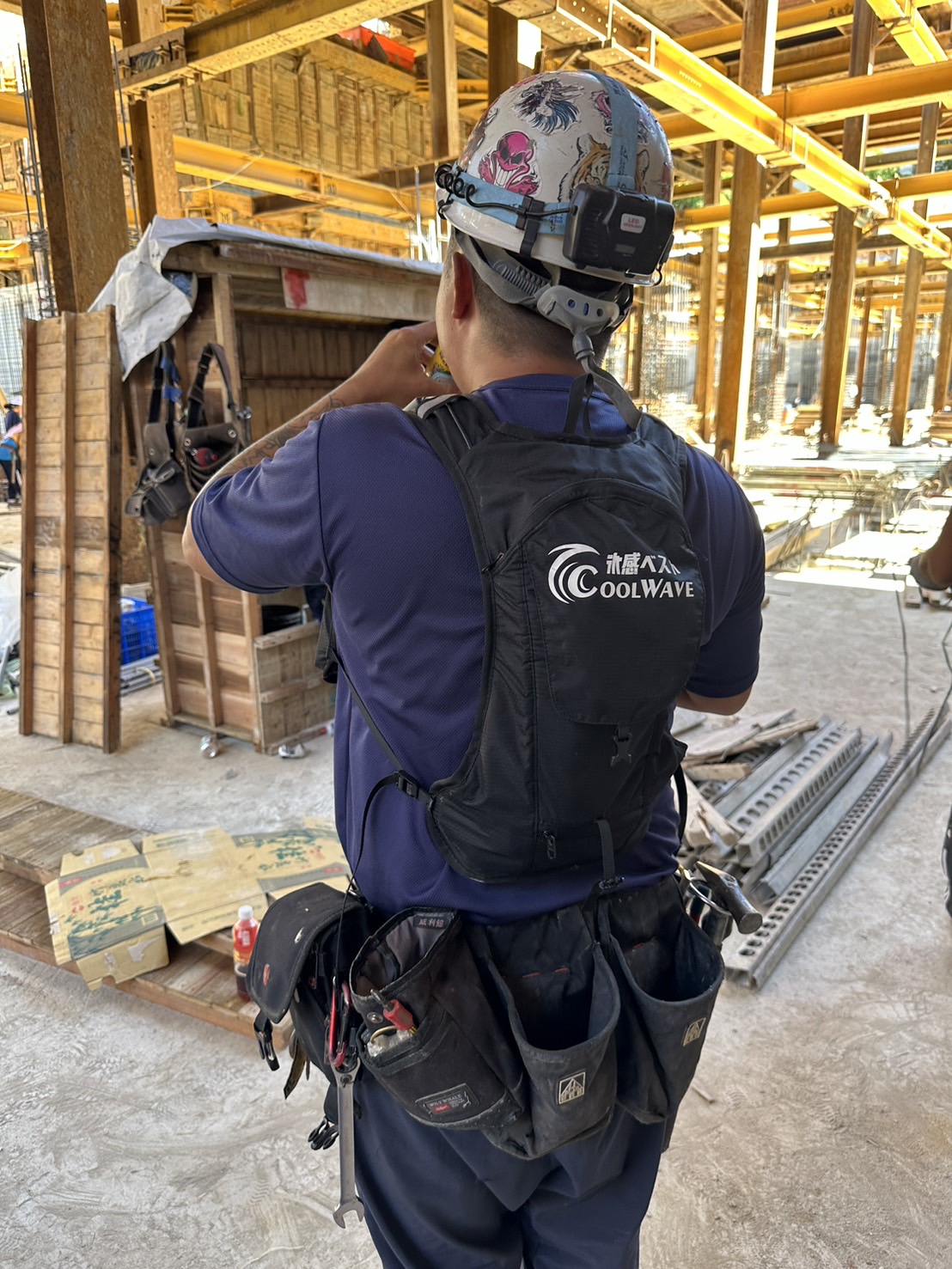
A dual cooling water cooling vest is not bought as a fashion item. It is industrial cooling equipment worn over or under work clothing, often for hours in direct sun, metal-roof factories, traffic-control posts, food stalls, and construction sites. For procurement teams at the Evaluation to Execution stage, the useful question is not whether a vest feels cold in a showroom. It is whether the vest can deliver repeatable cooling, remain wearable, and keep circulating water without leaks or power problems. Shokunin is a professional e-commerce brand launched by Feng Shang Precision Co., Ltd., a Taiwan-based company founded in 2009 that produces tools and cooling products. Its COOLWAVE Water-Circulation Cooling Vest is the reference product in this guide.
Problem Definition: Why Most Cooling Vest Purchases Fail in Real Heat
Industrial heat relief fails in three common ways. First, the vest cools for too short a period, so workers remove it during the hottest part of the shift. Second, the vest is too heavy or awkward, which reduces mobility and makes compliance drop. Third, the water-circulation system is underspecified: the pump is weak, the tubing kinks, the water bag leaks, or the power source is unclear. Any one of these turns a professional cooling vest into a stored item.
The problem is amplified in settings where heat is continuous rather than occasional. Construction crews, outdoor workers, traffic controllers, street vendors, food-stall operators, and sheet-metal factory teams do not have the option to step into air conditioning every hour. They need heatstroke prevention gear for extreme heat that can be worn while working, not a cooling device that demands constant attention.
Industry Background: Cooling Vests Are a Recognized Heat-Exposure Category
Personal cooling is not a niche accessory category. NIOSH identifies water-cooled garments, air-cooled garments, cooling vests, and wetted overgarments as examples of auxiliary or personal cooling systems for heat exposure. That classification matters for industrial buyers because it places a water-circulation cooling vest inside the broader discussion of heat-stress management, PPE planning, and worker comfort.
The commercial signal points in the same direction. A 2026 Dataintelo report cited in the verified data set estimates the global cooling vests market at USD 342 million in 2025, with industrial applications accounting for 34.5% revenue share. Those figures do not tell a buyer which vest to choose. They do explain why the category is crowded with outdoor cooling products, portable cooling vests, power-bank cooling vests, and industrial cooling vests that look similar but differ in specification quality.
The gap is verification. Published product claims often do not state the ambient temperature, humidity, workload, clothing layer, or measurement method used for cooling duration and flow rate. Buyers should therefore treat runtime and flow as RFQ items, not as settled facts. The COOLWAVE specification is useful because it gives concrete anchors: 3–4 hours, within 2 kg, 5V/150mA, and 320–370 ml/min maximum flow.
Detailed Solution: The 3 Must-Have Features Industrial Buyers Should Prioritize
The three features below are not equal in every work environment, but they form the minimum evaluation set for a dual cooling water cooling vest. If one is missing, the product may still be a useful ice cooling vest, but it is not yet a professional cooling vest for industrial heat relief.
Feature 1: 3–4 Hours of Cooling per Charge or Ice-Pack Cycle
The first must-have is a cooling duration that matches real work blocks. The COOLWAVE Water-Circulation Cooling Vest is listed with a 3–4 hour cooling duration per charge or ice-pack cycle. That number is practical for shift planning: it covers a meaningful outdoor task block, a half-shift, or a traffic-control rotation before a refill or ice-pack change.
For buyers, a 3–4 hour window changes the deployment model. Instead of treating the vest as a one-off cooling item, the team can plan spare ice packs, refill stations, and rotation schedules. That is especially important for heatstroke prevention gear for extreme heat, where a worker may not notice rising heat stress until performance has already declined. A long-duration cooling vest is only long-duration if the replacement cycle is planned.
The COOLWAVE packing list includes the water-cooled vest backpack ×1 and ice packs ×2. That matters for procurement because the usable runtime depends on how the second ice pack is managed. Ask the supplier to explain the refill and ice-pack exchange procedure, and confirm how ambient temperature and workload affect the 3–4 hour figure. A 3–4 hour claim without test conditions is a starting point, not a guarantee.
Feature 2: Sub-2 kg Net Weight for Wearability and Compliance
The second must-have is a net weight within 2 kg. The COOLWAVE vest is listed at within 2 kg and is described as lightweight and portable with an adjustable one-size-fits-all design. That combination matters more than the number alone. A lightweight cooling vest is easier to wear over work clothing, easier to adjust across body sizes, and less likely to be removed when a worker climbs, reaches, or moves through a site.
Weight affects compliance. If a cooling vest feels heavy after two hours, workers will loosen it, carry it, or leave it in the break area. In construction, outdoor work, street vending, traffic control, food stalls, and sheet-metal factories, the vest has to coexist with existing PPE and task movement. A sub-2 kg design supports longer wear, but buyers should still confirm the weight in the exact configuration, including the water bag and ice packs.
The adjustable one-size-fits-all design is useful for fleet purchasing because it reduces size-SKU complexity. It does not eliminate fit testing. Buyers should test the vest on representative body types and confirm shoulder-strap adjustment, hose routing, and access to the water bag while wearing gloves.
Feature 3: 5V/150mA Pump With 320–370 ml/min Maximum Flow
The third must-have is a pump specification that supports steady water circulation without creating a power burden. The COOLWAVE pump output is listed at 5V, 150mA maximum, with a maximum flow rate of 320–370 ml/min. In a dual cooling system, the ice packs provide the cold source and the pump moves chilled water through the cooling tube. The pump is therefore the difference between a passive ice cooling vest and a circulating cooling vest.
A 5V/150mA pump points buyers toward a low-voltage, power-bank-compatible architecture. That is practical for outdoor work because a power bank can be specified and replaced more easily than a custom battery. It also creates RFQ questions: Which power bank is required, what connector is used, how long does the pump run on a given capacity, and is the power source included in the packing list? The provided COOLWAVE packing list does not list a power bank, so the buyer should confirm the power source separately.
Flow rate should be read as a maximum, not an average. The 320–370 ml/min figure helps buyers compare pump capability, but it does not describe performance after tubing length, head pressure, kinks, or a partially filled water bag. Ask for the measurement conditions and confirm that the cooling tube and connectors are matched to the pump. A high-efficiency cooling work vest depends on the whole loop, not only on the pump label.
Material Quality: Where the Feature List Becomes a Service-Life Question
A dual cooling water cooling vest is a wet, worn, repeatedly handled product. The material set determines whether the vest survives refilling, movement, and storage. The COOLWAVE specification lists a TPU water bag, a polypropylene cap, a black sand rubber cooling tube, a 600D polyester shoulder strap, and PEVA vest material.
TPU water bag
TPU is the listed water-bag material. Buyers should confirm wall thickness, seam construction, and leak testing because the water bag is the highest-risk component in daily refilling.
Polypropylene cap
The cap is listed as polypropylene. Check thread durability, seal performance, and whether the cap can be opened and closed with work gloves on.
Sand rubber cooling tube
The cooling tube is listed as black sand rubber. Confirm kink resistance, connector fit, and spare-tube availability, because a collapsed tube can reduce flow even when the pump is rated correctly.
600D polyester shoulder strap
The shoulder strap is listed as 600D polyester. Check stitch density, adjuster grip, and how the strap behaves when the water bag is full.
The manufacturer also holds a water-cooled vest patent certificate, number I886033, issued by the Intellectual Property Office, Ministry of Economic Affairs, ROC, covering water-cooled vest structure and cooling system. For buyers, that is not a substitute for a sample test, but it is a useful document to request during supplier qualification. The manufacturer states that the product has also received a Disaster Prevention Product and Service Certification Award from the Taiwan Disaster Prevention Industry Association.
Step-by-Step Breakdown: How to Evaluate a Dual Cooling Water Cooling Vest
- Define the work block. Map the hottest continuous period, the number of workers, and the refill points. Use the 3–4 hour cooling duration as a planning anchor, then confirm the conditions in a sample test.
- Set a wearable weight limit. Use within 2 kg as the reference, and test the vest with the water bag and ice packs in the exact configuration you plan to buy.
- Review the pump and power source. Confirm 5V/150mA maximum pump output, 320–370 ml/min maximum flow, connector type, cable length, and power-bank requirements.
- Audit the wetted materials. Request the TPU water bag, polypropylene cap, sand rubber cooling tube, and 600D polyester shoulder strap specifications, plus leak and kink checks.
- Verify compliance documents. Ask for the patent certificate, disaster-prevention certification evidence, and any market-specific PPE or electrical-safety documentation required by your destination market.
- Run a sample test. Use representative workers, ambient heat, and task movement. Record refill time, comfort, hose routing, and any leakage or flow restriction.
- Plan the rollout. Confirm MOQ, lead time, monthly capacity, warranty, spare ice packs, and after-sales support before committing to a fleet order.
Use Cases: Where the Three Features Matter Most
The COOLWAVE reference implementation has been used by construction sites, outdoor workers, metal sheet factories, and street vendors. The same feature set can be evaluated across other heat-exposed roles.
Construction Sites and Outdoor Work
Construction crews face direct sun, hot surfaces, and limited shade. A 3–4 hour cooling window supports a morning or afternoon block, while sub-2 kg weight reduces fatigue during climbing and carrying. The cooling vest should be paired with a refill plan and a spare ice pack so the worker is not forced to choose between cooling and productivity. For sweat-proof cooling gear for construction, material durability and hose routing are as important as the cooling claim.
Traffic Control and Street Vending
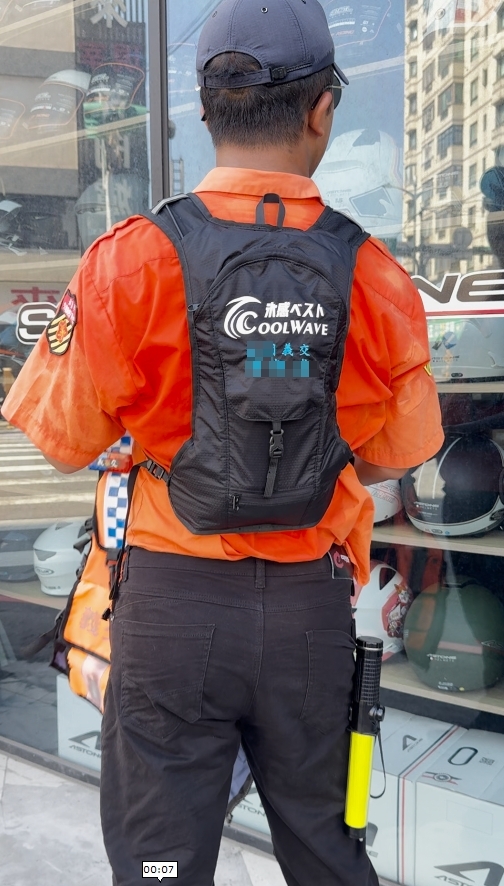
Traffic controllers and street vendors often stand in prolonged sun exposure with little access to power. A power-bank cooling vest with a 5V/150mA pump is easier to support than a high-voltage system, provided the power bank and cable are specified. The adjustable one-size-fits-all design helps teams issue vests across different workers without a complex size matrix. For street vendors, the vest must also be quick to put on and take off between customer interactions.
Metal Sheet Factories and Food Stalls
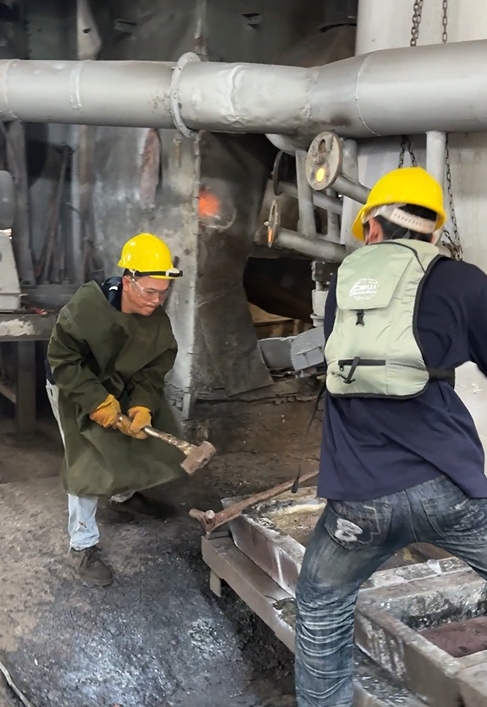
Metal sheet factories can combine radiant heat, poor airflow, and metal surfaces that stay hot after the ambient peak. A cooling solution for metal-roof factories needs a vest that can be worn for a full work block and a circulation loop that does not leak onto the work area. Food-stall operators face a different constraint: they need a portable cooling vest that does not interfere with cooking, serving, or moving between a stall and storage.
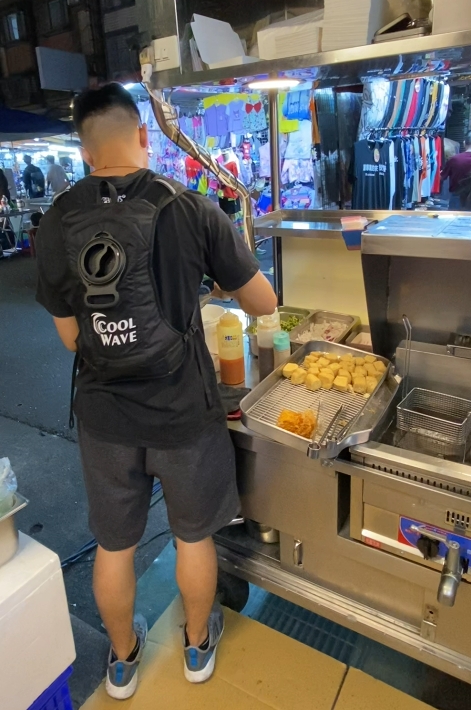
For night markets and food stalls, heat is often combined with long standing hours and limited refrigeration for spare ice packs. That makes the 3–4 hour runtime and the two-ice-pack packing list practical planning details, not accessories. The same logic applies to outdoor cooling products used by event staff, security teams, and municipal workers.
Comparison Table: What to Verify Against the COOLWAVE Reference Specification
The table below uses only the provided specification and verified content. It is a procurement checklist, not a ranking of competitors. Buyers can use the reference values to structure RFQ questions and sample-test criteria.
| Procurement criterion | COOLWAVE reference specification | Why it matters | RFQ check |
|---|---|---|---|
| Cooling duration | 3–4 hours per charge or ice-pack cycle | Supports shift planning and rotation | Confirm ambient temperature, workload, and refill procedure |
| Net weight | Within 2 kg | Affects comfort, mobility, and wear compliance | Weigh the exact configuration with water bag and ice packs |
| Pump output | 5V, 150mA maximum | Defines power-bank requirements and electrical load | Confirm connector, cable, and power source |
| Flow rate | Maximum 320–370 ml/min | Indicates circulation capability | Ask for flow test conditions and tubing length |
| Water bag | TPU | Primary wetted component and leak-risk point | Request seam and leak-test evidence |
| Water bag cap | Polypropylene | Refill access and seal durability | Check thread, seal, and glove-friendly handling |
| Cooling tube | Sand rubber, black | Carries chilled water through the vest | Check kink resistance and spare-part availability |
| Shoulder strap | 600D polyester | Load-bearing comfort and adjustment | Check stitching and adjuster grip |
| Vest material | PEVA | Main vest construction | Confirm cleaning and storage instructions |
| Packing list | Water-cooled vest backpack ×1, ice packs ×2 | Defines usable runtime and replacement planning | Confirm whether a power bank is included or separate |
| MOQ and lead time | MOQ 10 units; lead time 7–14 days | Supports pilot orders and rollout timing | Confirm production slot and freight terms |
| Capacity and service | Monthly capacity 3,000 units; 6-month warranty; ODM production services | Supports repeat orders and after-sales planning | Confirm spare parts and warranty process |
FAQ: Dual Cooling Water Cooling Vest Procurement Questions
Is a dual cooling water cooling vest classified as PPE?
NIOSH describes water-cooled garments, air-cooled garments, cooling vests, and wetted overgarments as personal cooling systems for heat exposure. The COOLWAVE product is described as industrial cooling apparel / PPE, and the manufacturer states it has received a Disaster Prevention Product and Service Certification Award from the Taiwan Disaster Prevention Industry Association. Buyers should still confirm the applicable PPE classification and electrical-safety rules for their market.
What should buyers verify about pump and material capability?
Verify the pump at 5V/150mA maximum and flow at 320–370 ml/min maximum; confirm the test conditions for that flow. Verify the water bag in TPU, cap in polypropylene, cooling tube in black sand rubber, and shoulder strap in 600D polyester. Request a sample and pre-shipment test before scaling.
How should a buyer budget for a dual cooling water cooling vest program?
The provided specification does not publish a unit price. Budget for the vest, two ice packs, and a compatible 5V power source for the pump, then add spare ice packs and after-sales support. Request a quote with order quantity and destination so freight and payment terms are clear.
Can buyers request a sample before placing a production order?
A sample request should be planned around the stated MOQ of 10 units and 7–14 day lead time. The purchasing terms list shipment after payment, freight paid by the buyer, pre-shipment test as the acceptance criterion, and full payment. Confirm the sample configuration before mass production.
What lead time and capacity should buyers plan for?
The typical production lead time is 7–14 days, monthly capacity is 3,000 units, and ODM production services are available. The water-cooled vest carries a 6-month warranty. For larger rollouts, confirm the production slot and spare-parts plan before committing. To start a sample or quote request, use the official Shokunin / Feng Shang Precision website or the product brochure linked below.
Conclusion: Buy the Three Features, Then Verify the Details
A dual cooling water cooling vest should be evaluated as a work tool. The three must-have features are 3–4 hours of cooling, a net weight within 2 kg, and a 5V/150mA pump with 320–370 ml/min maximum flow. Those numbers define the product’s ability to support a shift, stay wearable, and circulate water with a practical power source. Material quality then determines whether the vest survives daily refilling and movement: TPU water bag, polypropylene cap, sand rubber cooling tube, 600D polyester shoulder strap, and PEVA vest material.
The COOLWAVE Water-Circulation Cooling Vest from Shokunin is a useful reference because it publishes these specifications and has been used in construction sites, outdoor work, metal sheet factories, street vending, traffic control, and food-stall environments. Buyers should still run a sample test, confirm test conditions, and verify compliance documents and power-source requirements. A professional cooling vest is not chosen by the longest feature list. It is chosen by the specification set a buyer can verify, repeat, and support across a workforce.
Next step: request a sample or quote for the COOLWAVE Water-Circulation Cooling Vest, review the full specification, and confirm power-source and spare-ice-pack requirements for your site.
Website: https://www.fstool.com.tw/ · Brochure: Download the product brochure · Email: fsmarketing@fstool.com.tw · Phone: +886 3-312-6606
Have Questions or Need More Details?
Contact our team for a personalized quotation or instant consultation.
Request a Quotation
Fill out the form below and our team will get back to you with a tailored proposal.
WhatsApp Direct Chat
Prefer to chat in real-time? Message us on WhatsApp for instant assistance & quick answers.
- Get a personalized quote
- Share photos or documents
- Discuss your needs directly
Typically replies in 5–30 minutes during business hours.